Sofa Leg Wobble Problems
A sofa leg wobbles when one of four points is failing: the floor, the fastener, the socket, or the frame. Fix the failed point first, and replace the leg or hardware if tightening does not remove movement. Ignoring it can strip threads, enlarge the socket, and make the sofa unsafe to sit on. This guide shows how to diagnose each failure point and choose the right repair.
When to stop using a wobbly sofa
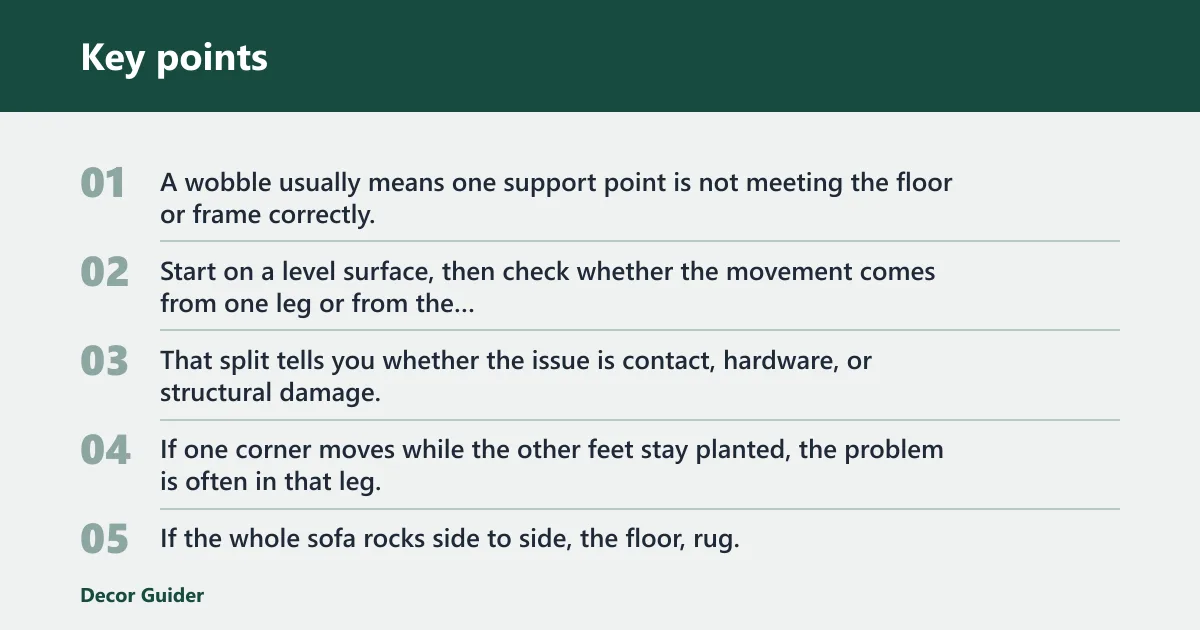


A wobble usually means one support point is not meeting the floor or frame correctly. Start on a level surface, then check whether the movement comes from one leg or from the whole sofa rocking. That split tells you whether the issue is contact, hardware, or structural damage.
Single leg wobble versus whole-sofa rocking
If one corner moves while the other feet stay planted, the problem is often in that leg, its hanger bolt, or the socket inside the frame. If the whole sofa rocks side to side, the floor, rug, or frame alignment is more likely involved. A sofa usually wobbles after assembly because one or more structural points are not meeting the floor or frame correctly.
Move the sofa onto a level surface first. A rug edge, debris under one foot, or an uneven floor can mimic a bad leg. Check hardwood, tile, vinyl, and carpet separately, because each surface can change how the feet sit.
When wobble means stop using the sofa
Stop using the sofa immediately if the leg shifts under load, the frame is cracked, or the mounting hardware appears to be failing. Repeated movement strains joints and connectors, and loose connections let the sofa shift every time someone sits down. Furniture safety guidance from consumer product safety organizations consistently treats unstable seating as a hazard, not a cosmetic issue.
Say your sofa looks fine on hardwood, but the front left leg moves a few millimeters when someone sits down. That points more to a fastener or socket problem than to the floor. If the same sofa rocks only on a thick rug, the carpet pile or rug edge is the first thing to correct.
Sofa leg diagnostic table

Use this table to match the symptom to the failure point before you tighten anything. The goal is to repair the real cause, not force hardware that is already failing.
| Symptom | Likely failure point | Severity | Tools needed | DIY vs replace | Stop using the sofa now triggers | What to inspect | Recommended fix | Replace when |
|---|---|---|---|---|---|---|---|---|
| One leg wobbles, others are stable | Fastener or socket | Moderate to high, depending on thread condition | Flashlight, screwdriver or wrench, matching replacement hardware | DIY if threads are sound; replace if the bolt or receiver is damaged | Leg shifts under load, visible cracking, metal receiver spinning | Hanger bolt, T-nut, internal threads, leg shoulder seating | Retighten if threads are sound; repair stripped wood or retrofit a plate if threads are damaged | The bolt spins, the socket is stripped, or the leg no longer sits flush and level |
| Whole sofa rocks on a flat floor | Floor contact or frame alignment | Low to moderate if caused by floor contact; high if the frame is warped | Level, thin shims or pads, flashlight | DIY for floor contact; replace or repair if the frame is out of square | Frame crack, sagging corner, widening joint movement | Floor debris, rug edges, leg lengths, frame corners | Clear the floor contact points, level the sofa, then recheck hardware | The frame is warped or the legs vary enough that the sofa cannot sit level |
| Leg tightens briefly, then loosens again | Stripped socket or pulled-out T-nut | High | Drill, hardwood dowel, epoxy, clamp, replacement fastener or plate | DIY only if the surrounding wood can still hold structure; replace if the receiver or frame hole is too damaged | Fastener spins freely, leg detaches, wood fibers are torn out | Thread grip, movement in the frame hole, metal receiver seating | Repair with wood dowel and epoxy if the hole can hold structure; use a mounting plate if the internal hole is destroyed | The wood is torn out, the metal receiver spins, or the frame hole has enlarged |
| Leg leans or sits crooked | Bent hanger bolt or damaged leg | Moderate | Flashlight, replacement hanger bolt or leg, wrench | Replace in most cases | Leg does not seat flush, rocking worsens with load | Bolt straightness, leg base, socket alignment | Replace the leg or the hanger bolt if alignment cannot be restored | The leg no longer seats flush or the bolt is visibly bent |
| New leg will not thread in cleanly | Thread mismatch | High if forced | Thread gauge or known matching fastener, flashlight | DIY if the correct thread is identified; replace if the wrong thread has damaged the socket | Cross-threading, metal shaving, socket damage during installation | Thread size, thread pitch, socket type | Match the correct standard before installation | The wrong thread has already damaged the socket or mounting plate |
Check the leg hardware
Sofa legs may be threaded hanger-bolt styles or plate-mounted attachments. The connection should sit flush and level so the load transfers into the frame without extra leverage. The core failure is often not the leg itself, but the compromised wood, receiver, or mounting hardware holding it.
Identify the attachment type
A threaded hanger bolt screws into the frame and connects the leg to internal hardware. A plate-mounted leg attaches to a mounting plate fixed to the frame underside. If the leg uses a hanger bolt, the socket size must match the bolt exactly, because wood-furniture fasteners are standardized only within their own thread system.
Modern sofa legs typically use either an M8 metric system or a 5/16"-18 US standard hanger bolt. Those are different thread systems and are not interchangeable. Threaded fastener standards and furniture connector hardware need to match before installation; forcing a mismatch can strip the receiver, cross-thread the bolt, or damage the plate.
Inspect the hanger bolt, T-nut, and socket
- Remove the leg if the design allows safe access.
- Check whether the hanger bolt is bent, rounded, or stripped.
- Inspect the T-nut inside the frame for pull-out or spinning.
- Look for crushed wood, elongated holes, or cracked frame edges.
- Confirm that the leg threads in by hand without binding.
The T-nut is the embedded threaded receiver inside the frame. It is a common failure point when it has pulled out of the wood or when the threads are damaged. If the bolt catches only at an angle, the hardware may be mismatched or the receiver may be distorted.
How do I fix a wobbly sofa leg?
Fix it by matching the repair to the failure point. Retighten only if the threads still grip and the leg sits square. If the hole is stripped, repair the wood or retrofit the frame. If the leg, socket, or plate is damaged beyond a secure fit, replace the failed part instead of forcing it.
Retighten safe connections
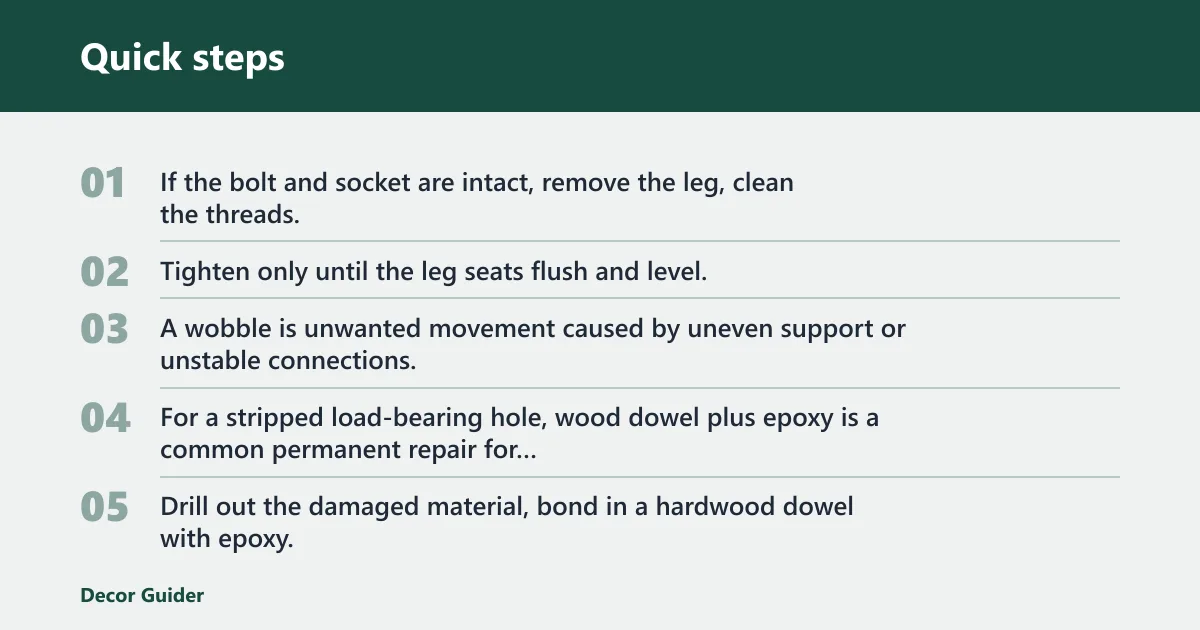
If the bolt and socket are intact, remove the leg, clean the threads, and reinstall it by hand first. Tighten only until the leg seats flush and level. A wobble is unwanted movement caused by uneven support or unstable connections, so over-tightening can make the problem worse if the threads are already failing.
Repair stripped wood with dowel and epoxy
For a stripped load-bearing hole, wood dowel plus epoxy is a common permanent repair for sound surrounding material. Drill out the damaged material, bond in a hardwood dowel with epoxy, and redrill to the correct size after it cures. Wood filler is not the right permanent fix for a load-bearing stripped hole, because it lacks the structural strength of solid wood.
Suppose the leg used to hold for a week, then began to loosen again after one move across carpet. That is a sign the wood around the receiver is failing, not just the bolt. Dragging the sofa across carpet to vacuum can create lateral stress on the leg and speed up that failure.
Use a mounting plate when internal threads fail
If the internal frame hole is entirely destroyed, bypassing it with a metal 5-hole mounting plate can be a permanent fix option. This spreads the load across a wider area and can bypass damaged wood. It is a better choice than re-threading a hole that no longer has enough material to hold.
Replace the leg or socket when repair is not sound
Replace the leg when the hanger bolt is bent, the foot is cracked, or the base no longer sits flush. Replace the socket or mounting hardware when the threads are stripped and the repair would only be temporary. Replacing worn wooden feet with an iron sofa leg is a practical upgrade path when the frame and hardware can support it.
How do you tell if the mounting plate is stripped?
A stripped mounting plate usually shows spinning, pull-out, or enlarged holes around the fastener points. If the screw turns without drawing the plate tight, or the plate shifts under hand pressure, the fastener no longer has enough grip. That is a hardware failure, not a floor problem.
What to inspect under the frame
Look at the underside of the sofa where the plate meets the frame. Check for wallowed-out holes, missing threads, torn wood fibers, and any gap between the plate and the frame. If the plate moves while the leg is still installed, the plate or the surrounding wood is no longer secure.
When a retrofit plate is the better fix
A retrofit plate is often the better fix when the original threaded insert or wood socket can no longer hold. It spreads the load across a wider area and can bypass damaged wood. Do not use it as a patch for a cracked frame. Structural cracks need a different repair or replacement.
Stabilize the floor contact
Floor contact checks come before final tightening. A level surface helps isolate the wobble source, while floor debris, rug edges, or a compressed carpet pile can create a false wobble. Anti-slip rubber pads can help anchor the sofa and reduce floor damage on hardwood, tile, or vinyl floors, but they do not fix stripped sockets or cracked frames.
Use anti-slip rubber pads correctly
Place pads under each foot only after you confirm the hardware is sound. They help with grip on hard floors and can reduce minor sliding. They are a stabilizer, not a structural repair, and they should not be used to mask a failing leg connection.
Level the sofa after hardware checks
If the sofa still rocks after the leg and socket check, slide thin shims or use correct foot pads to correct a small height difference. Do this only after you know the wobble is not from a failed fastener. Otherwise, you are hiding a problem that will keep spreading.
Can a wobbly sofa damage the frame over time?
Yes. Repeated movement lets the sofa shift every time someone sits down, which strains joints, connectors, and upholstery over time. A compromised leg shifts weight unevenly, and that extra movement can enlarge holes, loosen joints, and damage the frame faster than a stable setup.
Repair the failure point first
Start with the source, not the symptom. If the leg hardware is loose, secure or replace it. If the socket is stripped, repair or retrofit the frame. If the frame is cracked, stop using the sofa until the structure is repaired. That sequence limits further damage and avoids repeat failures.
A common first-timer mistake is to tighten one leg hard while leaving the other corners untouched. That can make the sofa feel better for a day, but it leaves misaligned frames to keep loading the same weak spot. Even tension and correct part matching matter more than brute force.
Frequently asked questions
Why is my sofa leg wobbling?
It usually points to one of four issues: the floor, the fastener, the socket, or the frame. Start with a level surface and then test whether one leg or the whole sofa moves. The answer tells you whether you need a floor fix, a hardware repair, or a structural repair.
What thread size do sofa legs use?
Many modern sofa legs use either M8 metric thread or 5/16"-18 imperial thread. Those are not interchangeable. Check the existing hardware before buying replacements, because mixing the two systems can ruin the mounting plate or socket.
Can I tighten a sofa leg without removing the sofa?
Sometimes, yes, if you can reach the fastener safely and the hardware is only slightly loose. But if the leg spins, the socket is stripped, or the plate is shifting, removal is usually necessary to inspect the threads and frame. Tightening blindly can hide the real problem.
How do I know if the mounting plate is stripped?
If the screws spin, the holes are enlarged, or the plate shifts when you press on it, the plate is likely stripped or the surrounding wood has failed. A retrofit plate is often the better fix when the original fastener points no longer hold, but a cracked frame still needs structural repair.
What if I searched for wooden chair legs instead of sofa legs?
The diagnosis is similar, but chair legs usually use different geometry, smaller load paths, and sometimes glued joints rather than the same threaded hardware common on sofas. If your search intent is a wooden chair, check the leg joint, stretchers, and seat block before applying sofa-specific replacement parts.
What if I meant table legs, not sofa legs?
Table legs often fail at corner brackets, threaded inserts, or apron joints instead of the sofa-style leg socket. A table can wobble from an uneven floor or a loose apron connection, but the repair steps and hardware types are not always the same. Match the fix to the furniture type first.
Is a wobble cushion the same thing as a wobble board?
No. A wobble cushion is a balance aid, while a wobble board is a training platform. They are unrelated to a loose sofa leg and do not solve furniture hardware failure. If your sofa wobbles, focus on the floor contact, fastener, socket, or frame.
Sources
- ANSI/BIFMA furniture safety and performance standards for seating and load-bearing furniture components
- Woodworker’s Journal and related furniture-hardware references on hanger bolts, T-nuts, threaded inserts, and mounting plates
- International fastener references for metric and imperial thread standards, including M8 and 5/16"-18 compatibility
- Consumer safety guidance on unstable furniture, load shifting, and when to stop using damaged seating
- General wood repair guidance on dowel-and-epoxy structural repair limits for stripped load-bearing holes
Products related to this article
Sponsored / affiliate links. As an Amazon Associate I earn from qualifying purchases. I may earn additional commission from eligible campaigns.