Foam Upholstery Cleaner Spray Review: Worth It?
Foam upholstery cleaner spray is worth buying for many fabric sofas only if the care label allows wet cleaning and you use it on light surface soil. Skip it for water-sensitive fabrics, heavy spills, or cushions that dry slowly. Used badly, it can leave rings, push soil deeper, soak padding, and make stains return after drying. This guide judges foam cleaners by those failure modes, plus residue and stain lift, so you can decide whether to buy one or use another method.
Verdict
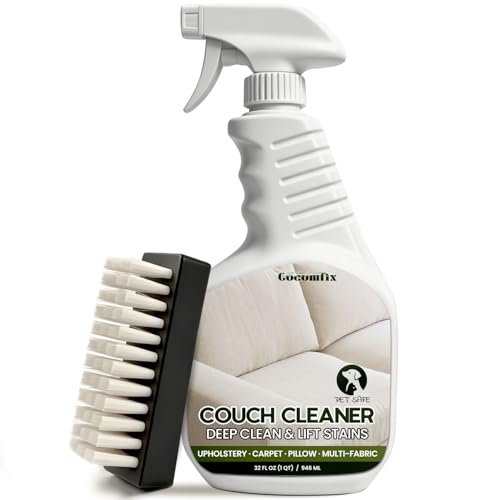
- No rinse required, no residue
- Gentle on microfiber and cotton
- Removes old coffee and ink stains
For a fabric sofa with coffee drips, tracked dirt, or a fresh pet mark, foam spray can be a practical spot-cleaning option because it spreads less liquid than a pourable cleaner and is easier to control on seams and welts. It is less convincing on deep-set stains, large cushions, or any cover that holds moisture in the padding underneath.
Specs at a glance
| Check | Foam upholstery cleaner spray | What matters on a sofa |
|---|---|---|
| Format | Foam spray | Lets you apply cleaner to a small area without soaking the whole cushion |
| Application | Spray, then agitate with a soft brush or sponge | Helps loosen soil in fabric fibers and around stitching |
| Drying risk | Moderate if overapplied | Too much liquid can reach foam padding and create rings or mildew risk |
| Best use | Light soil and fresh spills | Better for surface marks than old embedded stains |
| Test requirement | Spot-test first | Use an inconspicuous area such as the back or bottom edge |
| Cleanup | Blot, vacuum, or extract | Foam residue should not sit in the weave |
Car and Driver says upholstery cleaners are made for vinyl and cloth upholstery, warns that too much moisture can soak into foam padding under cloth seats, and recommends starting with a dry, soft brush before vacuuming. Those cautions matter even more on sofas, where cushion depth and seam lines can trap water and soil.
Sofa cleaning decision table
| Stain type | Fabric type | Moisture risk | Likely success with foam spray | When to stop and extract | Escalate to pro cleaning? |
|---|---|---|---|---|---|
| Coffee or tea | Microfiber, polyester blend, tightly woven textile | Medium | Good on fresh spills and light rings | If a darker halo appears after 15 to 30 minutes | Yes, if the stain is old or spread across a cushion seam |
| Grease or body oil | Microfiber, woven polyester, some flock covers | Low to medium | Fair on surface marks, weaker on aged oil | If residue stays slick or gray after two light passes | Sometimes, especially on pale fabric or armrests with repeat buildup |
| Pet hair plus dirt | Velour, woven textile, microfiber | Low | Fair after dry vacuuming and brush agitation | Stop if the fabric begins to fuzz or mat | Usually no, unless odor or urine is present |
| Marker or ink | Microfiber, polyester blend | Medium | Poor to fair; depends on ink age and dye type | If color spreads, lighten use and blot immediately | Yes, for any large or old ink mark |
| Old set-in stains | General textile, flock, velour | High | Poor | If the stain barely changes after a careful test patch | Yes, a machine extractor or pro cleaner is the better call |
Who it
Foam upholstery cleaner spray makes the most sense if your sofa is fabric, the care tag allows wet cleaning, and the problem is localized. That includes a coffee drip on a cushion corner, a light snack spill, or a dirty armrest that needs targeted cleaning rather than an all-over wash.
It is also a better fit when you want controlled application near seams, welt cords, or piping. Sofa construction matters here. A cloth cover can look dry while the padding below still holds moisture, so a cleaner that spreads slowly is safer than one that floods the fabric.
Car and Driver’s upholstery-cleaning guidance points readers toward a dry, soft brush before vacuuming and a spot cleaner for isolated marks. That same sequence fits sofas well, because dry debris on the surface can turn into muddy residue if you spray first.
What works
Fresh spills are the strongest use case. Coffee, soda, and other water-based spots usually respond better than older stains because the spill has not settled far into the backing yet. On a light sofa, a foam spray can lift the top layer of soil without leaving the whole seat damp.
Microfiber and many polyester blends are usually the most forgiving targets. Their tighter surfaces give you a better shot at lifting grime before it sinks below the weave. Velour and flock can also clean well if you use light foam and a soft brush, though the nap can flatten if you scrub hard.
Neutral soap or a specialized cleaner is the safer route than aggressive solvents or pure alcohol. Modernatex recommends removing dirt first with a dry brush, sponge, or vacuum cleaner, and warns not to use aggressive cleaning agents like solvents or pure alcohol. That advice is especially relevant on sofa fabric with mixed fibers.
A common first-time mistake is treating the whole cushion like one stain patch. Suppose a 24-inch seat cushion has a coffee ring near the front seam and a dry, dusty back edge. Cleaning only the marked area, then blotting and drying the edge, lowers the chance of a broad ring across the seat face.
What does not?
Foam spray is a weak answer for old set-in stains. If a mark has already dried through the face fabric and into the padding, spot lifting alone often leaves a shadow. The stain can also return after the water evaporates, which is why foam is not a full substitute for extraction on badly soiled cushions.
It is also a poor fit for delicate pile fabrics when you cannot control moisture. Velour and flock can bruise or flatten if the brush is too stiff, and repeated wetting can leave a tide line along seams or welt cords. On light upholstery, residue may show after drying even when the wet spot looked clean.
Do not use foam cleaner when the fabric dries slowly, the cushion is thick, or the filling already holds moisture. Car and Driver warns that too much moisture can soak into foam padding under cloth seats. That risk is similar on sofas, especially deep seat cushions and upholstered backs with dense foam cores.
If the sofa has leatherette parts, use a product intended for that surface instead of treating the whole piece as cloth. A fabric cleaner is not a default choice for coated trim, stitched accents, or panels that clean differently from the main upholstery.
How to use it on a sofa
Start by vacuuming the seat, back, and creases. Use a crevice or crease attachment to get grit out of seams, because debris trapped in stitching can drag across the fabric once you add foam. Car and Driver recommends starting with a dry, soft brush before vacuuming, which helps lift loose dirt from the pile.
Next, spot-test first in an inconspicuous area. The safest places are the back edge, bottom edge, or another hidden patch that already sees less light. Wait for it to dry fully before you judge colorfastness, because a wet patch can look fine and still dry to a ring or shade change.
- Check the care tag and confirm the fabric allows wet cleaning.
- Vacuum loose soil from seams, creases, and cushion edges.
- Apply a small amount of foam to the hidden test patch.
- Let it sit for the label’s dwell time, then blot or extract.
- Look for color change, rough texture, residue, or a dried ring.
- If the test passes, clean a small visible area at a time.
- Dry with airflow and keep people and pets off the cushion until it is fully dry.
Spray lightly, then use a soft brush or sponge to work the cleaner into the fibers. Keep the motion gentle. The goal is to loosen embedded soil, not to scrub the weave open. If a white towel comes away dirty after blotting, repeat once. If it keeps lifting soil, stop and extract.
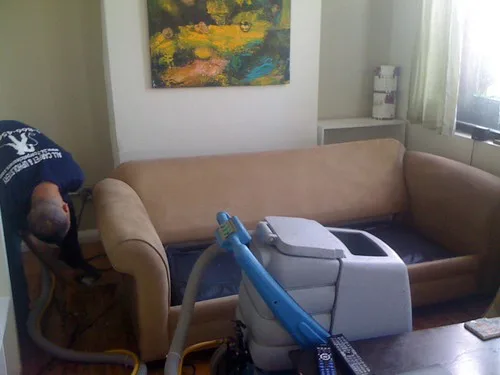
Do you need a wet vacuum after using foam upholstery cleaner on a sofa? Often, yes, if the cushion is thick or the stain is dark. A wet vacuum or upholstery extractor can pull out loosened residue, limit wicking, and help the fabric dry more evenly. That matters most on light-colored seating and on spots near seams.
Can you use it on microfiber or polyester?
Yes, in many cases. Microfiber and polyester are among the more common sofa fabrics for foam cleaners because they usually tolerate controlled moisture better than delicate pile or water-sensitive trims. The better question is not whether the fiber is synthetic, but whether the backing, dye, and finish can handle a wet spot.
Microfiber guidance is simple: use the least liquid needed, brush lightly, and stop if the nap starts to look patchy. Polyester and blended textiles usually handle spot cleaning well, but they still need a dry test patch. If the fabric is light-colored, check carefully for a drying halo.
Velour, flock, and tougher woven covers need more caution. Their surface texture can hide residue while wet, then reveal flattening or shading later. If the label is unclear, manufacturer-safe care should win over a stronger cleaner with a broader claim.
What to look for on the label
Look for a cleaner intended for upholstery, a neutral or mild formula, and clear instructions for foam application. Avoid products built around aggressive solvents, and prefer one that says it is safe for the specific fabric class you plan to clean. If the label is vague about upholstery type, treat that as a warning sign.
Foam versus liquid matters. Foam is easier to meter onto a sofa cushion and usually reduces the temptation to soak the whole seat. Liquid cleaners can work, but they are easier to overapply, especially on a large armrest or a cushion with stitched channels that pull moisture sideways.
Car and Driver’s list includes Meguiar’s Carpet & Upholstery Cleaner as “Most Reliable,” Bissell Little Green as “Best Upholstery Cleaning Tool,” and Chemical Guys Nonsense Invinsible Super Cleaner as “Best Overall.” Those labels are useful signals, but sofa safety still depends on your fabric, the amount of moisture, and whether you can extract the residue afterward.
Alternatives

- Lifts deep dirt and stains
- Built-in rinseable fabric-safe brush
- Eliminates tough pet odors
BISSELL® Woolite® Advantage Carpet & Upholstery Cleaner 4 Pack, 3325 is a better buy if you want a rinseable brush and a small cleaner supply for repeat spot work. Based on the listed details, it is meant to lift deep dirt and stains and eliminate tough pet odors. The drawback is that the pack format can be more than many renters need for occasional sofa stains.
Couch & Sofa Cleaner Spray, Upholstery Stain Remover for Fabric Furniture | Pro-Strength, Pet-Safe & Non-Toxic, Removes Pet Stains, Old Spots, Coffee & Ink, Foam Trigger Sprayer, 32 oz is the most directly aligned with sofa spot cleaning. It is listed as no-rinse and residue-free, with a foam trigger and claims for microfiber and cotton. The trade-off is that broad stain claims still need a careful test patch on your own fabric.

- Repels water-based spills
- Dries clear and odorless
- Protects upholstery and curtains
Scotchgard Fabric Water Shield Spray, 13.5 oz, 1 Pack is not a cleaner, so it does not replace stain removal. It is more of a prevention step for water-based spills and is listed as a clear, odorless repellent for upholstery and curtains. The drawback is obvious: it may help after cleaning, but it will not pull out an existing coffee ring or grease mark.
Should you buy it?
Buy foam upholstery cleaner spray if your sofa is fabric, the stain is fresh or light, and you can dry the area quickly after cleaning. It is a practical middle ground for spot work on microfiber, polyester blends, and other cloth covers that tolerate controlled moisture.
Skip it if the sofa is already showing wicking, the stain is old, or the fabric is delicate, high-pile, or moisture-sensitive. In those cases, a wet extractor, a stronger upholstery tool, or professional cleaning is the safer move. For many buyers, that is the real value test: not whether foam can lift a mark, but whether it can do so without creating a new one.
Frequently asked questions
Is foam upholstery cleaner spray worth it for fabric sofas?
Yes, if the sofa is wet-cleanable and the problem is light surface soil, a fresh spill, or a small stain near a seam. It is less worth it for heavy spills, old marks, or cushions that dry slowly, because those cases raise the risk of rings, residue, and stain return.
Does foam upholstery cleaner work better than liquid upholstery cleaner on couches?
Foam is usually easier to control on couches because it is less likely to flood the fabric. Liquid can still work well, but it is easier to overapply and push moisture into the cushion. On sofas, control matters more than the label claim.
How do I test a foam cleaner on a sofa without causing rings or discoloration?
Use an inconspicuous area such as the back or bottom edge, and let it dry fully before judging the result. Apply a small amount, blot, and check for color change, residue, or a drying halo. Car and Driver advises testing any product in an inconspicuous area first.
Will foam cleaner remove old stains, or only fresh spills?
Fresh spills are the best target. Old set-in stains often sit deeper in the fibers or padding, so foam alone may lighten them but not remove them. If the stain remains after a careful test patch, a machine extractor or professional cleaning is usually the better path.
Do I need a wet vacuum after using foam upholstery cleaner on a sofa?
Not every time, but it helps on thick cushions, dark stains, or any area where residue might linger. A wet vacuum can pull out excess cleaner and reduce wicking. If the sofa dries slowly, extraction is a safer choice than leaving foam to evaporate on its own.
What should I avoid when using upholstery cleaner on delicate upholstery fabrics?
Avoid aggressive solvents, pure alcohol, heavy scrubbing, and too much liquid. Modernatex warns against solvents and pure alcohol, and that advice fits delicate upholstery well. Skip foam if the fabric is water-sensitive, the pile is easy to bruise, or the care tag does not support wet cleaning.
Is a foaming upholstery cleaner safe for pets and kids’ sofas?
Only if the label says it is suitable for that use and the cushion can dry fully before anyone sits on it. Choose a mild formula, keep pets and children off the area until dry, and avoid products with harsh solvents or strong residue. A quick dry is part of the safety check.
How much moisture is too much when cleaning a fabric sofa?
Too much is any amount that soaks the cushion face, darkens a wide area, or takes a long time to dry. On sofas, the goal is a lightly damp surface, not a wet cushion. If the stain spreads outward while drying, the fabric probably got more moisture than it could handle.
Which fabric sofa stains are best handled by foam cleaner versus a machine extractor?
Foam cleaner is best for small coffee spots, tracked dirt, and light grease on wet-cleanable fabric. A machine extractor is better for old spills, larger rings, urine, and anything that has likely reached the padding. If the stain is broad or smells after drying, extraction wins.
Products related to this article
Sponsored / affiliate links. As an Amazon Associate I earn from qualifying purchases. I may earn additional commission from eligible campaigns.