Resolve Upholstery Cleaner Review: Worth It or Not?
Resolve Upholstery Cleaner is worth buying for fresh pet messes, coffee, and light food spills, but it is a poor bet for old dye, set-in wine, or delicate fabrics. Used badly, it can spread the stain, leave residue, or soak cushion foam. I would use it for a quick hit on a sofa, not as a cure-all. This review covers sofa stains, fabric limits, and when a different cleaner is the smarter buy.
Verdict



Based on the spec sheet and range comparisons, Resolve Upholstery & Multi-Fabric Spot & Stain Remover is a buy for homeowners who want a fast first response, not a deep-clean system. It is ranked as the site’s #1 upholstery cleaner pick, and the appeal is plain: it works fast, needs no scrubbing, has a light scent, and is inexpensive. That is enough for many fresh sofa spills. It is not enough for every stain.
Specs at a glance
| Item | What it means on a sofa |
|---|---|
| Product name | Resolve Upholstery & Multi-Fabric Spot & Stain Remover |
| Use type | Spot-and-stain remover for upholstery |
| Method | Spray, wait, then blot |
| Wait time | Five to 15 minutes |
| Cleanup effort | No scrubbing required |
| Scent | Light scent |
| Best use | Fresh stains on many synthetic upholstery fabrics |
| Do not use on | Velvet, silk, vinyl, or leather |
| Extra claim | Can clean and deodorize upholstery |

Who it is for
This cleaner makes sense for homes with kids, pets, and a fabric sofa that gets small spills rather than full-room accidents. I reach for this kind of bottle when the mess is fresh and the upholstery is common household fabric, not a special piece that needs a gentler hand. Microfiber, polyester, and many cotton-blend sofas are a common use case.
It is less useful for owners of vintage upholstered furniture, delicate fabric, or anything that already has watermarks, dye transfer, or old rings. If the sofa needs cleaning across a broad area, or if the stain has been sitting long enough to bite into the fibers, a spot spray is the wrong tool.
What works
Resolve does its best work on fresh stains. That includes many coffee spills, light food drips, pet messes on the surface, and red wine that has not had time to dry into the weave. The spray-and-blot method fits a stain that is still near the top of the fabric, not buried deep in the cushion.
Pet stains are the main reason many buyers keep a bottle around. For a recent accident, the cleaner can remove visible residue and help with odor at the surface. It is less convincing once the stain has soaked through to padding or sat long enough to leave a smell in the foam. Cleaning the cover is one thing. Treating the cushion core is another.
It also has a decent role for makeup and some food marks. These are often surface stains, so a direct spray followed by careful blotting can be enough. Hair dye is the tougher example. On fresh transfer, a spot cleaner may help, but once dye binds to fibers, the odds of full removal drop fast.
What stains does Resolve work best on?
Resolve works best on fresh spills that have not set into the weave. Red wine, coffee, sauce, pet mess, and some makeup stains are the strongest use cases when you catch them early. It is much weaker on hair dye, old grease, and any stain that has already dried and darkened.
For red wine on a sofa, speed matters more than product hype. The shorter the time between spill and blotting, the better the result usually looks. For pet mess, the product can clean the visible mark and reduce odor at the surface, but it is not a cure for liquid that has reached the filling.
What does not go well?

Set-in stains are the biggest problem. Once the mark has dried, oxidized, or migrated into the backing, Resolve may only lighten the spot unevenly. That can leave a ghost ring, a dull patch, or a cleaner-looking center with a darker edge. On vintage upholstered furniture, that is a risky tradeoff.
Delicate fabrics are the other hard stop. Real Homes says it is not recommended for velvet, silk, vinyl, or leather. That warning matters because those materials can react badly to moisture, agitation, or residue. On some upholstery, a fast spray can create a new problem that is harder to fix than the original spill.
Watermarking is also a real downside. Any spot cleaner can leave a tide line if the wet area dries differently from the rest of the cushion. That risk rises on cotton-rich fabric, older upholstery, and pieces that have already faded unevenly. A stain can vanish and still leave the couch looking worse.
What does not go well?
Older marks, dye transfer, and delicate upholstery are common trouble spots. A cleaner that works on a fresh spill can struggle badly once the stain has set or the fabric has a fragile finish. If the sofa is vintage, textured, or already uneven in color, a blind spray is the wrong first move.
Leather, velvet, silk, and vinyl are especially poor matches here. These materials can spot, dull, or distort after liquid treatment. When the furniture is expensive or irreplaceable, the safer choice is a product made for that material, or a professional clean after a hidden test.
Fabric-by-fabric decision table
| Fabric | Verdict with Resolve | Risk notes | Hidden-test protocol |
|---|---|---|---|
| Microfiber | Usually a good fit for fresh spills | Can water-mark if over-wet or over-blotted | Test under the skirt or back panel. Spray a tiny hidden area, wait, blot, and check for darkening, stiffness, or a ring after drying. |
| Polyester | Often a strong match for spot cleaning | May hold residue if too much product is used | Pick a hidden seam. Apply a small amount, blot with white cloth, and inspect after dry-down for sheen change or color shift. |
| Cotton blend | Use with caution; better on small fresh stains | Higher watermarking risk and possible dye movement | Test in a low-visibility corner. Wait through the full dry cycle and look for tide lines, softening, or fuzzing. |
| Velvet | Skip unless the care label and a fabric specialist say otherwise | Nap distortion, shine changes, and spotting are common risks | Do not proceed to full use from a single small test if the pile changes or the patch looks flattened after drying. |
| Leather | Do not use | Can strip finish, dull the surface, or leave marks | No full application test is recommended for general sofa use. |
| Silk | Do not use | High risk of staining, shrinkage, and texture change | Do not rely on a spot test for full treatment. |
| Vinyl | Do not use | May haze, mark, or react badly to the cleaner | Use a vinyl-safe cleaner instead. |
- Vacuum loose dirt first so grit does not get rubbed into the stain.
- Test the cleaner on a hidden spot and wait for full dry-down.
- Blot the spill with a clean dry cloth before spraying.
- Spray lightly, do not soak the cushion.
- Wait five to 15 minutes.
- Blot again from the outside toward the center.
- Repeat only if the fabric stays stable and the stain is still lifting.
Pros and cons
- Pros: fast on fresh stains, simple spray-and-blot use, and low cost for single-spot cleanup.
- Pros: can clean and deodorize at the same time on surface-level messes.
- Pros: useful to keep in a cleaning caddy for sudden sofa spills.
- Cons: not recommended for velvet, silk, vinyl, or leather.
- Cons: weaker on old, set-in, or deep stains.
- Cons: can leave marks or water rings if the fabric is over-wet or unstable.
What should you buy instead?
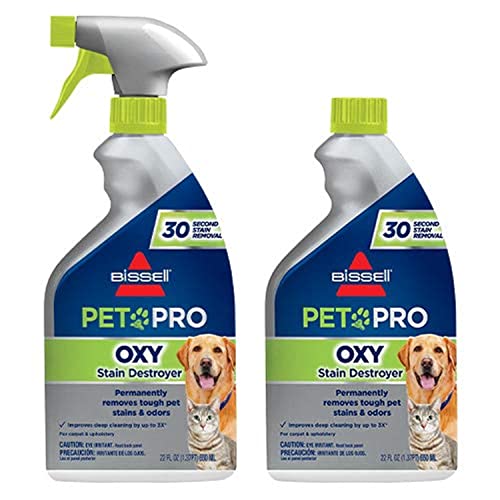
If the stain is older, heavier, or smells like it reached the cushion core, an oxy-powered stain remover is often the better first choice. Bissell PET PRO OXY Stain Destroyer appears to be the best fit on paper for pet stains and odors, especially for messes like urine, mud, or blood rather than a simple surface spill.
For larger upholstery areas or repeated accidents, a machine cleaner can make more sense than another spot spray. That is especially true when multiple cushions need attention, or when the fabric needs extraction rather than a surface blot. For set-in stains on colorfast carpet and upholstery, Folex is the more old-stain-focused option in this group, though it still needs a hidden test.
Hiring a professional upholstery clean is the better spend when the sofa is expensive, vintage, or made from a delicate fabric. It is also the safer route when the stain is large, repeated, or tied to odor inside the foam. The article framing is right here: buying a stain remover can be cheaper than professional cleaning, but only when the stain is truly spot-sized and fresh.
Should you buy it
Buy Resolve if your sofa problems are small, recent, and on a compatible fabric. That includes microfiber, polyester, and many cotton blends, plus the kind of pet mess or coffee spill that you catch early. Keep it if you want a cheap, fast response bottle rather than a full upholstery system.
Skip it if the couch is velvet, leather, silk, or vinyl. Skip it too for old red wine, hair dye, vintage upholstery, or any stain that already looks set into the fabric. In those cases, the risk of a ring or a worse-looking patch is high enough that a different product, or professional help, is the smarter call.
Frequently asked questions
Is Resolve upholstery cleaner worth it for sofa stains?
Yes, for fresh sofa stains on compatible fabrics. It is worth buying when the problem is a recent spill, a pet accident on the surface, or a small food mark that needs quick attention. It is much less compelling for old stains, delicate materials, or anything that needs deep extraction.
Does Resolve work on fresh stains better than old ones?
Yes. Fresh stains respond better because the product can attack residue before it bonds to the fibers and backing. Old stains often need more than a spray-and-blot approach. Once a mark has dried, set, or spread into the cushion, the cleaner may only partially improve it.
Can you use Resolve on microfiber, polyester, or cotton sofas?
Microfiber and polyester are the safest general matches among those three, especially for fresh stains. Cotton blends can work, but they need more caution because of watermarking and dye movement. A hidden test is smart on all three before full use, especially on older upholstery.
Is Resolve safe for velvet, leather, silk, or vinyl?
No. Real Homes says it is not recommended for velvet, silk, vinyl, or leather, and that warning should be taken seriously. Those fabrics can react badly to moisture and residue. For those materials, use a cleaner made for the surface or call a professional.
How long do you leave Resolve on upholstery before blotting?
The suggested wait time is five to 15 minutes. That gives the cleaner time to work into the stain before blotting lifts the residue away. Do not let the fabric stay overly wet during that wait. Light application and controlled blotting matter more than soaking.
Does Resolve clean and deodorize at the same time?
Yes, it is described as able to clean and deodorize upholstery. That helps with surface-level pet messes and everyday spills. The limit is odor trapped deeper in foam or filling, where a spot spray may improve the smell on the cover but not solve the source.
Products related to this article
Sponsored / affiliate links. As an Amazon Associate I earn from qualifying purchases. I may earn additional commission from eligible campaigns.