Does a Sofa Need Airflow Underneath?
A sofa often needs about 1 to 2 inches of clearance under the frame for basic airflow and routine cleaning access; if it sits on carpet, in a humid room, or on a solid platform, it may need more clearance or raised feet. Without that space, dust, trapped moisture, and odor can build up under the sofa and make cleaning harder. This guide explains when airflow matters, when it does not, and how to check sofa type, floor type, and room conditions safely.
Clearance needs vary by room condition


A sofa does not need open airflow underneath in every room, but it does need enough space to stay dry and to let you clean under it. Clearance matters most when the room is damp, the sofa base blocks drying, or dust and pet hair collect faster than you can remove them.
When airflow matters
Airflow matters when the underside stays closed off long enough for moisture, odor, or debris to linger. That is most common with low sofas on carpet, skirted sofas with fabric close to the floor, and any setup in a humid room or near a damp exterior wall.
When airflow does not matter much
If the room is dry, the sofa has legs, and you can vacuum under it without moving the frame every time, limited airflow is usually fine. A sealed floor with no spills, no pet shedding, and no dampness warning signs needs less attention than a room with constant condensation or a musty smell.
What changes by room condition
Room condition changes the answer more than the sofa itself in some homes. A sofa in a conditioned living room on hardwood may need only basic clearance, while the same sofa in a basement family room, apartment with poor ventilation, or coastal climate may need extra space or a dehumidifier.
How much space under a sofa is enough?
For most sofas, 1 to 2 inches of clearance under the frame is enough for basic airflow and routine cleaning access. If you use a standard vacuum floor head, have pets, or want better drying under the sofa, more room is easier to manage than a nearly closed base.
Practical clearance for vacuum access
A low-profile vacuum attachment usually needs at least 1.5 to 2 inches of opening, and some need more if the hose bends sharply. If you cannot slide the attachment under the front rail without forcing it, you will end up skipping the area or dragging the sofa too often.
Clearance for ventilation and dust control
For ventilation, 1 to 2 inches may be enough in a dry room with a legged sofa. For dust control, more clearance helps because you can remove lint, crumbs, and pet hair before they compact into a layer that holds odor and slows drying after spills.
Legged, skirted, and solid-base sofas
Legged sofas are the easiest to clean under and usually allow the best air exchange. Skirted sofas may hide a large gap visually, but the fabric can block circulation and trap dust near the floor. Solid-base sofas sit closest to the floor and are the most likely to restrict both drying and access.
| Sofa type | Airflow effect | Cleaning access | Best fit |
|---|---|---|---|
| Legged sofa | Usually fair to good | Easy with a low-profile tool | Common living rooms and dry floors |
| Skirted sofa | Often limited by fabric drape | Moderate to difficult | Dry rooms with regular vacuuming |
| Platform or solid-base sofa | Lowest airflow | Hard unless lifted | Only when moisture risk is low or clearance is added |
Moisture and mold risk under sofas
Moisture risk rises when a sofa blocks drying, especially on carpet, rugs, or sealed floors that can trap condensation. Mold risk is not automatic, but it becomes more likely when humidity stays high, air cannot move, or a spill seeps into the underside and stays hidden long enough to smell stale.
Humidity levels and warning signs
A practical warning level is indoor relative humidity above about 60 percent for extended periods. Watch for a musty odor, cool damp spots under the frame, dark marks on the underside fabric, or condensation on nearby windows and walls. Those signs point to a drying problem, not just a cleaning issue. (EPA)
Hidden dampness on carpet, rugs, and sealed floors
Carpet and thick rugs can hold water where you cannot see it, so a sofa may sit over dampness long after the surface looks dry. Sealed concrete, tile, and laminate do not absorb water the same way, but they can still trap a thin moisture layer under a low base if ventilation is poor.
Picture a skirted sofa on a thick rug in a basement den. If a spill soaks the rug edge and the skirt touches the pile, the trapped zone may stay damp long after the top feels dry. In that case, airflow and inspection matter more than decorative coverage.
Materials that trap moisture or odor
Unfinished underside fabric, particleboard panels, and foam near the floor can hold odor if they stay damp. A solid base with closed panels often traps more debris than a legged frame. Sofa covers do not create airflow by themselves; they only change the outer surface, not the clearance below.
Sofa airflow checklist
Use this checklist to decide whether you need more clearance, better cleaning access, or room-level moisture control. Answer yes or no to each point. If several answers are yes, airflow under the sofa matters enough to act on it.
Do You Need Airflow Under This Sofa?
- Is the sofa base solid? If yes, airflow and cleaning access are both limited.
- Does the sofa sit on carpet? If yes, moisture and dust can stay trapped longer.
- Is the room often above 60 percent humidity? If yes, drying under the sofa becomes more important.
- Do you smell mustiness near the sofa? If yes, check the underside for dampness or hidden debris.
- Do pets shed under and around it? If yes, you need more frequent vacuum access.
- Can your vacuum head fit under it? If no, the gap is too tight for routine cleaning.
- Does the sofa sit on a rug with a thick pad? If yes, the underside may dry slowly.
- Is there condensation on nearby windows or walls? If yes, the room may need dehumidification.
- Are risers stable on this floor? If no, do not force extra height.
- Can you inspect the underside without moving the sofa every time? If no, improve access.
Three actions follow from this checklist: leave it as-is, raise it 1 to 2 inches, or improve room ventilation and dehumidification. Choose the lightest fix that addresses the problem you actually found.
Should you use furniture risers?

Furniture risers can help when the sofa needs more clearance for cleaning or airflow, but they are not the right answer for every base or floor. A small lift of 1 to 2 inches is often enough for vacuum access, while moisture problems may need room changes instead of extra height.
Height range and weight limits
Most risers add roughly 1 to 3 inches of height, and many are sold with per-riser weight capacities that vary by model. Match the full sofa load, not just one leg, and keep the added height modest if the sofa already feels top-heavy or is used by children or older adults.
Floor compatibility and stability
Use risers only on floors they can grip safely. Hard floors need broad, non-slip feet; carpet may need wider bases so the riser does not sink unevenly. On tile or laminate, wobble is a warning sign, and on soft carpet the sofa can lean if the load is not evenly distributed.
When risers are the wrong fix
Risers are a poor fit if the sofa is already unstable, if the floor slopes, or if the room has a moisture problem that needs drying and ventilation. They are also a weak fix for skirted sofas that still block airflow with fabric even after the frame is lifted.
- Measure the current gap. Check the clear space under the front rail and sides. If the opening is under about 1 inch and a vacuum cannot fit, plan for a lift or use a different cleaning tool.
- Check the floor surface. Confirm whether the sofa sits on hardwood, laminate, tile, sealed concrete, carpet, or a rug. The floor type affects both stability and how moisture behaves under the frame.
- Test for movement. Push gently on one corner and watch for rocking or sliding. If the sofa shifts now, risers will make the problem worse unless they are wide, level, and compatible with the floor.
- Raise only if needed. A common rule of thumb is to add about 1 to 2 inches first, not more, unless cleaning access or a damp room clearly calls for extra space. More height can make the sofa less stable and can expose the underside to more dust.
Cleaning tools for under-sofa access
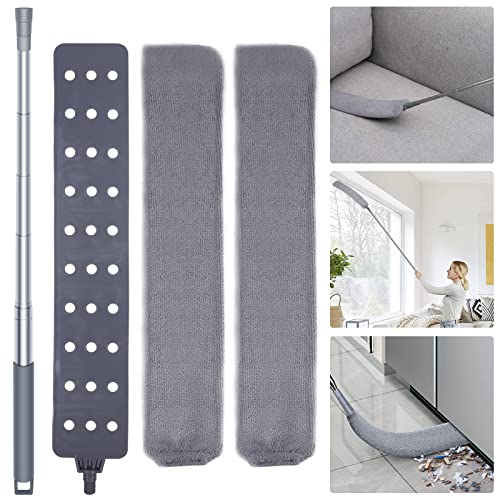
The best cleaning tool is one that fits the gap without scraping the floor or pushing debris deeper under the frame. A low-profile nozzle, crevice tool, or flat upholstery attachment works better than a wide floor head when clearance is tight.
Low-profile vacuum attachments
Look for attachments with a flat front edge and a slim profile that can slide under the rail. Hose reach matters because you should not have to tilt the sofa to clean every edge. A longer reach also helps when the sofa is against a wall or in a narrow apartment room.
Reach for pet hair and dust
For pet hair, a narrow motorized mini tool or a rubber-edged crevice attachment can lift strands from the carpet edge and the underside lip. On hard floors, a soft brush attachment often picks up fine dust better than a stiff tool that can scatter debris.
Hard-floor versus carpet cleaning
On hard floors, dry dust and hair usually collect in a visible strip where the sofa meets the floor. On carpet, debris can sink into the pile and stay hidden, so slower passes and closer edge cleaning help. If the sofa sits on a rug, lift the front edge when possible to vacuum the pad line too.
Suppose a legged sofa over a hardwood floor has 2 inches of clearance, but pet hair still gathers in a line under the middle seat section. In that case, the issue is usually cleaning access, not a need for more airflow. A low-profile tool and weekly vacuuming solve more than risers would.
How often to vacuum under and around a sofa
Vacuum around the sofa weekly in a normal household, and more often if you have pets, allergies, or a low sofa on carpet. Under-sofa cleaning is commonly done at least monthly, and sooner if dust buildup, crumbs, or a stale smell near the floor appears.
Frequently asked questions
Does a sofa need airflow underneath?
Not always. A sofa needs enough clearance to stay clean and dry, but full airflow is most important in humid rooms, on carpet or rugs, and with solid-base designs. In a dry room with a legged sofa, 1 to 2 inches of space is often enough for basic maintenance.
What happens if there is no airflow under a sofa?
Dust and pet hair collect faster, spills dry more slowly, and odor can linger under the frame. If the room is humid or the floor is cool, trapped moisture may stay hidden longer and create a musty smell before you notice visible damage.
How much space should be under a sofa for cleaning and ventilation?
Plan for at least 1 to 2 inches if your main goal is vacuum access and light airflow. More space helps in humid rooms, on carpet, or with a low-profile vacuum head. Skirted and solid-base sofas usually need more room than legged ones to stay easy to clean.
Can a sofa sit directly on carpet or a rug?
Yes, but that setup needs closer attention. Carpet and rug pads can trap dust and moisture under the frame, especially if the room is humid or the sofa base is solid. If you do place it there, check for odor, dampness, and flattened fibers under the feet or rails.
Does airflow under a sofa help prevent mold or odors?
Yes, when moisture is part of the problem. Airflow helps surfaces dry after spills, condensation, or damp floors, which lowers odor risk and can reduce the conditions mold needs. It is less important in a dry room with good cleaning access and no hidden dampness.
What if my sofa has a solid base with no legs?
That design needs the most attention for cleaning and drying. If the base sits close to the floor, use a slim vacuum tool, check for odor or dampness often, and consider risers only if the sofa is stable and the floor can support them safely.
Products related to this article
Sponsored / affiliate links. As an Amazon Associate I earn from qualifying purchases. I may earn additional commission from eligible campaigns.