How Much Does It Cost to Fix a Sinking Sofa Cushion?
Fixing a sinking sofa usually costs $50 to $600, depending on whether the issue is sagging springs, worn foam, broken webbing, or a damaged frame; if repair approaches 50% to 70% of replacement cost, replacement is usually smarter. Ignoring it can lead to deeper sag, weak support, and more costly frame damage. This guide maps each failure point, typical repair prices, and the point where repair stops making financial sense.
This guide is part of our Sofa cleaning and stain removal series.
What makes a sofa sink or sag?


A sinking sofa usually points to two problems: the cushions have lost support, or the structure under them has failed. Cushion foam problems are often cheap to fix. Spring, webbing, seat deck, or frame failure costs more and can leave the sofa feeling low even after new cushions go in.
Cushion foam failure versus support-system failure
Foam failure shows up as flattened cushions, uneven seating, and a seat that feels soft but still stable underneath. Support-system failure feels deeper. You may drop toward the frame, hear creaks, or notice one seat bay sitting lower than the others. That difference matters because a new cushion will not repair a broken rail, stretched webbing, or a sagging seat deck.
Common signs of a broken frame, spring, webbing, or seat deck
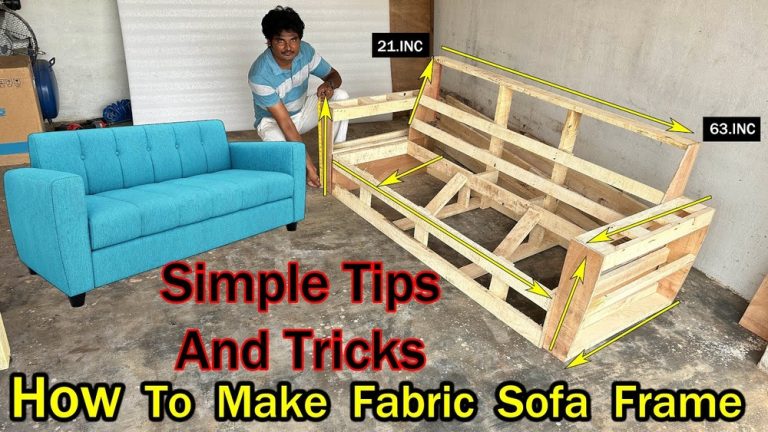
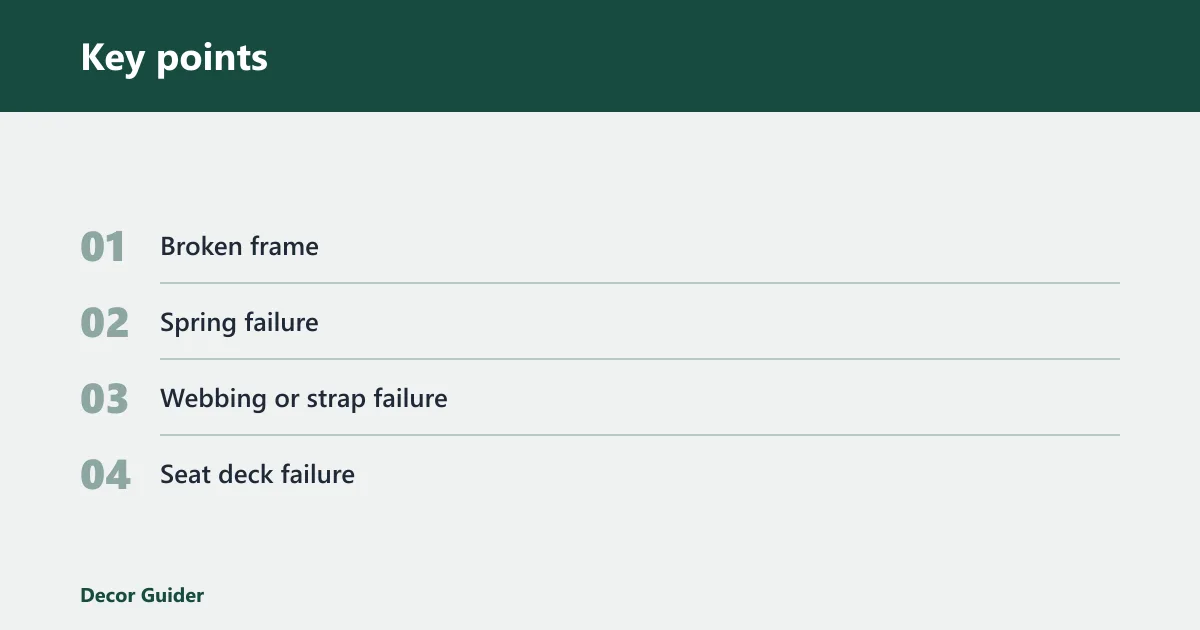
- Broken frame: squeaks, rocking, a visible crack, or one side dropping lower than the rest.
- Spring failure: a dipped seat line, poking coils, or a seat that bottoms out near the center.
- Webbing or strap failure: loose fabric support under the cushions, uneven sag, or a hammock feel.
- Seat deck failure: soft spots, a bowing plywood sheet, or MDF that flexes too much under normal use.
Can a sinking sofa be repaired?
Yes, a sinking sofa can often be repaired if the problem is limited to foam, webbing, springs, or a single damaged seat deck section. Structural frame damage can also be repaired, but the cost rises fast. If the sofa is already near the price of a replacement, the repair may be possible but not a smart spend.
When a cushion fix is enough
If the frame is solid and the support system still holds shape, new foam inserts, firmer cushion cores, or a topper-style adjustment may restore comfort. This is most reasonable when the sofa still sits level and the issue is mainly a flattened seat surface. It is a lighter repair with a lower bill.
When structural damage changes the answer
If the sofa sinks because the frame rail cracked, the spring grid failed, or the seat deck collapsed, the fix is more involved. Those jobs often require opening the underside or removing upholstery panels, then rebuilding the support structure. At that point, labor costs can move close to replacement pricing, especially on larger pieces.
What does it cost to fix each failing component?
Costs depend on the exact failure point. Foam repairs are usually the least expensive, while frame repair and full upholstery labor sit near the top. The table below gives realistic ranges for common scenarios, plus a repair-versus-replace threshold that helps you compare the job against a new sofa.
| Failure type | DIY fix | Professional repair range | Repair-vs-replace threshold |
|---|---|---|---|
| Cushion foam wear | $20 to $150 per cushion for foam, batting, or a topper | $80 to $300 per cushion | Often not worth it if total exceeds 30% to 40% of a new sofa |
| Seat springs, loose or stretched | $15 to $75 in parts; hand tools if accessible | $150 to $450 | Consider replacement when multiple spring bays fail or labor pushes past 50% of replacement value |
| Webbing or elastic straps | $20 to $100 in material | $150 to $400 | Replace when several straps fail or when the repair requires major disassembly |
| Seat deck or platform | $25 to $120 for plywood, screws, and braces | $200 to $500 | Replace when the deck failure comes with frame damage or the sofa is low-value |
| Frame rail or joint damage | $30 to $150 in wood, brackets, glue, or fasteners | $250 to $800+ | Often poor value if the sofa is budget-grade or already needs upholstery work |
| Upholstery labor after repair | Not usually a DIY item | $150 to $700 for partial work; full reupholstery can be much higher | Full reupholstery usually only makes sense on a quality frame |
Seat springs: zigzag versus coil springs
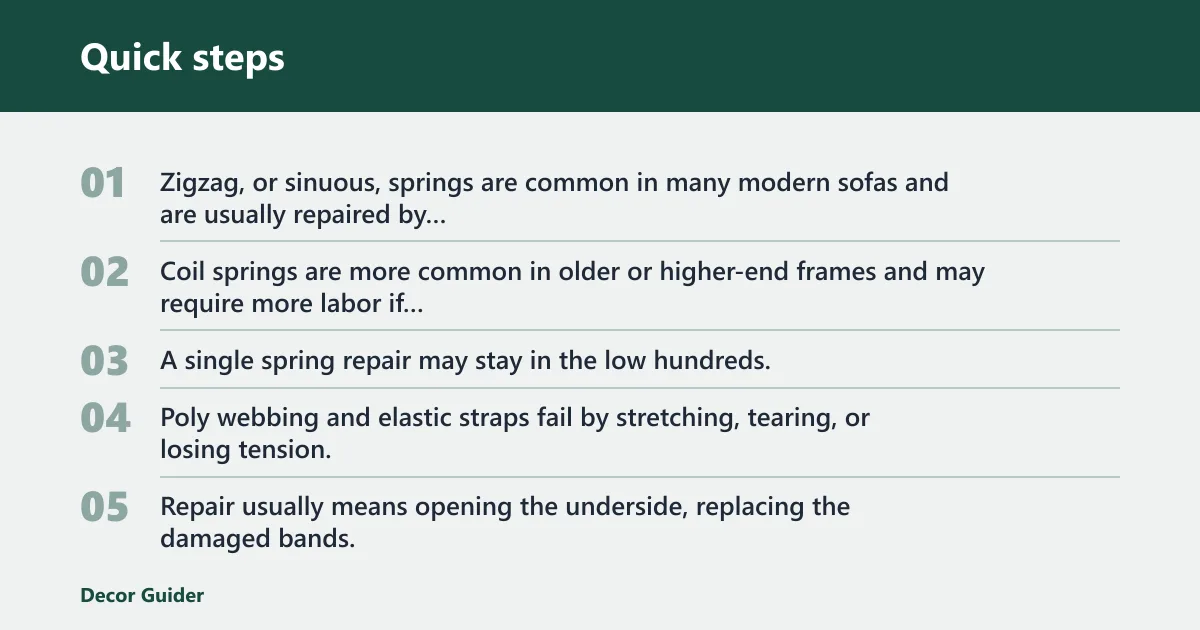
Zigzag, or sinuous, springs are common in many modern sofas and are usually repaired by reattaching clips, replacing broken sections, or adding new support. Coil springs are more common in older or higher-end frames and may require more labor if a tie or unit fails. A single spring repair may stay in the low hundreds, but several broken sections change the equation fast.
Support webbing or straps
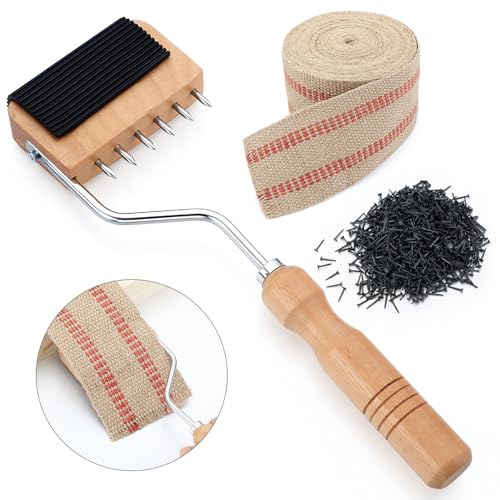
Poly webbing and elastic straps fail by stretching, tearing, or losing tension. Repair usually means opening the underside, replacing the damaged bands, and re-tensioning the seat support. The material itself is not the expensive part; labor is. If multiple straps are shot, a pro may recommend replacing the whole support field rather than patching one strip at a time.
Cushion foam and inserts
High-density foam is the common replacement for flattened cushions. Firmer inserts with a higher ILD can restore seat height and slow future sag. A topper can help a tired cushion feel better for a short time, but it does not fix a collapsed core. Full cushion replacement costs more, yet it lasts longer than adding a thin layer over worn foam.
Seat deck or platform repair
A sagging plywood or MDF base often needs reinforcement with new plywood, corner blocking, or additional braces. MDF is more likely to flex or fail than plywood when repeatedly loaded. If the base is bowed but the frame is sound, reinforcing the platform may be enough. If the deck failure comes from a split rail, the support problem is bigger than the board itself.
Frame repair and upholstery labor
Wood frames are usually easier to repair than metal frames because cracked rails, corner blocks, and joints can often be rebuilt with glue, screws, and brackets. Metal construction can be harder if welded members are bent or broken. Upholstery labor can add a major share of the bill because accessing springs, webbing, or the seat deck often means partial removal of fabric.
Say your three-seat sofa sinks only in the center. If the foam is flattened but the deck and springs are sound, a cushion-only repair may be enough. Suppose the same sofa bottoms out and you hear a crack on the right side; that points to a support or frame issue, and the repair quote will rise accordingly.
How do repair costs change by sofa type?
Sofa type changes both labor time and parts cost. Larger frames, more seat sections, and moving mechanisms all add work. A loveseat is simpler and cheaper to open. Sectionals, recliners, and sleepers often cost more because each section or mechanism needs separate access, parts, or alignment.
Standard sofa and loveseat
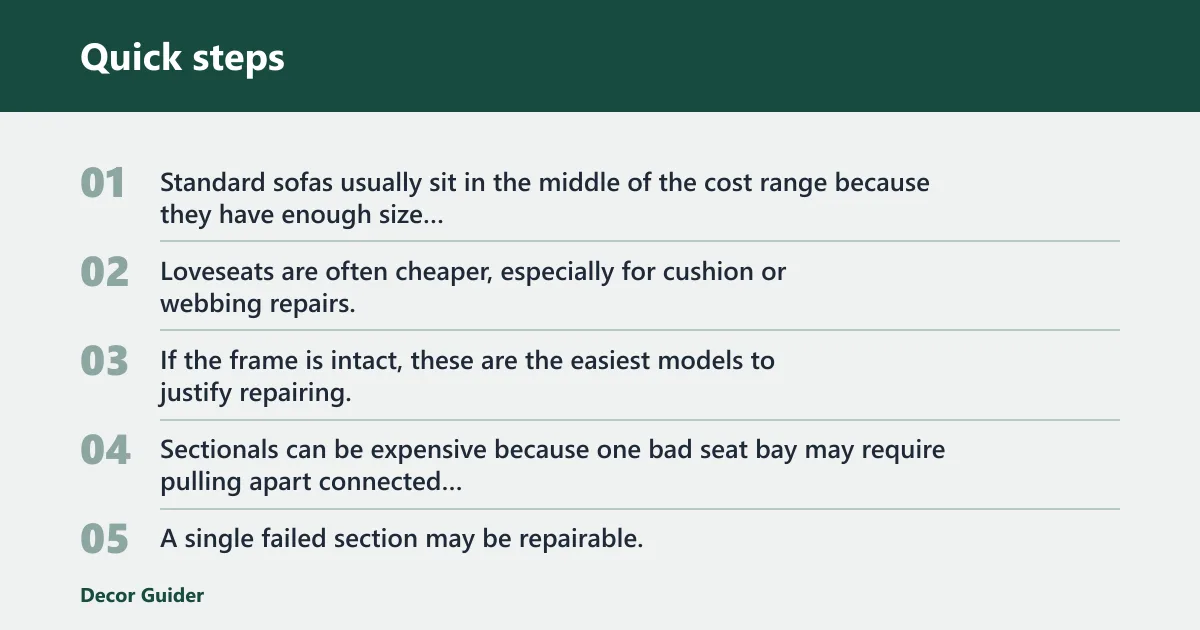
Standard sofas usually sit in the middle of the cost range because they have enough size to need real labor, but not so many parts that the job becomes complex. Loveseats are often cheaper, especially for cushion or webbing repairs. If the frame is intact, these are the easiest models to justify repairing.
Sectional and modular sofa
Sectionals can be expensive because one bad seat bay may require pulling apart connected pieces, and modular units may have several weak points. A single failed section may be repairable, but labor rises as the number of connected modules increases. Pickup and delivery can also cost more because of size and weight.
Recliner and reclining sofa
Can a recliner or reclining sofa cost more to repair? Yes. Mechanical parts, hinges, footrests, and lift mechanisms add failure points and labor. A reclining sofa may need both upholstery access and mechanism repair, which often moves the quote above a standard fixed-frame sofa of the same size.
Pull-out sleeper
Sleeper sofas are among the costliest to repair because the mattress mechanism, foldout frame, and seat support all need to work together. A collapsed seat deck on a sleeper can be more difficult to fix than the same issue on a regular sofa. If the pull-out hardware is bent or the mattress support is damaged, replacement may make more sense.
Who can repair a sinking sofa, and what do they charge?
The right provider depends on what failed. Upholsterers handle fabric access, support rebuilds, and cushion work. Furniture repair specialists are useful for structural repairs and mechanisms. Handymen can help with simple brace or deck fixes. Brand service centers are best when the sofa is under warranty or uses proprietary parts.
Upholsterer
Upholsterers are the best fit for webbing, springs, foam replacement, and partial re-covering work. They usually charge for both labor and access, and pickup or delivery can be added separately. If your sofa needs internal repair plus fabric restoration, this is often the most complete option.
Furniture repair specialist
These pros are often the best choice for broken frames, rails, seat decks, and recliner mechanisms. Their pricing can be similar to upholsterers, but they may be faster on structural work. Ask whether they rebuild the support system or only patch visible damage.
Handyman
A handyman may be fine for a simple brace, board replacement, or a basic underside repair. That said, handymen are not always set up for spring re-tensioning, seat webbing, or upholstery removal. Use this option only for straightforward work with clear access and limited risk.
Brand service center
Brand service centers may have access to original parts for reclining mechanisms or modular components. Pricing can be higher than local repair shops, but it may be the only path for certain parts. This is most relevant for newer furniture or pieces still covered by a warranty plan.
How can you compare quotes without missing hidden costs?
Ask each provider to quote the same repair scope. A low number for cushion foam means little if the seat deck is also failing. Hidden costs often come from pickup, delivery, inspection, parts sourcing, and partial re-upholstery. The goal is to compare the same repair, not just the same sofa.
- Ask what failed: foam, springs, webbing, deck, frame, or mechanism.
- Request a written parts-and-labor breakdown.
- Ask whether pickup and delivery are included.
- Confirm whether the quote covers opening and closing the upholstery.
- Ask if the repair includes one seat section or the whole sofa.
- Compare the total against a new sofa with similar size and build.
Pickup, delivery, and inspection fees
Large sofas can be costly to move, and some shops charge for both pickup and return delivery. Inspection fees may be separate, especially if the provider needs to open the sofa before giving a final estimate. Get that in writing before you approve transport.
Parts, labor, and partial re-upholstery
Partial re-upholstery is common when the shop must remove fabric to reach internal support. That labor can exceed the cost of the parts. Make sure the quote states whether it includes new batting, staple work, seam repairs, or matching fabric on visible panels.
Questions to ask before you approve work
- Which part is causing the sink?
- Will the repair fix the cause or only the symptom?
- Are replacement foam, springs, or webbing included?
- Is there a warranty on labor and parts?
- What happens if another hidden failure is found after opening the sofa?
How much should you repair before replacing the sofa?
Repair is usually sensible when the sofa is well built and the fix stays well below replacement cost. A common decision point is 50% to 70% of a comparable new sofa. If the frame is damaged, the mechanism is failing, or the repair quote keeps climbing, replacement may be the better value.
Repair-versus-replace thresholds by damage severity
- Minor cushion sag: repair usually makes sense if the total stays under about 30% of replacement value.
- Moderate support failure: repair can still make sense if springs, webbing, or a deck can be fixed for less than half of replacement cost.
- Major frame collapse: replacement is often smarter when the frame, mechanism, and upholstery labor all need attention.
Using replacement sofa price as the baseline
Use the price of a similar new sofa as your reference point, not the cheapest item you can find. Budget sofas may start low, mid-range pieces sit higher, and premium models can climb quickly. That baseline matters because a repair that costs $450 may be poor value against a basic replacement, yet reasonable for a higher-quality sectional.
When a used sofa is the better option
A used sofa can make sense when the current sofa needs a costly frame or mechanism repair and the upholstery is tired too. If a local used market offers a cleaner piece for less than the repair estimate, replacement may be the practical move. Just check the seat support and frame before buying.
What causes sofa cushions to sink?
Sofa cushions sink when the foam breaks down, the springs stretch or fail, the webbing loosens, or the seat deck sags under weight. Sometimes the cushion is the main issue. In other cases, the cushion is only revealing a deeper structural problem under the seat surface.
How do you fix a couch that sinks?
Fix the cause, not the symptom. Replace flattened foam, re-web loose support straps, repair broken springs, reinforce a sagging deck, or rebuild damaged frame members. If the sofa has multiple failures, the repair should address each one at the same time or the sag will return.
When is a sinking sofa not worth fixing?
A sinking sofa is often not worth fixing when the frame is broken, the repair needs major upholstery labor, or the total quote reaches about half to two-thirds of replacement cost. If the sofa is low-cost to begin with, even moderate repair charges can exceed its remaining value quickly.
How much does professional sofa repair near me cost?
Professional sofa repair near you usually falls in the low hundreds for support work and higher for frame or mechanism repair. Local labor rates, pickup distance, and sofa size all matter. Expect a smaller cushion job to cost far less than a sectional, sleeper, or recliner rebuild.
How much does it cost to recover a sofa after repairs?
Reupholstering after structural repairs can range widely because labor and fabric drive the bill. Partial recovery for a small damaged panel may be manageable, but full reupholstery can exceed the value of many standard sofas. It makes the most sense when the frame is strong and the piece is worth keeping.
What can I do to stop sofa cushions from sagging again?
Rotate cushions regularly, avoid concentrating weight on one seat, and deal with the first signs of foam collapse before the support system starts to fail. For repaired sofas, ask for firmer foam or reinforced webbing if the old materials wore out early. Preventive care is cheaper than another rebuild.
Products related to this article
Sponsored / affiliate links. As an Amazon Associate I earn from qualifying purchases. I may earn additional commission from eligible campaigns.