Professional Sofa Cleaning vs DIY Cleaning: Cost and Risk
DIY sofa cleaning is cheapest only on sturdy synthetic upholstery with light soil. If you need stain removal, odor control, or fast drying, hire a pro. Poor cleaning can wick stains, leave mildew, or shrink fabric, and one mistake on an older sofa can cost more than the service fee. This guide breaks down real DIY costs, pro pricing, fabric risks, drying time, and which choice fits pets, kids, allergies, and delicate upholstery.
This guide is part of our Sofa cleaning and stain removal series.
Quick answer: which option is safer for your sofa?


Professional sofa cleaning is usually the safer choice when the sofa is valuable, the stain is old, the fabric is sensitive, or drying time is tight. DIY can be the better value for a clearly water-safe sofa with a fresh spill, light soil, and enough airflow to dry it fast without over-wetting.
The trade-off is plain: DIY usually looks cheaper up front, while professional cleaning usually buys more power, more even moisture removal, and less damage risk.
What most homeowners miss is the total cost. The rental fee is only part of DIY; solution, spotters, brushes, fans, repeated passes, and the cost of long drying time all matter. If a mistake causes water rings, dye bleed, or odor return, the “cheap” option can turn expensive fast.
According to Tested: Couch Professional Cleaning vs DIY for 2026 — Professional service cost is listed at about $120 to $180.
Professional sofa cleaning vs DIY cleaning
| Decision factor | Professional Sofa Cleaning | DIY Cleaning | Winner |
|---|---|---|---|
| Up-front cost | About $120 to $180 | About $35 to $45 per day, plus about $15 for solution | DIY Cleaning |
| Cleaning power | Truck-mounted systems use 400 to 500 PSI and over 150 inches of water lift | DIY rentals push water at roughly 30 PSI | Professional Sofa Cleaning |
| Drying time | About 4 to 6 hours | About 12 to 24 hours | Professional Sofa Cleaning |
| Stain removal | About 90% to 98% | About 60% to 75% | Professional Sofa Cleaning |
| Damage risk | Lower when the cleaner knows fabric codes and spotting methods | Higher if the sofa is over-wet, colorfastness is not checked, or the wrong chemistry is used | Professional Sofa Cleaning |
Cost: rental fees, solution, fans, and repeat work versus service price
DIY looks cheaper only if the sofa is cleaned once and dries well. Once the rental, solution, spot treatments, air movers, and possible re-cleaning are counted, the gap narrows quickly. The professional price is easier to predict because the equipment, labor, and extraction are bundled.
Equipment: DIY upholstery extractor rental versus truck-mounted professional upholstery cleaning system
A DIY upholstery extractor rental is a portable machine with limited vacuum strength and modest water pressure. It can handle light soil, but it leaves more moisture behind. A truck-mounted professional upholstery cleaning system uses much stronger pressure and vacuum lift, so it tends to rinse soil better and pull out more water from the fabric and cushion fill.
Drying time: portable extractor moisture left behind versus stronger vacuum lift
Drying is where the hidden cost shows up. A DIY rental often leaves the sofa damp long enough for odors, ring marks, or wick-back to appear if airflow is poor. Better vacuum lift and faster moisture extraction shorten the wet period and reduce the chance of trouble in foam, seams, and cushion channels.
Risk: color bleed, water rings, foam saturation, and seam damage
Most failures come from over-wetting, skipping the colorfastness test, or using the wrong solution for the fabric code. Water rings show up when surface moisture dries unevenly. Foam saturation can trap odor deep inside the cushion, and seam distortion is common when wet agitation is too aggressive.
Best fit by sofa condition and household type
DIY is most defensible on sturdy, clearly water-safe upholstery with a fresh spill and normal drying access. Professional service fits better when the home has pets, kids, allergies, or an older sofa that cannot tolerate trial and error. Delicate fabrics and odor problems tilt the decision toward a trained cleaner.
How much does DIY actually cost?

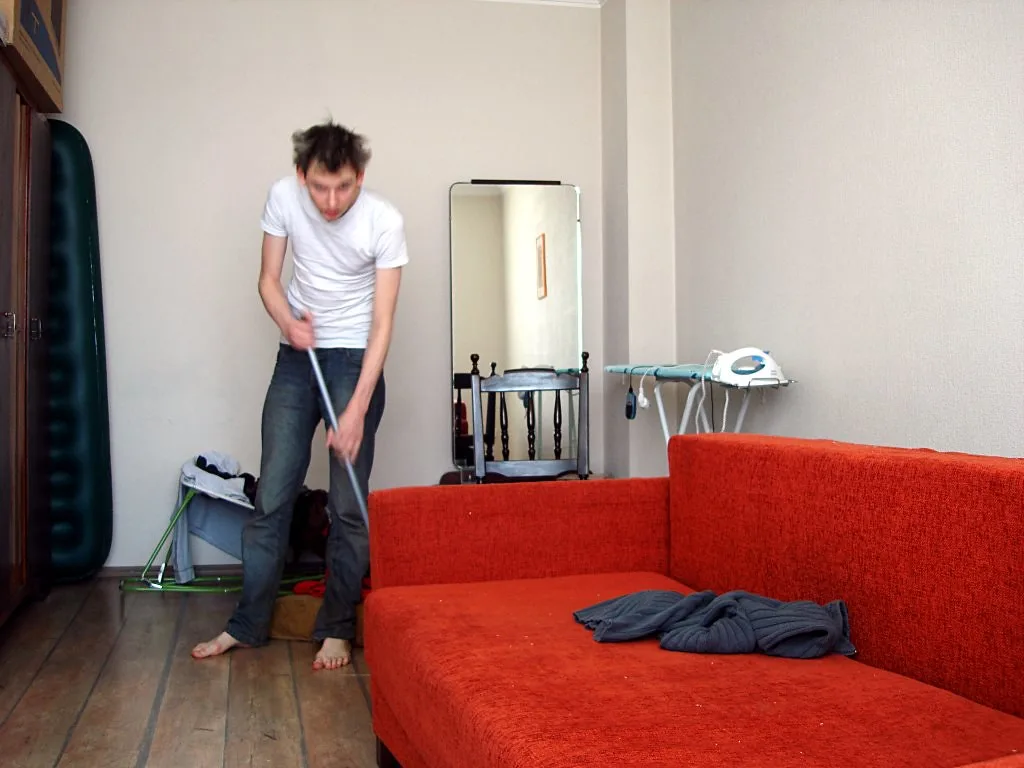
DIY upholstery cleaning usually costs less than professional service on paper, but the real bill includes the rental, solution, small tools, drying help, and the value of the time the sofa is unusable. If the job has to be repeated, the total can move close to professional pricing.
DIY upholstery extractor rental daily cost range and solution add-on cost
The stated DIY rental machine cost is about $35 to $45 per day, plus about $15 for solution. That is the base cost, not the full project cost. A portable extractor can handle surface soil and some embedded grime, but it does not match truck-mounted extraction power.
Soft-bristle upholstery brush, spotter, and other small purchases
A soft-bristle upholstery brush is the safer agitation tool before extraction because it loosens body oils and pet dander without roughing up the weave. A small bottle of spotter may be needed for isolated marks, especially before pre-spray and extraction. Those items are modest individually, but they are part of the true cost.
Drying fans and air circulation costs
Drying fans or strong air circulation are not optional extras on many DIY jobs. They help move moisture out of the fabric, reduce odor risk, and lower the chance of mildew. If the home lacks enough airflow, the sofa can stay damp long after the cleaning session ends.
The hidden cost of mistakes, re-cleaning, and longer downtime
The biggest hidden expense is correction. A water ring, dye bleed, or odor return can force another cleaning pass or a professional rescue visit. Long drying time also has a cost: the sofa is out of use, and the room can feel damp or smell musty while the fabric finishes drying.
A simple break-even point versus professional cleaning
If the DIY total stays near the rental and solution price, DIY can make sense for light soil. Once you add fans, spotters, extra time, and the chance of a second pass, the gap shrinks fast. When the sofa is valuable or the stain is stubborn, the service price often looks cheaper after risk is counted.
What type of sofa can you clean yourself safely?
You can clean some sofas yourself safely, but only after checking the care tag and doing a hidden colorfastness test. W and many WS fabrics are the friendliest candidates. S, X, vintage pieces, and anything with uncertain labeling should be treated as higher risk.
How to read fabric care codes: W, S, WS, and X
W means water-safe cleaning is allowed. S means solvent-only care, so wet cleaning can damage the fabric. WS allows either water-based or solvent-based methods, but it still needs a cautious test first. X means vacuum-only care, which makes wet cleaning too risky.
Risk rises quickly as the code gets stricter. W is the best candidate for a careful DIY wash. WS may work with restraint. S and X usually belong in professional hands or in dry cleaning-style care only.
How to do a colorfastness test before any wet cleaning
Test an inconspicuous area first. The hidden-spot test should use a white microfiber towel for 30 seconds. Press gently, then check the towel for color transfer and look at the spot for changes in texture or sheen. If dye lifts, stop before cleaning the whole sofa.
Which fabrics are friendlier to DIY, and which are high risk
Microfiber and some plain W-coded synthetics are often the easiest DIY candidates. Velvet, linen, wool blends, leather-adjacent upholstery, and trim-heavy pieces are riskier because they can spot, distort, or dry unevenly. Vintage fabric is especially unforgiving because age weakens fibers and dyes.
Why stain age changes the answer
Fresh spills are easier because the soil has not bonded deeply. Older stains can oxidize, set, or wick into padding. Once that happens, simple washing may only lighten the mark while leaving a halo or odor behind.
When should you hire a professional upholstery cleaner?
Hire a professional when the fabric is delicate, the stain is old, the sofa smells, or the home cannot tolerate a long dry period. An IICRC-certified upholstery cleaner is worth checking because certification suggests the cleaner understands fabric judgment, spotting methods, and how to avoid common wet-cleaning failures.
Why an IICRC-certified upholstery cleaner is worth checking
Certification does not guarantee perfection, but it is a useful hiring check. It signals that the cleaner is more likely to know when to use targeted spotting, how much moisture a fabric can take, and when to stop before damage spreads. That matters on expensive or sentimental pieces.
Pet odor, kid spills, and allergy-heavy homes
Homes with pets often need more than surface cleaning because urine, dander, and tracked soil can move into foam and seams. Kid spills may include dyes, sugar, grease, or sticky residues that need specific spotting. Allergy-heavy homes benefit from stronger extraction because it removes more embedded debris and soil.
Vintage upholstery, wool blends, velvet, and delicate trims
Vintage upholstery is often brittle, faded, or already weakened by past cleaning. Wool blends can shrink or distort if they are soaked. Velvet and decorative trims can flatten or change appearance after a heavy DIY pass. These are common cases where professional judgment saves the piece.
When specialized spotting beats trial and error
Ink, unknown liquids, pet contamination, and dark beverage stains often need stain-specific chemistry. Pros may use specialized cleaning chemicals and stain treatments that are not worth buying for one job. The advantage is less guesswork and fewer repeat passes.
Decision matrix: fabric code, stain age, household type, and drying tolerance
| Fabric code | Stain age | Household type | Drying tolerance | Safer choice |
|---|---|---|---|---|
| W or WS | Fresh spill | Standard home | Can wait 12 to 24 hours | DIY Cleaning |
| S or mixed-code upholstery | Older stain | Pets, kids, or allergy concerns | Needs faster dry | Professional Sofa Cleaning |
| X, vintage fabric, or uncertain label | Any stain age | Any household | Low tolerance for risk | Professional Sofa Cleaning |
| W or WS | Light soil only | Low-risk household | Can use fans | DIY Cleaning |
This matrix points to the safer choice, not the cheapest sticker price. If the code is restrictive, the stain is old, or the household cannot absorb a long damp period, professional service is the safer bet. If the tag allows water, the soil is light, and drying support is ready, DIY can be reasonable.
Choose Professional Sofa Cleaning if… / Choose DIY Cleaning if…
Choose Professional Sofa Cleaning if the fabric is S, X, vintage, wool blend, velvet, or label-unclear; the stain is old or odor-based; pets or allergies are part of the problem; or you need faster drying and lower risk of ring marks, wick-back, or foam saturation.
Choose DIY Cleaning if the sofa is clearly W-coded or a cautious WS candidate, the spill is fresh, the soil is light, you can run fans for drying, and you are prepared to vacuum first, spot-test, pre-spray lightly, agitate with a soft-bristle upholstery brush, and avoid over-wetting.
- Vacuum the sofa thoroughly before any wet cleaning.
- Check the care tag and do the hidden colorfastness test with a white microfiber towel for 30 seconds.
- Apply upholstery pre-spray and let it sit for 5 to 7 minutes.
- Use a soft-bristle upholstery brush with light agitation.
- Extract with one wet pass followed by two dry passes.
- Run drying fans and keep air moving until the fabric is fully dry.
Pros often do more than a basic wash. They judge the fabric, choose stain-specific spotting, and control moisture more tightly. DIY can preserve a sofa well when the job is simple, but pros usually extend the life of a heavily used piece by reducing soil load without flooding the padding.
Frequently asked questions
Is professional sofa cleaning better than DIY?
Professional sofa cleaning is better when the sofa is valuable, the stain is difficult, or fast drying matters. DIY is enough for some fresh spills on W-coded fabric, but the risk of ring marks, dye bleed, and leftover moisture is higher. The better option is the one that matches the fabric code and stain type.
How much does professional sofa cleaning cost vs DIY?
Professional service is listed at about $120 to $180. DIY rental machines cost about $35 to $45 per day, plus about $15 for solution. That does not include fans, spotters, or the value of extra time and re-cleaning if the first pass leaves residue or uneven drying.
How long does a sofa take to dry after DIY cleaning?
DIY drying time is about 12 to 24 hours. The exact time depends on how much water was used, how strong the airflow is, and how absorbent the cushions are. Fans help a lot. If the sofa still feels cool or damp after several hours, keep air moving.
Can DIY upholstery cleaning ruin a sofa?
Yes. DIY can ruin a sofa through water rings, dye bleed, foam saturation, seam distortion, shrinkage, or odor return. The biggest causes are over-wetting, skipping the colorfastness test, and using the wrong chemistry for the fabric code. Older sofas and delicate fibers are especially vulnerable.
What is the difference between truck-mounted and rental upholstery cleaners?
Truck-mounted professional upholstery cleaning systems are much more powerful, using 400 to 500 PSI of water pressure and over 150 inches of water lift. DIY rentals push water at roughly 30 PSI and leave more moisture behind. That difference affects stain removal, drying time, and the chance of wick-back.
How do I know if my sofa fabric is water-safe?
Check the care tag first. W means water-safe, S means solvent-only, WS means mixed compatibility, and X means vacuum-only. After that, do a hidden colorfastness test with a white microfiber towel for 30 seconds. If color transfers or the fabric changes, do not wet clean the whole sofa.
Products related to this article
Sponsored / affiliate links. As an Amazon Associate I earn from qualifying purchases. I may earn additional commission from eligible campaigns.