How Much Does a Murphy Bed Cost?
A Murphy bed often costs about $1,000 to $5,000 for the bed itself, and the full project can land around $1,500 to $8,000 once installation, wall prep, and upgrades are added (Murphy Door pricing, 2026; Lori Beds pricing guide). A low quote can miss framing, electrical, or finish work that raises the final bill. This guide breaks down base prices, labor, and the most common add-ons so you can budget accurately.
This guide is part of our Chairs guide: types, buying and care series.
Typical cost range
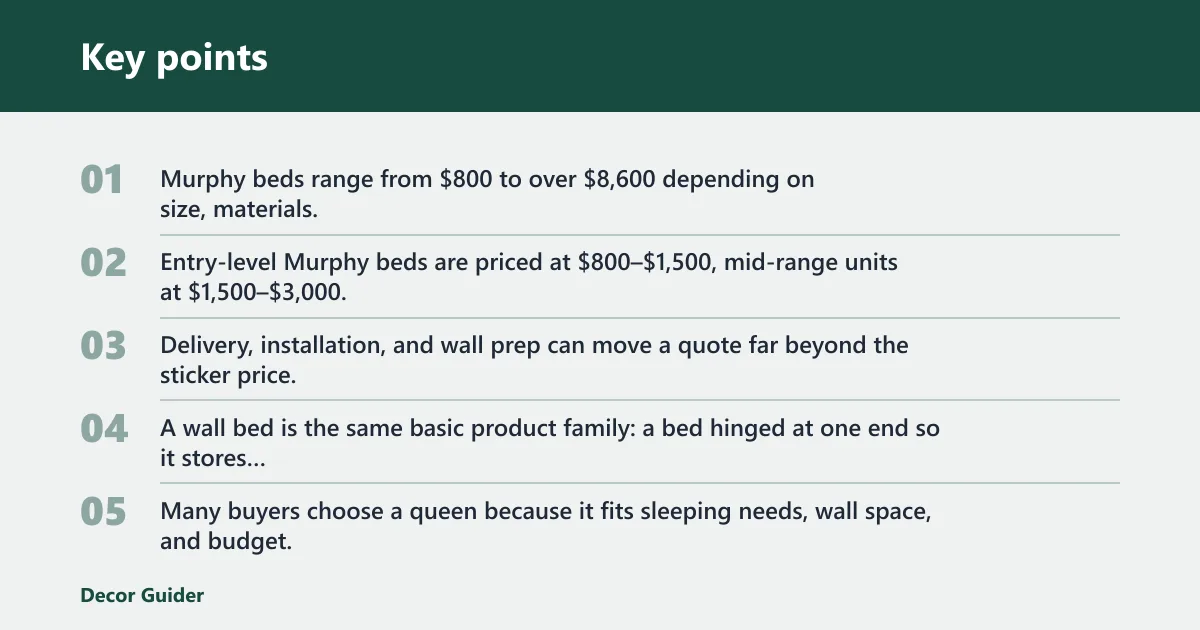


Murphy beds range from $800 to over $8,600 depending on size, materials, mechanism quality, and design complexity (Murphy Door 2026 pricing; general retail range reported by Lori Beds). Entry-level Murphy beds are priced at $800–$1,500, mid-range units at $1,500–$3,000, and high-end heirloom models at $4,300–$8,600+ (market range varies by seller, finish, and configuration). Delivery, installation, and wall prep can move a quote far beyond the sticker price.
A wall bed is the same basic product family: a bed hinged at one end so it stores vertically against the wall. Many buyers choose a queen because it fits sleeping needs, wall space, and budget. A cheaper unit can still be poor value if you need structural work or replace low-grade hardware sooner.
What usually pushes the total higher
Higher-grade hardware and cabinet work raise the price. Premium finishes, built-in storage, and unusual room conditions such as uneven walls, wainscoting, or low ceilings also add cost. Labor often rises when the installer must add blocking inside the wall, adjust trim, or work around flooring and baseboards.
Suppose a queen wall bed looks affordable at the catalog price, but the room has baseboard heat, a sloped ceiling, and no blocking behind the drywall. The project may need a horizontal layout, site modification, and extra labor, which can change the budget more than the bed price itself.
What does a Murphy bed cost by size?
Size changes the budget, but it is only one part of the total. Twin and full models usually sit at the lower end, queen is the most common middle-ground size, and king models cost more because they use larger cabinetry and heavier hardware. Specialty layouts can cost more than a standard size even when the sleep surface is similar.
Twin and full bed budgets
Murphy Door lists a twin slab-style Murphy bed without cabinets at $1,325.18 and a full slab-style Murphy bed without cabinets at $1,724.18 (Murphy Door product pages, 2026). These figures are useful as a bare-bones starting point, not a full project total. Once you add delivery, assembly, and wall prep, the final number can move up quickly.
For small guest rooms, a twin often keeps the cabinetry footprint manageable. A full bed gives more sleeping room, but it also increases the cabinet width and the load on the mechanism, which can nudge the quote higher.
Queen bed budgets
Queen is a common middle-ground size because it fits many guest rooms and office combos without taking over the wall. The same source says a quality Murphy bed costs between $1,325 and $3,150 in 2026, and it lists a queen vertical starting at $1,839 in slab style with a paint-grade face (Murphy Door 2026 pricing). That makes queen a realistic middle tier for many projects.
Murphy Door also lists a horizontal queen at $2,490 (Murphy Door 2026 pricing). The extra cost often reflects the cabinet layout, mechanism design, and the amount of wall coverage needed. A queen with side cabinets can move well past the base bed price once storage is added.
King and specialty size budgets
The same source lists a king slab-style Murphy bed without cabinets at $2,174.18 (Murphy Door product page, 2026). King units need more wall space, heavier-duty hardware, and more material overall, so the final price can climb faster than a queen. Desk and bookcase variants can also add cost because they combine sleep storage with built-in furniture.
King makes sense when the room can handle the footprint and you want a true primary-bedroom sleep surface. If the wall is short or the ceiling is low, a queen or horizontal layout may fit better and cost less to install correctly.
What you pay for in the mechanism
The Murphy bed mechanism is a major cost driver. Piston-assisted and spring-counterbalanced systems are the core fold-down hardware, and their quality affects smoothness, ease of use, and mattress weight limits. A stronger mechanism usually costs more, but it can also widen the range of mattresses that will work safely.
Piston-assisted vs spring-counterbalanced hardware
Piston-assisted systems usually feel smoother and appear more often in higher-priced units. Spring-counterbalanced hardware is another common option and can be cost-effective, but pricing depends on load rating and build quality. In both cases, the mechanism is not an accessory; it is the part that makes the bed function and often explains a large share of the total.
Murphy beds are often sold with the cabinet and hardware bundled together, which makes the mechanism easy to overlook. That is a mistake. Two beds with similar cabinet finishes can price very differently if one uses higher-capacity hardware.
Weight limits and mattress compatibility
Most manufacturers specify a maximum mattress thickness that is often about 10 to 12 inches, depending on the system (manufacturer specs commonly vary by model and load rating). Mattress weight matters too. A coil-spring mattress is commonly specified because it fits many mechanism limits, while very heavy foam or hybrid models can require different hardware or reduce the list of compatible mattresses.
Picture a queen wall bed ordered with a thick mattress that looks comfortable in a store but exceeds the mechanism limit. The bed may close poorly or operate too heavily, which can force a mattress swap or a hardware upgrade.
Why hardware quality changes the total
Hardware quality affects both the upfront price and the long-term value calculation. A cheaper bed can look attractive if you only compare the cabinet shell, but mechanism wear, limited mattress choices, or a rougher fold-down action can make it less appealing over time. That is where a mid-range bed often makes more sense than the lowest-price option.
How much does installation add?
Installation can add several hundred dollars or more, depending on the room and the seller. The same source says a handyman install usually runs $150-$400 in most markets (Murphy Door install guidance, 2026). Delivery, assembly, and wall mounting are separate line items in many quotes, and third-party assembly may be needed for online purchases.
Delivery, assembly, and wall mounting
Some custom quotes include installation. Many online kits do not. That means the shopper may need to budget for delivery to the home, on-site assembly, anchoring, and final adjustment. Labor often changes the final price more than the buyer expects because a wall bed is larger and heavier than a normal bed frame.
When a supplier says the unit is “easy to install,” that does not always mean the whole project is easy. A two-person assembly on a clean, flat wall is very different from a setup that needs trim removal, floor leveling, or cabinet scribing.
Wall blocking, anchors, and site prep
Wall blocking is a common hidden cost. Many wall beds need solid fastening into framing or added blocking to support the repeated motion of the mechanism and the cabinet load. Uneven walls, plaster repair, wainscoting, or baseboard conflicts can also add labor and materials.
Common first-timer mistake: budgeting only for the cabinet and forgetting the wall conditions. If the room needs blocking or trim work, the project total can rise even when the bed itself is in the middle of the price range.
When third-party labor can be needed
Online kits often depend on a separate installer or an experienced handyman. That makes sense when the bed is being shipped flat-packed or when the seller does not include site prep. If the room has electrical outlets, vents, or tight clearances, a professional installer may save time by handling layout and adjustments in one visit.
Custom Murphy bed cost drivers
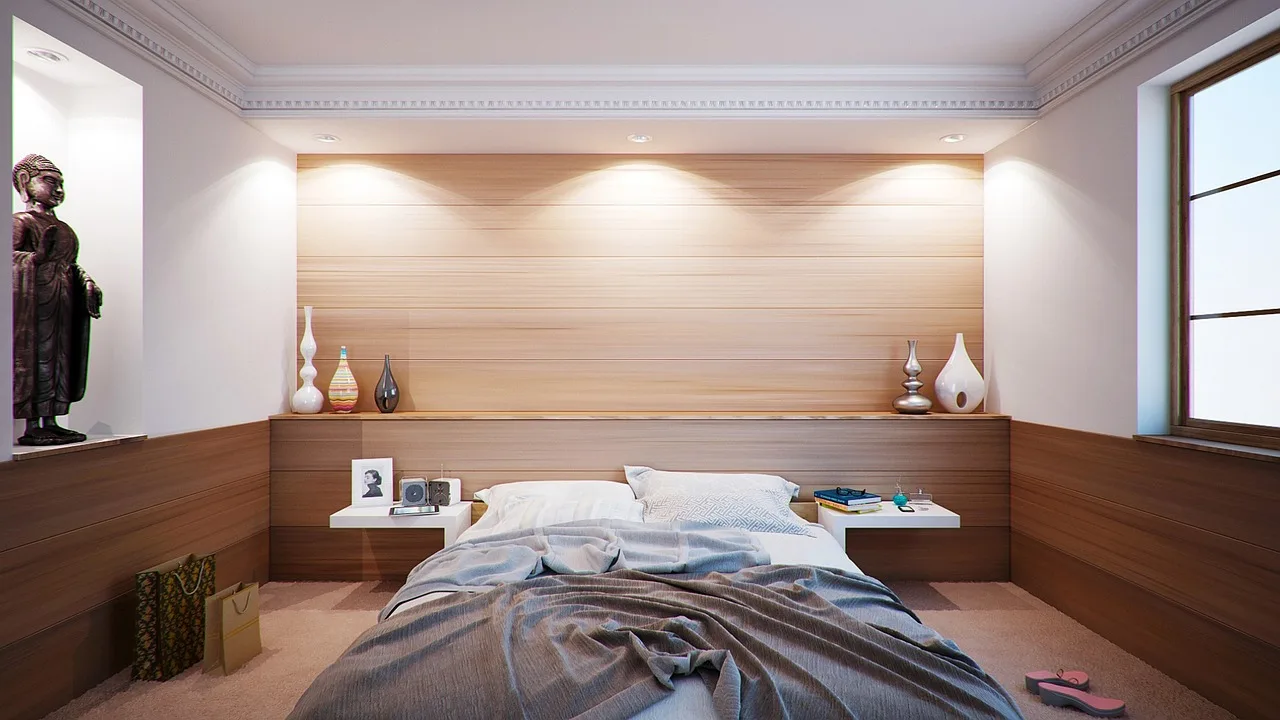
Custom Murphy bed pricing rises when the project moves beyond a basic fold-down cabinet. Cabinet materials, face frames, finish quality, and add-ons such as shelves or side cabinets can shift the total by hundreds or thousands of dollars. Built-in units usually cost more because they are made to fit a specific room and often need more labor.
Cabinet materials and face frames
Cabinet construction usually uses sheet goods, solid wood face frames, or a mix of both. Sheet goods help control cost, while solid wood face frames can improve finish quality and structural performance. That material choice matters because the cabinet has to stay square and hold hardware over repeated use.
Paint-grade faces usually cost less than detailed finish work, and custom millwork around the bed adds labor on top of the cabinet price. If the cabinet has to match existing trim or millwork, the quote often rises again.
Integrated shelving, desks, and side cabinets
Built-in storage can be a smart use of wall space, but it adds real cost. The same source says a single side cabinet runs $1,800, and a left-and-right pair of side cabinets runs $3,150 (Murphy Door 2026 pricing). A desk or bookcase variant can also increase the project total because it turns one cabinet into a room feature.
That is useful in an office combo or rental property where the bed also needs to function as storage furniture. It is less useful if the room already has enough closet space and the goal is to keep the budget under control.
Finish upgrades and built-in details
Paint-grade faces are usually cheaper than more elaborate finish work, and custom millwork around the bed can add labor on top of the cabinet price. A built-in Murphy bed often costs more than a freestanding kit because the finish work has to look intentional from the rest of the room, not just functional.
Once you add matching cabinetry, trim returns, or custom paint work, the total can move into the premium band quickly.
Vertical vs horizontal wall bed cost
Vertical is the most common style. It usually fits standard ceiling heights and uses less wall width, while horizontal and side-tilt layouts can work better in low-ceiling rooms or wider wall spaces. The orientation affects both the cabinet shape and the installation details, so it can change the quote.
When a vertical layout fits best
A vertical wall bed stores longways and needs enough ceiling height plus floor and wall clearance when open. It is usually the best fit for standard bedrooms, guest rooms, and multipurpose spaces with a tall wall. Because it is common, more models and price points are available in this layout.
Vertical beds are often the simplest answer when the room is deep enough and the ceiling is not a problem. They also tend to work well when you want the bed centered on a main wall.
When a horizontal layout makes sense
Horizontal and side-tilt beds take less vertical height but more horizontal wall width. That makes them useful under windows, in basements, or in rooms where ceiling height is limited. The same source says a horizontal queen starts at $2,490 (Murphy Door 2026 pricing), which shows that the space-saving layout can cost more than a standard vertical version.
If the room has low ceilings or ductwork that limits vertical storage, horizontal may be the practical choice. The tradeoff is wall width and, sometimes, a higher material and hardware cost.
Murphy bed budget worksheet
Use this worksheet to quote the full project, not just the cabinet price. It separates the bed, orientation, cabinets, labor, wall prep, and mattress allowance so the total is easier to compare across sellers and room layouts. The sample totals are simple budgeting examples, not universal quotes.
| Bed size | Base price | Orientation | Cabinet add-ons | Install labor | Wall prep/blocking | Mattress allowance | Estimated total |
|---|---|---|---|---|---|---|---|
| Twin | $1,325 | Vertical | $0 | $200 | $150 | $300 | $1,975 |
| Queen | $1,839 | Vertical | $0 | $300 | $250 | $500 | $2,889 |
| Queen | $1,839 | Vertical | $3,150 | $400 | $400 | $500 | $6,289 |
How to use the worksheet
- Start with the listed bed price for the size and style you want.
- Add cabinet upgrades, side storage, or desk features only if you need them.
- Include delivery and install labor, even if the seller says the unit is simple to assemble.
- Estimate wall prep separately for blocking, trim work, or minor repairs.
- Budget for a compatible mattress with the right thickness and weight.
Sample project types
Budget DIY twin: a small guest room, flat wall, and no cabinet add-ons. This is the lowest-cost path because it keeps both the footprint and labor simple. It is the best fit when the room is straightforward and you are comfortable arranging separate assembly.
Mid-range queen: a balanced option for a guest room or office combo. This is often the most practical place to spend because the sleep size is comfortable and the project usually stays within a manageable wall width and budget band.
Custom queen with side cabinets: a built-in look, more storage, and a higher total. This version makes sense when the bed needs to anchor the room design or when you want the wall to work harder as storage.
Murphy bed cost vs other sleep options
Murphy beds usually cost more upfront than a standard bed frame, and they can cost more than some sleeper sofas too. The added price can make sense when floor space matters, because a wall bed turns one wall into both sleep storage and usable room space during the day.
Murphy bed vs sleeper sofa
A sleeper sofa can look cheaper at first, but it often gives up mattress comfort and may be harder to use nightly. A Murphy bed usually offers a more bed-like sleep surface and keeps the mattress supported on a dedicated mechanism, which is why many buyers choose it for guest rooms that double as offices.
Murphy bed vs standard bed frame
A standard bed frame is usually the lowest-cost option. It also uses permanent floor space, which can be a problem in small rooms or rentals. A Murphy bed costs more because it buys back usable floor area when the bed is folded away, so the value depends on how often that extra space matters.
Where the added cost can make sense
If the room needs to function as a home office, basement flex room, or guest space, a Murphy bed can justify its higher upfront cost. If the bed will stay down all the time and the room has plenty of space, a simpler frame is usually the better budget choice.
How much does a Murphy bed cost from California Closets?
California Closets Murphy bed pricing is typically custom-quoted because the final cost depends on room measurements, cabinetry finish, accessories, and installation scope. In practice, buyers should expect a custom built-in Murphy bed from a premium closet company to cost more than a flat-pack kit and often more than a basic big-box setup, especially once delivery, trim, and wall work are included (custom closet market pricing varies by region, design, and installer).
If you are comparing California Closets to a kit, ask for the bed unit, cabinetry, delivery, install, and any electrical or trim modifications as separate line items. That is the only way to compare apples to apples against an online Murphy bed or a local cabinetmaker quote.
To build vs to buy/install
Building a Murphy bed yourself can lower the cash outlay, but buying and installing one is usually simpler and more predictable. The right choice depends on whether you want to pay for materials and your own labor, or pay more upfront for a packaged system, installation support, and a clearer warranty path. A DIY kit can be the lower-cost entry point, while custom built-ins cost the most because they combine carpentry, cabinetry, and finish work.
DIY kit cost
A DIY Murphy bed kit generally gives you the mechanism and cabinet components, with final cost shaped by lumber, hardware, finish materials, and any outsourced labor. This path can be attractive if you want to control spending and already have the skills, tools, and time to assemble accurately. The tradeoff is that mistakes can become expensive when the cabinet has to stay square and the mechanism must operate smoothly.
Mechanism-only cost
Mechanism-only purchases are the most bare-bones way to start. They are useful for builders who want to create a custom cabinet around a specific hardware set or replace a worn mechanism in an existing bed. Mechanism pricing varies by lift type, load rating, and brand, so the hardware can be economical or surprisingly expensive depending on the system.
Custom built-in cost
Custom built-in Murphy beds usually cost the most because they combine the bed, cabinetry, site measurement, delivery, and installation into one project. This is where a project can move into the several-thousand-dollar range quickly, especially if you want side cabinets, matching trim, or a full wall treatment. Built-ins are the strongest fit when the bed needs to look like part of the room rather than a standalone piece.
Frequently asked questions
How much does a Murphy bed cost?
For many shoppers, the practical project budget lands closer to $1,500 to $8,000 once delivery, installation, wall prep, and upgrades are included.
How much does a queen Murphy bed cost?
A queen Murphy bed often sits in the middle of the market because it is a common size and has broad model availability. Installation and prep can add more.
How much does it cost to have a Murphy bed installed?
The final labor cost depends on delivery, assembly, wall mounting, and whether the room needs blocking, trim changes, or other prep work before the bed can be anchored.
How much does a custom Murphy bed cost?
A custom Murphy bed can move well past the price of a basic kit once you add cabinetry, finish work, and room-specific construction. Lori Beds says basic Murphy beds can start at around $400 and run to $6,000 for customized versions (Lori Beds pricing guide), which shows how wide the custom range can be.
How much does a built-in Murphy bed cost?
A built-in Murphy bed usually costs more than a freestanding kit because it often includes custom cabinetry, finish matching, and site-specific labor. Side cabinets alone can add substantial cost, and a left-and-right pair runs $3,150 in Murphy Door’s pricing, before you add installation or wall work (Murphy Door 2026 pricing).
How much does a good quality Murphy bed cost?
That is a useful middle-range guide for shoppers who want better hardware and finish quality than the lowest tier, but do not need a fully customized built-in with every upgrade.
Products related to this article
Sponsored / affiliate links. As an Amazon Associate I earn from qualifying purchases. I may earn additional commission from eligible campaigns.