How to Clean Sofa Springs: Inspect, Fix, and Clean
Clean sofa springs by vacuuming loose debris, brushing away surface grime, and treating light rust with a metal-safe cleaner on a barely damp cloth. If a spring is bent, broken, or detached, cleaning will not fix it. Check the underside first, because dust, rust flakes, and trapped moisture can turn a simple cleaning job into a frame problem.
What you’ll need


- Vacuum with brush attachment
- Pliers
- Staple remover
- Microfiber cloths
- Mild soap
- Gloves
- Rust remover suitable for metal
- Replacement staples
- Stapler or staple gun
How do you clean sofa springs?
Start by exposing the underside, removing loose dust, and wiping only the accessible metal with a lightly damp cloth. Keep the frame dry. If you see broken wire, badly bent metal, or a cracked frame, stop cleaning and move to repair planning.
- Move the sofa away from walls, and unplug nearby cleaning tools before you start.
- Turn the sofa on its side or back with help if needed.
- Remove the dust cover with a staple remover and pliers so you can reach the frame.
- Vacuum the underside, springs, clips, and corners with the brush attachment.
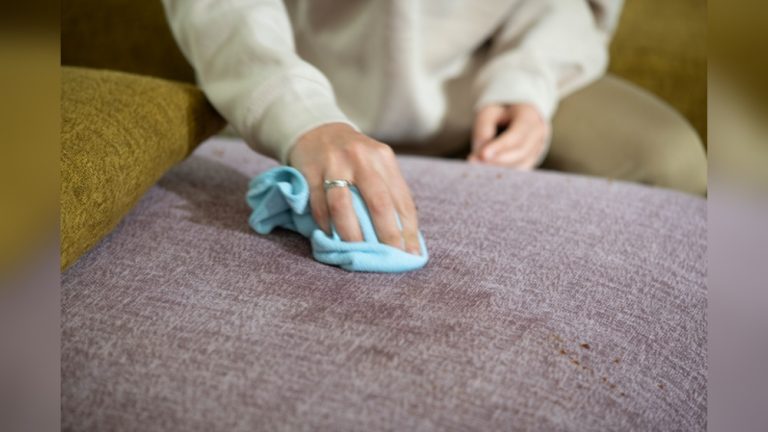
- Wipe accessible spring surfaces with a microfiber cloth dampened with mild soap and water, then wrung nearly dry.
- Use a second dry cloth to remove residue immediately.
- Let the area dry fully before reattaching the dust cover.
Say your sofa has a light squeak and a few gray dust streaks under the seat. A vacuum pass, a careful wipe, and full drying may be enough. Suppose the wire is shiny but one clip is loose and the seat sags on one side. Cleaning will help the dirt, but not the support problem.
Sofa spring decision table
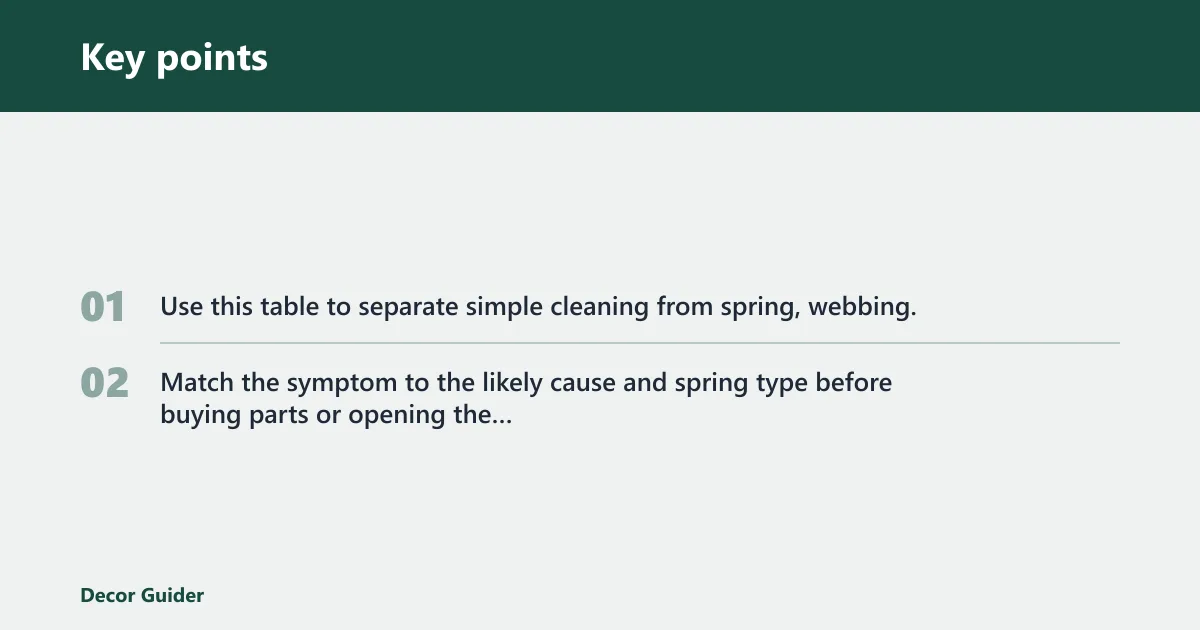
Use this table to separate simple cleaning from spring, webbing, or frame problems that need another fix. Match the symptom to the likely cause and spring type before buying parts or opening the frame further.
| Symptom | Likely cause | Spring type | DIY fixability | Required parts | When to call a pro |
|---|---|---|---|---|---|
| Sagging in one seat area | Dust buildup, stretched support, or a loose mounting point | Zig-zag, coil, or webbing | Cleaning only if the support still feels firm; otherwise limited | Replacement staples, possibly new webbing or spring match | Call a pro if the sag returns after cleaning or the frame is warped |
| Squeaking when you sit | Dirt at contact points, dry fasteners, or a loose clip | Zig-zag or coil | Yes for cleaning and inspection; no for broken hardware | Possibly spring clips and matching staples | Call a pro if the squeak comes from a broken wire or cracked wood |
| Poking through the seat | Broken spring end or failed webbing | Coil or webbing | No, beyond cleaning | Replacement spring or webbing parts | Call a pro right away if metal is exposed or fabric is torn |
| Uneven seating across the cushion | Loose clips, stretched webbing, or mixed spring tension | Zig-zag or webbing | Partial if the issue is dirt and loose dust only | Matched clips, staples, or replacement webbing | Call a pro if the support system is out of alignment |
How do you clean light rust on springs?
Light rust can usually be cleaned if the metal is still solid, smooth enough to handle, and not bent or cracked. Use a metal-safe rust remover on the affected spot only, then wipe the residue away and dry the area fully. Do not soak the frame or leave moisture trapped under the dust cover.
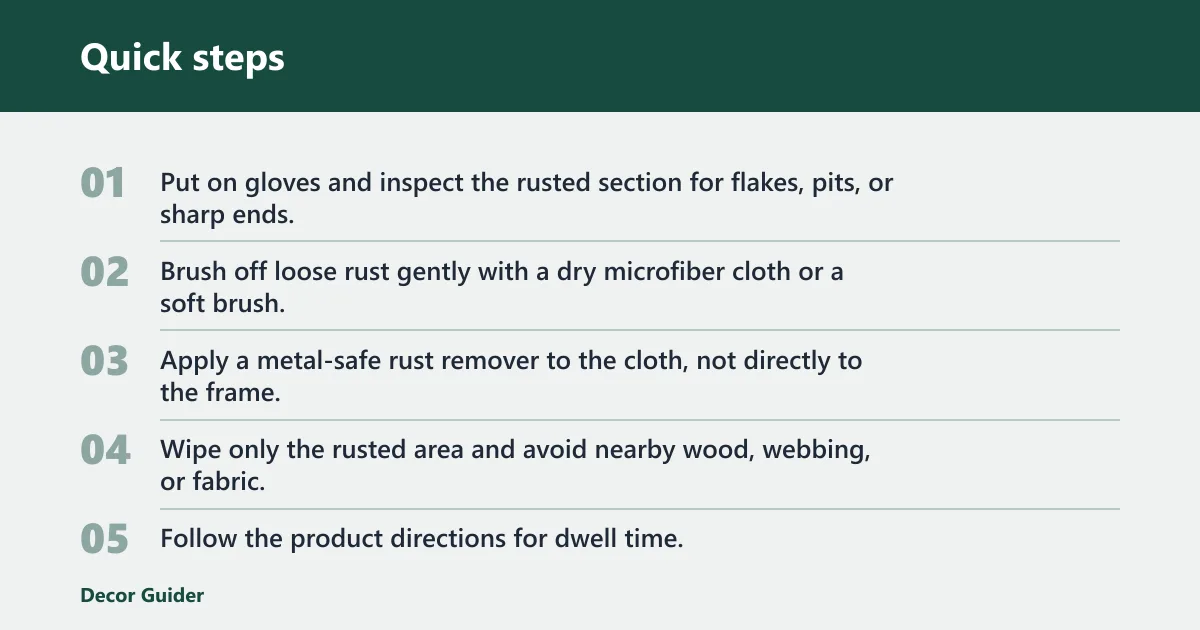
- Put on gloves and inspect the rusted section for flakes, pits, or sharp ends.
- Brush off loose rust gently with a dry microfiber cloth or a soft brush.
- Apply a metal-safe rust remover to the cloth, not directly to the frame, unless the label says otherwise.
- Wipe only the rusted area and avoid nearby wood, webbing, or fabric.
- Follow the product directions for dwell time, then wipe again with a clean damp cloth if required by the label.
- Dry the metal immediately with a fresh cloth and leave the sofa open until every cleaned area is dry.
Picture a sofa with a few orange specks on one spring, but no bending and no broken ends. That is the kind of spot treatment cleaning can handle. If the rust feels rough enough to catch a cloth, or the wire looks thinner in one place, replacement is the safer path.
How do you inspect the springs after cleaning?
After cleaning, check support by pressing each seat, listening for squeaks, and looking for uneven movement. You are looking for a clean underside that still supports weight evenly. If the seat still dips, shifts, or pokes, the issue is beyond cleaning and likely involves hardware, webbing, or the frame.
- Press each seating area with firm, even pressure.
- Listen for squeaks, clicking, or scraping at the same spot.
- Look for loose clips, exposed staples, or wire ends that remain visible.
- Check whether the webbing feels stretched or slack under the cushions.
- Confirm the dust cover can be reattached without trapping wet spots.
Spring systems you may find
Zig-zag springs, also called sinuous wire support systems, are a type of spring support used in sofas. They are usually steel and attached with clips or staples. Coil springs are often used in traditional builds, while other spring types may be found in older or premium sofas and may need professional retying or replacement. Webbing support often sits under cushions and can mimic spring failure when it stretches.
Diagnosis and repair matrix
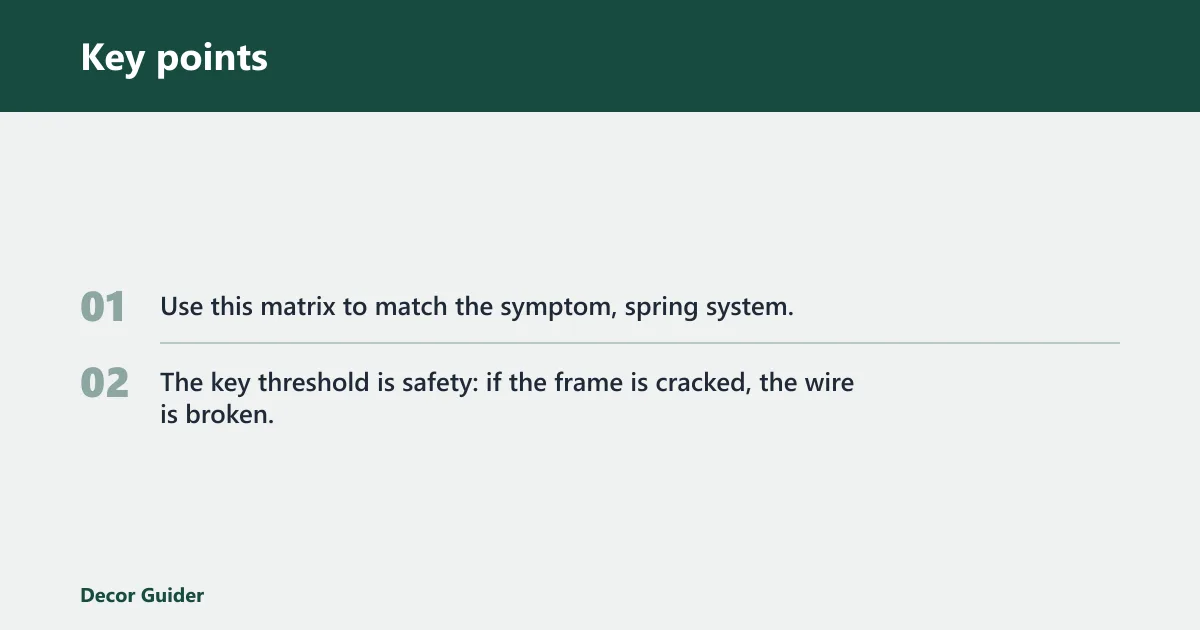
Use this matrix to match the symptom, spring system, and repair path before you open more of the sofa. The key threshold is safety: if the frame is cracked, the wire is broken, or the support system is pulling apart, stop and move from cleaning to repair or professional service.
| Spring system | Sagging | Squeaking | Poking | Uneven seating | DIY fixability | Parts or materials | Stop-work threshold |
|---|---|---|---|---|---|---|---|
| Zig-zag springs | Check for loose clips, stretched support, or failed staples. Cleaning helps only if debris is the cause. | Usually from a dry clip, loose staple, or metal rubbing on wood. | Can happen when the wire end breaks free or the sinuous wire rises through padding. | Often caused by one loose mounting point or a clip shifted out of alignment. | Usually yes for clip replacement, re-stapling, and cleaning if the frame is sound. | Replacement clips, staples, staple gun, pliers, and possibly a matching spring section. | Stop if the wood rail is split, the wire is broken, or the mounting strip is torn away. |
| Coil springs | May come from a detached spring, worn tie, or failed attachment to the frame. | Often from spring-to-frame contact or a loose tie point. | Can occur when a spring breaks, tilts, or loses tension and pushes through the cushion build-up. | May show as one side sitting higher or lower than the opposite side. | Sometimes, if the spring can be reattached and the frame is intact. | Matching replacement spring, hog rings or ties as required, pliers, and fastening hardware. | Stop if the spring is broken, the attachment point is torn, or more than one spring has failed. |
| Eight-way hand-tied springs | Often points to failed ties, worn knots, or a support failure deeper in the spring unit. | Can come from loose ties or a spring shifting against another spring or the frame. | Poking is a warning sign that one spring has come loose, snapped, or lost its tension path. | Uneven seating often means the spring unit has shifted out of tune across the seat. | Usually no for a full DIY fix; cleaning and inspection are fine, but structural repair is difficult. | Matching spring unit or retying materials; professional upholstery tools are often required. | Stop if the spring unit feels loose, several ties are broken, or the seat has lost its shape across a wide area. |
| Webbing support | Common when webbing stretches, slips, or tears. | Less common, but squeaks can come from webbing rubbing on wood or fasteners. | Poking is usually a padding or frame issue, but torn webbing can let hardware rise into the seat. | Often caused by stretched bands or uneven tension across the webbing grid. | Yes for limited webbing replacement if the frame is sound and access is clear. | Replacement webbing, staples or clips, webbing stretcher if needed, and adhesive only where approved. | Stop if the frame is cracked, the anchor points are loose, or the webbing tear spans multiple supports. |
How do you repair zig-zag springs?
For zig-zag springs, the usual repair path is cleaning, then checking clips and staple lines, then replacing the loose or damaged clip. If the wire itself is broken or the frame rail is cracked, do not keep tightening hardware. At that point, the support system needs replacement or professional upholstery repair.
- Remove the dust cover and vacuum the area around the spring line.
- Inspect each clip for looseness, rust, deformation, or pull-out from the frame.
- Replace any failed clip with a matched part sized for the wire and mounting surface.
- Reset the spring into the clip and secure the clip firmly to sound wood.
- Retest the seat for squeaks and even support before closing the dust cover.
How do you repair coil springs?
Coil spring repair usually starts with locating the failed connection, not just the broken spot you can see. A detached coil can sometimes be reattached, but a broken or badly distorted coil needs replacement with a matched spring. If the frame is cracked or multiple coils are failing, call a pro.
- Lift the dust cover and inspect the spring grid for loose ties, pulled staples, or broken spring ends.
- Compare the damaged spring to the surrounding ones so the replacement matches height and tension.
- Reattach any spring that is still intact and only disconnected at a tie or mount.
- Replace a broken spring with the same general size, shape, and support strength.
- Check the seat again for level support before reattaching the cover.
How do you repair eight-way hand-tied springs?
Eight-way hand-tied systems are usually not a quick DIY fix because the spring tension depends on many tied points working together. If the issue is only dust or light surface rust, cleaning is fine. But if the seating has gone uneven or the ties are broken, the proper repair is usually retying or professional upholstery work.
- Inspect the spring deck for broken ties, shifted springs, or visible separation in the support grid.
- Check whether the frame is still square and whether the springs sit evenly across the seat.
- Do not tighten one point in isolation if multiple ties are loose, because that can distort the entire seat.
- If the spring unit has lost its pattern, move to professional repair or full retie work.
How do you handle webbing support?
Webbing is a separate support system, but it often fails in the same way springs do: sagging, squeaking, and uneven seating. Cleaning only helps if the problem is dirt or residue. If the webbing is stretched, slipping, or torn, the repair is replacement, and the frame attachment points must be sound first.
- Press the seat to identify whether the give comes from webbing rather than springs.
- Check for stretched bands, loose staples, or torn anchor points.
- Replace any damaged strip with matching webbing material and proper tension.
- Use fasteners approved for the frame material and seat construction.
- Test for even support before reinstalling the cover.
When should you use upholstery adhesive or wood screws?
Use upholstery adhesive for fabric-to-material reattachment or for approved trim and dust cover fixes where the product instructions allow it. Use wood screws for loose frame hardware only when the wood is solid and the original fastener hole still has enough strength. If the frame is cracked, neither product is a real fix.
- Choose adhesive only for reattaching fabric layers, trim, or dust cover edges where the label permits it.
- Choose wood screws for loose brackets, rails, or mounts that bite into sound wood.
- Pre-drill only if the material and screw size require it and the frame can take the load.
- Do not use adhesive to replace structural support and do not use screws in split wood.
How do you replace spring clips, webbing, and the dust cover?
Spring clips hold zig-zag springs in position, webbing carries support across the seat, and the dust cover keeps debris out after the repair. If any of these parts fail, replacing them is part of the fix, not an extra step. Match the part to the frame and spring type before closing the underside.
- For spring clips, remove the failed clip, set the spring into the new clip, and fasten it to solid wood.
- For webbing, remove the damaged strip and install replacement webbing with proper tension and secure anchors.
- For the dust cover, reattach fabric only after the underside is dry and the support system passes inspection.
- Use fresh staples and keep the cover smooth so it does not rub or trap moisture.
How do you match replacement springs?
Replacement springs need to match the original type, length, diameter, and tension range as closely as possible. Measuring before you buy helps avoid an uneven seat or a spring that loads the frame incorrectly. If you cannot identify the spring type confidently, compare it to an intact spring or take the removed part to a furniture supplier.
- Measure the removed spring from end to end and note its shape and wire thickness.
- Check how it attaches: clip, tie, staple, or a hand-tied unit.
- Compare the replacement to the surrounding springs so the seat remains even.
- Choose the closest match in size and support rather than forcing a near-fit part.
Common mistakes
Using too much water can turn a cleaning job into a frame problem. Water can pool under the dust cover and leave rust, odor, or weakened staples behind.
Skipping dust cover removal hides the actual problem. A surface-only check misses loose clips, stretched webbing, and sharp wire ends.
Missing rust flakes, staples, or bent edges can cut hands and tear fabric during reassembly. Wear gloves and work slowly around the underside.
Assuming cleaning will fix a broken spring leads to wasted time and a worse seat. Cleaning helps dirt and light corrosion, but not detached wire, cracked wood, or badly stretched webbing.
Frequently asked questions
How do I fix sofa springs?
For cleaning-related fixes, remove the dust cover, vacuum the underside, wipe light grime from the springs, and dry everything fully before reattaching the cover. If the spring is bent, detached, or broken, cleaning is not enough. At that point, a furniture repair pro is usually the safer choice.
How do I repair a sofa spring?
Repair starts with inspection, not cleaning alone. If the spring is only dusty or lightly rusty, clean it first. If the wire has separated from its clip or the frame is cracked, the job moves beyond cleaning and usually needs matched parts, new fasteners, or professional upholstery work.
How do I repair sagging sofa springs?
First check whether the sag comes from dust, stretched webbing, or a damaged spring. Clean the underside, then press the seat again. If it still dips, the problem is usually support-related, not surface dirt. A sagging spring system often needs replacement parts or professional reattachment.
How do I clean a sofa at home?
For the underside, use a vacuum with a brush attachment, a microfiber cloth, mild soap, gloves, and a staple remover for the dust cover. Keep water light and controlled. Avoid soaking upholstery near the frame, because trapped moisture can damage wood, staples, and the support system.
How do I tighten sofa springs?
Tightening is only useful when a clip, staple, or mounting point has loosened. Clean first, then inspect whether the hardware is secure. If the spring itself is stretched or broken, tightening will not solve it. In those cases, the fix is replacement or professional repair, not more pressure.
How do I replace springs in a couch?
Replacement requires the correct spring type, length, and wire gauge. Measure the removed part before buying anything, because zig-zag and coil systems do not use the same parts. If the sofa uses eight-way hand-tied springs, replacement is usually a job for an upholsterer rather than a simple DIY repair.
Sources
- University extension and furniture-care guidance on moisture control, fabric-safe cleaning, and avoiding saturated upholstery during underside cleaning
- Manufacturer upholstery care instructions for drying times, spot cleaning limits, and approved cleaners for metal and fabric components
- Upholstery and furniture repair references on sinuous/zig-zag springs, coil springs, eight-way hand-tied construction, and webbing support systems
- Hardware and fastener guidance on when to replace clips, staples, and frame-mounted parts versus when cracked wood requires stopping the repair
- Rust-treatment product directions for spot application, dwell time, and full drying before reassembly
Products related to this article
Sponsored / affiliate links. As an Amazon Associate I earn from qualifying purchases. I may earn additional commission from eligible campaigns.