Baking Soda vs Upholstery Deodorizer: Which Works First?
Use baking soda for light, dry odors on vacuum-safe fabrics. Use a commercial upholstery deodorizer when the smell is oily, pet-based, smoke-based, or keeps returning after vacuuming. Pick the wrong one and you can leave residue, set stains, or waste time on a smell buried in the cushion. This guide compares both by odor source, fabric code, residue risk, and when each one fixes the smell versus only freshens the surface.
This guide is part of our Sofa cleaning and stain removal series.
Baking soda vs upholstery deodorizer: which one fits the smell?


For surface odors on forgiving fabric, baking soda is the simpler first try. For urine, smoke, dampness, or odors that keep coming back, a deodorizer with a neutralizing formula usually does more than a dry powder sitting on top of the fibers. Fabric code matters as much as odor type.
W, S, WS, and X tags indicate roughly how much moisture or solvent the piece can tolerate. I check that label before I touch the upholstery. A dry powder may suit an X-code piece better than a spray, while a WS piece gives more room to use either method if the fabric itself is not delicate.
| Decision factor | Baking Soda | Upholstery Deodorizer | Winner |
|---|---|---|---|
| Odor source | Best for light food, body, and general stale odors on the surface | Better for pet urine, smoke, and embedded smells that keep returning | Upholstery Deodorizer |
| Fabric safety | Safer on many dry-cleanable fabrics when used lightly, but not on silk or velvet | Depends on formula; sprays add moisture, powders add residue risk | Baking Soda |
| Residue and cleanup | Needs thorough vacuuming; overuse leaves grit in seams | Sprays can leave damp spots; powders can cling to pile | Tie |
| Repeat-treatment value | Low cost per use, good for regular maintenance | Higher cost per use, often better for problem odors | Depends on smell |
| Best use case | Routine refresh on vacuum-safe upholstery | When the source is inside padding or foam | Depends on source depth |
Odor source decides the winner
Baking soda is a mild alkaline compound that absorbs and helps neutralize some odors. That works best when the smell is sitting on the fibers or in the first layer of dust and skin oils. A deodorizer wins more often when the odor source is chemical, oily, or deep in the cushion.
That is why pet urine and smoke are poor baking soda bets. They often live below the surface. A spray or powder deodorizer with a neutralizing formula can reach farther, while fragrance-based versions mostly cover what you already smell.
Fabric code changes the choice
W and WS fabrics allow more treatment options, but the fabric itself still matters. Microfiber, polyester, nylon blends, and cotton blends usually tolerate a light dry treatment well if the vacuuming is careful. Velvet, silk, and leather need more restraint.
X-code pieces are vacuum-only by design, so a dry powder is still risky if it is worked too deeply into the pile. On velvet, silk, or leather, the safest answer is often no product at all until the care label and a hidden-area test both look good.
Surface refresh is not source removal
Both products can make a sofa smell better for a short time. Only one of them may actually remove the source. Baking soda on a dry surface can clear the top layer of odor, but if the odor lives in foam or under a stain, the smell can return as soon as the room warms up.
A deodorizer can also fail if it only perfumes the air around the fabric. A neutralizing product is the better buy when the issue is recurring, because repeat treatments on the same spot usually reveal that the source was never reached.
What you’ll need before treating a sofa
- Vacuum with upholstery attachment
- Soft-bristle brush
- Baking soda (sodium bicarbonate) or the right upholstery deodorizer formula
- Clean white cloths for a hidden-area test
- Small bowl or shaker for controlled application
- Flashlight for seams, crevices, and under cushions
How to deodorize upholstery safely
- Check the care label for W, S, WS, or X before anything else.
- Vacuum the upholstery first, including seams, crevices, and both sides of removable cushions.
- Test a hidden area with the chosen product and let it dry fully.
- Apply a light, even layer of baking soda or the smallest effective amount of deodorizer.
- Use a soft-bristle brush with the grain only if the fabric can handle gentle agitation.
- Let the product dwell, then vacuum or wipe away residue completely.
Does baking soda actually work on couch odors?
Yes, but mostly on light, dry odors that are sitting near the surface. Baking soda is a mild alkaline powder, so it can help absorb and neutralize some odor compounds without adding much moisture. It is strongest when the fabric is vacuum-safe and the smell is still fresh.
It works best after vacuuming and on fabrics that can be cleaned dry. Family Handyman recommends letting it rest 20 minutes to an hour, while many couch guides use 15 to 30 minutes for routine odors. Stronger smells may need several hours or overnight.
Where baking soda works best
Food odors, body odor, and general stale smells are often a good fit. A light layer on microfiber, polyester, nylon blends, and cotton blends can help if the odor is not embedded. Removable couch cushions are especially useful here because both sides can be treated and vacuumed.
It is most useful as maintenance, not rescue. A clean sofa that smells a little off after heavy use is the sweet spot.
Where baking soda usually falls short
It may not work well on pet urine, smoke, or mildew. Those odors often come from inside foam, padding, or an old stain. Dry powder can sit on top and still leave the source untouched.
That is where a deodorizer with a neutralizing formula has the edge. Fragrance-based products may only hide the smell for a while.
When is upholstery deodorizer the better choice?
Upholstery deodorizer is the better choice when the odor is oily, persistent, or clearly tied to a source inside the cushion. Pet urine is the classic example. Smoke and stale moisture also tend to beat simple dry powders because the odor sits deeper than the surface fibers.
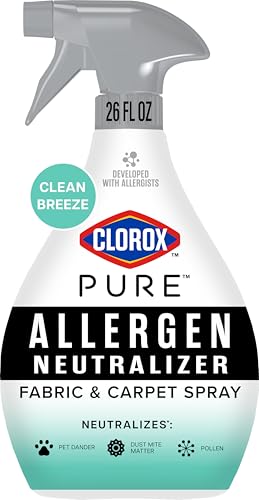
Sprays are useful when a light mist will not soak the fabric, while powders suit pieces that should stay dry. Neutralizing formulas are better than fragrance-based sprays for source odors, especially in homes with pets or allergies, because they aim to change the odor rather than cover it.
Spray versus powder
Sprays can reach more of the visible surface, but moisture is the tradeoff. That matters on W fabrics that are already sensitive to over-wetting and on dark fabrics where water marks can show. Powders avoid that moisture risk, but they need complete vacuuming.
For leased furniture, powders often leave less visible risk if used lightly. For a problem spot that is clearly inside the cushion, a neutralizing spray may do more work, provided the fabric code allows it.
Fragrance-based versus neutralizing formulas
Fragrance-based deodorizers are better at masking than removing. Neutralizing formulas are the better bet when the smell returns after the room settles. That difference matters more than the label color or the marketing name.
If a sofa smells fine for ten minutes and then goes back to urine or smoke, masking was all that happened. Choose a neutralizer or address the source directly.
Decision table: odor type, fabric code, and best option
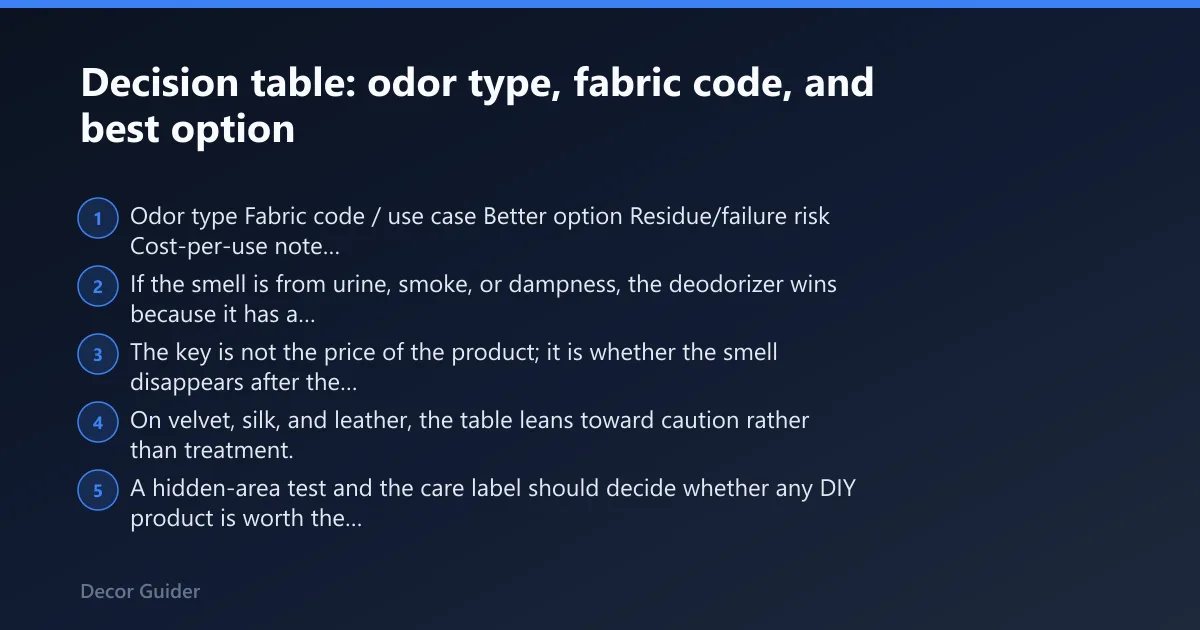
| Odor type | Fabric code / use case | Better option | Residue/failure risk | Cost-per-use note |
|---|---|---|---|---|
| Food smell | W or WS, microfiber or cotton blend | Baking soda | Low residue risk; low failure risk if odor is light | Lowest recurring cost for routine refreshes |
| Body or sweat odor | WS, polyester or nylon blend | Baking soda | Low to moderate residue risk if overapplied | Good for regular maintenance |
| Pet urine | W or WS, removable cushions | Upholstery deodorizer | Higher failure risk with baking soda alone | Higher per use, but fewer repeat attempts |
| Smoke | W, WS, or solvent-safe S fabric | Upholstery deodorizer | Medium residue risk with sprays; powder may cling | Worth it when odor returns after vacuuming |
| Stale moisture or mildew | WS or S, if fabric is not delicate | Upholstery deodorizer | High failure risk for baking soda if source is inside foam | Better than repeating a low-cost fix that misses the source |
| Velvet or velour | Use only if label allows and test passes | Usually deodorizer powder or professional care | High residue risk with either product | Lower cost is not the point here; safety is |
| Silk or leather | Avoid routine DIY unless care label and test allow | Neither as a default | Very high damage risk from both products | Professional cleaning is often cheaper than repair |
How to use the table in real life
If the odor is light and the fabric is forgiving, baking soda wins on cost and cleanup. If the smell is from urine, smoke, or dampness, the deodorizer wins because it has a better chance of reaching the source. The key is not the price of the product; it is whether the smell disappears after the sofa fully dries.
On velvet, silk, and leather, the table leans toward caution rather than treatment. A hidden-area test and the care label should decide whether any DIY product is worth the risk.
Common mistakes to avoid
Using too much baking soda is a common problem. A heavy layer is harder to vacuum, more likely to lodge in seams, and more likely to leave a chalky feel on dark fabric.
Skipping the vacuum before treatment also hurts results. One competitor notes that vacuuming first removes dust, pet hair, crumbs, and loose debris, which gives the deodorizer a cleaner surface to work on. Treating cushions without checking the foam is another miss; the smell may be inside the insert, not on the cover.
Velvet, silk, and leather are the fabrics that punish guesswork. If the tag says X or the fabric feels delicate, stop before applying anything broad across the whole piece.
How long should baking soda sit on upholstery?
For routine odors, 15 to 30 minutes is a practical dwell time. Family Handyman’s 20 minutes to an hour lands in the same range for normal couch odor control. Stronger smells may need several hours or overnight, but only on fabric that can stay dry without damage.
If that didn’t work, try this next
- Vacuum the spot again with the upholstery attachment.
- Check the cushion insert for odor by removing the cover if possible.
- Repeat with a neutralizing deodorizer if the smell returns after drying.
How much baking soda should I use on a sofa?
A standard couch treatment uses about 1/2 to 1 cup of baking soda. That amount is usually enough for a light, even layer over the smelly area without packing powder into the weave. More product does not mean better odor control.
Use just enough to dust the fabric, then brush lightly with the grain if the upholstery can handle it. Overapplication makes cleanup slower and raises the chance of residue in the seams.
Can I use baking soda on couch cushions?
Removable couch cushions can often be treated on both sides if the care label allows it. Vacuum before and after, and treat the cover and the insert separately if the odor seems to live inside the foam. That is where many odors hide.
If the smell is only on the surface, the cover may be enough. If the odor returns after the cover is cleaned, the insert needs attention too, or the smell will keep coming back through the fabric.
Can I use baking soda on leather or velvet furniture?
Not as a default. Silk and velvet can be sensitive to baking soda, and leather may also be a poor choice for loose powder because cleanup and surface safety can be tricky. A hidden-area test is the bare minimum.
For leather and velvet, check the care label first and keep the treatment plan conservative. If the fabric is delicate or the label is unclear, professional cleaning is the safer route.
Choose baking soda if…
Choose baking soda if the odor is light, dry, and surface-level; the fabric is vacuum-safe; and you want the lowest-cost fix with the least moisture. It is a good maintenance tool for food, body, and general stale odors on microfiber, polyester, nylon blends, and many cotton blends.
Choose upholstery deodorizer if the odor source is pet urine, smoke, mildew, or a smell that keeps returning after vacuuming. That is the better pick when you need source reduction, not a temporary refresh. If the sofa is velvet, silk, leather, or X-code, stop and test carefully before using either one.
Frequently asked questions
Is upholstery deodorizer better than baking soda for pet smells?
For pet urine, yes. For general pet dander or a light pet odor, baking soda may help. Urine usually needs a neutralizing deodorizer or a deeper cleaning step because the source sits inside the cushion and keeps releasing odor after the surface looks clean.
Can baking soda damage upholstery fabric or leave residue?
Yes, if it is overused or left in the fabric too long. Silk and velvet are especially risky, and rough vacuuming can work powder deeper into the pile. A soft-bristle brush, a light layer, and careful vacuuming reduce the chance of residue.
Products related to this article
Sponsored / affiliate links. As an Amazon Associate I earn from qualifying purchases. I may earn additional commission from eligible campaigns.