Commercial Sofa Cleaner vs Homemade Cleaner Guide
Commercial sofa cleaner wins for oil, dye, urine, and older upholstery; homemade cleaner is fine for fresh food spills on sturdy fabric if you use one mild formula and blot fast. The wrong mix can set stains, leave residue that attracts soil, or damage trim and backing. This guide compares both by stain type, fabric risk, residue, odor control, pet safety, and cost per use.
Commercial sofa cleaner vs homemade cleaner: the core trade-off

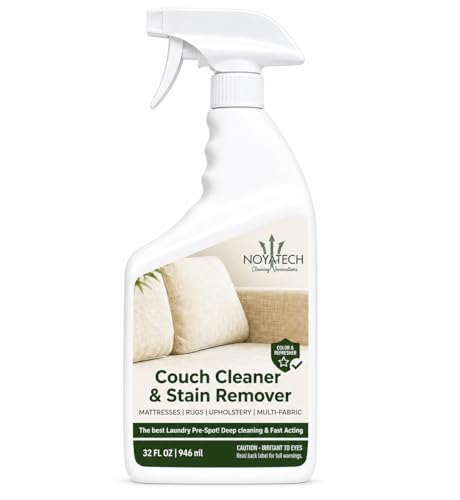


The core trade-off is simple. Commercial cleaning products are built for stain range, controlled strength, and clearer instructions, while homemade cleaners are usually cheaper and better for light upkeep. Commercial formulas use ingredient blends chosen for stain removal, residue control, and labeled dilution rates, and they are often presented as having been thoroughly tested and aligned with industry standards.
Homemade mixes have a place, but they fail faster on set-in soil, body oils, pet accidents, and odor. They also create more guesswork on upholstery fabric type, which matters because some fabrics handle liquid poorly and some react badly to acids, alkalis, or extra moisture.
What each option is built to do
A commercial upholstery cleaner is made for stains and grime that need a stronger chemical profile, clearer use directions, and better surface compatibility. Many products also include disinfectant or sanitizer action, which can matter when the goal is reducing germs after a pet accident or similar mess.
A homemade cleaner is usually a light-duty mix made from common household items such as vinegar, baking soda, and lemon juice. It is often enough for daily maintenance tasks like wiping or dusting, but it is limited when the stain has already bonded to fibers.
Where each option usually fails
Commercial products can still fail if they are used on the wrong fabric, left to sit too long, or overapplied. The most common problem is not weakness; it is misuse on a sensitive weave or a leather blend that should not be soaked.
Homemade mixtures fail in a different way. They can leave residue, cause water rings, or make discoloration more likely if the recipe is too acidic, too alkaline, or too wet for the upholstery backing.
What to decide first: stain, fabric, or sanitation
Decide in this order: stain severity, fabric sensitivity, then whether sanitation is part of the job. If the issue is fresh crumbs or a light spill, a mild DIY mix may be enough. If the issue is urine, grease, dye transfer, or an old odor source, a commercial cleaner is usually the safer starting point.
Commercial sofa cleaner vs homemade cleaner: side-by-side comparison
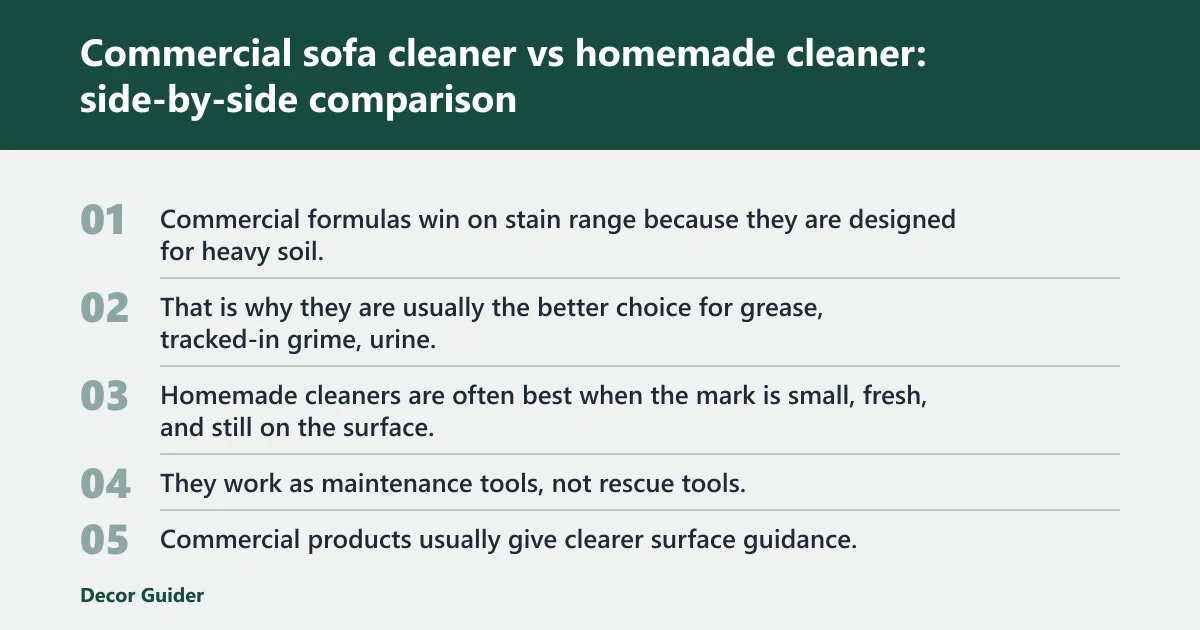
| Decision factor | Commercial Sofa Cleaner | Homemade Cleaner | Winner |
|---|---|---|---|
| Cleaning strength | Built for stains and grime; better for deep cleaning and tough soil | Better for light maintenance and fresh spills | Commercial Sofa Cleaner |
| Fabric safety control | Clear instructions and surface compatibility guidance | Depends on the mix and how carefully it is tested | Commercial Sofa Cleaner |
| Residue and oversaturation risk | Lower when used as directed; still depends on correct use | Higher if the mix is too wet, too salty, or not fully blotted | Commercial Sofa Cleaner |
| Cost per use | Higher upfront, but quality agents require less product and may last longer with dilution | Often cheaper at first, but reapplication can add hidden cost | Homemade Cleaner |
| Sanitation need | Can include disinfectant or sanitizer action | Usually not enough for germ reduction needs | Commercial Sofa Cleaner |
Cleaning strength and stain range
Commercial formulas win on stain range because they are designed for heavy soil, older marks, and messes that have set into the pile. That is why they are usually the better choice for grease, tracked-in grime, urine, and dye transfer.
Homemade cleaners are often best when the mark is small, fresh, and still on the surface. They work as maintenance tools, not rescue tools.
Fabric compatibility and label guidance
Commercial products usually give clearer surface guidance, which matters on upholstery fabric type. That guidance reduces the chance of using the wrong chemistry on a couch that reacts badly to moisture or pH.
Homemade mixes offer less guidance and more uncertainty. The safer path is always to spot test on a hidden area first.
Residue, odor, and dry-down risk
Commercial cleaner wins when residue control matters, because the formula and instructions are built around a specific use rate. That still only works when the user does not over-saturate the cushion.
Homemade cleaner often leaves a greater residue risk, especially if baking soda crystals, vinegar odor, or excess liquid remain in the fabric. Lingering odor after drying is a warning sign that the fabric or backing kept too much cleaner.
Cost per use and repeat application
Homemade cleaner is often cheaper than store-bought products upfront, but cost per use can change once repeat applications are counted. If a light mix must be reapplied several times, the savings shrink fast.
Commercial supplies may save time and effort through efficiency and convenience. Quality cleaning agents also require less product, which can create cost savings over repeated cleanings.
Which cleaner works better for your stain type?
The best cleaner depends on the mess, not the sticker on the bottle. Fresh spills on a tolerant fabric often respond to a mild homemade mix, but grease, dye, urine, and old set-in stains usually need the stronger control of a commercial upholstery cleaner.
Fresh spills and light dirt
For crumbs, light dusting, and fresh food drips, a homemade solution can be enough if it is mild and used quickly. This is the best fit for daily maintenance, not for a stain that has already dried into the fabric.
Grease, food, and tracked-in grime
Grease and tracked-in soil favor commercial cleaner because those stains cling to fibers and resist simple wiping. A stronger formula is more likely to break the soil bond without repeated scrubbing that can rough up the fabric.
Pet accidents, odor, and old set-in stains
Pet accidents are where disinfectant or sanitizer action starts to matter. If odor control and germ reduction are part of the goal, commercial upholstery cleaner is usually the better choice, especially on older stains that need more than a surface rinse.
Will the cleaner damage your sofa fabric?
Yes, either option can damage a sofa if the fabric type is ignored. Cotton, microfiber, polyester, velvet, and leather blends can react differently to liquid load, pH, and rubbing, so a spot test is a good idea.
Cotton and cotton blends
Cotton usually tolerates cleaning better than many delicate fabrics, but it still absorbs liquid fast. Too much moisture can leave rings, and acidic or alkaline mixes can shift color in the hidden backing before the top face looks damaged.
Microfiber and polyester
Microfiber and polyester often handle a controlled cleaner well, but they can still show streaking or residue if the mix is too strong. A commercial product with clear directions is often safer here because the use rate is easier to control.
Velvet, delicate weaves, and leather blends
Velvet and delicate weaves need extra caution because pile distortion and water marks show fast. Leather blends are even trickier, since the fabric side and the leather side may need different care; a wet homemade mix can create uneven marks or stiffen trim.
What can go wrong with residue, water rings, or oversaturation?
The biggest failure modes are residue left behind, water rings from too much liquid, discoloration, and texture change after drying. These are cleaning errors, not just cosmetic issues, because once fibers hold cleaner or water unevenly, new soil sticks more easily.
Residue left by homemade mixes
Homemade mixes can leave vinegar smell, baking soda grit, or a sticky film if they are not rinsed or blotted well. That film can attract new dirt and make the cleaned spot look darker later.
Water marks after too much liquid
Water marks are common when the cleaner travels farther than the stain. The result is a larger ring around the original mess, which is especially visible on cotton, velvet, and some polyester weaves.
Discoloration and texture change
Discoloration can come from pH mismatch, dye movement, or over-scrubbing. Texture change often happens when the pile is crushed or when the backing gets too wet and dries unevenly.
How do cost per use and repeat cleaning change the math?
A lower shelf price does not always mean a lower cost per use. A cheaper bottle can end up costing more if it needs repeated applications, while a more concentrated commercial product may cost less per cleaning when dilution and better stain removal are factored in.
Dilution ratios and bottle yield
Commercial cleaners often stretch farther because they are concentrated and used in measured amounts. Homemade recipes look inexpensive, but the actual yield depends on how often the sofa needs another pass and how much blotting water is required afterward.
How often each cleaner needs reapplication
A light DIY mix may need several rounds on the same spot if the stain is old or oily. That extra labor matters. Commercial cleaner can reduce repeat passes when the stain type matches the formula.
When cheaper ingredients still cost more
If a homemade cleaner needs more time, more blotting, and more follow-up cleaning to remove residue, the total cost climbs. The cheapest ingredient list is not always the cheapest job.
Sofa-cleaner decision table: choose the safest option by fabric and stain
| Fabric / stain | Safest cleaner choice | Why | Quick risk check |
|---|---|---|---|
| Cotton / fresh food spill | Homemade cleaner | Light maintenance is usually enough if the spill is fresh and blotted fast | Check for color lift, water ring, oversaturation |
| Cotton / old grease or dye | Commercial sofa cleaner | Needs stronger stain removal and better control of residue | Test for discoloration and backing bleed-through |
| Microfiber / tracked-in grime | Commercial sofa cleaner | Works better for soil that has worked into the fibers | Check for streaking and residue |
| Polyester / light dust or crumbs | Homemade cleaner | Often enough for routine upkeep if the fabric is tolerant | Check for damp halos and smell after drying |
| Velvet / any wet stain | Commercial sofa cleaner, used very sparingly | Controlled application is safer than a wet DIY soak | Check for pile crush, water marks, shade change |
| Leather blend / mixed surface stain | Commercial sofa cleaner or specialist cleaner | Mixed materials need controlled product use and less liquid | Check for trim damage, stiffening, uneven shine |
Common stain types mapped to the safer choice
Fresh tea, a light snack spill, or a small dust mark can often start with a homemade mix if the fabric is tolerant. Oil, ink, urine, cosmetics, and long-set stains often lean toward a commercial cleaner because the risk of spreading or setting the stain can be higher.
Quick risk checklist for color change, residue, and oversaturation
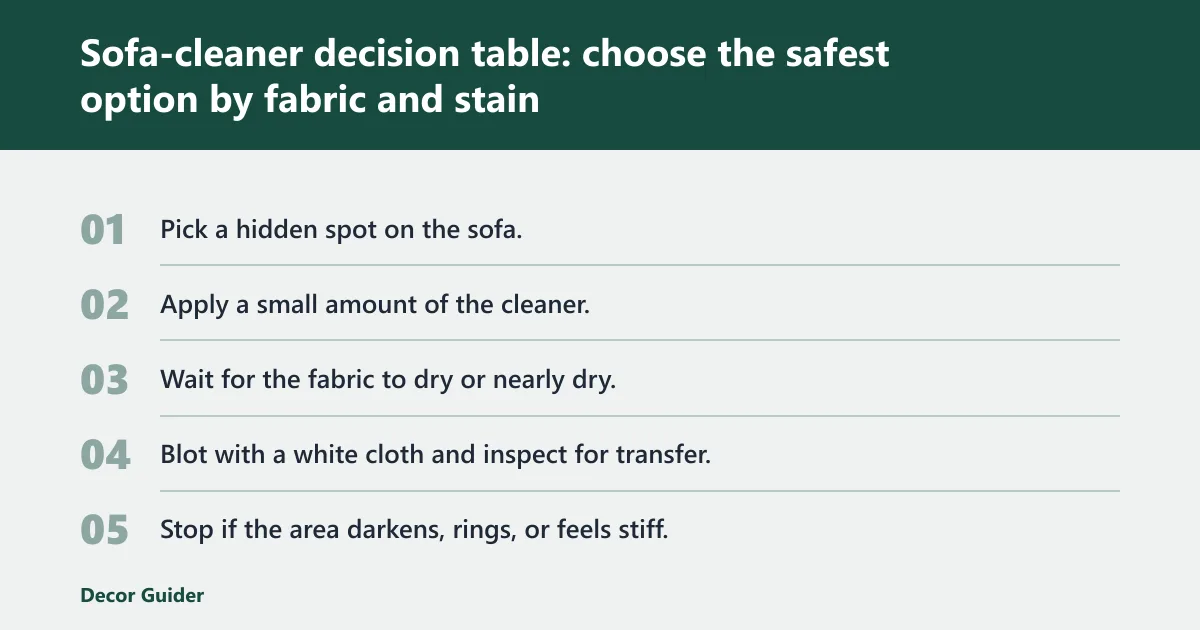
- Pick a hidden spot on the sofa.
- Apply a small amount of the cleaner.
- Wait for the fabric to dry or nearly dry.
- Blot with a white cloth and inspect for transfer.
- Stop if the area darkens, rings, or feels stiff.
Choose Commercial Sofa Cleaner if… / Choose Homemade Cleaner if…
Choose commercial sofa cleaner if the stain is older, oily, dyed, or tied to pet mess, if the couch needs odor control or sanitizer action, or if the fabric is sensitive enough that clearer label guidance matters. Choose homemade cleaner if the mess is fresh, light, and on a fabric that tolerates moisture well, and if you are willing to spot test first.
When damage risk is high, stop and call a professional cleaner. That is especially wise for velvet, leather blends, or any sofa with a stain that has already spread into the cushion core.
How do I test a cleaner on a sofa before using it?
Test the cleaner on a hidden area first. Use a small amount, wait until it dries, then blot and inspect for color loss, texture change, residue, or a water ring. If any of those appear, do not continue on the visible area.
Plain steps for a spot test
- Pick a hidden seam, back corner, or lower skirt.
- Apply a small amount of the cleaner with a white cloth.
- Do not soak the fabric.
- Wait for the test spot to dry.
- Blot again and check for transfer, fading, stiffness, or a halo.
Frequently asked questions
Is commercial sofa cleaner better than homemade cleaner?
Commercial sofa cleaner is better when the stain is tough, the fabric is sensitive, or the job needs sanitizer action. Homemade cleaner is better for light upkeep, fresh spills, and simple maintenance when the fabric is tolerant and the user spots tests first. The right pick depends on the stain and the couch.
What homemade cleaner is safe for upholstery?
A mild homemade cleaner built from common household items such as vinegar, baking soda, or lemon juice can be safe on some upholstery, but only after a spot test. The safest choice is the least aggressive mix that still handles the soil. Strong acids, heavy paste, and soaking are the usual problems.
Can I use vinegar on a fabric sofa?
Vinegar can work on some fabric sofas, but it is not safe for every upholstery fabric type. It may help with light maintenance, yet it can also leave odor, discolor some dyes, or create a water ring if used too wet. Spot test first and keep the amount small.
Will commercial upholstery cleaner damage my couch fabric?
It can, if the formula is wrong for the fabric or if too much product is used. Commercial cleaners are generally more controlled because they come with instructions and compatibility guidance, but velvet, leather blends, and delicate weaves still need a hidden-area test.a test before full cleaning.
Which cleaner works better on tough sofa stains?
Commercial sofa cleaner usually works better on tough sofa stains because it is formulated for stronger soil removal and may include disinfectant or sanitizer action. That matters for old grease, dye transfer, pet accidents, and grime that has settled into the fibers. DIY mixes are better reserved for light maintenance.
Are homemade cleaners cheaper than store-bought upholstery cleaners?
Homemade cleaners are often cheaper than store-bought products upfront because they use common household items. The cheaper bottle does not always mean lower total cost, though, since repeat application, blotting time, and residue cleanup can erase the savings. Cost per use depends on dilution, yield, and how often the stain returns.
Products related to this article
Sponsored / affiliate links. As an Amazon Associate I earn from qualifying purchases. I may earn additional commission from eligible campaigns.
 Zorbent Pet Accident Cleanup – Odor Remover for Dog & Cat Messes. Absorbs 1 Gallon. Pet-Safe Cleaner for Urine, Vomit, Poop & Accidents on Hardwood, Tile, Vinyl, Concrete, Short Carpet & Rugs, 5 qt
 Azobur Couch Patch Repair Fabric,Microfiber Fabric, Self-Adhesive, for Sofa Repair and Upholstery, 2 Pieces, 9.5 x 11 inches (Light Brown)