Hand Cleaning vs Machine Cleaning a Sofa Cover Guide
Machine cleaning is safer for sturdy, pre-shrunk cotton or polyester covers with clear care labels; hand cleaning is safer for delicate, lined, or fitted covers, and any cover that cannot tolerate heat or spin. I have seen the wrong wash shrink seams, twist zippers, and lock pet odor into the fabric. This guide compares both methods by fabric, construction, stain type, and drying risk so you can pick the least wasteful option.
This guide is part of our Sofa cleaning and stain removal series.
Hand cleaning vs machine cleaning a sofa cover: which is safer?
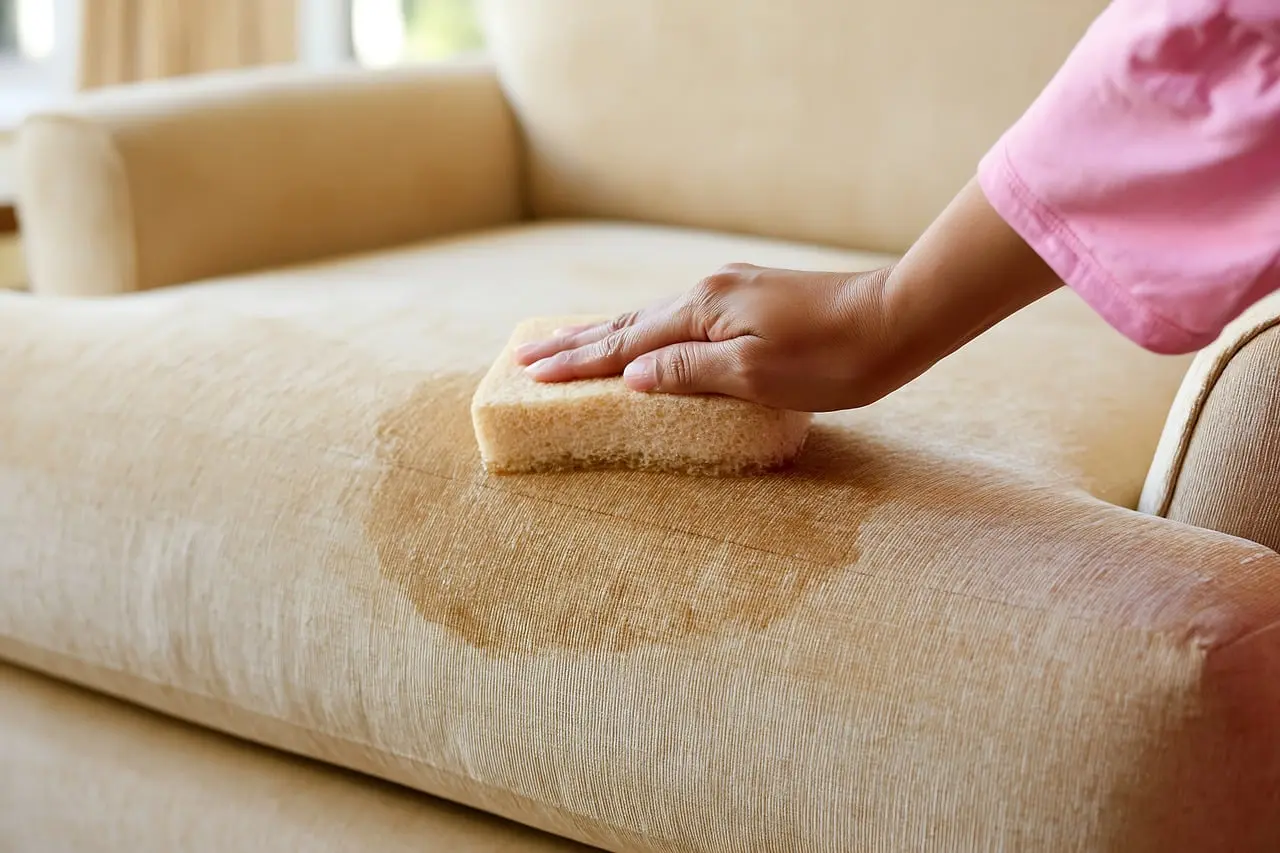


Machine cleaning is faster, while hand cleaning gives more control on fragile covers. The safer choice depends less on the word “washable” and more on fabric type, seam strength, zipper quality, fit, and how much agitation the cover can handle without changing shape.
A front-loading washing machine is usually kinder than a top-loader because the drum action is gentler on covers. Even so, a loose weave, weak stitching, or a zipper that already snags can turn a machine wash into a failure point faster than hand washing would.
| Decision factor | Hand Cleaning | Machine Cleaning a Sofa Cover | Winner |
|---|---|---|---|
| Fabric delicacy | Better control for velvet, pure linen, wool blends, and fragile weaves | Better for sturdy cotton or polyester with clear wash approval | Hand Cleaning |
| Shrink risk | Lower when water is cool and agitation is mild | Higher if water is warm, cycle is rough, or drying is too hot | Hand Cleaning |
| Zipper and seam stress | Less mechanical pull if handled flat and supported | More stress from spin, tumbling, and load movement | Hand Cleaning |
| Stain load | Good for spot-heavy covers with targeted pre-treatment | Better for overall soil, body oils, and routine refreshes | Machine Cleaning a Sofa Cover |
| Labor time | More manual work and drying supervision | Less hands-on time once loaded correctly | Machine Cleaning a Sofa Cover |
| Drying risk | Lower heat exposure if air dried carefully | Higher if tumble dried on more than low heat | Hand Cleaning |
Fabric delicacy decides the first round
Hand cleaning wins when the cover is made from delicate sofa cover fabrics such as velvet, pure linen, or wool blends. Those materials can change texture, pull at seams, or distort under aggressive spinning. A sturdy weave with a simple construction can usually handle machine cleaning better.
Construction matters as much as fiber content
Loose weaves, weak seams, and fragile zippers raise the failure risk in either method, but machine cleaning magnifies that risk. A cover that fits tightly around the frame is more likely to stress zipper teeth and corner seams during agitation. That is where hand cleaning often becomes the safer call.
Stain load changes the time and effort trade-off
When the cover has general grime, machine cleaning usually wins on labor. When the issue is one pet accident or a few spots, hand cleaning with pre-treatment can be smarter because it targets the soil instead of beating the entire cover through a cycle it may not need.
What does the sofa cover care label mean?
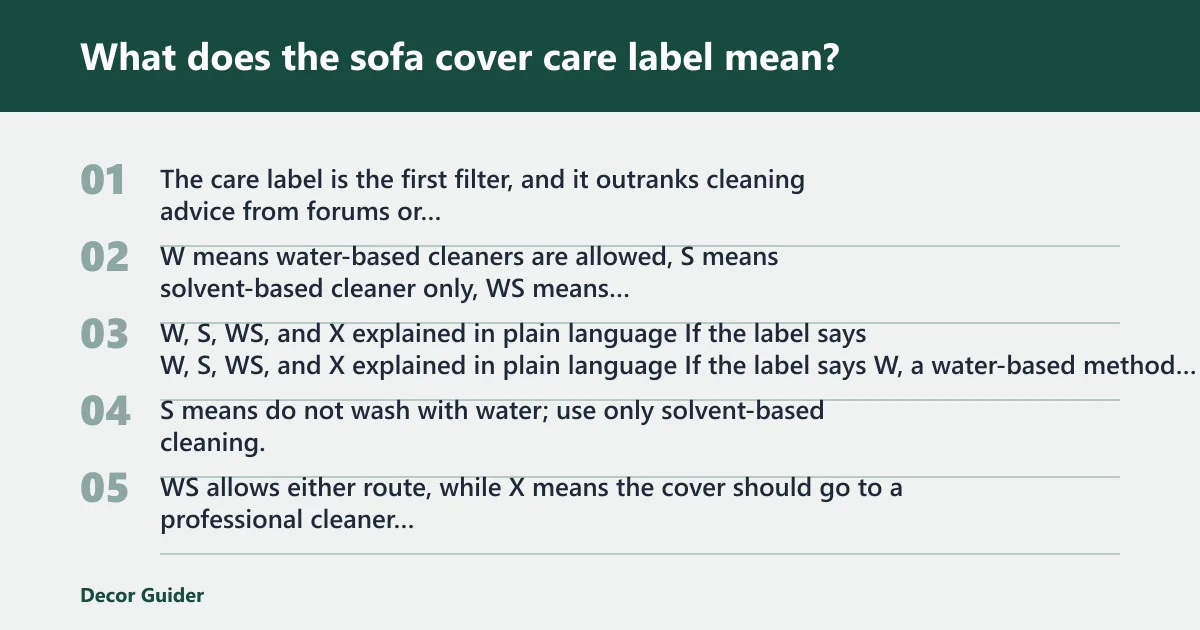
The care label is the first filter, and it outranks cleaning advice from forums or product pages. W means water-based cleaners are allowed, S means solvent-based cleaner only, WS means either water or solvent-based cleaner may be used, and X means professional cleaning only.
W, S, WS, and X explained in plain language
If the label says W, a water-based method may be acceptable if the fabric itself can tolerate it. S means do not wash with water; use only solvent-based cleaning. WS allows either route, while X means the cover should go to a professional cleaner rather than a home sink or washer.
When the label allows washing and when it does not
Even when a label allows water, that does not mean every method is safe. A W or WS cover can still shrink, bleed color, or distort if the weave is weak or the fit is tight. An X label ends the home-washing question immediately.
Why the label outranks online cleaning advice
Label codes are the manufacturer’s own limit line for that cover. A guide can help with technique, but it cannot override a solvent-only instruction, a professional-cleaning requirement, or a fabric finish that reacts badly to water and heat.
When is machine washing the better choice?
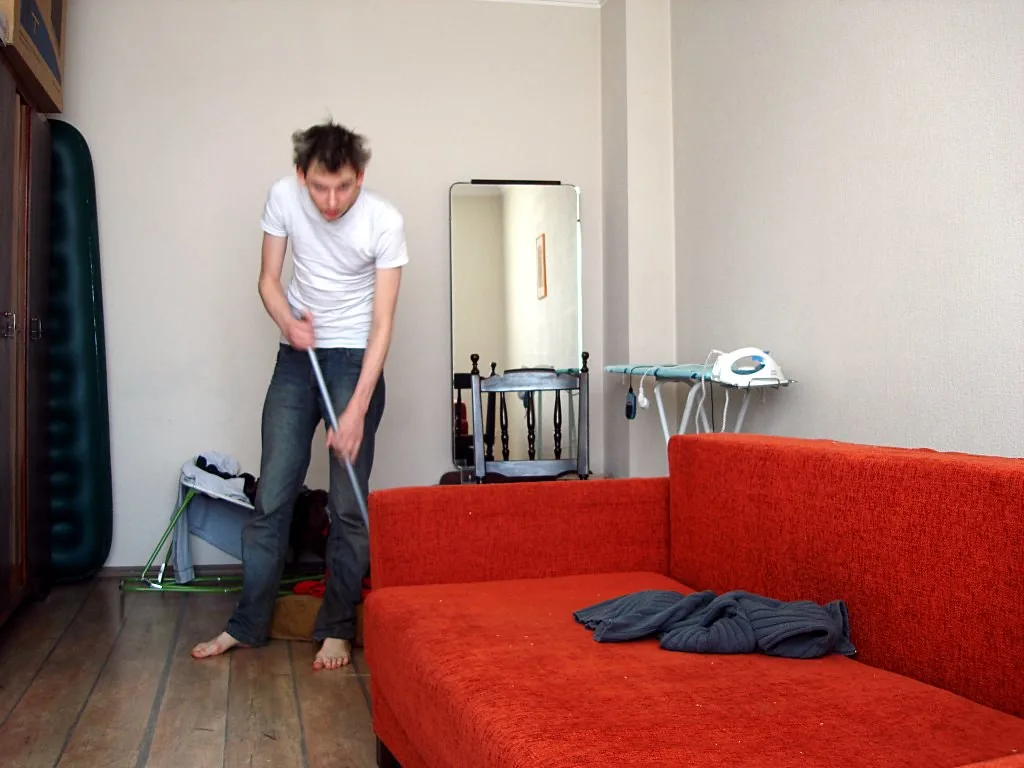
Machine washing is the better choice for sturdy, removable covers that have a clear washable label, hold their shape well, and do not have fragile zippers or weak seams. A front-loading washing machine is the safer machine choice, especially on a gentle or delicate cycle with cold water.
Best case for a front-loading washing machine
Front-loading washing machines are described as gentler on covers because they rely less on rough mechanical action than many top-loaders. That matters when the cover is removable but still fitted closely, since less agitation usually means less seam strain and less twisting around the zipper.
Why cold water and a gentle cycle lower risk
Cold water wash means 30°C/86°F or lower, and that lower temperature helps reduce shrinkage risk. The gentle or delicate cycle can reduce tugging on the weave and may give the fabric less chance to distort. Hot water is the usual mistake when a cover comes out smaller or out of shape.
Detergent, load size, and zipper protection
Mild liquid laundry detergent is often a better choice than powder detergent because it tends to dissolve more evenly and is less likely to leave residue on thicker fabric. Use a small amount. Fabric softener is discouraged because it can leave residue, and overloading the drum increases rubbing at the seams and zipper ends.
- Close zippers before washing.
- Turn the cover inside out if the label allows it.
- Use cold water at 30°C/86°F or lower.
- Select a gentle or delicate cycle.
- Use a small amount of mild liquid laundry detergent.
- Remove the cover promptly after the cycle ends.
When is hand washing safer than machine washing?
Hand washing is safer when the cover is delicate, the seams are stressed, or the zipper feels weak. It is also the better choice when the label allows water but the fabric construction looks too fragile for spinning, tumbling, or repeated impact inside a drum.
Delicate sofa cover fabrics: velvet, pure linen, and wool blends
Velvet needs extra caution because crushing and agitation can alter the surface. Pure linen is advised to be washed in cold water only. Wool blends may need hand washing or dry cleaning, which is a strong signal not to send them through routine machine cleaning unless the label clearly supports it.
Loose weaves, weak seams, and fragile zippers
A loose weave can stretch unevenly under machine agitation. Weak seams may open at the corner folds, and a fragile zipper can catch when the fabric shifts. Hand washing keeps the cover supported, which lowers the chance of mechanical stress in those weak spots.
How to hand wash a sofa cover without shrinking it
Use cool water, mild liquid detergent, and gentle movement rather than twisting or wringing. Keep the cover fully supported as it moves through the water, and rinse until detergent is out. Do not scrub hard at seams, because that can stretch the stitching more than the stain itself.
- Fill a clean tub or basin with cool water.
- Mix in a small amount of mild liquid laundry detergent.
- Submerge the cover and press water through the fabric gently.
- Lift and lower it instead of twisting.
- Rinse several times until the water runs clear.
- Press out water with your hands or a clean towel.
How do drying choices change the result?
Drying choice is where many good washes go wrong. Air drying is the preferred drying method, usually flat or on a drying rack, because heat can shrink the cover after the washing step went smoothly. Low-heat tumble drying is a backup only when the label allows it.
Air drying flat or on a rack
Air drying flat helps a cover keep its shape, and a drying rack lets air move around the fabric without pulling it downward. For heavy covers, rotate and smooth them while damp so the weight does not stretch one edge more than another.
Low-heat tumble drying only when the label allows it
Low-heat tumble drying should use the lowest heat setting only. Remove the cover while it is still slightly damp so the last bit of drying happens in place. Higher heat increases shrinkage risk, especially on fitted covers and natural fibers.
Putting covers back on while slightly damp
Putting covers back on while slightly damp can help them settle to shape as they finish drying. That works best when the frame and foam insert are dry enough not to trap moisture. Do not force a nearly dry cover over a too-tight cushion; that can tear seams.
Decision matrix: hand washing vs machine washing by risk and effort
This matrix turns the choice into a practical rule. Scores are on a 1-to-5 scale, with lower numbers generally indicating a safer or easier choice for that factor and higher numbers indicating more difficulty or risk. Lower totals favor the method that puts less stress on the cover in that situation.
| Scenario factor | Hand Cleaning score | Machine Cleaning a Sofa Cover score | Best recommendation |
|---|---|---|---|
| Delicate fabric such as velvet or wool blend | 1 | 5 | Hand Cleaning |
| Pre-shrunk cotton or polyester with a W or WS label | 3 | 1 | Machine Cleaning a Sofa Cover |
| High zipper stress from a tight fit | 1 | 4 | Hand Cleaning |
| Heavy soil, pet hair, and overall buildup | 3 | 1 | Machine Cleaning a Sofa Cover |
| Time and labor needed from the homeowner | 4 | 2 | Machine Cleaning a Sofa Cover |
| Drying shrink risk | 1 | 4 | Hand Cleaning |
Scenario recommendations by household type
Pet homes usually benefit from machine cleaning when the label allows it, because fur, dander, and recurring odor build-up are easier to flush out that way. For pet accidents, use an enzyme-based cleaner first; it breaks down proteins in urine before the full wash.
Kid-heavy homes often need the faster reset that machine cleaning offers, especially for washable cotton or polyester covers. Allergy-sensitive homes may also prefer machine cleaning because it removes more loose dander and dust, but only when the fabric and label can handle it.
Rental properties and turnover spaces often need the fastest safe method, which is usually machine cleaning for plain, sturdy covers. Delicate designer covers are the opposite case: if they are textured, tailored, or expensive to replace, hand cleaning or professional cleaning is usually the safer path.
Choose Hand Cleaning if… / Choose Machine Cleaning a Sofa Cover if…
Choose hand cleaning if the cover is velvet, pure linen, wool blend, loosely woven, tightly fitted, or has weak seams and a delicate zipper. It is also the safer call when you need more control over a stain, want to minimize shrink risk, or the label says X.
Choose machine cleaning a sofa cover if the label allows water, the fabric is sturdy, the cover is pre-shrunk, and a front-loading washer is available. It is the better choice for heavy soil, pet hair, repeated household messes, and situations where speed matters more than absolute control.
Failure-case troubleshooting
If the cover comes out stretched, the most common cause is too much agitation, too much water weight, or hanging it before the shape was settled. If a foam insert looks warped, stop forcing the cover onto it and let both pieces dry fully before trying again.
Zipper damage usually points to spin stress, a poor fit, or closing the zipper over bunched fabric. Seam stress often appears where the cover hugs corners or arms too tightly. Color bleed means the fabric was not stable enough for the wash method; rewash only if the label and dye behavior support it.
When a spot remains after the wash, treat it with a soft-bristle brush only after checking for color bleed on a hidden area. That brush is useful for lifting soil without harsh scrubbing, but it should not be used hard enough to fuzz velvet or widen an already stressed seam.
Frequently asked questions
Is it better to hand wash or machine wash a sofa cover?
Machine washing is better for sturdy, washable covers with clear labels and durable construction. Hand washing is better for delicate fabrics, tight fits, weak zippers, or covers that can wrinkle, shrink, or distort under spin and tumble action. The label and fabric type should decide first.
Can you put sofa covers in the washing machine?
Yes, many removable sofa covers can go in the washing machine if the label allows water-based cleaning and the fabric is sturdy enough. A front-loading washing machine on a gentle or delicate cycle with cold water is the safer setup. Avoid overfilling and use mild liquid detergent.
What sofa cover fabrics should not be machine washed?
Velvet, pure linen, and wool blends need extra caution, and some of them may need hand washing or dry cleaning instead. Covers with weak seams, fragile zippers, or loose weaves are also poor machine candidates, even when the fabric itself seems washable. The label still comes first.
How do you hand wash a sofa cover without shrinking it?
Use cool water, a small amount of mild liquid detergent, and gentle handling. Do not wring, twist, or scrub hard at the seams. Rinse well, press out moisture with towels, then air dry flat or on a rack so heat and rough motion do not pull the fabric smaller.
Does cold water help prevent sofa cover shrinkage?
Yes. Cold water wash means 30°C/86°F or lower, and that lower temperature reduces shrinkage risk compared with hotter water. Cold water is especially important for pure linen and other natural fibers that can tighten or distort when exposed to heat during washing or drying.
Should you air dry sofa covers or tumble dry them?
Air drying is the preferred drying method for most washable sofa covers because it avoids heat shrinkage. Low-heat tumble drying is only for covers whose label allows it, and it should use the lowest heat setting. Remove the cover while it is still slightly damp if you use the dryer at all.
Products related to this article
Sponsored / affiliate links. As an Amazon Associate I earn from qualifying purchases. I may earn additional commission from eligible campaigns.