How to Clean Fabric Sofa by Hand: Easy Steps for Spotless Results
Cleaning a fabric sofa by hand isn’t just about making it look good, it’s about protecting your investment and creating a healthier home. Many people worry that hand cleaning won’t be as effective as using professional tools, but with the right steps, you can refresh your sofa and remove stains, odors, and dirt without expensive equipment.
Whether you have kids, pets, or just everyday mess, learning to clean your fabric sofa by hand is a skill that saves money and extends the life of your furniture.
People often make mistakes when hand cleaning, such as using too much water, which can cause mold, or the wrong cleaning products, which may damage fabric. This guide will help you avoid those problems. You’ll learn how to prepare, which products to use, the steps for deep cleaning, and how to maintain your sofa between cleans.
I’ll also share insights I’ve learned from cleaning dozens of sofas, including tricks most beginners miss.
Understanding Your Fabric Sofa
Before you start, you need to know what type of fabric your sofa is made from. Fabric sofas can be made of cotton, linen, polyester, acrylic, wool, or blends. Each fabric reacts differently to moisture and cleaning solutions. There’s a small tag under the cushions or on the frame that shows a cleaning code.
Common Cleaning Codes
| Code | Meaning | What It Allows |
|---|---|---|
| W | Water-based cleaner | Safe to use water and mild detergent |
| S | Solvent cleaner | Use dry cleaning solvent only |
| WS | Water or solvent | Both water-based and solvent cleaners are safe |
| X | Vacuum only | No cleaners; vacuuming only |
Pro Tip: Always test any cleaner on a hidden spot before using it on the main fabric.
Preparing To Clean Your Sofa
Getting ready is just as important as the cleaning itself. Skipping preparation can make stains worse or cause damage.
First, remove all cushions, throws, and pillows. Take off anything that isn’t attached to the sofa. Shake out loose debris from the cushions outside.
Next, use a vacuum cleaner with a soft brush attachment. Go slowly over every surface, the seat, back, arms, and even crevices. This removes crumbs, dust, pet hair, and dirt that could turn into mud when wet.
If your sofa allows water-based cleaning, prepare your cleaning supplies:
- Mild dish soap (like Dawn or Fairy)
- White vinegar
- Baking soda
- Two buckets (one for cleaning solution, one for rinsing)
- Soft microfiber cloths
- A soft-bristled brush
- Spray bottle (optional)
- Clean towels
For “S” code sofas, buy a dry cleaning solvent from a hardware or home store.
Warning: Never use hot water or bleach on fabric sofas. Hot water can set stains and bleach can ruin color.

Credit: www.paulscleaningsydney.com.au
Treating Stains Before Cleaning
Spot-treating stains is key to a clean finish. If you try to clean the whole sofa without addressing stains, they often remain visible.
How To Identify And Treat Common Stains
| Stain Type | First Step | Best Treatment |
|---|---|---|
| Food/Drink | Blot with paper towel | Mild soap + water, dab gently |
| Grease/Oil | Sprinkle baking soda, wait 20 min | Vacuum, then use dish soap solution |
| Pet accidents | Blot, do not rub | Vinegar + water mix, dab and air dry |
| Ink | Test rubbing alcohol on hidden spot | Dab with cotton swab, blot dry |
Always blot, don’t rub. Rubbing pushes stains deeper into the fibers. Use a clean white cloth so you can see the stain lifting.
Making A Safe Cleaning Solution
Many beginners think strong chemicals work best, but these can damage delicate fabrics. For most sofas, a gentle homemade solution is safest.
Homemade Cleaning Solution
- Mix 1 teaspoon mild dish soap with 2 cups warm (not hot) water.
- For extra cleaning, add 1 tablespoon white vinegar.
- Stir gently to avoid too many bubbles.
Pour the solution into a spray bottle or leave it in a bowl for dipping your cloth.
For odors, sprinkle a light dusting of baking soda on dry fabric. Let it sit for 15, 20 minutes, then vacuum thoroughly.
If your sofa is labeled “S,” do not use water or vinegar. Use a solvent-based upholstery cleaner following the instructions carefully.
Hand Cleaning The Sofa: Step-by-step
This section covers the main cleaning process. In my experience, patience makes the difference between a fresh-looking sofa and one with watermarks or rough patches.
1. Spot Test First
Spray or dab a small amount of your solution onto a hidden area. Wait 10 minutes. If the color doesn’t change and the fabric feels normal after drying, it’s safe to continue.
2. Clean The Fabric Surface
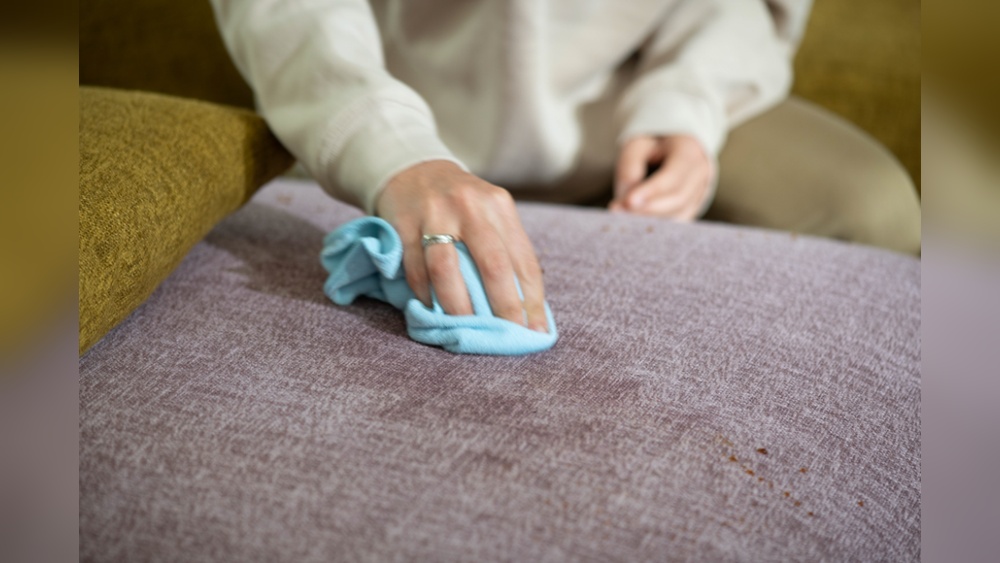
Dip a microfiber cloth into your solution, then wring it out until just damp. Wipe the fabric in small sections, starting at the top and working down. Use gentle, circular motions, don’t scrub hard. This prevents roughening the fibers.
For arms and spots with extra dirt, use a soft brush dipped in solution, but always finish with a cloth to avoid leaving marks.
3. Rinse Soap Residue
Fill your second bucket with plain water. Dip another clean cloth in, wring out, and wipe over the areas you just cleaned. This removes leftover soap, which can attract more dirt if left behind.
Example: I once forgot to rinse after cleaning, and my sofa felt sticky for weeks, rinsing is worth the extra effort.
4. Dry The Sofa
Blot with a dry towel to remove as much moisture as possible. Open windows or use a fan to speed up drying. Never use a hair dryer on high heat, it can shrink fabric or set stains.
Allow at least 3, 4 hours for drying before using the sofa again. If the weather is humid, it may take longer.
Deep Cleaning For Tough Stains And Odors
Sometimes, regular cleaning isn’t enough. If your sofa has tough stains or a musty smell, try these deeper cleaning methods.
Baking Soda Deodorizing
Sprinkle baking soda evenly over the dry fabric. Leave it for several hours, or overnight if possible. Baking soda absorbs odors and some oils. Vacuum thoroughly when finished.
Vinegar Solution For Odors
For smells from pets or spills, mix equal parts white vinegar and water. Lightly spray or dab onto the affected area. Vinegar breaks down odor-causing bacteria. The smell of vinegar disappears as the sofa dries.
Handling Mold Or Mildew
If you see black or green spots, mix 1 part vinegar to 4 parts water. Dab gently, never soak the area. Open windows for ventilation. If mold covers a large area, professional cleaning may be needed to avoid health risks.
Using A Solvent Cleaner
For “S” code sofas, apply a small amount of dry cleaning solvent to a clean cloth. Gently blot the stain, never pour solvent directly onto the fabric. Allow to air dry fully.
Pro Tip: If you’re unsure about your sofa’s fabric or stain, consult the manufacturer or a professional cleaner.
Maintaining Your Fabric Sofa
Regular maintenance keeps your sofa looking good and makes deep cleaning easier.
- Vacuum weekly. Use a brush attachment to reach into crevices.
- Rotate cushions every month so wear is even.
- Clean spills immediately. The longer a spill sits, the harder it is to remove.
- Limit sun exposure. Direct sunlight fades fabric over time.
- Keep pets off or use washable covers if possible.
Fabric Sofa Maintenance Comparison
| Task | Frequency | Why It Matters |
|---|---|---|
| Vacuuming | Weekly | Removes dirt, prevents wear |
| Spot Cleaning | As needed | Prevents stains from setting |
| Cushion Rotation | Monthly | Ensures even wear |
| Deep Cleaning | Every 6, 12 months | Removes deep dirt, refreshes fabric |
Common Mistakes And How To Avoid Them
Many people make the same errors when cleaning their sofas. Here’s what you should watch out for:
- Using too much water. This can soak the cushions and lead to mold. Always use a damp, not wet, cloth.
- Skipping the spot test. Even safe cleaners can react with dyes or finishes.
- Rubbing stains. This pushes stains deeper and damages fibers.
- Not rinsing soap. Leftover soap attracts dirt and makes the fabric sticky.
- Drying with heat. High heat can shrink or discolor fabric.
- Ignoring the cleaning code. Using water on “S” or “X” code sofas can cause permanent damage.

Credit: www.cleanipedia.com
Special Cases: Delicate Or Vintage Sofas
Some sofas need extra care, especially if they are vintage or made from delicate materials like silk, wool, or velvet.
- Velvet: Use a soft brush and minimal moisture. Too much water leaves marks.
- Silk or antique fabric: Avoid DIY cleaning. Consult a professional.
- Removable covers: Check the label, some can be machine washed, but always air dry to prevent shrinkage.
Pro Tip: For rare or expensive fabrics, it’s better to do less than risk damage. Always consult the sofa’s manufacturer or a professional if you’re unsure.
Eco-friendly And Allergy-safe Cleaning
If you’re sensitive to chemicals or want to avoid strong smells, stick to natural cleaners. Baking soda and vinegar are both effective and safe for most fabrics. For those with allergies, vacuuming with a HEPA filter helps remove dust mites and pet dander.
If you use essential oils for scent, add just 2, 3 drops to your cleaning solution. Too much can stain or irritate skin.
When To Call A Professional
Most sofas can be cleaned by hand, but some problems require expert help:
- Deep stains that won’t lift after two attempts
- Large mold or mildew patches
- Odors that return after cleaning
- Fabric labeled “X” (vacuum only)
- Expensive or antique furniture
Professionals use special tools and know-how to prevent damage. If you’re worried about ruining your sofa, it’s better to spend a little more than to risk a costly mistake.
The Cost And Time Of Hand Cleaning
Hand cleaning a sofa takes effort but is much cheaper than hiring a service. Expect to spend 2, 4 hours total, including drying time. Most cleaning supplies cost less than $20, and you probably already have many of them at home.

Credit: sofatica.com
Real-world Example
When I cleaned my own light gray fabric sofa, I followed these steps. Stubborn coffee stains faded after two treatments with a mild soap solution and blotting with a damp cloth. I was surprised how much fresher the whole room smelled after sprinkling baking soda and vacuuming.
The key was patience, letting the sofa dry completely before sitting made a big difference in the final look and feel.
Frequently Asked Questions
How Do I Clean A Fabric Sofa Without Water?
For “S” or “X” code sofas, use a dry cleaning solvent designed for upholstery. Apply with a clean cloth and blot gently. For dust, vacuum regularly with a soft brush. Avoid any water-based products, as these can cause stains or shrinkage.
Can I Use A Steam Cleaner On My Fabric Sofa?
Check the cleaning code. “W” or “WS” sofas can often be steam cleaned, but always test a hidden area first. Steam can cause shrinkage or water stains on sensitive fabrics. If unsure, stick with hand cleaning or consult a professional.
What If The Sofa Smells Bad Even After Cleaning?
If odors persist, try a second round of baking soda treatment, let it sit overnight, then vacuum thoroughly. For pet odors or mildew, use a vinegar and water solution. If smells remain after multiple cleanings, there may be deep-seated bacteria or mold, and it’s best to call a professional.
How Often Should I Deep Clean My Fabric Sofa?
For most homes, deep cleaning every 6 to 12 months is enough. If you have pets, kids, or allergies, clean more often, every 3 to 6 months. Regular maintenance like vacuuming and spot cleaning keeps your sofa fresh between deep cleans.
Is It Safe To Use Commercial Upholstery Sprays?
Most commercial sprays are safe for “W” or “WS” code fabrics. Always read the label and do a spot test. Some sprays contain chemicals that can irritate skin or damage certain fibers. For more information about fabric care, check the Good Housekeeping cleaning guide.
A clean fabric sofa makes your living space healthier and more inviting. With these steps and tips, you can handle most messes yourself and enjoy a comfortable, refreshed sofa for years to come.
Products related to this article
Sponsored / affiliate links. As an Amazon Associate I earn from qualifying purchases. I may earn additional commission from eligible campaigns.