Dining Chair vs Side Chair: Key Differences for Rooms
A dining chair is usually wider, taller, and built for the table; a side chair is lighter and more versatile, so choose dining chairs for everyday meals and side chairs when you need extra seating or tighter spacing. Pick the wrong one and you can end up with cramped knees, a crowded table, or chairs that feel awkward outside the dining room. This guide compares size, comfort, and room fit in real home scenarios so you can choose the right chair for your space.
This guide is part of our Chairs guide: types, buying and care series.
Dining chair vs side chair: the core trade-off


The real difference is how the chair works. A dining chair is made for longer meals at a table, while a side chair is usually armless and slimmer, which makes it easier to place around a table or move into another room.
| Decision factor | Dining Chair | Side Chair | Winner |
|---|---|---|---|
| Seat comfort for long meals | Usually better, with more width and support | Good for shorter sits, less supportive in many designs | Dining Chair |
| Space efficiency around the table | Wider footprint can reduce seating count | Slender profile fits tighter layouts | Side Chair |
| Use in other rooms | Works, but can look and feel more tied to dining use | Moves more easily into a bedroom, hall, or office | Side Chair |
| Arm support and access | May have arms, which help comfort but need more clearance | Usually no arms, so it slides in easier | Side Chair |
| Fit for formal seating | Often the stronger choice for long hosting | Can work, but depends on seat support | Dining Chair |
Seat comfort for long meals
Dining chairs usually win when people sit for a long dinner, holiday meal, or game night. Their wider seat and more supportive back can matter more than their label.
Side chairs can still be comfortable, but many are built to save space first. When the chair is used for only a short stretch, that trade-off is easier to accept.
Space efficiency around the table
Side chairs are the easier fit in small dining rooms and narrow table layouts. Their slimmer body leaves more room for elbows, corners, and chair pull-out space.
Dining chairs take more room per place setting. That can be worth it when comfort matters, but it reduces how many people can sit at the table without crowding.
Use in other rooms
Side chairs move more naturally into a bedroom, home office, or extra guest spot. The armless shape and lighter visual weight make them easier to place without the room feeling overfilled.
Dining chairs can also move out of the dining room, but a larger or armchair-like version may look too formal beside a bed or desk unless the room is scaled for it.
According to Dining Chair Vs Side Chair: What Are The Differences? – Anabei — Anabei says side chairs are usually narrower at 18 to 20 inches.
What is a dining chair?
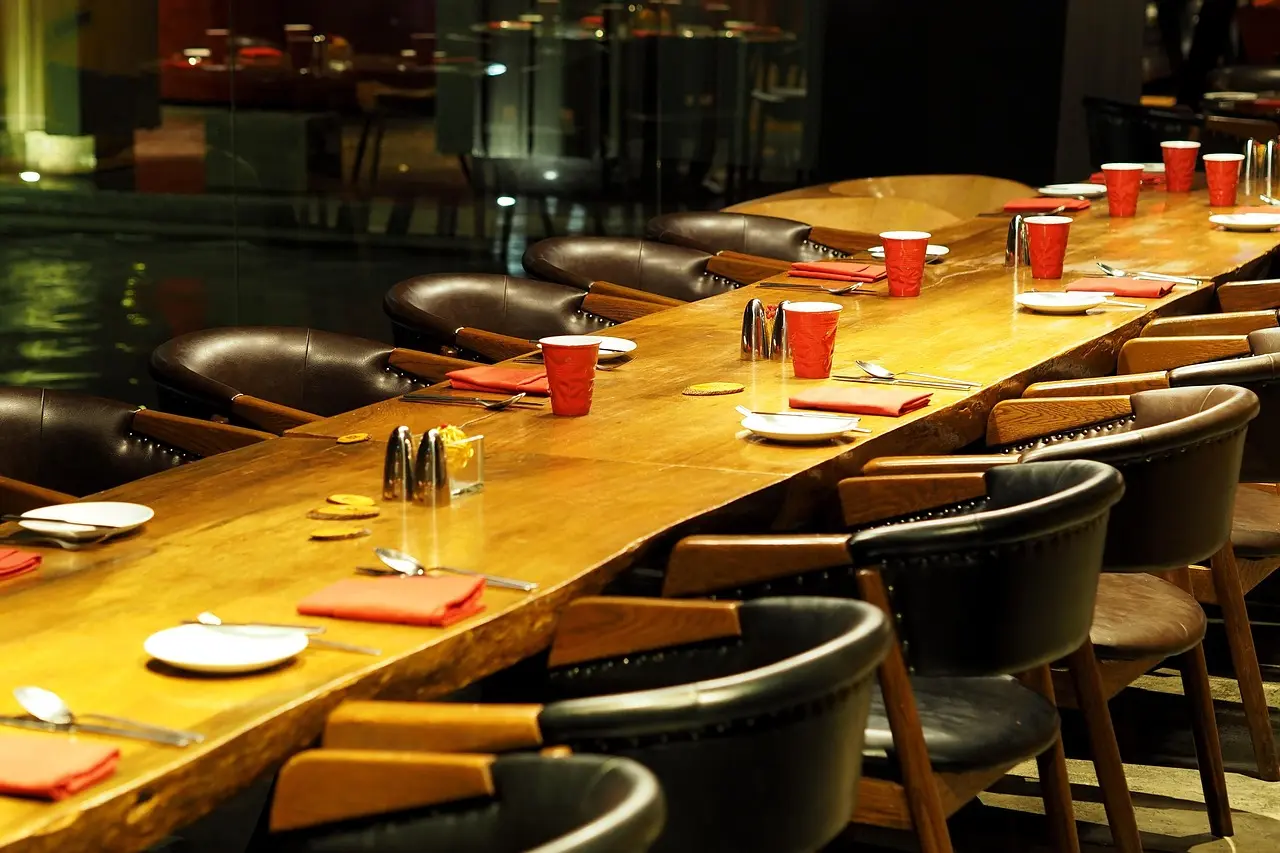
A dining chair is seating meant for a dining table, usually with a seat height around 17 to 20 inches. It is built for meals, so it tends to be wider, more supportive, and better suited to longer sitting than a basic extra chair.
Typical seat height, width, and depth
Anabei says dining chairs usually measure 17 to 20 inches from floor to seat. It also cites dining-chair width at 22 to 24 inches, with seat depth around 16 to 18 inches.
Those numbers matter because they affect both comfort and table fit. A chair that is too tall can press into the table apron; one that is too deep can leave shorter users sitting too far back.
When arms help and when they get in the way
Some dining chairs have arms or armrests. They can make long meals more comfortable, especially at a larger table, but they also tend to need more lateral room and can make chair tuck-in harder.
For tighter dining rooms, armchairs often reduce seating capacity. They are better when the table is large enough and the room has enough circulation space behind the chairs.
Why dining chairs suit longer meals
Dining chairs are built for posture and staying power. A supportive back and a seat that does not pinch the thighs can matter more after 45 minutes than the finish or frame style.
Back height matters here too. A taller back can support the upper body better, while a lower back may look lighter but usually gives less support for lingering meals.

What is a side chair?
A side chair is an armless chair with a slimmer profile, often used as flexible seating in the dining room and beyond. It usually slides around tables more easily and works well when the same chair may need to move from one room to another.
Why the armless shape matters
Armless design is the defining feature for many side chairs. Anabei notes that side chairs usually never have arms, and that absence makes them easier to tuck in, pull out, and place in tighter spots.
That simplicity also helps visually. A side chair can read as lighter in a room, which matters when the table, rug, and circulation path are already doing a lot of work.
How the slimmer footprint helps in tight rooms
Anabei says side chairs are usually narrower at 18 to 20 inches. That smaller width can make the difference between a usable aisle and a cramped one.
In a small apartment, a narrower chair may be the only reason the table still feels practical. It can also let you squeeze in an extra seat without making everyone sit elbow-to-elbow.
Where side chairs work beyond the dining table
Side chairs are useful in bedrooms, guest corners, and mixed-use rooms because they are easier to relocate. They often work as spare seating without looking overly specific to one job.
They can also function as a desk chair when the table height and seat height align. For long work sessions, though, the back support and seat depth matter more than the label.
What is the difference between a dining chair and a side chair?
The main difference is that a dining chair is built around meal seating, while a side chair is built around flexibility and a smaller footprint. Both can sit at a table, but they solve different problems when the room is tight or the seating needs to move.
Seat height, width, and comfort are the practical split
Dining chairs are usually wider and often more comfortable for longer sitting. Side chairs are slimmer, which makes them easier to place but sometimes less forgiving for extended meals.
Seat height should align to the table first. If the chair is mismatched, even a beautiful chair can feel wrong at the table.
Back height changes posture and visual weight
A taller back gives more support and can suit a formal dining room or a chair used for long periods. A shorter back can feel lighter and less dominant in a smaller room.
When the room already feels crowded, back height affects more than posture. It changes how much visual mass the chair adds to the space.
Dining-height is not the same as side chair
Shopping results often blur these labels. A chair can be dining-height and still be a side chair if it is armless and slim, which is why shoppers should read beyond the product name.
The Eames DCW is a useful example. The DCW stands for Dining Height Side Chair on Wood Base, was released in 1946, is a molded plywood chair, was discontinued in 1953, and was re-issued in 1994.
Authenticity details for early DCW chairs
Early identification details matter for collectors and buyers who are comparing vintage pieces. A first-generation identifier is often described as the 5-2-5 screw pattern, while a later Herman Miller marker is sometimes described as the 5-2-4 pattern after the takeover.
Oval shock mounts are another structural and identification detail on early DCW chairs. These details help separate an original-era chair from later production changes.
How do size and fit change the answer?
Size decides whether a chair is actually comfortable at the table. Seat height, width, depth, and back height all affect how the chair fits the table, the room, and the person sitting in it.
Seat height against table height
Seat height is one of the main comfort checks. For dining use, the chair needs enough clearance under the table so knees do not hit the apron and the sitter can sit close enough to eat comfortably.
Anabei’s 17 to 20 inch dining-chair range is a useful starting point, but the table itself still sets the final test. If the dining table is unusually low or high, the chair should be judged against that table rather than the product label.
Width, elbow room, and place-setting spacing
Chair width affects how many people fit at the table and whether elbows collide. Wider chairs reduce capacity; narrower chairs help preserve spacing between place settings.
That is why a side chair often wins at a narrow table. It leaves more breathing room without forcing people to sit sideways or bump arms during the meal.
Seat depth and back height in real use
Seat depth changes leg support. Anabei cites 16 to 18 inches for dining chairs, which is deep enough to support the thighs without always pushing the sitter too far back.
Back height changes how much support the chair gives during longer sitting. A taller back is generally better for lingering meals, while a lower back is easier to place in a tight room and tends to look lighter.
Decision matrix: which chair fits each room job?
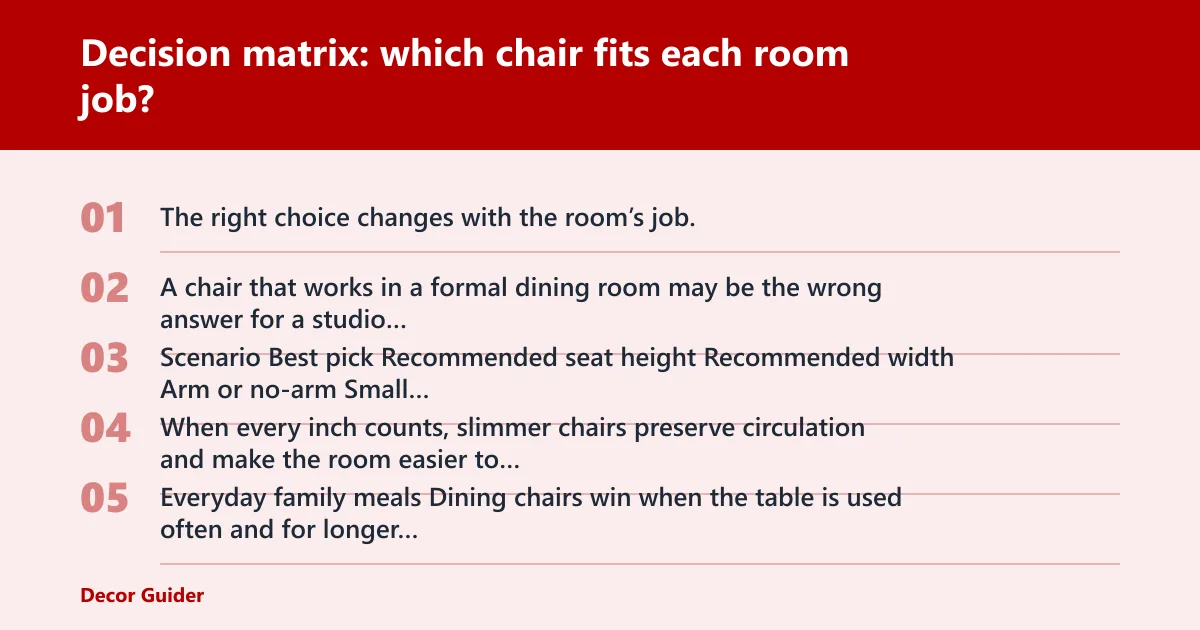
The right choice changes with the room’s job. A chair that works in a formal dining room may be the wrong answer for a studio apartment, and a slim side chair may fail when people sit for hours.
| Scenario | Best pick | Recommended seat height | Recommended width | Arm or no-arm |
|---|---|---|---|---|
| Small apartment dining | Side Chair | 17-19 inches | 18-20 inches | No arms |
| Everyday family meals | Dining Chair | 17-20 inches | 22-24 inches | No arms or low arms |
| Formal entertaining | Dining Chair | 17-20 inches | 22-24 inches | Arms acceptable if the table is wide enough |
| Extra seating in a bedroom | Side Chair | 17-19 inches | 18-20 inches | No arms |
| Mixed-use home office | Side Chair | 17-19 inches | 18-20 inches | No arms |
| Narrow table layouts | Side Chair | 17-19 inches | 18-20 inches | No arms |
Small apartment dining
Side chairs usually win here because footprint matters more than presence. When every inch counts, slimmer chairs preserve circulation and make the room easier to use day to day.
Everyday family meals
Dining chairs win when the table is used often and for longer stretches. The extra width and support are worth it if people sit through homework, weeknight dinners, and weekend breakfasts.
Formal entertaining
Dining chairs are usually the better pick because guests stay seated longer and the room can afford a fuller chair. Armrests are fine if the table is large enough and the chairs do not crowd one another.
Extra seating in a bedroom
Side chairs fit better because they look less like overflow from the dining room. A bedroom seat should be useful, but it should not dominate the room or block access to drawers and closets.
Mixed-use home office
Side chairs often work best in a room that serves as office and guest space. If the chair must move between desk duty and occasional seating, an armless model is usually simpler to place.
Narrow table layouts
Side chairs are the practical answer when the table is long but the room is tight. The narrow profile helps preserve elbow room and allows better chair pull-back without hitting walls or adjacent furniture.
Choose dining chair if… / Choose side chair if…
Choose a dining chair when comfort and support matter more than footprint. Choose a side chair when flexibility and tighter spacing matter more than width. The right pick depends on how the chair will actually live in the room, not on the label attached to it.
Choose dining chair if…
- People sit for longer meals or frequent gatherings.
- You have enough room for wider seats and possible armrests.
- You want a chair with stronger back support and a more substantial feel.
- The table is large enough that chair width will not reduce seating too much.
Choose side chair if…
- The room is small or the table layout is narrow.
- You want chairs that can move into a bedroom, office, or guest corner.
- You need more seats around the table without crowding elbows.
- You want an armless chair that tucks in more easily.
Can a dining chair work as an accent chair, desk chair, or bedroom chair?
Yes, a dining chair can work in those roles if its scale fits the room and the seat height makes sense for the surface beside it. The swap works best when the chair is visually light enough for the room and comfortable enough for the time spent there.
What makes the swap work
A dining chair works as an accent chair when its back height, width, and finish do not overwhelm the room. It works as a desk chair when the seat height and desk height align closely enough for good posture.
It can also work in a bedroom if the chair helps with dressing, bag storage, or a reading spot. The key is whether the chair feels like a planned choice or a leftover dining-room piece.
When the swap looks awkward
It feels awkward when the chair is too wide for the room, too formal for the bed, or too tall for the side table next to it. Armrests can also cause trouble if they prevent the chair from sliding where it needs to go.
A chair can be beautiful and still be wrong for the job. If it blocks movement or looks oversized, the room will reveal the mismatch fast.
How to judge secondary use before you buy
- Measure the table or desk height, then compare it with the chair seat height.
- Check chair width against the path the chair must clear.
- Decide whether arms will help comfort or only create clearance problems.
- Think about how long someone will sit in the chair.
- Match back height to the level of support and visual weight the room can handle.
Frequently asked questions
what is a dining side chair
A dining side chair is a side chair sized for dining-height use. It usually means an armless chair that fits at a dining table while keeping a slimmer footprint than a larger dining chair. The term often appears in shopping results, which can make it sound like a separate category when it is really a dining-height side chair.
what is the best dining chair
The best dining chair is the one that matches your table height, room size, and how long people sit. For long meals and family use, a wider chair with better back support usually wins. For tight spaces, a slimmer model may be the better choice even if it feels less plush.
what are the best dining room chairs
The best dining room chairs are the ones that fit the room without crowding the table and support the way the room is actually used. For daily meals, that usually means a stable seat in the 17 to 20 inch height range with enough width for comfort and enough clearance for easy movement.
can you use a dining chair as an accent chair
Yes, if the chair’s scale and shape fit the room. A dining chair can work as an accent chair when it does not look too bulky next to the bed, sofa, or side table, and when its seat height and back height feel appropriate for the intended use.
do side chairs have arms
Side chairs usually do not have arms. That armless shape is part of what makes them easier to place around tables and move into other rooms. If arms are present, the chair may no longer behave like a typical side chair in tight spaces.
which chair is better for small spaces
Side chairs are usually better for small spaces because they are narrower and easier to move. Their slimmer profile helps preserve walking room and makes table seating feel less crowded. A dining chair only makes more sense in a small room if comfort and long-sit support outweigh the space cost.
Products related to this article
Sponsored / affiliate links. As an Amazon Associate I earn from qualifying purchases. I may earn additional commission from eligible campaigns.