Office Chair Cost / Price / How Much
A decent office chair usually costs $150 to $400 new. Better ergonomic models often run in the roughly $400 to $900 range. Used chairs can sometimes be a smart buy in the roughly $75 to $250 range if the warranty and condition still make sense. Buying too cheap often means weak lumbar support, poor adjustability, and early wear that adds replacement costs. This guide breaks down office chair prices by budget, what each tier buys, and when paying more is worth it.
Office chair price tiers
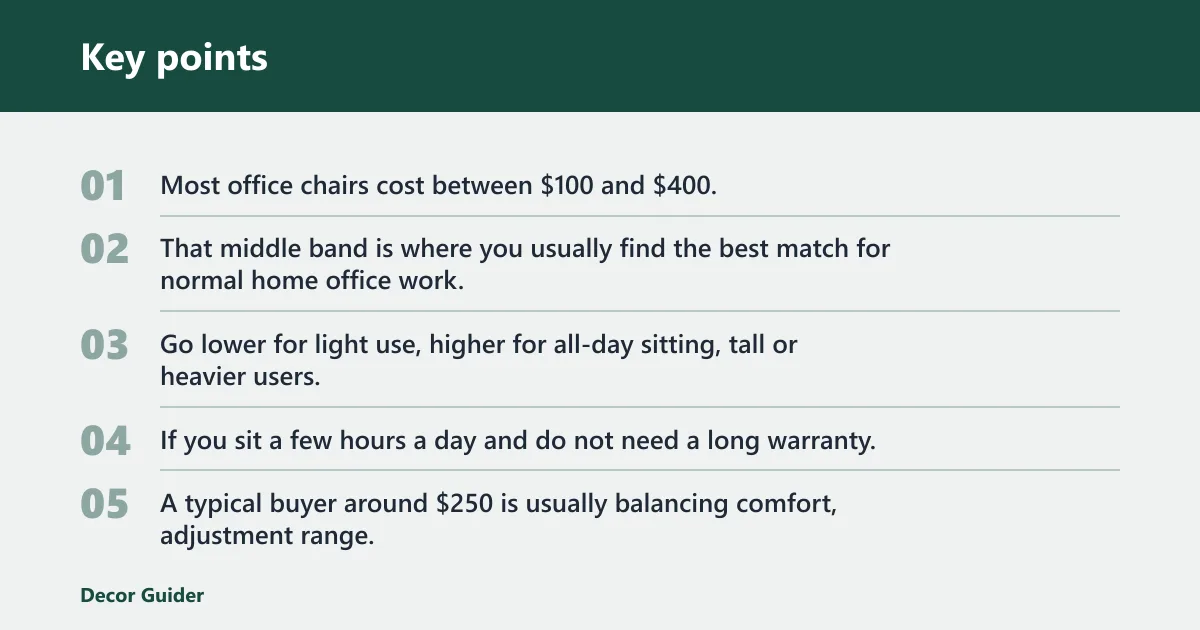


Most office chairs cost between $100 and $400, and the average buyer in one guide pays about $250. That middle band is where you usually find the best match for normal home office work. Go lower for light use, higher for all-day sitting, tall or heavier users, or a chair expected to last many years.
What the average buyer pays
If you sit a few hours a day and do not need a long warranty, the middle of the market is the practical target. A typical buyer around $250 is usually balancing comfort, adjustment range, and build quality instead of chasing the lowest sticker price. For most desks, that beats the cheapest chair on fit and lifespan.
How use case changes the right budget
Price matters less than fit. A chair for occasional email use can stay near the low end, but all-day work changes the math fast. TechRadar frames office chair buying as a price-and-value decision, not just a cheapest-price decision, and it says to consider whether you need a chair for all-day use.
Picture a remote worker who sits six to eight hours a day in a compact apartment office. A $90 chair may look fine at first, but if the seat foam flattens and the armrests wobble within a year, replacement costs can erase the savings. A better chair with firmer parts often costs more upfront and less over time.
What does a decent office chair cost?

A decent office chair usually starts around $150 and can reach $400 or more depending on fit, materials, and adjustments. Under $100, you can find chairs that work for short sessions, but the trade-off is usually weaker support, fewer adjustments, and shorter life. Past $400, you are often paying for better mechanisms, longer warranties, and more exact ergonomics.
Entry-level expectations under $100
Affordable office chairs can cost under $100. In this band, expect simpler construction, limited lumbar shaping, basic seat-height control, and fewer arm adjustments. Cheap chairs may last only one or two years, so this tier fits temporary use, guest seating, or very light work rather than daily eight-hour sitting.
Mid-range value from $100 to $500
This is the most useful range for many shoppers. Most office chairs cost between $100 and $400, and chairs in that zone often combine mesh or fabric upholstery with better tilt controls, sturdier bases, and more predictable comfort. If you want a chair for daily work, this is usually the first band worth comparing closely.
When premium pricing starts to make sense
Premium office chairs can cost $2,000 or more. That price level starts to make sense when you need long service life, stronger support, replacement parts, and detailed adjustment ranges. Wirecutter notes that the best office chairs cost hundreds of dollars, and some office chairs are over $1,000. That higher spend is easiest to justify for intensive daily use.
Office chair price-to-feature matrix
This table shows how the budget bands usually line up with materials, adjustment range, lifespan, warranty quality, and use case. Use it as a buying map, not a rulebook, because brand, testing, and build quality can shift the value inside each band.
| Budget band | Expected materials | Adjustability | Lifespan | Warranty quality | Best-fit use case |
|---|---|---|---|---|---|
| $0-$100 | Mesh or fabric; some bonded leather; lighter frame and simpler base | Basic seat height, fixed or limited arms, simple recline | Often 1 to 2 years | Usually short and limited | Guest use, short sessions, temporary setup |
| $100-$250 | Mesh or fabric with better foam; occasional bonded leather | Better lumbar support, armrest adjustment, recline tension on many models | Moderate if used daily | Better than entry level, but still mixed | Home office, part-time remote work, student desk |
| $250-$500 | Higher-grade mesh, fabric, or leather; stronger frame and mechanism | More seat-height range, more arm positions, seat depth on some chairs | Often several years longer than budget chairs | Usually stronger coverage and parts support | Daily office work, long sessions, better fit for 8-hour use |
| $500-$1,000 | Better mesh, premium fabric, or higher-grade leather; reinforced components | Broader adjustment range, better recline, more refined lumbar tuning | Long service life if well maintained | Often better support and replacement-part access | All-day work, taller users, heavier users, frequent use |
| $1,000+ | Premium materials, high-grade mechanism, heavy-duty frame, better finishing | Deep adjustment range and more exact fit options | Often built for long-term use | Typically the strongest service and support tier | Heavy daily use, ergonomic priority, long ownership horizon |
Why are office chairs so expensive?
Office chairs are expensive because the cost is not only in fabric and foam. The frame, mechanism, base, gas cylinder, casters, and weight capacity all affect the bill. Better warranties and parts support also add cost. Price usually reflects how much engineering and service the chair carries, not just how soft it feels.
What materials add cost
Mesh usually costs more when it needs to stay taut and breathable without sagging. Fabric can be affordable and comfortable, but quality varies a lot. Leather raises the price further, while bonded leather is usually cheaper than full-grain leather. Full-grain leather generally costs more because it is more durable and more demanding to produce and finish.
How mechanisms and weight ratings affect price
The mechanism is one of the biggest price drivers. A chair with basic tilt is cheaper than one with synchronized recline, tension control, and seat-depth adjustment. A stronger base, a heavier-duty gas cylinder, and a higher weight capacity also cost more because they need better materials and tighter manufacturing control.
How warranties and support change the bill
Longer warranties often signal better parts availability and better after-sales support. Cheap chairs often carry short warranties, and that matches their shorter lifespan. A quality office chair can last 10 to 20 years, while a cheap chair may last only one or two years. That gap is a major reason the upfront price can look high.
Which features justify a higher price?
A higher office chair price is easiest to justify when the added features match your sitting time and body size. Lumbar support, armrest adjustment, seat-height adjustment, recline tension, and seat depth all affect fit. If you sit eight hours a day, those features matter more than decorative stitching or a softer-looking cushion.
Ergonomic adjustments worth paying
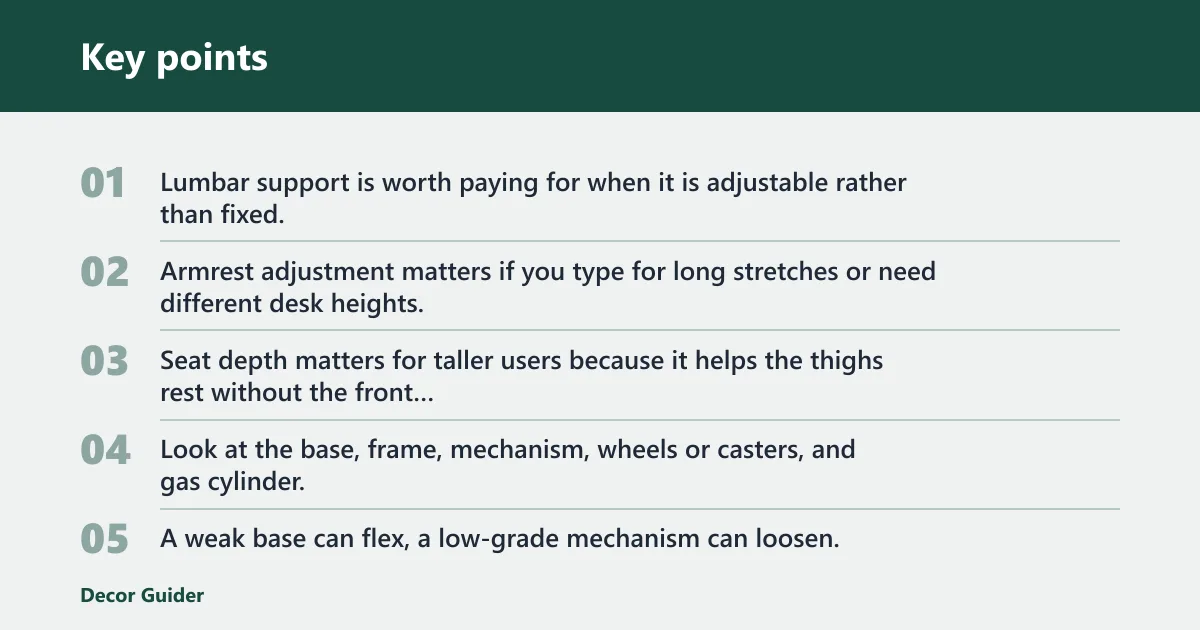
Lumbar support is worth paying for when it is adjustable rather than fixed. Armrest adjustment matters if you type for long stretches or need different desk heights. Seat depth matters for taller users because it helps the thighs rest without the front edge pressing behind the knees. These are fit issues, not luxury extras.
Build parts that affect durability
Look at the base, frame, mechanism, wheels or casters, and gas cylinder. A weak base can flex, a low-grade mechanism can loosen, and poor casters can wear quickly on hard floors. Weight capacity matters too, because it often reflects how much reinforcement the chair has in the frame and lift hardware.
Suppose a 6-foot-4 user buys a bargain chair with shallow seat depth and fixed armrests. The chair may still “work,” but the legs can feel cramped and the shoulders may rise toward the ears. A taller user often gets better value from a pricier chair with a deeper seat, wider adjustment range, and stronger support parts.
When 8-hour use changes the budget
If you need a chair for 8-hour use, the budget should move upward. The extra cost usually pays for more adjustability, steadier support, and better materials that hold their shape longer. That is where the cheapest chair tends to fail first, because fatigue from poor fit shows up before the chair looks worn out.
New vs used office chair value
Used chairs can be worth buying, but only when the price drop is large enough to offset unknown wear. Refurbished chairs from authorized dealers or office liquidators are usually safer than random marketplace listings because they may include inspection, cleaning, and replacement parts. The key question is whether the savings beat the risk of hidden damage.
When refurbished is the better buy
Refurbished makes the most sense for premium chairs with a strong original design and available parts. A well-kept chair with a long warranty history and verified authenticity can beat a cheap new chair on both comfort and lifespan. That is especially true when the new price is far above your target budget.
Where to shop secondhand
Good sources include authorized dealers, office liquidators, Craigslist, and Facebook Marketplace. Authorized dealers are the safest for authenticity and parts. Liquidators often have surplus commercial chairs at lower prices. Marketplace listings can save money, but condition, completeness, and authenticity need close inspection before you pay.
Inspection checklist before you pay
- Check the seat foam for flattening, tears, and hard spots.
- Test the height lift, recline, and arm adjustments several times.
- Look at the base, frame, and casters for cracks, wobble, or missing parts.
- Confirm the gas cylinder holds height without slipping.
- Ask for model information, authenticity labels, and any remaining warranty details.
- Compare the used price with the cost of likely repairs or replacement parts.
Certification, testing, and quality cues
Certification and testing do not guarantee comfort, but they help you judge build quality. ANSI references, third-party testing, and documented quality control are signs that the chair was checked beyond basic assembly. Manufacturer country can also matter when paired with clear specs, consistent parts, and support access.
ANSI and third-party testing
ANSI-related testing and other third-party checks can help confirm that the chair meets stated performance claims. That matters for stability, weight rating, and repeated use. A chair that has been tested is easier to compare than one that only lists marketing language and no test standard at all.
Why quality control matters
Good quality control can help reduce wobble, squeaks, and part mismatch. It also helps explain why some chairs in the same price band feel very different. Two chairs can both claim ergonomic design, but only the one with tighter manufacturing control is likely to hold up well over time.
What manufacturer details can tell you
Look for clear model identification, country of manufacture, and visible part specifications. Those details make it easier to compare warranty coverage, replacement availability, and authenticity. If a listing hides basic details, treat that as a warning sign rather than a bargain.
Frequently asked questions
How much is an average office chair?
That middle range usually covers the best mix of comfort, adjustment, and durability for typical home office use. If you sit all day, the practical average can move higher.
How much does an office chair cost?
The right number depends on how long you sit, how much adjustment you need, and whether the chair must last for years.
What price range should I expect for a decent office chair?
For a decent office chair, expect roughly $150 to $400 new. That range usually gets you better lumbar support, more adjustment, and sturdier parts than the cheapest chairs. If you need 8-hour comfort or a taller fit, move closer to the upper half of that range.
Is it worth buying a used office chair?
Yes, if the chair is from a trusted source, the price is low enough, and the parts still work properly. Refurbished chairs from authorized dealers or liquidators are usually safer than random marketplace listings. Check for wear, missing parts, and proof of authenticity before you pay.
What features justify a higher office chair price?
Lumbar adjustment, armrest adjustment, seat-depth control, a stronger mechanism, and better recline tension are the main features that justify paying more. They matter most for long daily sitting, heavier users, and taller users. A higher price is easier to justify when the chair fits your body instead of forcing your body to adapt.
Products related to this article
Sponsored / affiliate links. As an Amazon Associate I earn from qualifying purchases. I may earn additional commission from eligible campaigns.