Pet Hair Brush vs Vacuum for Sofas: Which Wins on Fur?
I reach for a pet hair brush on most sofa fabrics when I need fast surface cleanup or I’m dealing with a delicate textile, but I use a vacuum for embedded hair, seam buildup, and allergy control. Pick the wrong tool and you waste time, push hair deeper, or mark the fabric. This guide compares both tools by sofa fabric, shedding level, and cleanup goal.
This guide is part of our Sofa cleaning and stain removal series.
| Decision factor | Pet Hair Brush | Vacuum for Sofas | Winner |
|---|---|---|---|
| Hair depth | Best for loose surface fur sitting on top of upholstery fibers | Best for embedded hair lodged in nap, seams, and cushion folds | Vacuum for Sofas |
| Fabric safety | Gentler on many woven fabrics when pressure is controlled | Safer on rough hair pickup when the upholstery tool is used correctly, but can snag or pull on weak fabric | Pet Hair Brush |
| Allergy control | Removes visible hair only; dander stays on the sofa unless wiped or vacuumed later | Better when paired with HEPA filtration or sealed filtration | Vacuum for Sofas |
| Noise and power | Quiet, manual, and works without power | Noisier and depends on battery life or cord access | Pet Hair Brush |
| Cleanup speed | Fast for a few pillows or a light shed on a low-risk fabric | Faster for heavy shedding, deep seams, or a whole couch | Vacuum for Sofas |
| Maintenance | Simple to clean by pulling off collected hair | Needs dustbin emptying, filter care, and brush-roll hair removal on some models | Pet Hair Brush |
Pet hair brush vs vacuum for sofas: the core trade-off
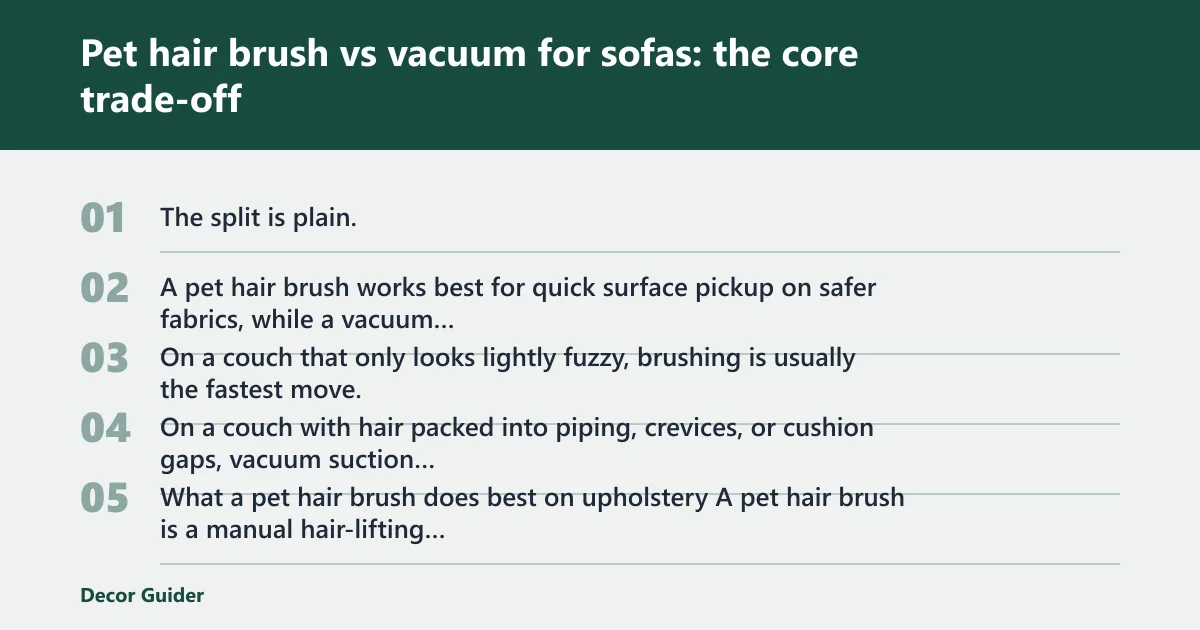
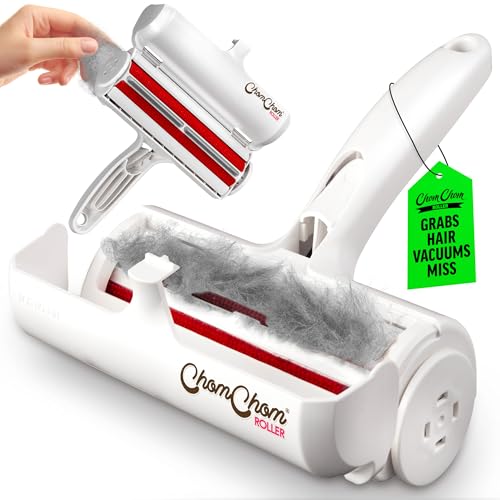


The split is plain. A pet hair brush works best for quick surface pickup on safer fabrics, while a vacuum handles embedded hair, seams, and dander better. On a couch that only looks lightly fuzzy, brushing is usually the fastest move. On a couch with hair packed into piping, crevices, or cushion gaps, vacuum suction usually wins.
What a pet hair brush does best on upholstery
A pet hair brush is a manual hair-lifting tool. It works without power and I find it best on woven upholstery where hair sits on the surface rather than wedged into the pile. Because I control pressure by hand, it helps when I want to stop before snagging trim or distorting a delicate surface.
Where a vacuum pulls ahead on sofa hair
A vacuum cleaner for pet hair brings stronger suction, an upholstery tool, and often a tangle-resistant brush roll. That matters when hair is tucked into seams, pressed into cushions, or mixed with dander. Pet-specific models also commonly use HEPA filtration or sealed filtration, which helps keep fine particles contained instead of sending them back into the room.
Side-by-side comparison table: brush vs vacuum on sofas
Here the winner changes by job, not by brand hype. For loose fur on a calm fabric, the brush has the edge. For deeper cleanup, allergy control, and seam work, the vacuum is the better sofa tool, even if it takes more setup and more care around fragile materials.
Hair depth, shedding level, and cleanup speed
Brushes remove hair sitting on top of the fabric quickly, especially after a light shed from a short-haired pet. Vacuums are more effective when hair has worked down into the weave or built up after several days, because suction can pull material out of folds instead of sweeping only the top layer.
Noise, power, and effort
Manual brushing is generally quiet and does not depend on runtime, which can make it useful in apartments, around sleeping households, or for quick touch-ups. Vacuuming reduces hand strain on larger jobs, but handheld and cordless vacuums bring their own limits: a smaller dustbin, battery runtime constraints, and more stops to empty or recharge.
Snag risk, seam cleaning, and allergy control
A brush can snag boucle, velvet, loose-weave upholstery, and decorative trims if pressure is too heavy or the edge catches a loop. A vacuum can also damage fabric if the wrong attachment grabs at it, but the upholstery tool usually gives better control on seams, piping, and crevices. For allergy control, vacuuming is the only option here that actively captures dander.
How sofa fabric changes the answer
Fabric changes the result. The same tool that works on a tight woven couch can punish a looped weave or pull at a soft pile finish. Sofa care gets easier when the tool matches the texture instead of the hair problem alone.
Woven upholstery and microfiber
On woven upholstery and microfiber, a pet hair brush often handles quick surface hair well because the fibers are relatively stable. Microfiber may still need a vacuum pass when hair settles into the nap or clings around seams, but it is usually a safer starting point than on loose-loop fabrics.
Boucle, velvet, and loose-weave fabrics
Boucle and loose-weave fabrics are the failure cases many guides skip. A brush can catch loops and lift threads, and a vacuum brush roll can do the same if it is too aggressive. Velvet is better treated with a lighter touch and the upholstery tool rather than a spinning head that can crush the pile or leave marks.
Cushions, piping, and tight seams
Cushion edges, piping, and stitched channels hold hair where a flat brush misses it. This is where the upholstery tool matters most. It is made for sofas and cushions, and it can reach into creases without the same snag risk as a broad brush dragged across the whole surface.
When should I use a brush instead of a vacuum on a couch?
Use a brush instead of a vacuum when the hair is mostly on the surface, the fabric is delicate or looped, or the room needs a quiet cleanup without power. It is also the safer first move when you are unsure how a trim, weave, or decorative stitch will react to suction or bristles.
Best situations for a manual pet hair brush
Choose a pet hair brush for woven upholstery, microfiber touch-ups, quick pillow cleanup, and small jobs where you can see every pass. It also makes sense when a vacuum would be too much, such as removing a thin layer of fur after a short visit from a shedding dog or cat.
When light pressure protects delicate fabric
Light pressure matters because snagging usually happens when the tool digs in, not when it glides. On boucle, velvet, and loose weaves, a gentle stroke can lift visible hair without catching fibers. If the brush starts to tug, stop. That is the fabric warning you to switch tools.
A three-step brush-first workflow
- Test a small hidden area with short, light strokes to check for snagging.
- Brush in one direction on open seat and back panels, then collect the lifted hair by hand.
- Stop at seams, piping, and deep folds; switch to a vacuum upholstery tool only where hair remains trapped.
When should I use a vacuum instead of a brush?
Use a vacuum instead of a brush when hair is embedded, seams are packed, or allergy control matters. A vacuum with an upholstery tool reaches into cushion gaps and captures finer debris that a manual brush leaves behind. It is the better second step after brushing, and the better first step for heavy shedders.
Best vacuum features for upholstery
For sofas, look for an upholstery tool, strong suction, HEPA filtration or sealed filtration, and a tangle-free brush roll if the pet sheds heavily. A pet hair remover vacuum is built for this job more directly than a generic model, and pet-specific designs usually do better on furniture attachments than standard vacuums.
Why the upholstery tool matters on seams and cushions
The upholstery tool is the attachment that turns a vacuum from a floor cleaner into a sofa cleaner. It is shaped for cushions, piping, and crevices, where hair collects in narrow lines. Without it, even a strong vacuum may skim the top and leave the worst buildup behind.
A three-step vacuum-first workflow
- Fit the upholstery tool and use short passes across seams, corners, and cushion folds first.
- Vacuum the open panels with controlled suction so the fabric does not pucker or lift.
- Empty the dustbin, then check the filter and brush roll for wrapped hair before storing the tool.
Can a vacuum damage upholstery fabric?
Yes, a vacuum can damage upholstery fabric if the attachment is wrong, suction is too aggressive, or the brush roll grabs at weak fibers. The risk is higher on boucle, velvet, loose weaves, and delicate trims. The fix is simple: use the upholstery tool, keep the head moving, and stop if the fabric starts to pull or polish unevenly.
How to reduce vacuum damage on a couch
Use a smooth attachment rather than a spinning head on fragile fabrics. Lower suction if the vacuum allows it, and avoid pressing down hard on the same spot. If the couch has fringe, embroidered trim, or loose loops, vacuum those areas last and with very light contact.
How do I remove embedded pet hair from couch cushions?
Embedded hair is usually a vacuum job, especially when it has settled into cushion seams or compressed seat channels. A brush can loosen the top layer first, but the vacuum finishes the task by pulling hair out of depth and collecting dander at the same time. That combination gives the cleanest full-cushion result.
Best method for deep cushion buildup
Start by loosening the top layer with a pet hair brush if the fabric is safe for it. Then use the upholstery tool on the vacuum to work the folds, piping, and zipper edges. If the cushion cover is removable and the care tag allows it, clean both sides so hair does not migrate back.
Why hair sometimes moves deeper
Hair can be pushed deeper when a brush drags across a thick weave or when a vacuum head is too stiff for the fabric. That is why the tool order matters. On mixed buildup, loosen first, then extract; do not keep scrubbing one spot until the fibers stop responding.
What vacuum features matter most for upholstery?
The most useful vacuum features for upholstery are the upholstery tool, suction control, HEPA or sealed filtration, and a tangle-free brush roll. Those details matter more than broad marketing claims because sofa cleaning is about control, containment, and reach. A model that cleans floors well can still be awkward on cushions.
Handheld vacuum and cordless vacuum limits
A handheld vacuum is portable and can be good for quick couch cleanup, but its dustbin is often small, so heavier shedding may mean more frequent emptying. A cordless vacuum is easier to move around furniture and under side tables, but runtime constraints can interrupt longer sofa sessions, especially in multi-seat rooms.
Why pet-specific vacuums help heavy shedders
Pet vacuums are usually described as having stronger suction, anti-tangle brushes, and HEPA filtration. Regular vacuums often lose suction, tangle easily, and recirculate fine particles. For a home with repeated shedding and allergy concerns, that difference matters more than a higher wattage number on paper.
Do pet vacuums work better on sofas than regular vacuums?
Usually yes, because pet vacuums are built for hair, not just dust. They typically pair stronger suction with anti-tangle brushes and better filtration, which helps with both visible fur and the finer debris pet owners want removed from upholstery. On sofas, that usually means fewer passes and fewer clogs.
Examples of pet-focused models
Dyson V15 Detect is the best overall cordless vacuum for pet hair, while Shark Rocket Pet Pro is CNET’s best value cordless vacuum for pet hair. Good Housekeeping names the Bissell Pet Hair Eraser Turbo Plus Lightweight Vacuum as its top pick, and notes that it works on carpets, hardwood, and furniture.
Handheld, cordless, and full-size use cases
Black & Decker Dustbuster Advanced Clean is CNET’s best handheld vacuum for pet hair, which makes sense for quick sofa touch-ups. iRobot Roomba J7 Plus is CNET’s best overall robot vacuum for pet hair, and iRobot Roomba i3 Plus Evo is CNET’s best value robot vacuum for pet hair, but neither replaces a proper upholstery pass when the sofa itself is the target.
Is Dyson the best vacuum for pet hair?
Dyson is one of the strongest names in this category, and Dyson V15 Detect is the best overall cordless vacuum for pet hair in the source set here. That said, “best” depends on the job: sofas, stairs, handheld touch-ups, and budget all point to different models, and no single vacuum wins every furniture case.
Where Dyson fits in sofa cleaning
Dyson is a good fit when you want cordless mobility and strong pickup for furniture, but a sofa buyer should still check for the upholstery tool and filtration design. A strong floor head does not matter much on a couch if the attachment set is weak or awkward around seams.
What is the best Bissell vacuum for pet hair?
Good Housekeeping says its top pick is the Bissell Pet Hair Eraser Turbo Plus Lightweight Vacuum. It is a practical sofa-cleaning option because it works on carpets, hardwood, and furniture, includes a tangle-free brush roll, has hands-free dust cup emptying, weighs 13.75 lbs, uses a 30-foot cord length, and has a sealed filtration system that traps allergens.
Why that matters for sofas
That combination suits homes that want one vacuum for pet hair across several surfaces without losing sofa performance. The sealed filtration helps when dander is part of the problem, while the tangle-free brush roll reduces wrap during repeated furniture cleanups. The cord adds range, but it also means less runtime anxiety than a cordless unit.
What is the best vacuum for pet hair and hardwood floors?
The best mixed-surface vacuum for pet hair and hardwood floors is the one that can move from floors to furniture without losing suction or scratching upholstery. In the supplied source set, Bissell Pet Hair Eraser Turbo Plus is explicitly noted to work on carpets, hardwood, and furniture, while Dyson V15 Detect is the best overall cordless pick for pet hair.
How to choose for mixed rooms
If the sofa is the main concern, prioritize the upholstery tool, filtration, and attachment control. If the room also needs floor cleaning, a model that can handle both surfaces reduces clutter in the closet, but the sofa still deserves its own attachment and its own pass pattern.
Decision matrix: which tool wins for your sofa
The choice becomes easy when you match the tool to the fabric and the type of hair. Use the brush for light surface hair on safer upholstery, use the vacuum for seams, deep buildup, and allergies, and use both in sequence when the couch has mixed buildup. That is the most reliable sofa-cleaning rule.
Choose pet hair brush if…
- The hair is sitting on top of woven upholstery or microfiber.
- You need a quiet, no-power cleanup.
- The fabric is delicate enough that you want tighter control than a vacuum head can give.
- You are doing a fast touch-up between deeper cleanings.
Choose vacuum if…
- Hair is embedded in cushion seams, piping, or crevices.
- Allergy control matters and you want dander captured, not shaken loose.
- The pet sheds heavily and the sofa needs a deeper reset.
- You have the upholstery tool and a model with HEPA filtration or sealed filtration.
Use brush first, then vacuum when hair is mixed at the surface and in seams
This is the best workflow for most busy sofas. Brush the open panels first to lift loose fur, then vacuum the seams and cushion edges where the brush cannot reach without snag risk. Stop brushing when you feel drag, and stop vacuuming when the attachment begins to pull the fabric instead of gliding over it.
Choose Pet Hair Brush if… / Choose Vacuum for Sofas if…
Choose Pet Hair Brush if the sofa fabric is safer under light manual pressure, the hair is mostly on the surface, and you want the quietest, cheapest, least fussy cleanup. Choose Vacuum for Sofas if hair is embedded, seams are packed, or dander control matters more than speed or silence.
Frequently asked questions
Is a pet hair brush or a vacuum better for sofas?
A pet hair brush is better for fast surface pickup on safer fabrics, while a vacuum is better for embedded hair, seams, and allergy control. If the couch is lightly dusty with fur, brush first. If the hair is deep or the household has allergies, vacuuming is the stronger option.
What is the best vacuum for pet hair on furniture?
The best vacuum for furniture is one with an upholstery tool, strong suction, and filtration that contains fine particles. Pet-specific models usually do better than generic vacuums because they are built for hair, not just debris. For cordless use, Dyson V15 Detect is the best overall cordless vacuum for pet hair in the provided source set.
When should I use a brush instead of a vacuum on a couch?
Use a brush when the hair sits on the surface, the room needs quiet cleanup, or the upholstery is delicate enough that suction or a brush roll could tug at it. Brushes are especially useful for quick touch-ups on woven fabrics and microfiber, provided the pressure stays light.
Can a vacuum damage upholstery fabric?
Yes. Damage happens when the attachment is too aggressive, the suction is too strong for the fabric, or the head catches loops, trim, or pile. Use the upholstery tool, keep the head moving, and avoid hard pressure on boucle, velvet, and loose-weave fabrics.
Do pet vacuums work better on sofas than regular vacuums?
Usually yes. Pet vacuums are described as having stronger suction, anti-tangle brushes, and HEPA filtration, while regular vacuums often lose suction, tangle easily, and recirculate fine particles. That difference matters on sofas because upholstery holds hair and dander in places floor tools often miss.
How do I remove embedded pet hair from couch cushions?
Start with a pet hair brush only if the fabric is safe for it, then switch to a vacuum with an upholstery tool for seams and folds. Work the cushion edges, piping, and creases first, since that is where embedded hair usually builds up. Finish by emptying the dustbin and checking for wrapped hair.
Products related to this article
Sponsored / affiliate links. As an Amazon Associate I earn from qualifying purchases. I may earn additional commission from eligible campaigns.