Platform Bed vs Panel Bed
Choose a platform bed if it includes a slatted or solid deck that supports a mattress without a box spring; choose a panel bed only if its frame accepts the support your mattress needs, because the label alone does not guarantee support. Get this wrong and you can end up with sagging, a higher mattress setup, or extra box-spring cost. This guide compares support, height, mattress fit, and total price so you can judge the listing details that matter.
| Factor | Platform Bed | Panel Bed | Winner |
|---|---|---|---|
| Support system | Built-in mattress support, usually with slats or a solid deck; no box spring required | Usually needs a box spring or mattress foundation; some models include roll slats | Platform Bed |
| Final bed height | Often 10–14 inches for the frame itself, which keeps the sleep setup lower | Often 16–24 inches before mattress thickness is added | Panel Bed |
| Mattress fit | Best fit for memory foam and latex; closer slat spacing helps support foam | Often pairs well with innerspring mattresses and a foundation layer | Tie |
| Total cost | Usually fewer add-ons if the frame truly supports the mattress on its own | Often adds the cost of a box spring or foundation | Platform Bed |
| Room fit | Better for small rooms, low ceilings, and storage needs | Better when you want a taller bed and have room for extra height | Platform Bed |
Check the support spec before comparing styles
The real difference is support structure, not the label on the listing. A platform bed supports the mattress directly, while a panel bed often relies on a separate box spring or mattress foundation, which changes height, cost, and compatibility. Verify that first, before you compare style.
That matters because two beds can look similar in photos and still need very different support. A panel bed with roll slats may act more like a platform bed, while a platform bed with wide slat gaps may fail to support a foam mattress well.
Support built in or added later
A platform bed keeps the support layer inside the frame. A panel bed usually asks you to add support later, which means the real purchase is the frame plus the foundation, not the frame alone.
That difference affects weight support, warranty fit, and how much setup you need before the mattress can be used.
Why the label matters less than the spec sheet
Look for the words box spring, foundation, slat spacing, deck type, and weight limit. Those details tell you more than the category name does.
A listing that says “panel bed” may still include roll slats and work without a box spring. Another listing that says “platform bed” may have slats spaced too far apart for foam.
Bed choice decision table
| Listing field | Platform Bed | Panel Bed | Recommendation |
|---|---|---|---|
| Required foundation | “No box spring required” or “supports mattress directly” | “Requires box spring” or “requires foundation” | Pick the model whose required support matches your mattress plan |
| Final bed height | 10–14 inches for the frame, before mattress thickness | 16–24 inches for the frame, before mattress thickness | Choose the height that fits your entry comfort and ceiling clearance |
| Slat spacing / support type | Closer slats, commonly no more than 2–3 inches apart, or a solid deck | Roll slats under a foundation, or a separate box spring | Use closer support for foam; use foundation support when the mattress calls for it |
| Mattress type | Memory foam, latex, and many hybrid beds with approved support | Innerspring and some hybrids that are meant to sit on a foundation | Match the frame to the mattress construction first |
| Room constraint | Small bedroom, low ceiling, storage need, or tight walking space | Higher sleep surface, more traditional room scale, or easier entry preference | Pick the frame that solves the room problem you actually have |
| Cost add-on | No added foundation if the frame is complete | Add the cost of a box spring or foundation if one is required | Count the add-on before comparing total price |
What is a platform bed?
A platform bed is a bed frame with built-in mattress support, so you do not need a box spring. It usually sits lower than a panel bed and may include drawers or cubbies beneath the sleep surface.
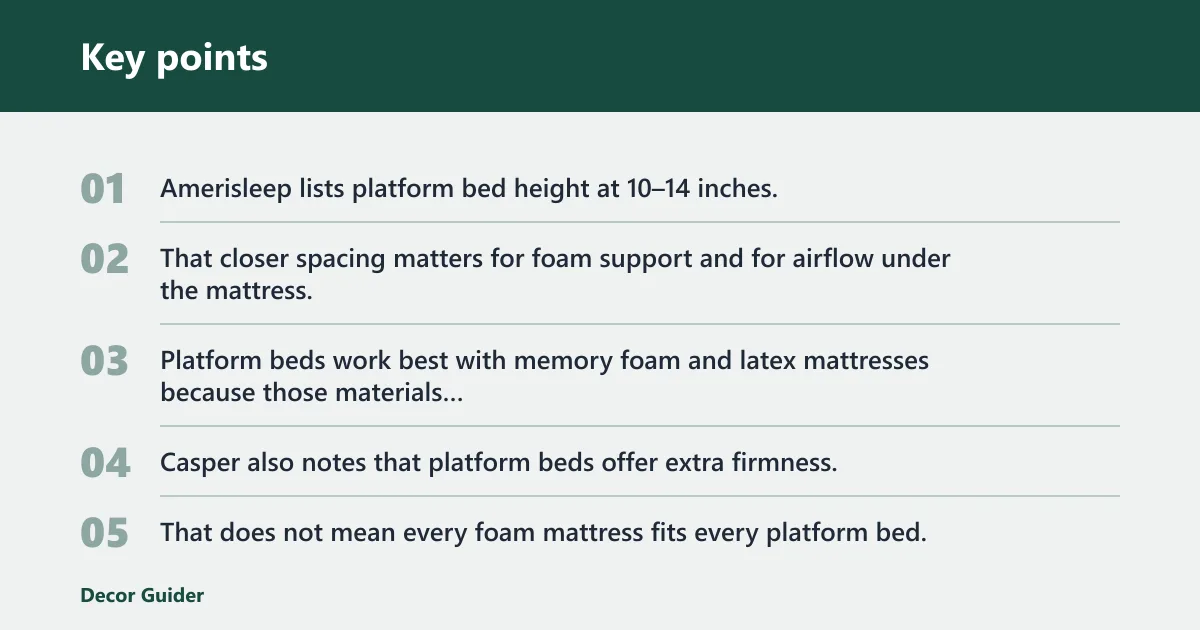
Amerisleep lists platform bed height at 10–14 inches, and Purple says platform-bed slats are usually no more than 2–3 inches apart. That closer spacing matters for foam support and for airflow under the mattress.
Best mattress matches
Platform beds work best with memory foam and latex mattresses because those materials benefit from even support. Casper also notes that platform beds offer extra firmness, which can help a mattress feel more stable.
That does not mean every foam mattress fits every platform bed. If the slats are too far apart, the mattress can sag between supports and may lose warranty coverage.
Where storage fits
Platform beds often come with under-bed storage, which helps in small rooms where every inch counts. Drawers and cubbies are common options.
If you need to keep bins, shoes, or bedding out of sight, this style often handles both mattress support and storage in one frame.
What is a panel bed?
A panel bed is a traditional frame with a headboard and footboard that usually needs a box spring or mattress foundation. Casper calls panel beds the standard bed model, and they often sit higher than platform beds.
The same source lists panel bed height at 16–24 inches, which can make the final sleep surface easier to get into for some buyers. The trade-off is that you may need an added support layer and the extra cost that comes with it.
Typical height and feel
Panel beds create a taller profile once the box spring or foundation and mattress are stacked together. That can help in rooms with enough vertical space and for people who prefer a higher seat when getting in and out of bed.
Because the mattress sits on a separate layer, the feel can be different from a direct-support setup. That is one reason the mattress type matters so much here.
When the extra layer changes airflow
A foundation can raise the mattress and leave more open space under the sleep surface, which may help airflow compared with some low, solid-base frames. That does not guarantee a cooler bed, but it can change how air moves around the mattress.
Panel beds with slats under the foundation can also create a more breathable setup than a solid deck, especially for mattresses that benefit from ventilation.
Which bed height works for your room?
Final bed height depends on three things: the frame height, any support layer height, and the mattress thickness. That total matters more than the number attached to the frame listing, because a low frame with a tall mattress can end up feeling high anyway.
If you want easier entry, a taller setup may help. If you have low ceilings, a fan overhead, or a small room, a lower profile can keep the space from feeling crowded.
How to estimate final sitting height
- Check the frame height listed by the seller.
- Add the height of any box spring or foundation if one is required.
- Add the mattress thickness.
- Compare the total with your preferred seat height and knee comfort.
Say your room has an 8-foot ceiling and a ceiling fan, and the listing shows a 24-inch panel bed before mattress thickness. A tall foundation plus a thick mattress can push the top surface high enough to feel cramped, even if the frame looked fine online. (Upenn)
Low profile versus easier entry
A lower platform bed can be easier to fit in a compact room and may help with ceiling clearance. A higher panel bed can be easier to sit on for buyers who want less distance between standing and sitting.
Choose based on the room and the people using it, not on a broad style label.
How mattress type changes the answer

Memory foam and latex usually pair best with platform beds because they need even support. Innerspring mattresses often pair well with panel beds because they are commonly designed to sit on a box spring or foundation.
Hybrid mattresses need more checking than most shoppers expect. Some hybrids work well on a platform bed; others are listed for use with a foundation, and the wrong support can change feel and warranty coverage.
Memory foam and latex on platform beds
Foam mattresses do best with close slat spacing or a solid deck, because gaps can create soft spots over time. That is why the support description matters more than the name “platform bed.”
If the listing does not say the slats are close enough, do not assume they are. The product page should state the spacing or say that the deck is solid.
Innerspring and panel bed pairings
Innerspring mattresses often work well with a panel bed and a box spring or foundation. That setup can keep the mattress feel aligned with how it was designed to work.
It also spreads the load across a separate support layer, which can be useful if the mattress is heavier or if the frame’s slat design is minimal.
Hybrid beds and mixed cases
A common first-timer mistake is treating “panel” as the same as “needs a box spring.” Some panel beds include roll slats and do not need one, while some platform beds may still need careful mattress matching.
Picture a couple choosing one bed for two different mattresses: one side likes a medium-firm foam mattress, the other wants a traditional innerspring feel. In that case, match the support system to the mattress that will stay on the frame, not the one that happens to fit the photo.
Choose Platform Bed if… / Choose Panel Bed if…
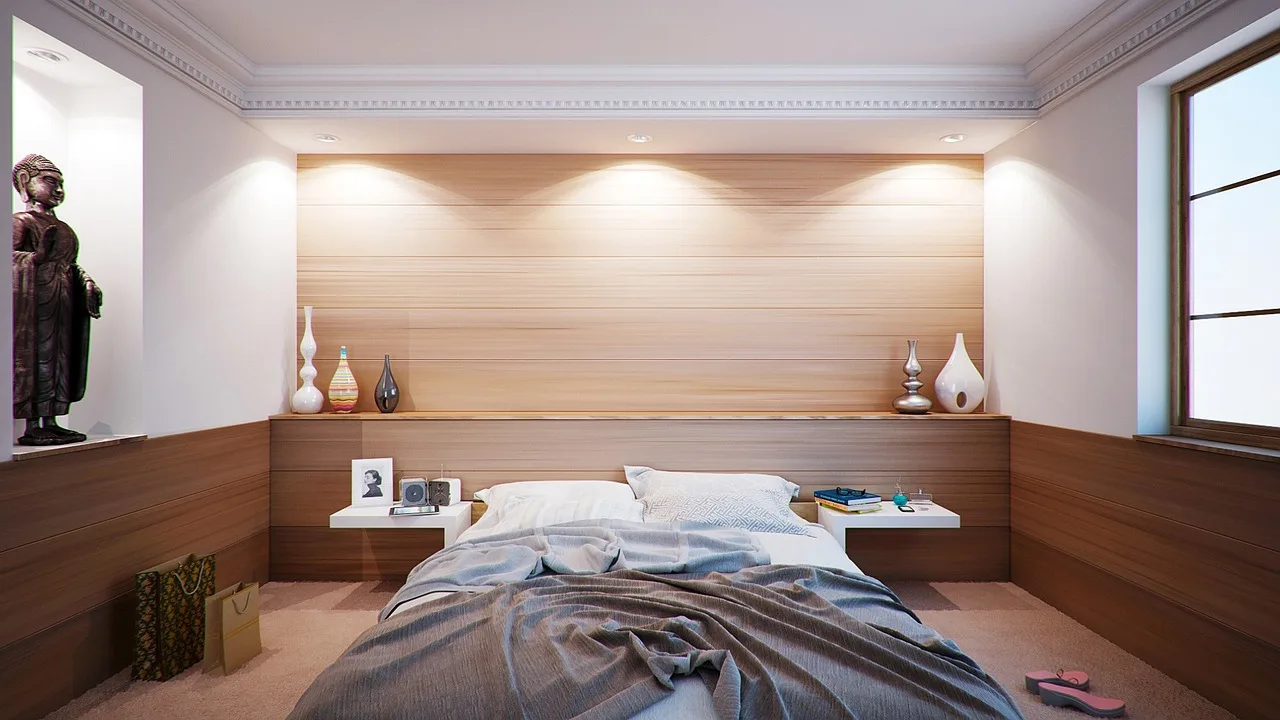
Choose a Platform Bed if you want built-in support, a lower profile, or under-bed storage, and your mattress is memory foam, latex, or another model approved for direct support. Choose a Panel Bed if you want a higher sleep surface, plan to use a foundation, or already own an innerspring mattress that suits that setup.
The best choice also depends on the room. Small bedrooms, low ceilings, and storage needs usually point to Platform Bed, while taller bed height, a classic headboard-footboard look, and a foundation-based mattress setup point to Panel Bed.
- Choose Platform Bed if the listing says no box spring is required.
- Choose Platform Bed if you need storage under the frame.
- Choose Platform Bed if your mattress is foam or latex and the slats are closely spaced.
- Choose Panel Bed if you want a taller sleep surface and are fine adding a box spring or foundation.
- Choose Panel Bed if your mattress is an innerspring model that expects that support.
- Choose Panel Bed if the room can handle the added height.

Frequently asked questions
What’s the difference between a platform bed and a panel bed?
The main difference is whether the frame supports the mattress directly or depends on a separate support layer. Platform beds eliminate the need for a box spring, while panel beds often require one. That choice affects height, total price, and mattress fit.
Are platform beds comfortable to sleep on?
They can be comfortable when the slat spacing is appropriate and the mattress matches the support type. Platform beds often feel firmer because the mattress sits directly on the frame, so the comfort outcome depends on the mattress, the slats, and the weight limit rather than the name alone.
Do panel beds need a box spring?
Often, yes. Panel beds usually require a box spring or foundation for proper support, but some models include roll slats or built-in support and do not need one. Check the product listing rather than assuming every panel bed works the same way.
How much extra does a panel bed cost with a box spring?
The extra cost is the price of the box spring or foundation added to the frame price. Since panel beds are often listed in roughly the $400–$1,200 range and a box spring is an additional purchase, the total cost can be much higher than the frame price alone. Always compare frame-plus-foundation totals.
Products related to this article
Sponsored / affiliate links. As an Amazon Associate I earn from qualifying purchases. I may earn additional commission from eligible campaigns.