Bed Frame Size Chart: Dimensions and Fit
A bed frame size chart is an ordering check: match the frame’s inside dimensions to your mattress size, then add room for clearance, headboard depth, and any slats or side rails. Buy the wrong footprint, and you can end up with a mattress that slips, hangs over the edge, or leaves too little space to walk around the bed. This guide gives you a practical size chart, the measurements to take, and the clearance rules to confirm before you order.
Measurements for twin through California king beds



Use a bed frame size chart to compare three measurements: mattress size, inside frame size, and the outside footprint the bed takes up in the room. Standard bed frame sizes include twin, twin XL, full, queen, king, and California king, and frames usually add 2 to 5 inches to mattress width and length.
The inch figures below are the ones shoppers most often need when comparing listings. Metric conversions help when a seller mixes units or when you measure a room in centimeters.
| Bed size | Mattress size | Typical outside frame footprint | Approx. metric equivalent | Fit note |
|---|---|---|---|---|
| Twin | 38 x 75 inches | 40-43 x 77-80 inches | 97-109 x 196-203 cm | Best for one sleeper and small rooms |
| Twin XL | 38 x 80 inches | 40-43 x 82-85 inches | 97-109 x 208-216 cm | Common in dorms and for taller sleepers |
| Full | 54 x 75 inches | 56-60 x 76-80 inches | 142-152 x 193-203 cm | Good for single sleepers who move around |
| Queen | 60 x 80 inches | 62-67 x 81-85 inches | 157-170 x 206-216 cm | Popular for couples |
| King | 76 x 80 inches | 78-82 x 82-85 inches | 198-208 x 208-216 cm | Needs a larger bedroom |
| California king | 72 x 84 inches | 72-79 x 86-89 inches | 183-201 x 218-226 cm | Best for tall sleepers needing extra length |
These figures are not interchangeable. A queen mattress does not automatically mean a queen frame will fit every room, because rail thickness, headboard depth, and storage add to the outside footprint.
How do you measure a bed frame correctly?
Measure the mattress first, then the room, then the bed’s outside footprint. Separate inside dimensions from outside dimensions, because a frame can accept the correct mattress and still block a door, crowd a nightstand, or narrow a walkway.
-
Measure the mattress.
Record length and width at the widest points, then note mattress thickness. A mattress that is 12 inches thick will sit differently in the room than one that is 8 inches thick, especially with a low platform frame or a tall upholstered base.
-
Measure the bed footprint.
Check the outside edge of the frame, not the advertised mattress size. Include side rails, posts, headboard width, and any footboard or drawer overhang, because those parts define what the bed occupies on the floor.
-
Map room clearances.
Measure the path from the bedroom door to the planned bed location, and note where dresser drawers, closet doors, and nightstand drawers need space to open. A bed that fits on paper can still block movement if a drawer needs another 18 to 24 inches of swing room.
Say your room is 10 x 10 feet and you want a queen bed. A frame that lands near 67 inches wide and 85 inches long may fit the mattress, but it can leave awkward side clearance if both nightstands also need space. Measuring the route and the final footprint avoids that squeeze.
Bed frame size chart table
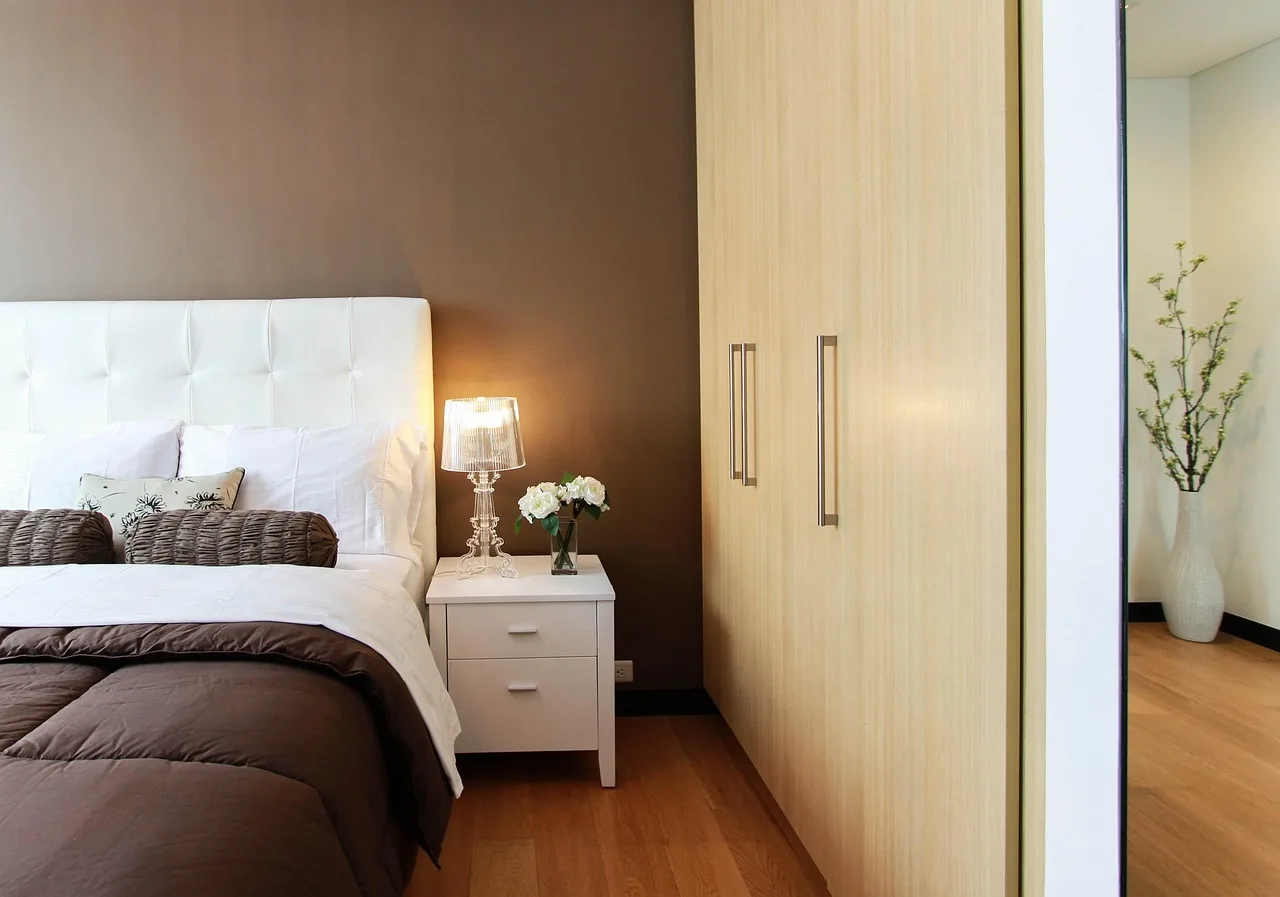
Use this decision table before you order. It combines mattress size, typical outside footprint, room-fit targets, and the most common mistake for each standard size. The room-size guidance is a practical minimum, not a luxury layout target.
| Mattress size | Outside frame footprint | Recommended minimum room size | Side clearance target | Foot-of-bed clearance target | Common buying mistake |
|---|---|---|---|---|---|
| Twin, 38 x 75 inches | About 40-43 x 77-80 inches | 7 x 10 feet | At least 24 inches on one side, or 30 inches for easier access | At least 24 inches | Buying a frame that fits the mattress but leaves no path to a closet or dresser |
| Twin XL, 38 x 80 inches | About 40-43 x 82-85 inches | 7 x 10 feet | At least 24 inches on one side | At least 24 inches | Ignoring the extra length and finding that the footboard crowds a wall or doorway |
| Full, 54 x 75 inches | About 56-60 x 76-80 inches | 9 x 10 feet | At least 24 to 30 inches | At least 24 inches | Choosing a full frame for a small room without measuring dresser drawer swing |
| Queen, 60 x 80 inches | About 62-67 x 81-85 inches | 10 x 10 feet | At least 30 inches on one or both sides | At least 24 to 30 inches | Assuming every queen frame has the same footprint, including upholstered models |
| King, 76 x 80 inches | About 78-82 x 82-85 inches | 12 x 12 feet | At least 30 inches | At least 30 inches | Ordering a king before checking whether bedside tables can still open and pass comfortably |
| California king, 72 x 84 inches | About 72-79 x 86-89 inches | 12 x 12 feet | At least 30 inches | At least 30 inches | Focusing on length only and forgetting that the frame still needs walking space at the foot |
What size bed frame do you need for each mattress?

The right bed frame size matches your mattress dimensions and still leaves usable space in the room. Twin and twin XL work for one sleeper in compact rooms, full suits single sleepers who want more room to move, and queen, king, and California king are better when the bedroom size can absorb the larger footprint.
Twin and twin XL
A twin frame fits a 38 x 75 inch mattress, and a twin XL fits a 38 x 80 inch mattress. These sizes are common in smaller bedrooms and dorms, but the extra 5 inches of length on a twin XL matters if the sleeper is tall or if the bed sits near a wall at the foot.
Full and queen
A full frame fits a 54 x 75 inch mattress, while a queen frame fits a 60 x 80 inch mattress. Full works well for a single sleeper who moves around during the night, while queen is a better everyday choice for couples or anyone who wants more width without moving to a king.
King and California king
A king frame fits a 76 x 80 inch mattress, and a California king fits a 72 x 84 inch mattress. King gives the most width, while California king gives extra length for taller sleepers. Both need a bedroom that can handle the footprint and still allow access around the sides and foot.
What size bed frame fits a queen mattress? A queen mattress needs a queen frame, but the frame’s outside footprint is still larger than the mattress itself. That is why a queen bed in a tight room can feel oversized even when the mattress label looks correct.
How much bigger is a bed frame than a mattress?
Bed frames generally add 2 to 5 inches to mattress width and length, though the exact amount depends on style and attachments. Inside dimensions should still match the mattress category, but the outside footprint may be wider and longer once you include rails, legs, headboards, footboards, or storage components.
Platform frames often stay closer to the mattress size, while upholstered and storage frames can run larger because of padded sides or drawer clearance. Adjustable bases are different again, since the moving base and support hardware can change both the footprint and the height profile.
- Platform frames. These often keep a compact footprint, but the side rails and slats still add some width and length beyond the mattress.
- Upholstered frames. Padded rails usually make the bed look and measure larger, so check the full outside width before ordering.
- Storage frames. Drawers need space to open, so the footprint can extend beyond the sleeping surface.
- Adjustable bases. These may match the mattress size closely in one position, but moving sections and control mechanisms can affect the final setup.
Headboards and footboards can change the answer too. A tall headboard may not affect mattress fit, but a wide one can add to the footprint, and a footboard can shorten the usable walking space at the end of the bed.
How much room should each bed size have?
Room size should be judged by more than bed length and width. You also need space for doors, drawer swing, nightstands, and a walkway that does not force you to sidestep the bed every time you cross the room. A practical layout usually leaves at least 24 to 30 inches of clearance where people need to move.
Minimum room size targets
For a twin, a 7 x 10 foot room is a useful minimum. For a queen, about 10 x 10 feet is a commonly cited minimum by retailers and room-planning guides, and larger sizes generally need more room if you want bedside tables or easy access on both sides.
Side and foot clearance targets
Try for at least 24 inches of side clearance on small layouts and about 30 inches where possible, especially beside beds that see daily use. At the foot of the bed, 24 to 30 inches helps keep closet doors usable and makes it easier to change bedding without pinning yourself against a wall.
A common first-timer mistake is measuring only the mattress and forgetting the dresser drawer that needs to open. A queen frame that fits a 10 x 10 room can still cause problems if a drawer needs to extend into the same area where you planned to walk.
Does frame style change the dimensions?
Yes. Frame style can change both the outside footprint and the final bed height, even when the mattress size stays the same. Platform, upholstered, storage, and adjustable bases do not all measure the same way, so the frame label alone is not enough for a room-fit decision.
Platform frames
Platform frames often sit low and keep the overall profile compact. They are a good option when you want a cleaner outline and less visual bulk, but they still need the right mattress size and enough clearance for nearby furniture.
Upholstered frames
Upholstered frames usually look larger because padded rails and thick headboards extend beyond the mattress edge. That extra width may be only a few inches, but in a small bedroom those inches can decide whether a nightstand fits cleanly.
Storage frames
Storage frames need room for drawers to open. If a drawer extends from the side or foot of the frame, measure the full open position, not just the closed footprint, or the bed may block the closet, dresser, or entry path.
Adjustable bases
Adjustable bases can work well for sleepers who want head or foot elevation, but they need their own sizing check. The base should fit the mattress size, and the room must allow the moving sections to operate without hitting a wall, nightstand, or footboard.
What is the difference between mattress size and bed frame size? Mattress size is the sleeping surface, while bed frame size includes the structure that supports it and often extends beyond it. That difference is why a mattress can be “queen” while the frame footprint is several inches larger in every direction.
Frequently asked questions
What are the standard bed frame sizes?
The standard bed frame sizes are twin, twin XL, full, queen, king, and California king. Those sizes are the starting point for most shoppers, but the outside footprint can vary by style. Always compare the frame’s listed dimensions with the mattress size and the room layout before you buy.
What size bed frame do I need for a full mattress?
A full mattress needs a full bed frame. The mattress measures 54 x 75 inches, and typical full frames are about 56-60 x 76-80 inches, depending on style. That extra space is normal, but you should still confirm the room has enough clearance for doors, drawers, and walking paths.
What are bed frame dimensions in inches?
Bed frame dimensions in inches vary by size. Common outside footprints are about 40-43 x 77-80 inches for twin, 56-60 x 76-80 inches for full, 62-67 x 81-85 inches for queen, 78-82 x 82-85 inches for king, and 72-79 x 86-89 inches for California king.
What are bed frame sizes in cm?
Bed frame sizes in cm are useful when a product page mixes metric and imperial measurements. A twin frame is roughly 97-109 x 196-203 cm, a queen is about 157-170 x 206-216 cm, and a king is about 198-208 x 208-216 cm. Convert the room too, not just the bed.
What is the difference between mattress size and bed frame size?
Mattress size describes the sleeping surface only. Bed frame size includes the structure around that mattress, so the outside footprint is usually larger. That difference matters most in small rooms, where a few extra inches can affect walkway space, nightstand placement, and whether drawers or doors can open fully.
Products related to this article
Sponsored / affiliate links. As an Amazon Associate I earn from qualifying purchases. I may earn additional commission from eligible campaigns.