Best Bookcase for Heavy Books (2026): we compared
A good bookcase for heavy books usually has short shelf spans, a fairly deep shelf, thicker engineered wood or solid wood shelves, and wall anti-tip anchoring; aiming for higher per-shelf capacity is sensible. Skip those basics, and bowed shelves, cracked dowels, and a tipping hazard can turn a storage buy into a replacement bill. This guide shows how to judge shelf span, depth, material, fasteners, and safety features before you buy.
This guide is part of our Chairs guide: types, buying and care series.
Quick comparison
| Product | Badge | Best for | Price | ||
|---|---|---|---|---|---|
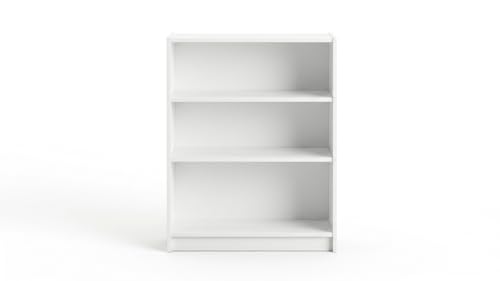 |
Ikea BILLY Bookcase, white 80x28x106 cmIKEA | Also great | BILLY · 80x28x106 cm · Adjustable shelves | $159.99
Price as of 28 Sep 2026
|
View |
 |
Bezuny 5-Tier Metal Bookshelf, 72" H Adjustable DeepBezuny | Our pick | 72" H · 2500 lbs capacity · Metal | $79.99
Price as of 28 Sep 2026
|
View |
 |
Sauder Miscellaneous Storage 5-Shelf Bookcase/ Book shelf,Sauder | Upgrade pick | Select Cherry finish · 3 adjustable shelves | $189.99
Price as of 28 Sep 2026
|
View |
 |
Camaflexi Shaker Style 6 Shelf Bookcase / Solid Wood / 72Camaflexi | Also great | Solid wood · 72" H · 11.5" deep | $337.77
Price as of 28 Sep 2026
|
View |
 |
Jazipic 5-Tier Bookcase with Adjustable Storage Shelves,Jazipic | Budget pick | 70.9" H · Book stoppers · Anti-tip kit | $139.99
Price as of 28 Sep 2026
|
View |
Use the comparison table to separate safe choices from flashy claims. I look first at shelf rating, shelf depth, span, and whether the unit includes or supports wall anchoring.
How we chose
The shortlist favors units with clear per-shelf ratings, usable depth for dense books, and construction that resists sag over time. I also weighed anti-tip support, shelf span, and whether the frame relies on weak back panels or flimsy connectors.
Capacity alone is not enough. A shelf rating means little if the span is too long, the load sits only at the front edge, or the unit has a tall, narrow footprint that raises its center of gravity when loaded.
I also separated wood, MDF, and metal by how they behave under sustained weight. For heavy books, the question is not whether the shelf holds today. It is whether it keeps that shape after months of load.

Solid-wood bookcase: best for long-term heavy loads

Solid wood is often a strong long-term choice when loads stay heavy and shelves need to resist sag over time. This Camaflexi unit uses solid wood, stands 72 inches tall, and has 11.5-inch depth, which helps with large hardcovers and steadier front-to-back support.
It suits owners who want a bookcase that can carry textbooks, reference volumes, and art books without depending on thin shelf decks. The closed back also helps cut wobble compared with open-backed decorative units.
The drawback is cost and weight. Solid wood usually costs more, and if shelf spans are still wide, even solid wood can sag under dense books unless the load is spread out and the unit is anchored well.
Metal-frame bookcase: best for maximum stiffness
Metal frames usually resist sag better than light wood composites because the shelf support structure is stiffer. This Bezuny unit is built around a metal frame, includes reinforced back beams, and is advertised with adjustable, detachable storage for large loads.
It is a practical pick for people who want dense storage without depending on a thick wood shelf deck. The rigid frame can matter a lot when the unit carries rows of textbooks or reference books.
The drawback is that metal strength depends on the shelf deck and the joints, not only the frame. A stiff frame with a thin shelf panel can still deflect, and open metal units still need careful anchoring if they are tall.
Engineered-wood bookcase: best for budget buyers with lighter loads
Engineered wood can work for light to moderate book loads when the shelf spans are short and the book depth is reasonable. This IKEA BILLY includes adjustable shelves and comes with the wall fastener needed for anti-tip safety, which matters more than many shoppers expect.
It is a sensible choice for paperbacks, mixed media, and lighter hardcovers if the owner follows the anchoring instructions and avoids overloading one shelf. Adjustable shelves also make it easier to space books by height instead of stacking them awkwardly.
The drawback is that light composite shelves are less forgiving under sustained dense loads. Long spans, uneven loading, and deep rows of heavy books can lead to sag before the unit looks visibly overloaded.
Engineered-wood bookcase: best for mixed household storage
Sauder’s 5-shelf bookcase suits buyers who need a finished look and flexible storage more than maximum load. The three adjustable shelves make it easier to fit binders, paperbacks, and some hardcovers without forcing books into a tight vertical gap.
It works best when the load is spread out and the shelf is not asked to carry very dense rows of encyclopedias or art books. That makes it useful in living rooms and shared spaces where appearance matters alongside utility.
The drawback is that this type of unit is not the first pick for the heaviest collections. If the shelf span is long and the backing is thin, the unit can feel fine at first and then start to loosen as the load settles.
Engineered-wood bookcase: best for heavy-duty value
Jazipic is the best value-leaning pick here because it combines a metal frame with an anti-tip kit and built-in book stoppers. That makes it better suited to dense books than a basic decorative shelf, especially in apartments and home offices.
It fits buyers who want a safer budget option without moving all the way up to solid wood pricing. The 70.9-inch height makes the anchoring kit important, but the included safety features reduce the number of separate parts a buyer needs to add later.
The drawback is that a tall frame still depends on proper assembly and wall support. A strong-looking frame can wobble if the fasteners are loose, the floor is uneven, or the shelves are loaded unevenly from side to side.
How to judge shelf capacity before you buy
What weight capacity should a bookcase have for heavy books? For dense collections, a shelf capacity around 50 pounds or more is a reasonable target, and it may need to be higher if the shelf span is long or the books are especially heavy. Capacity is not universal; it changes with material, span, and how evenly the load sits.
Shelf-load planning table by book type
| Book type | Approximate weight per linear foot | Recommended shelf depth | Minimum safe per-shelf rating |
|---|---|---|---|
| Paperbacks | 8–12 lb | 10 in | 30 lb |
| Hardcovers | 12–20 lb | 10–12 in | 40 lb |
| Textbooks | 18–28 lb | 11–12 in | 50 lb |
| Art books | 25–40 lb | 12–14 in | 60 lb |
| Large-format volumes | 30–45 lb | 12–15 in | 75 lb |
The table is a planning tool, not a promise. A shelf that is fine with paperbacks across the full width may sag under the same linear space of art books if the support points are too far apart.
How span, material, and load pattern change capacity
Unsupported span length matters because shelf bend rises fast as the distance between supports grows. A 30-inch shelf with center support behaves very differently from the same shelf with no support, even if the material is identical.
Solid wood usually holds shape better than thin panel stock, but it is not magic. Engineered wood and MDF can be acceptable when the span is short and the shelf is thick enough, while metal frames often give the stiffest support if the deck itself is not flimsy.
Even weight distribution matters because concentrated loading creates the worst bend at the middle. Spread books across the shelf face, avoid piling heavy volumes at one end, and do not put the heaviest row entirely at the front edge.
How to spot overstated manufacturer claims
- Check whether the rating is per shelf or for the entire unit.
- Look for the shelf span, not just the outside width.
- See whether the load assumes even distribution or point loading.
- Watch for vague phrases like “holds a lot” without a number.
- Inspect whether the back panel is thin, loose, or only decorative.
- Prefer listings that mention cross-bracing, center support, or wall anchoring.
If a listing gives a big number but hides the shelf depth, the support style, or the back design, treat the claim as optimistic. Heavy books expose weak joints quickly.
How to keep a tall bookcase from tipping
Tall-unit tipping risk rises when heavy books sit high on the shelf, the base footprint is narrow, or the unit is left unanchored. Wall anchoring is the most reliable fix, but renters need a version of the plan that works when drilling is restricted or forbidden.
Renter-friendly anti-tip checklist
- Choose the widest base footprint you can fit.
- Keep the heaviest books on the bottom shelves.
- Avoid loading the top shelf with art books or boxed sets.
- Use included anti-tip straps or fasteners if the lease allows them.
- Place the bookcase on level flooring and check for rocking before loading it.
- Keep the front edge free of overhanging books that can catch and pull the shelf forward.
Non-renter anchoring checklist
- Fasten the unit to wall studs whenever possible.
- Use the manufacturer’s anchoring kit, not random hardware.
- Check that cam locks, screws, and shelf pins are fully seated.
- Confirm the back panel or crossbeam is installed exactly as intended.
- Level the unit before filling it, then recheck after loading.
- Keep the center of gravity low by placing dense books on the lower shelves.
Loading habits that reduce tipping risk
Put the densest volumes low. That lowers the center of gravity and cuts the chance of a forward tip if someone bumps the unit or pulls a drawer nearby.
Do not overload one side. Uneven loading twists the frame, opens gaps at the joints, and can make a stable-looking bookcase feel loose after a few weeks.
What should I look for in a heavy duty bookcase for heavy books?
Look for short shelf spans, a depth that matches your biggest books, a stiff frame, and a real anchoring plan. A strong heavy-duty bookcase is one where the shelf, back, base, and fasteners all work together instead of relying on one bold capacity claim.
Build quality matters at the connectors as much as at the shelves. Cam locks, screws, crossbeams, leveling feet, and an anchoring kit all help the unit keep its shape under load.
Assembly hardware that affects stability
Cam locks and screws are common, but they need to seat tightly or the frame will rack. Crossbeams and X-braces matter because they resist side-to-side sway, which is one of the first signs that a loaded unit is losing rigidity.
Leveling feet are worth paying attention to on uneven floors. If the unit rocks before books are added, it will usually feel worse after loading because the weight magnifies the tilt.
Which one should you buy
If the collection is mostly textbooks or encyclopedias, choose the metal-frame Bezuny or the solid-wood Camaflexi. If the shelves need to hold art books or oversized hardcovers, the Camaflexi’s 11.5-inch depth is the safer starting point among these picks.
For renters, the IKEA BILLY is the simplest choice because it includes the wall fastener and works well for lighter to moderate loads when anchored correctly. For a tighter budget with a sturdier feel, the Jazipic gives you a metal frame plus an anti-tip kit.
If the goal is a finished living-room look with mixed storage, the Sauder is the softer fit. It is a better match for books and household items than for the densest shelves in a serious library setup.
Frequently asked questions
how to arrange books on a deep bookshelf
Use the back of the shelf first. Put taller or heavier books at the rear, then fill the front with shorter books, boxed sets, or small storage bins. That keeps the load from rolling forward, cuts overhang, and makes the shelf less likely to act like a lever on the front edge.
how to fit the most books on a bookshelf
Sort by height, not by size alone. Adjustable shelves let you reduce wasted vertical space, but do not pack books so tightly that they bow the shelf. For dense collections, the safest way to fit more books is often to add another shelf unit rather than overload one span.
is bigger books reliable
If this means larger books are safe on a bigger shelf, only when the shelf depth and support match the size. Oversized books need deeper shelves and stronger shelf support because they create more front-to-back force and can overhang shallow shelving badly.
what weight capacity should a bookcase have for heavy books?
For heavy books, 50 pounds per shelf is a practical minimum starting point, and more is better when the shelf span is wide or the books are art books and textbooks. The useful number is not the total unit capacity; it is the safe rating for each shelf under even loading.
should I choose solid wood or metal for heavy books?
Choose solid wood if you want a classic look and good long-term strength, especially with shorter shelf spans. Choose metal if maximum stiffness matters more, or if you need a frame that stays straighter under sustained load. In both cases, shelf design and anchoring still decide the final result.
how do I stop a tall bookcase from tipping under heavy books?
Anchor it to the wall whenever possible, keep the heaviest books on the lower shelves, and avoid loading the top shelf with dense volumes. A wide base footprint and a low center of gravity help, but they do not replace anchoring on tall units.
are deep shelves better for large hardcover books?
Yes, within reason. Deep shelves help large hardcovers sit fully supported, which reduces overhang and front-edge strain. The tradeoff is that extra depth can tempt people to stack books two rows deep, so the load still needs to be managed to avoid hidden sag and poor access.
what shelf depth is best for textbooks and art books?
For textbooks, 11 to 12 inches is usually a better target than standard shallow shelving. Art books often need 12 to 14 inches, especially when the bindings are thick or the pages are oversized. Depth alone does not make a shelf safe, but shallow shelves are a poor fit for those formats.
can an IKEA bookshelf hold heavy books safely?
Yes, if the unit has a real wall fastener, the load is spread evenly, and the books are not concentrated on one span. An IKEA bookshelf can be a sensible choice for moderate heavy-book storage, but it should be treated as a system of shelf, back, and anchor rather than a standalone panel.
Products related to this article
Sponsored / affiliate links. As an Amazon Associate I earn from qualifying purchases. I may earn additional commission from eligible campaigns.