Best Bookshelf Ideas for Living Rooms (2026): we compared
The best bookshelf ideas for living rooms use one tall unit per wall, keep 30 to 40 percent of shelves open, and place the bookcase where it won’t block light or traffic. Put it wrong, and the room feels smaller, busier, and harder to use. This guide covers the smartest bookshelf placements, styling choices, storage types, and room-size picks that work in real living rooms.
This guide is part of our Bookshelf guide: build, style, and organize series.
Quick comparison
| Product | Badge | Best for | Price | ||
|---|---|---|---|---|---|
 |
WELLAND 60" Long Floating Shelf, Floating Bookshelf forWELLAND | Our pick | 60 in · 2 in thick · 25 lb capacity | $85.99
Price as of 26 Sep 2026
|
View |
 |
Furinno Basic Book Shelf, 3-Tier Bookshelf, StorageFurinno | Budget pick | 3-tier · 11x17x26 in · espresso | $29.20
Price as of 26 Sep 2026
|
View |
 |
TVU Wood Corner Book Shelf, 5 Tier 65 Inch Tall BookshelfTVU | Upgrade pick | 5-tier · 65 in tall · walnut | $149.99
Price as of 26 Sep 2026
|
View |
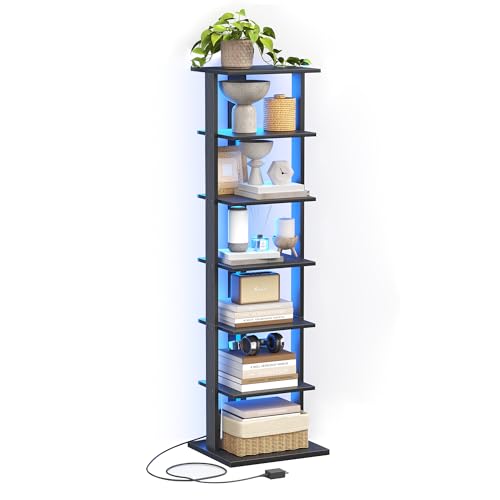 |
GLANZALANT 7-Tier Bookshelf, Narrow Bookcase with LEDGLANZALANT | Also great | 7-tier · 47 in · LED lights | $45.99
Price as of 26 Sep 2026
|
View |
 |
Lifenite 3-Tier Bookshelf, Ladder Shelf for Small Spaces,Lifenite | Pair with it | 3-tier · ladder style · rustic brown | $28.99
Price as of 26 Sep 2026
|
View |
Use this first if the room feels tight, dark, or overfull. The comparison below sorts the main choices by size, install effort, storage type, and safety before any styling decisions.
How we chose
Placement came first. A bookshelf that blocks a window or a walking path fails before styling starts. Then I looked at storage needs, dust control, family use, installation effort, and how well each option fits a rental, a long wall, or a small apartment.
The best picks also had to leave the room calmer, not busier. That is why modular units and mixed storage matter more now than a single open shelf wall.

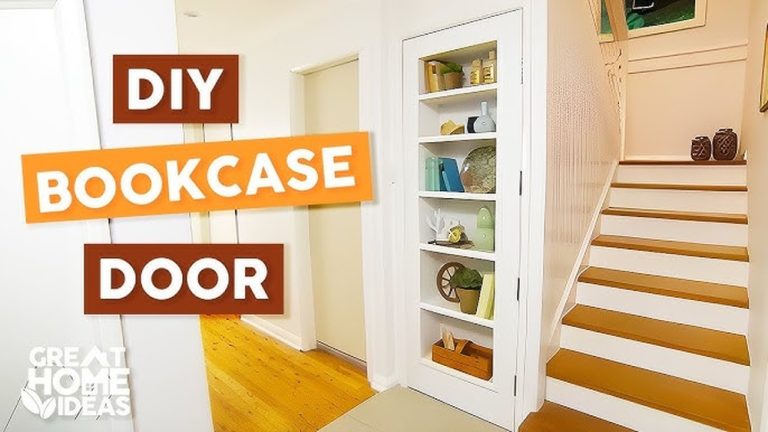
Built-in bookshelf: best for large walls

Built-ins make the most sense on a large wall where a permanent install can turn dead space into finished storage. They suit homeowners who want a wall-integrated look, a finish you can tailor, and a room that feels orderly and open. They are the strongest choice when the room needs both storage and visual order.
The downside is cost and installation effort. Built-ins need planning, leveling, and usually an installer. They also need restraint in styling, or the whole wall can start to feel heavy. Keep some negative space, break up long runs with closed sections, and avoid stuffing every shelf edge to edge.
Floating shelves: best for small or busy rooms
Floating shelves are ideal for compact or busy living rooms where floor space matters more than bulk storage. Their hidden brackets give a light visual profile, which helps a small room feel less boxed in. They work well above a console, beside a window, or over a low sofa back.
The tradeoff is weight and anchoring. A floating shelf is only as safe as the wall fixings behind it, and it should not carry heavy book loads without a proper anchor into studs or masonry. The best use is for a small stack of books, framed art, and a few objects, not a dense row of hardcovers.
Ladder bookshelf: best for narrow zones
Ladder bookshelves suit narrow zones where a full cabinet would crowd the room. Their lean-back form feels casual, and the portable footprint is useful for renters who may shift furniture often. They can fit beside a chair, in a corner, or at the end of a long wall where depth is limited.
The problem is tipping risk. A ladder shelf needs anti-tip anchoring, especially in homes with children or pets. It also needs careful loading, with heavier items lower and lighter decor near the top. Keep each tier sparse enough that the shelf still reads as airy, not cramped.
Open-back shelving unit: best as a room divider
An open-back shelving unit works well when one room needs two zones without losing light. It can divide a living and dining area, or separate a seating nook from an entry path, while preserving a bright, connected feel. That makes it one of the better choices for open-plan rooms.
Balance matters here. Both sides need to look finished, because the unit is visible from multiple angles. Mix books with a few closed bins or sculptural objects, and avoid putting every heavy item on one side. If the shelves become too dense, the divider starts to look like a wall.
Corner bookshelf: best for dead space
Corner bookshelves are ideal for smaller living rooms because they turn unused corners into storage. Vertical or tiered corner forms can pull the eye upward, which helps the room feel taller and keeps the center of the floor open. They are useful where straight walls are already spoken for.
Corner units need careful measurement. Baseboards, outlet covers, and wall angles can reduce the usable depth more than expected. A corner shelf is a smart fix only when the fit is exact. If it is too large, the room feels pinched instead of organized.
Modular systems: best for flexible storage
Modular systems are the best answer when the room must change with the household. IKEA BILLY can move from a single cabinet to a wall-covering bookcase, and IKEA BESTÅ offers tremendous versatility for living room storage. Both support mixed open, closed, and glass-door setups, which is exactly what many rooms need now.
These systems work well when the goal is to cover a wall without making it feel packed. Going vertical uses the full height of the room, and added lighting can make shelves read lighter at night. The drawback is that modular units still need planning; without a layout, they can look pieced together instead of intentional.
Built-in bookshelf details that matter
Built-in shelves work best on long walls that do not need frequent reconfiguring. They suit permanent renovations, large media walls, and rooms where matching the trim or paint finish matters more than portability. A built-in also pairs well with a TV if the screen is centered and the shelves stay outside the viewing cone.
To keep a built-in from feeling heavy, break the run with closed doors, leave breathing room around objects, and do not push all the color to the front edge. The cleanest built-ins often use one calm finish across the full wall.
Floating shelf details that matter
Floating shelves are best when the room already has enough storage and just needs a lighter display surface. They are strong visual tools for renters because they use the wall without consuming the floor. That makes them a good fit above desks, beside windows, or on short wall sections near seating.
The failure case is overload. Too many books on a floating shelf add visual weight and can stress the anchors. Keep heavier books lower, limit row depth, and reserve these shelves for mixed display rather than bulk storage.
Ladder shelf details that matter
A ladder bookshelf can feel right in a modern living room that needs a casual accent without a bulky cabinet. It works especially well in a narrow zone next to a lounge chair or in a hallway-like section of a living room. The open sides help it read lightly.
Styling should stay disciplined. Put heavier books and baskets on the lower shelves, then use the upper tiers for framed prints or one or two small objects. If the top gets crowded, the shelf looks top-heavy and the lean angle becomes more noticeable.
Open-back shelving unit details that matter
Open-back shelving helps divide open-plan rooms while keeping the space visually connected. It is a useful choice when a sofa floats in the room and the back of the seating area needs structure without blocking daylight or conversation lines.
This style works best with balanced styling on both sides. If one side is dense and the other is sparse, the shelf looks unfinished from half the room. Add baskets or closed boxes where clutter gathers fastest, especially near the entry side of the unit.
Corner bookshelf details that matter
Corner shelves make the most sense when a living room has awkward alcoves, leftover wall slivers, or a corner that keeps catching visual clutter. They bring storage into a part of the room that often gets ignored. Small rooms benefit the most.
Measure from the baseboard to the outer edge of the room before buying. A corner shelf that is too wide can block nearby seating or trim. Tiered forms usually feel lighter than chunky corner cabinets, especially in tighter layouts.
Color-coded shelf styling
Color-coded book styling works best on neutral shelving, where the books can become a lively focal point without fighting the cabinet finish. It creates a clean visual sequence and can look especially sharp in rooms with simple furniture and limited decor.
It is less forgiving in visually busy rooms. If the room already has patterned upholstery, strong wall color, or many decor objects, color coding can read as extra noise. It also needs regular dusting because the arrangement depends on keeping the spines clean and consistent.
Industrial bookshelf styling
Industrial bookshelves use reclaimed wood and metal, which suits contemporary interiors that can handle a firmer, more architectural look. They are a good match for loft-style rooms, black window frames, leather seating, and vintage accents. The material contrast gives the shelf clear presence.
The drawback is weight, both visual and physical. Industrial units can dominate a small room if the finish is too dark or the frame is too thick. They work best when paired with lighter objects, open floor space nearby, and one or two softened materials around them.
Living-room bookshelf placement checklist
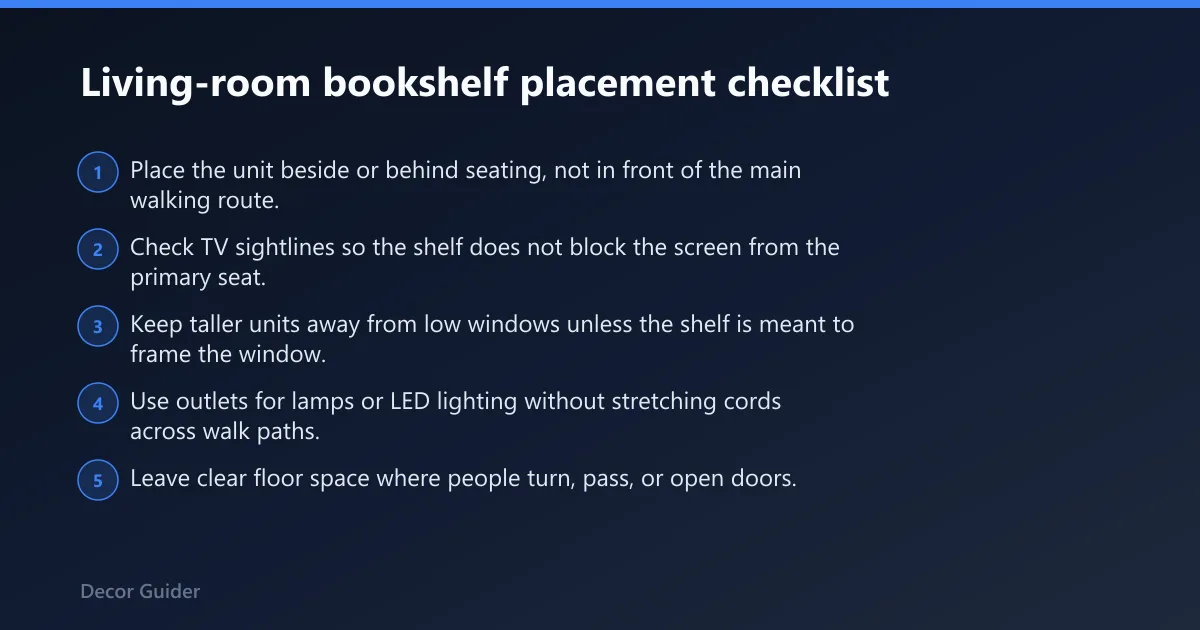
Use placement before styling. The shelf should support the room’s flow, not interrupt it. This checklist keeps the bookshelf from fighting the seating plan, the TV, or the natural light path.
- Place the unit beside or behind seating, not in front of the main walking route.
- Check TV sightlines so the shelf does not block the screen from the primary seat.
- Keep taller units away from low windows unless the shelf is meant to frame the window.
- Use outlets for lamps or LED lighting without stretching cords across walk paths.
- Leave clear floor space where people turn, pass, or open doors.
- Keep heavier storage lower and lighter display higher.
Simple zone map: put tall storage on the longest uninterrupted wall, place lower or floating pieces near windows, keep the zone behind a sofa shallow, and use corners for overflow storage. In open-plan rooms, let the shelf define the edge of the seating area without blocking light from one zone to the next.
| Room condition | Open storage | Closed storage | Best move |
|---|---|---|---|
| Dusty room or allergy-prone home | Harder to keep clean | Better protection | Choose mixed or closed |
| Kids or pets | Easy to reach, easier to knock | Safer for clutter control | Choose closed lower sections |
| Frequent decor changes | Easy to restyle | Slower to update | Choose open or mixed |
| Visual clutter is already a problem | Can look busy fast | Hides the mess | Choose closed or glass-door |
| Mostly books and display objects | Good for display | Less flexible | Choose mixed storage |
Which one should you buy?
Buy floating shelves if you rent, have a small room, and need a lighter wall treatment. Buy a ladder bookshelf if the room is narrow and you want portability with low visual weight. Buy a corner unit if the room has dead space that is not doing any work.
Buy a modular system if you want the most control over storage, doors, lighting, and future changes. BILLY is the better wall-covering route when open display matters, while BESTÅ is the better choice when closed storage and mixed fronts matter more. Buy a built-in only if the budget and permanence fit the room.
For family rooms with kids or pets, choose closed lower sections or a mixed system. For small apartments, the safest bet is a tall, shallow unit or wall-mounted shelves placed away from traffic. If the room is a permanent renovation with a big blank wall, the built-in wins.
Frequently asked questions
where should a bookshelf go in a living room
A bookshelf should go on a wall that does not block the main walking route, TV view, or the best natural light. Long walls are usually the strongest choice. In smaller rooms, corners, shallow wall zones, or the back of a sofa often work better than placing a cabinet where people turn or pass.
what should I put on living room shelves
Use books, framed art, plants, baskets, and a few objects with different heights. Keep heavier items low and lighter pieces higher. The best shelves hold enough to look used, but not so much that the wall starts reading as crowded storage instead of part of the room.
how do I style a bookshelf in a living room
Start with a mix of open space and grouped objects. A good target is to keep some shelves quiet and let others carry the eye. Repeat a few finishes across the unit, vary height and texture, and leave room for the shelf itself to read clearly.
what size bookshelf works best for a living room
The right size depends on wall length, ceiling height, and how much floor space the room can spare. Tall units work best on long walls and in rooms that need vertical storage. Shorter or narrower shelves fit beside windows, chairs, and compact seating plans without making the room feel boxed in.
should a living room bookshelf be open or closed
Open storage is better for display and a lighter feel. Closed storage is better for dust control, kid zones, and rooms that already feel visually busy. Mixed storage usually gives the best balance because it hides clutter where needed while leaving room for books and a few display pieces.
how can I make a bookshelf look less cluttered
Reduce the number of items, repeat a small palette, and keep some shelves nearly empty. Put the heaviest visual items lower, use bins for small loose objects, and avoid lining up every object at the front edge. If the unit still feels crowded, close off part of it or remove one shelf layer entirely.
Products related to this article
Sponsored / affiliate links. As an Amazon Associate I earn from qualifying purchases. I may earn additional commission from eligible campaigns.