Best Bookshelf Ideas for Small Apartments: based on specs
Choose a bookshelf that is roughly 12–15 inches deep, fits the wall width with a little extra clearance, and can hold your heaviest books without leaning. Skip depth, lease rules, or load, and you end up blocking walkways, losing deposit money, or replacing a sagging shelf. This guide ranks the best bookshelf ideas for small apartments by layout, rental limits, and book weight, then shows which styles suit each.
Quick comparison
| Product | Badge | Best for | Price | ||
|---|---|---|---|---|---|
 |
Axeman Deep Floating Shelves – 16 Inch Wide x 12 Inch DeepAxeman | Budget pick | 16 in W · 12 in D · Set of 2 | $27.99
Price as of 24 Sep 2026
|
View |
 |
X-cosrack 5-Tier Over the Door File Organizer, StackableX-cosrack | Also great | 5-tier · Iron · Hanging file organizer | $45.99
Price as of 24 Sep 2026
|
View |
 |
HOOBRO DIY Ladder Shelf, 6-Tier Wall Mounted Bookshelf,HOOBRO | Our pick | 6-tier · 9.4×23.6 in shelves · Ladder style | $59.99
Price as of 24 Sep 2026
|
View |
 |
Armocity Expandable Bookshelf Small Short Corner BookcaseArmocity | Pair with it | Expandable · 180° or 90° corner fit | $149.99
Price as of 24 Sep 2026
|
View |
The right format depends less on style than on where it can physically sit. In a small apartment, the best choice is the one that clears the path, fits the wall, and stays stable under real book weight.
According to Rotating Bookshelf – Keep Every Book Within Reach — Flycity sells a 360-degree rotating bookshelf.
How we chose
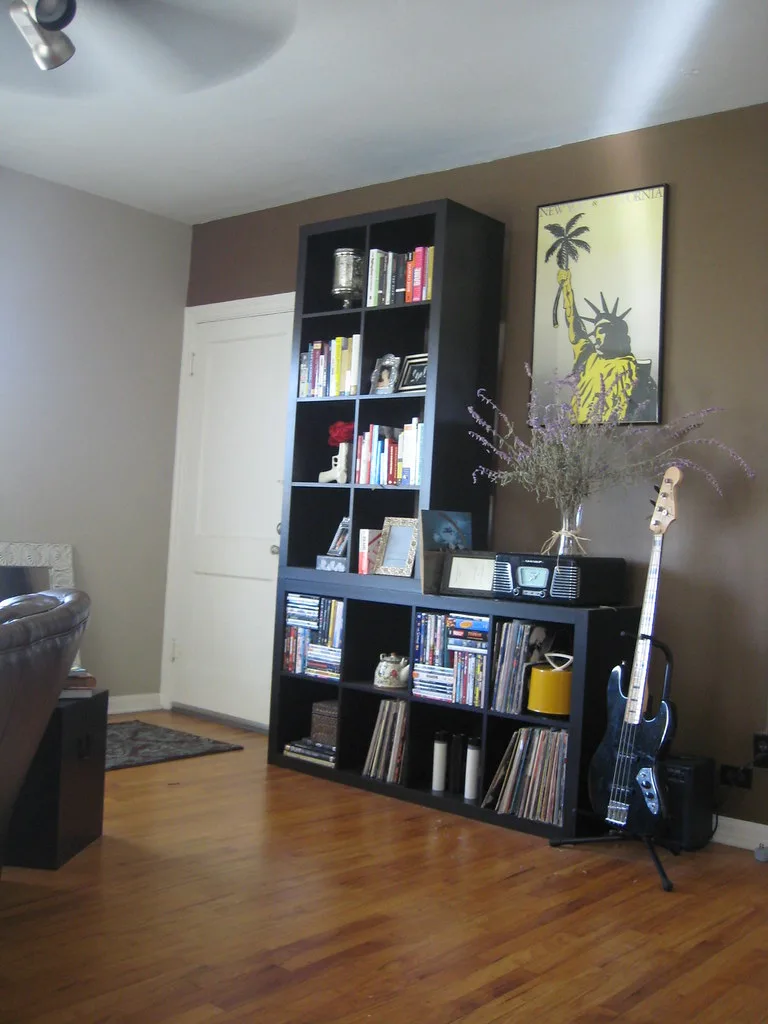
These picks were compared on five plain checks: fit to wall width and depth, stability under load, rental damage risk, access to books, and visual bulk. A pretty shelf that wobbles or blocks a doorway does not make the list.
That filter matters because small apartments fail in predictable ways. The common misses are shelves that protrude too far, tall units that tip if the base is too light, and wall-mounted pieces that ask more from drywall than it can safely give.
Apartment bookshelf fit checklist
Before buying, measure the room first and shop second. This one-page check keeps the decision grounded in the apartment you actually have, not the room in the product photo.
- Wall width: Measure the open wall from trim to trim. Leave 2–3 inches of breathing room so the shelf does not crowd outlets, baseboards, or adjacent furniture.
- Usable depth: Measure how far the unit can project without blocking passage. For most small apartments, shallow shelves are easier to place near doors, desks, and sofas.
- Ceiling height: Check the vertical run from floor to ceiling or to the lowest obstruction. Tall pieces only help when the top shelves remain reachable and the unit still looks balanced in the room.
- Required walkway clearance: Measure the aisle you must preserve. If a shelf steals the main path, it is the wrong shelf even if the dimensions look good on paper.
- Renter-safe selector: Decide yes or no on wall holes, anchors, and permanent installation before you shop.
Simple yes/no selector: If you need no wall damage, start with freestanding or a light corner unit. If you can anchor into studs or approved wall anchors, a floating shelf becomes possible. If the apartment has a dead corner, a corner or rotating option is worth comparing. If the space is permanent and oddly shaped, built-in shelving is the strongest fit.
Axeman deep floating shelves: best for renters who want books and decor
The Axeman deep floating shelf suits renters who want books off the floor without adding a bulky cabinet to the room. Its 12-inch depth handles books better than thin display ledges, and the 16-inch width works well above desks, sofas, or low consoles.
What stands out is the cleaner wall profile. With no visible supports, the shelf reads lighter than a full bookcase, and that matters in tight rooms where every visual break counts. The bracket system also allows placement above or below the board, which gives more flexibility when working around outlets or trim.
The drawback is the tradeoff that comes with any wall-mounted shelf: it depends on wall anchors and the wall itself. In weaker drywall, or when overloaded with heavy hardcovers, floating shelves can fail fast. It is a better fit for mixed books and decor than for a dense wall of textbooks.
HOOBRO DIY ladder shelf: best for visually light vertical storage
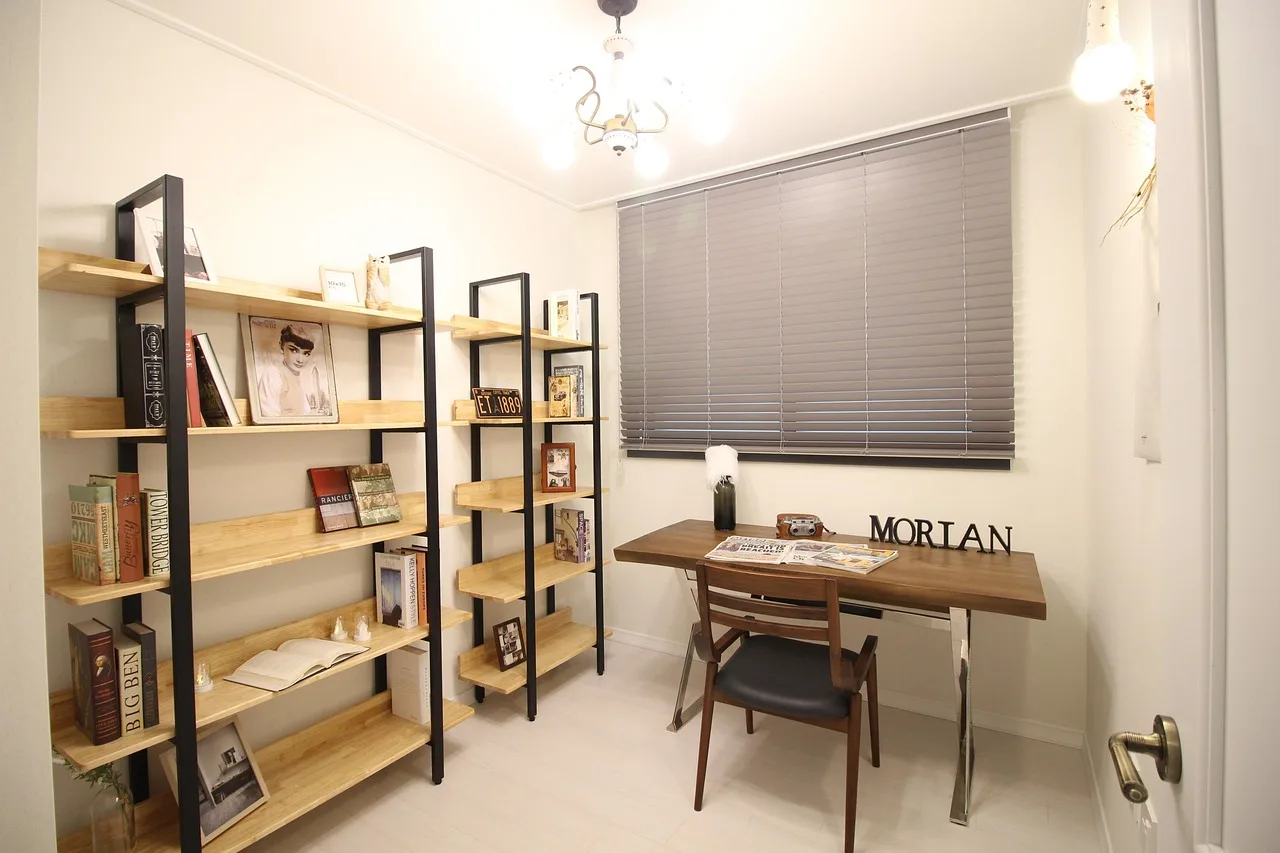
The HOOBRO ladder shelf is for rooms that need storage but cannot afford a heavy visual block. The open-back ladder shape keeps the footprint small, and the six-tier layout uses height well in bedrooms, offices, and studio corners.
It works especially well when the shelf needs to carry both books and display objects. Based on the spec sheet and owner feedback patterns, the open structure makes it easier to avoid that boxed-in feeling common with closed cabinets. The matte black iron pipes also help the frame read slimmer than a full-depth bookcase.
The drawback is stability. Ladder shelves lean by nature, so they need a wall that can support them and a floor setup that does not shift. They also do not solve deep storage needs, because the shelves are more limited than a true bookcase.
Armocity expandable corner bookcase: best for awkward spaces
The Armocity corner bookcase is the strongest fit when the apartment has a dead corner, an odd wall return, or a spot that ordinary rectangular furniture wastes. Its expandable corner setup and 180° or 90° fit make it useful in layouts that do not give you a full straight wall.
This is the kind of unit that earns its keep by geometry. Corner shelves can turn an unused angle into storage without eating the center of the room, and the trapezoidal ladder-style tiering gives each shelf a different depth, which helps with books and decor both.
The drawback is that corner units can be less forgiving to measure. If the angle is off, or the corner is partly blocked by baseboard heaters, switches, or trim, the fit becomes awkward. It is also pricier than basic modular shelving, so the value is better in awkward rooms than in clean rectangular ones.
X-cosrack over-the-door file organizer: best for freeing floor space
The X-cosrack organizer is not a bookcase in the usual sense, but it matters for tiny apartments where the main problem is storage pressure. It gets vertical storage off a door and off the floor, which can help when paperbacks, notebooks, or mail need a home without claiming wall real estate.
Its strength is simple: it uses unused door space. The five stackable tiers are useful for documents and lightweight items, and the iron build gives it more staying power than a flimsy over-the-door caddy. For renters, it avoids drilling and can be removed when the lease ends.
The drawback is that it is the least book-friendly option in this roundup. It is better for files, papers, and mixed small items than for a true library load. If the goal is long-term book storage, this is a supplement, not the main answer.
What is the best bookshelf for a small apartment?

The best overall bookshelf for a small apartment is the one that fits the wall and the walkway before it tries to fit the style. For most people, a slim wall bookshelf or a narrow vertical tower wins because it uses height without stealing aisle space, and it is easier to place near furniture, outlets, and door swings.
Best by layout type
Studios: Go with a slim wall bookshelf, floating shelves, or a narrow vertical tower. Studios punish depth more than height, so the safest move is to keep the shelf footprint shallow and the visual weight light.
One-bedrooms: A corner bookshelf or ladder shelf often works best because there is usually one awkward wall or corner that can take storage without crowding the main living path. If the room has a proper wall run, a slim unit is still the safer buy.
Entry halls: Choose a shallow floating shelf or a very narrow vertical unit. Hallways are where bad measurements show up fast. If a door opens near the shelf, choose the smallest projection you can live with.
Awkward corners: Use a corner bookshelf, a rotating bookshelf, or a built-in nook if the home already has a recess. These spaces are often too small for standard furniture but ideal for shaped storage.
How do I store books in a tiny apartment without taking up floor space?
Use wall-mounted or vertical options, but only after checking the wall and the load. Floating shelves, tall narrow towers, and over-door organizers can all reduce floor use, yet each one trades floor space for different risks, especially in rentals with weak drywall or limited anchor points.
Best no-floor strategies
Floating shelves work when the goal is a light book-and-decor mix and the wall can take anchors. Vertical storage towers work when the room has ceiling height but little floor width. Over-the-door storage works for papers and slim items, not for a heavy run of hardcovers.
If the apartment lease is strict, choose freestanding pieces that stand in a corner or against a wall without drilling. That is the safest path when you need book storage but do not want repair charges later.
Are corner bookshelves good for small spaces?
Yes, corner bookshelves are one of the better small-space fixes because they use a part of the room that is often dead space. Their angular or L-shaped footprint can tuck into a corner without interrupting the main path, which is why they work so well in apartments with limited usable wall runs.
When corners work best
They are strongest in rooms where straight-wall furniture would block a window, outlet, or walkway. Corner ladder styles feel lighter, and corner tree styles can take advantage of vertical room without looking like a heavy cabinet. The catch is that the corner still needs accurate measuring, especially near trim and baseboard heaters.
Home Collective includes corner ladder shelves in its small-space roundup, and Ashdeco says its corner tree bookshelves fit snugly into tight spaces and maximize vertical room. Those are the right clues to look for: shape first, then shelf count.
Should I choose a floating shelf or a bookcase for a small apartment?
Choose a floating shelf when you want low visual bulk and lighter storage, and choose a bookcase when you need real capacity and easier book access. Floating shelves are best for a smaller number of books plus decor; bookcases are better when the collection is heavier or wider.
Pick floating shelves if…
You are renting, the wall can take anchors, and the shelf will hold a moderate load. Floating shelves read lighter because there are no visible supports, and Home Collective includes floating shelf styling as a small-space option. They are a poor choice when the wall is weak drywall or the books are dense and heavy.
Pick a bookcase if…
You need a stable base, more shelf depth, or safer storage for heavier books. A small bookcase is often the better buy when the collection is growing, because it is easier to load without the same anchor concerns. It also gives more room for sorting by size, subject, or frequency of use.
What size bookshelf works in a small apartment?
A small apartment bookshelf should be sized to the wall, the walkway, and the load, not to a sales photo. In practice, that means shallow enough to avoid blocking circulation, tall enough to use vertical room, and wide enough to stay stable with the heaviest books on the lower shelves.
Practical sizing rules
A narrow wall usually wants a slim vertical unit with a shallow profile. A dead corner can take an angular shelf or rotating model. A permanent alcove can take built-in nook shelving that sits flush with the wall. If the shelf sticks out into a route you use daily, it is too deep.
Home Collective says small-space shelves can make tiny rooms feel instantly bigger, and it highlights slim wall bookshelves, vertical storage towers, built-in nook shelves, and under-stair bookshelves. That is useful because it separates the problem by fit type, not by decoration style.
How do I style a bookshelf so it does not make a room feel cluttered?
Keep more empty space than you think you need. A bookshelf feels calmer when books and decor are edited hard, color is grouped with intention, and the shelf is not packed from end to end. Light finishes help, but the real fix is restraint.
Simple styling rules that work
- Mix books with decor in a measured ratio, not evenly across every shelf.
- Leave negative space on some tiers so the unit can breathe visually.
- Group book spines by color or tone when the shelf is in a visible room.
- Use only a few decor pieces, then stop before the shelf feels crowded.
- Remove worn paperbacks, duplicate copies, and items that do not need display space.
A shelf that holds everything looks heavier than one that holds the right things. That is especially true in small apartments, where one overfilled bookcase can make the whole room feel busier than it is.
What kind of bookshelf fits a narrow wall or awkward corner?
A slim wall bookshelf fits a narrow wall, while a corner bookshelf or rotating bookshelf fits an awkward corner. The decision comes down to shape. Long, narrow wall runs want a vertical unit with a shallow depth. Odd angles want furniture that turns with the room instead of fighting it.
Best match by shape
Narrow wall: Choose a slim wall bookshelf or vertical storage tower. The vertical orientation keeps the floor footprint small and the light visual weight helps the room stay open.
Awkward corner: Choose a corner bookshelf, ladder-style corner unit, or rotating bookshelf. These let the dead space work without pushing furniture into the center of the room.
Permanent alcove: Built-in nook shelving is the best fit if the apartment already has a recess and you are allowed to make it part of the room. It sits flush and uses space that would otherwise stay empty.
Are rotating bookshelves useful in small spaces?
Yes, rotating bookshelves can be very useful in small spaces when access matters as much as footprint. A 360-degree spin means you can store more books in a compact area and reach them without needing a wide front opening, which is helpful in corners and tight rooms.
When rotating shelves are worth it
They make the most sense for readers who want easy access and do not want a deep cabinet taking over the wall. Flycity describes its spinning bookshelf as a space-saving home and corner storage solution, which matches the main use case here: compact storage with easier reach.
The drawback is that rotating pieces are more specialized. If the room has a simple straight wall and plenty of clearance, a normal slim bookcase may give more shelf volume for the money. Rotating units are strongest when the room itself is awkward.
Which one should you buy?
Buy by budget, lease limits, and collection size, not by the prettiest silhouette. If the apartment allows drilling and the wall is solid, a floating shelf can be the cleanest low-bulk choice. If you need no damage, go freestanding or corner-based. If the book pile is heavy, choose stability over a sculptural frame.
Best for book-heavy households
Choose a slim wall bookshelf or a vertical storage tower with a stable base. These are better than floating shelves when the books are dense, because they carry weight without demanding as much from the wall. A corner shelf can also work if the room has the right angle and the unit sits solidly.
Best for renters
Choose a freestanding corner unit, a ladder shelf, or a no-drill organizer first. Floating shelves only belong here if the lease allows anchors and the wall is suitable. If drilling into drywall is a concern, avoid anything that depends on heavy wall loading.
Best for studios and entry halls
Choose the shallowest option that still holds your books safely. Studios and halls need walkway clearance more than display value, so a slim wall bookshelf, a floating shelf, or an over-door organizer is usually smarter than a deep cabinet.
Best for decor-first styling
Choose floating shelves, ladder shelves, or a sculptural corner piece. These formats leave more negative space and keep the room from feeling overbuilt. They work best when the book count is modest and the shelf is meant to hold a few books, a lamp, and a small object mix.
When to skip the premium piece
If the shelf is likely to sit in a hidden corner, hold mostly paperbacks, or get replaced when you move, save the money. Premium sculptural units make sense when the room is permanent and the shelf will be seen every day. If not, modular storage is the safer buy.
Products related to this article
Sponsored / affiliate links. As an Amazon Associate I earn from qualifying purchases. I may earn additional commission from eligible campaigns.
 Acovy 40 Inch Floating Shelves, 12" Deep Floating Shelf Wall Mounted, 40" Wall Shelves, Rustic Deep Bookshelf, Extra Deeper & Thicker Display Shelves for Bedroom, Living Room, Oak, Set of 2
 Acovy 24 Inch Floating Shelves, 12" Deep Floating Shelf Wall Mounted, 24" Wall Shelves, Rustic Deep Bookshelf, Extra Deeper & Thicker Display Shelves for Bedroom, Living Room, Brown, Set of 2