How Much Does a Ladder Shelf Cost?
A basic ladder shelf usually costs about $30 to $120, midrange models run about $120 to $250, and handmade or custom pieces often start at roughly $250 and can go above $600. Those bands line up with current retail listings from major home-improvement and furniture retailers, where smaller particleboard or pine units sit near the low end and solid wood or larger decorative pieces move up quickly. This guide breaks down what drives ladder shelf prices, what different materials cost, and when buying beats building.
DIY and retail ladder shelf prices
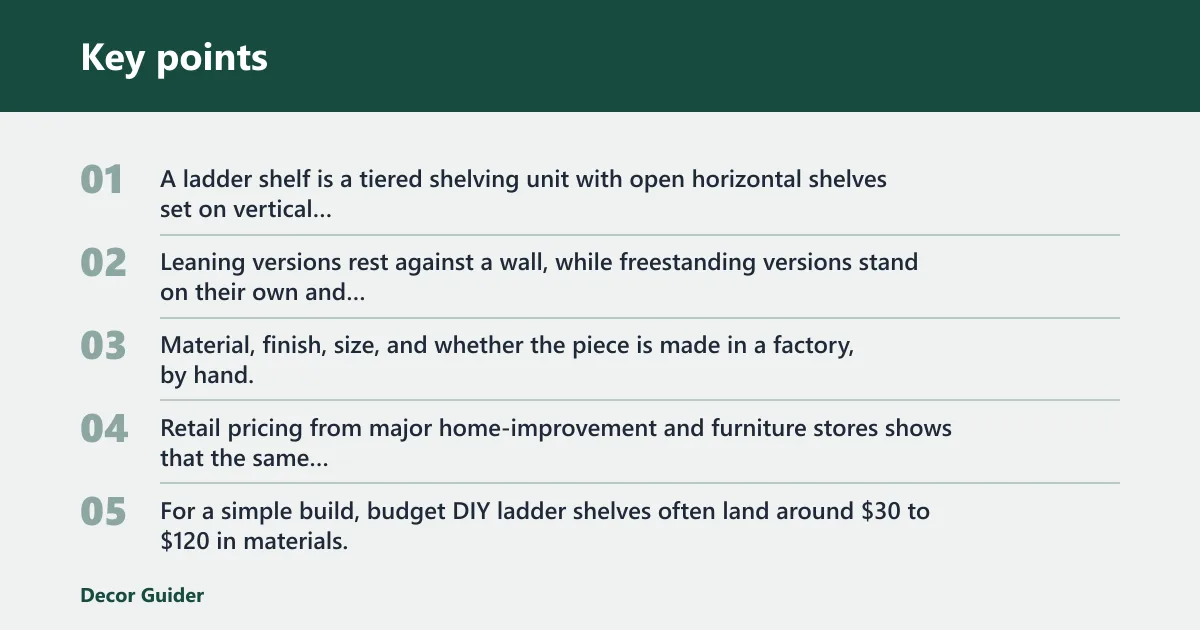


A ladder shelf is a tiered shelving unit with open horizontal shelves set on vertical supports. Leaning versions rest against a wall, while freestanding versions stand on their own and usually need a wider base. Material, finish, size, and whether the piece is made in a factory, by hand, or from an upcycled ladder drive the price. Retail pricing from major home-improvement and furniture stores shows that the same basic style can vary widely depending on whether it is pine, engineered wood, or solid hardwood, and whether it is designed for decorative use or heavier storage.
Budget DIY price range
For a simple build, budget DIY ladder shelves often land around $30 to $120 in materials, with the low end usually tied to pine, plywood, or salvaged parts. If you already own tools and keep the finish plain, you spend less. If you need primer, paint, sandpaper, screws, and anti-tip hardware, the total climbs fast. Lumber, fasteners, and finish products are the main cost drivers, and current home-improvement pricing makes it easy for a simple materials list to push toward the top of the range once you include everything needed for assembly and safety.
Mid-range retail price range
Mid-range retail ladder shelves often fall around $120 to $250. That range usually buys better joinery, a cleaner finish, and more stable construction than the cheapest flat-pack options. It also covers many bathroom ladder shelves and living room units sized for books, plants, and decor rather than heavy storage. In this tier, pricing is often driven by a better wood species, more shelf depth, and a more furniture-like finish rather than a huge jump in size.
Handmade or upcycled price range
Handmade or upcycled ladder shelves often start at roughly $250 and can go above $600, especially for solid wood, custom sizing, or a detailed finish. Custom work usually costs more because the maker has to price design time, material selection, sanding, finishing, and assembly. If a piece is built from reclaimed parts, the labor can outweigh the raw material cost even when the materials themselves are modest.
Ladder shelf cost matrix
This matrix separates what you pay for. Material is only part of the bill. Labor, finish, and markup can matter just as much, especially once a shelf moves from a basic shop build into a handmade piece or an upcycled statement item.
| Tier | Materials | Labor | Finish | Markup | Total | When it makes sense |
|---|---|---|---|---|---|---|
| DIY basic | $30 to $70 | $0 to $20 | $10 to $30 | $0 | $30 to $120 | You want a simple shelf for a corner, rental, or light decor load. |
| Mid-range retail | $45 to $110 | $25 to $70 | $20 to $45 | $30 to $70 | $120 to $250 | You want a ready-made shelf with a cleaner finish and less build work. |
| Handmade or upcycled | $60 to $180 | $80 to $220 | $30 to $90 | $60 to $180 | $250 to $600+ | You want a custom size, a distinct look, or solid wood and can pay for labor. |
Example configurations by type
These examples show how size, material, and room use affect price in practical terms.
- A 60-inch pine leaning shelf for a small living room wall usually sits near the lower-to-middle retail band because pine is less expensive and the design stays relatively simple.
- An oak freestanding shelf with a wider base, deeper shelves, and a furniture-grade finish usually lands higher because solid wood and heavier joinery add cost.
- An over-the-toilet bathroom ladder shelf can be priced anywhere from budget to mid-range depending on moisture-resistant finish, compact sizing, and whether the unit is freestanding or wall-secured.
Typical ladder shelf size for a living room
For a living room, a typical ladder shelf is often about 60 to 72 inches tall, 24 to 36 inches wide, and roughly 10 to 16 inches deep at the shelves. Taller units give you more display height, while wider units offer better balance for books and decor. Shallower shelves cost less and fit tight spaces better, but deeper shelves are more usable for framed art, baskets, and plants. Wider and deeper dimensions usually raise the price because they require more material and often more structural support.
Why some ladder shelves cost more
Higher prices usually come from solid wood, better finishing, and more labor. Oak and walnut cost more than pine, MDF, or plywood because the material itself is pricier and the final piece can carry a furniture-grade look. On branded retail pieces, that premium also includes design, packaging, and store markup. Major furniture retailers and home-improvement stores commonly price hardwood or larger units well above basic engineered-wood shelves for these reasons.
Solid wood and premium species
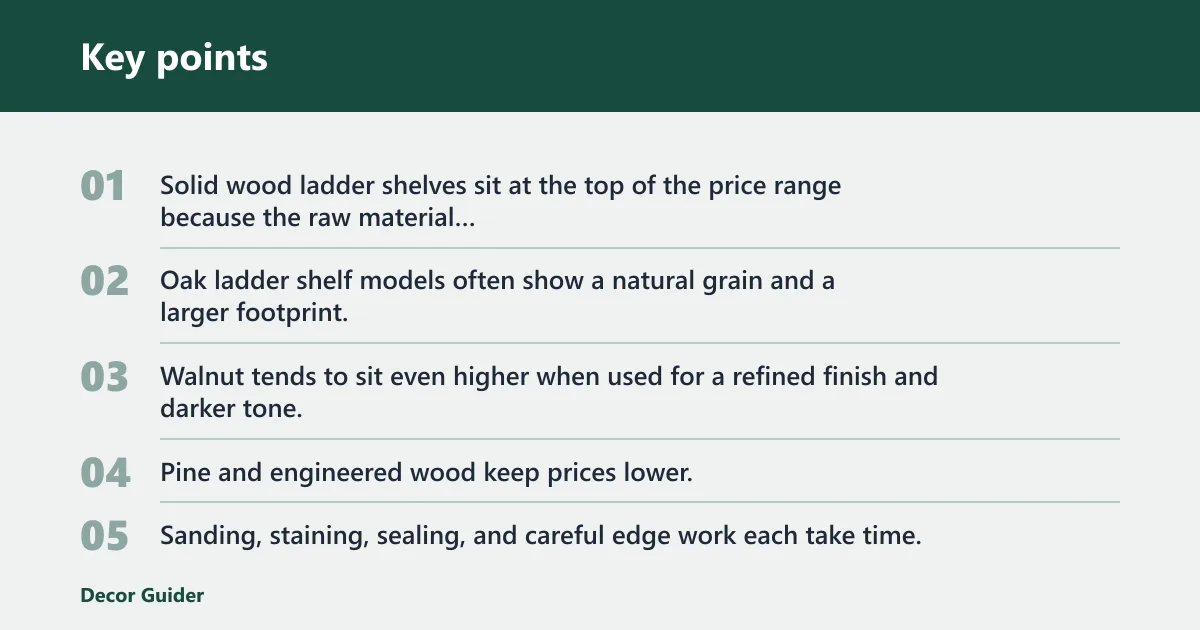
Solid wood ladder shelves sit at the top of the price range because the raw material costs more and usually lasts longer under daily use. Oak ladder shelf models often show a natural grain and a larger footprint, which push them into a higher retail tier. Walnut tends to sit even higher when used for a refined finish and darker tone. Pine and engineered wood keep prices lower, but they may sacrifice some durability or load capacity compared with hardwood options.
Finish quality and labor
Sanding, staining, sealing, and careful edge work each take time. Cleaner edges, even color, and smooth shelf faces add labor hours, and that labor shows up in the price. A basic painted shelf can be quick. A stained, sealed, hand-finished shelf asks for more prep and more touch-up work. Retail listings for finished furniture typically reflect this difference in labor and production complexity.
Brand markup and custom sizing
Retail markup covers warehousing, shipping, retail overhead, and profit. Custom sizing adds another layer because the maker has to adjust the frame, shelf depth, and spacing. Tall shelves, wider footprints, and special bathroom or over-the-toilet dimensions usually cost more than a standard decorative unit.
How much does a ladder shelf cost to build?
A basic DIY ladder shelf often costs less than buying one, but only if you keep the design simple and count your materials honestly. A straightforward build can stay near the lower end of the price range, while premium lumber, finish supplies, and safety hardware push it closer to retail pricing. Home-improvement sources on lumber and hardware pricing make it clear that the final bill usually depends less on one board and more on the full set of materials needed to finish the project.
Basic materials
For a basic build, you usually need lumber for the frame, shelf boards, wood screws, sandpaper, primer or stain, paint or topcoat, and optional anti-tip hardware. If the shelf leans, non-slip furniture pads help at the floor contact point. For a sturdier frame, some builders use 1×4 lumber instead of 1×3 lumber.
Main build steps
- Cut the vertical beams and shelf boards to size.
- Assemble the frame so the side rails stay square.
- Fasten each shelf board with screws or brackets.
- Sand the edges, faces, and visible screw areas.
- Prime before paint, or stain and seal the wood.
- Add wall securing or anti-tip hardware if the shelf leans.
Painting or staining costs
Finish costs can be modest, but they are easy to forget. Primer, paint, brushes, sandpaper, and topcoat all add up. Finish color choices can affect both cost and durability, but the biggest budget difference usually comes from the number of prep steps and the type of coating you choose rather than one specific paint color.
A common first-timer mistake is to budget only for the shelf itself and forget the wall anchors, finish, and assembly hardware. A $40 wood bill can turn into about a $90 project once you add screws, primer, paint, sandpaper, and anti-tip hardware. That is why a true DIY estimate should include finish and safety parts, not just boards.
What affects the price the most?
Size, shelf count, and construction style drive the biggest jumps. A taller shelf needs more material and more bracing. Deeper shelves cost more in board footage. Leaning designs may look lighter, but they can still need anchoring and careful balance, which adds hardware and labor.
Size and number of shelves
A compact three-shelf unit costs less than a tall five-shelf model because it uses less wood and fewer fasteners. More shelves also mean more chances for sag if the boards are thin. For a living room, many shoppers want enough width for books, framed art, and plants without crowding the wall. Larger dimensions also tend to move the shelf into a higher price band because they require more raw material and often more shipping cost.
Leaning versus freestanding design
Leaning shelves often cost less to make, but they depend on wall contact and placement. Freestanding ladder shelves usually need more structure in the base and can cost more to build. If you rent or want to avoid wall holes, a freestanding version may make more sense even if it costs a bit more.
Bathroom, living room, or office use
A bathroom ladder shelf usually needs a compact footprint and moisture-practical materials or finish. An over-the-toilet ladder shelf is a space-saving bathroom variant that often sits over the toilet with a freestanding configuration. In an office, the same tiered shelving can hold files, bins, and decor, so shelf depth and load capacity matter more than style alone.
Do you need wall securing for a ladder shelf?
Yes, leaning ladder shelves usually need wall securing if they hold anything heavier than light decor. Anti-tip hardware, screw anchoring, and non-slip furniture pads improve stability. The taller the shelf and the more weight you place on the upper tiers, the more important those safety parts become. Furniture safety guidance from organizations such as the U.S. Consumer Product Safety Commission and ASTM emphasizes anchoring tall or top-heavy furniture to reduce tip-over risk.
Anti-tip hardware
Anti-tip hardware is the safest choice for a leaning shelf in a busy room, a home with kids, or any space where the shelf might get bumped. Screw anchoring keeps the frame from shifting backward. It is especially useful when books, planters, or heavier baskets sit on the upper shelves. If a shelf comes with a wall strap or bracket, use it rather than relying on friction alone.
Non-slip pads
Non-slip furniture pads help prevent sliding at the bottom contact points. They do not replace anchoring for every setup, but they improve grip on smooth floors. For light decor in a low-traffic room, pads can be a useful added layer. For tall leaning units, they should be paired with wall securing.
When a freestanding version makes more sense
Freestanding ladder shelves make sense when you need a movable piece, cannot drill into walls, or want a bathroom or office shelf that stays off the wall. They usually cost a little more to build because the base must carry more of the load. They also reduce the risk of wobble from poor wall contact.
Ladder shelf vs. bookcase
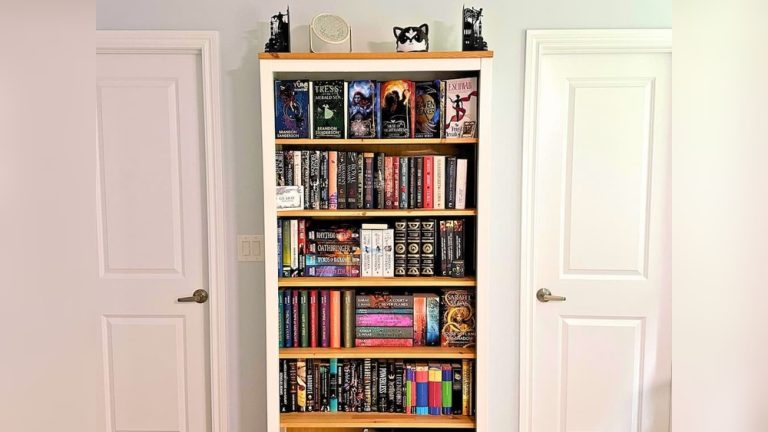
Ladder shelves and bookcases can both store books and decor, but they solve different problems. A ladder shelf usually has a lighter visual footprint and narrower shelves, while a bookcase offers more enclosed structure, deeper shelves, and often higher load capacity. Choose a ladder shelf when style, display, and space-saving matter most. Choose a bookcase when you need maximum storage, deeper shelving, or a more rigid furniture piece for heavier loads.
Footprint
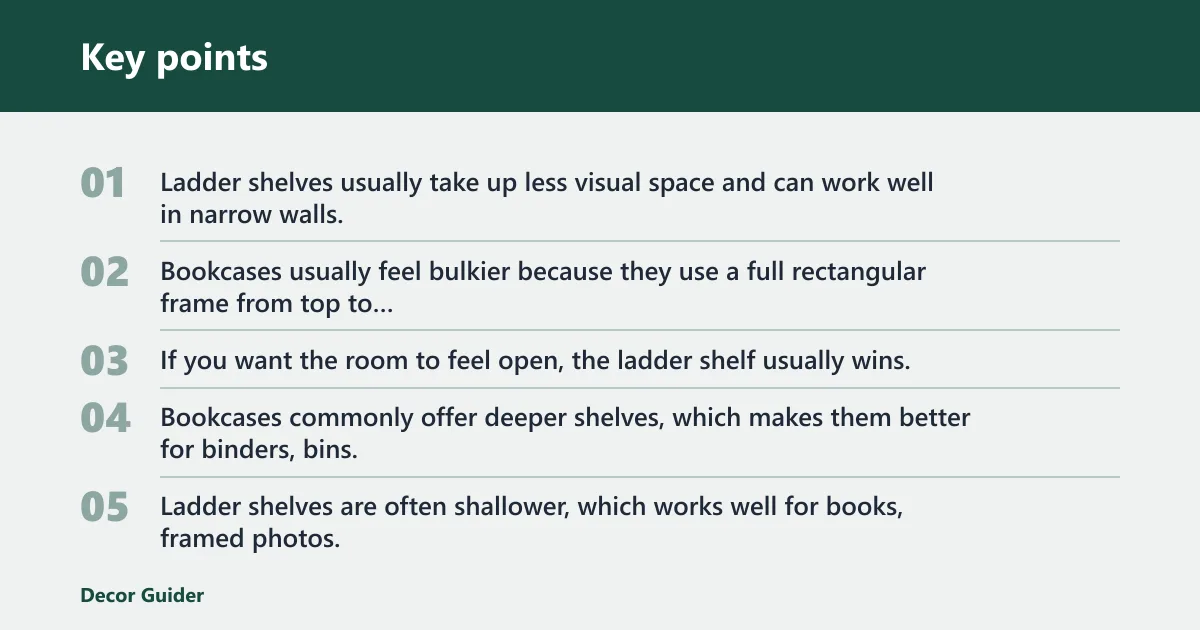
Ladder shelves usually take up less visual space and can work well in narrow walls, corners, and apartments. Bookcases usually feel bulkier because they use a full rectangular frame from top to bottom. If you want the room to feel open, the ladder shelf usually wins.
Depth
Bookcases commonly offer deeper shelves, which makes them better for binders, bins, and larger decor. Ladder shelves are often shallower, which works well for books, framed photos, and plants but can limit storage for bulky items. Shelf depth is one of the biggest reasons a bookcase feels more storage-heavy and a ladder shelf feels more decorative.
Load capacity
Bookcases generally handle heavier and denser loads better because they rely on a boxier frame and more continuous support. Ladder shelves are often better for lighter to moderate loads unless the design uses thicker boards and stronger joinery. If you plan to store heavy books or dense bins, a bookcase is usually the safer choice.
Stability
Freestanding bookcases are typically more stable out of the box, while leaning ladder shelves often need wall securing to prevent tipping. That does not make ladder shelves unsafe by default, but it does mean the installation and placement matter more. In homes with kids or pets, that difference is important.
Best-use cases
Ladder shelves work best for display, smaller rooms, and vertical storage where style matters. Bookcases work best for higher-capacity storage, offices, libraries, and situations where shelf depth and rigidity matter more than open styling. If you need a room divider or serious storage wall, the bookcase usually makes more sense. If you want a lighter-looking piece for plants, frames, and accent storage, the ladder shelf is usually the better fit.
Which ladder shelf type fits your room?
The right choice depends on room size, weight, and how much storage you need. A display shelf for a living room does not need the same moisture resistance as a bathroom model. A rental-friendly shelf should favor stability without permanent wall work, while a heavy-duty shelf should favor stronger material and tighter joinery.
Living room storage and display
In a living room, ladder shelves work well for books, framed photos, candles, and plants. Tiered shelving gives you open display depth and a light visual profile, so the piece feels less bulky than a closed bookcase. Balance and symmetry matter when styling, especially on taller shelves with uneven objects.
Bathroom ladder shelf and over-the-toilet use
A bathroom ladder shelf is usually compact and vertical, which makes it useful in tight spaces. Over-the-toilet ladder shelves take advantage of unused wall height and keep towels, tissue, and toiletries within reach. If the shelf sits over plumbing, measure carefully and choose a freestanding design that clears the toilet without crowding the room.
Office or rental-friendly placement
For an office, choose a shelf with deeper tiers if you plan to use storage bins or binders. For a rental, look for a lighter build with stable footing and minimal wall damage. If you want a flexible piece, a mid-range retail shelf often gives the best balance of cost and convenience.
Suppose you want a 60-inch leaning shelf for a small living room wall. If you choose solid oak, the cost rises because the wood, finish quality, and brand price all climb together. If you choose a painted pine version, the shelf can stay closer to the budget tier, but it still needs proper anchoring if it leans.
Frequently asked questions
How much does a ladder shelf cost?
Material, size, finish, and safety hardware explain most of the gap between those tiers.
Why are some ladder shelves so expensive?
Higher prices usually reflect solid wood, better joinery, more finish work, and custom sizing. Oak and walnut ladder shelves cost more than pine or MDF, and handmade pieces also carry labor and design time. Retail markup can push the price higher still, especially for branded furniture.
What affects the price of a ladder shelf?
Price depends on the wood species, shelf count, footprint, finish, and whether the shelf leans or stands freestanding. Safety hardware can add a little more. A bathroom ladder shelf may cost less in material but still rise in price if it needs custom dimensions or moisture-resistant finish work.
Is a ladder shelf worth the splurge?
It can be, if you want a specific size, a cleaner finish, or solid wood that suits a visible room. A splurge makes the most sense for a living room display piece or an oak ladder shelf with a large footprint. For light decor, a budget version often does the job.
How much does a DIY ladder shelf cost to build?
A basic DIY ladder shelf can cost about $30 to $120 once you include lumber, fasteners, sandpaper, primer or stain, and paint. If you add better wood, more shelves, or anti-tip hardware, the total climbs. A simple build can stay cheap only when the finish stays simple.
Do leaning ladder shelves need wall securing?
Usually, yes. Leaning shelves should be anchored or fitted with anti-tip hardware if they carry more than light decor. Non-slip pads help, but they do not replace anchoring on taller units. The higher the shelf and the heavier the load, the more important wall securing becomes.
Products related to this article
Sponsored / affiliate links. As an Amazon Associate I earn from qualifying purchases. I may earn additional commission from eligible campaigns.