Bookshelf Speakers Vs Floorstanding Speakers
Bookshelf Speakers Vs Floorstanding Speakers: Which Is Right for Your Space and Sound?
The world of home audio is filled with choices, but few are as pivotal as the decision between bookshelf speakers and floorstanding speakers. Audiophiles and casual listeners alike often debate which format best suits their listening room, music preferences, and budget. This decision can shape not only the quality of your sound but also the look and feel of your living space.
Selecting the right speaker type is about more than just size, it’s about performance, aesthetics, flexibility, and long-term satisfaction. Whether you’re building your first hi-fi setup or upgrading an existing system, understanding the differences, advantages, and limitations of each type will empower you to make the best choice for your needs. This comprehensive guide will break down every aspect of the bookshelf vs floorstanding speakers debate, providing data, real-world examples, and expert insights.
Key Takeaways
- Bookshelf speakers are compact, versatile, and ideal for smaller spaces or flexible setups, while floorstanding speakers offer fuller, room-filling sound and are suited to larger rooms.
- Sound quality varies: Floorstanders typically deliver deeper bass and higher output, but well-matched bookshelf speakers can outperform budget floorstanders in clarity and imaging.
- Budget and room size play crucial roles, investing in quality bookshelf speakers and a subwoofer can sometimes yield better results than entry-level floorstanders in small rooms.
- Aesthetics and placement should be considered: Floorstanders make a visual statement, while bookshelf speakers can blend more discreetly into decor.
- Long-term upgrades and system flexibility often favor bookshelf speakers, but floorstanders may provide a more “complete” sound without needing extra components.
- Real-world case studies and data-driven comparisons reveal that personal priorities, listening habits, music genres, and living space, are the ultimate deciding factors.

Credit: www.ricable.com
Understanding Bookshelf Speakers
Bookshelf speakers are a staple in the audio world, prized for their compact footprint and adaptability. Let’s break down their defining features, pros and cons, and ideal use cases.
What Are Bookshelf Speakers?
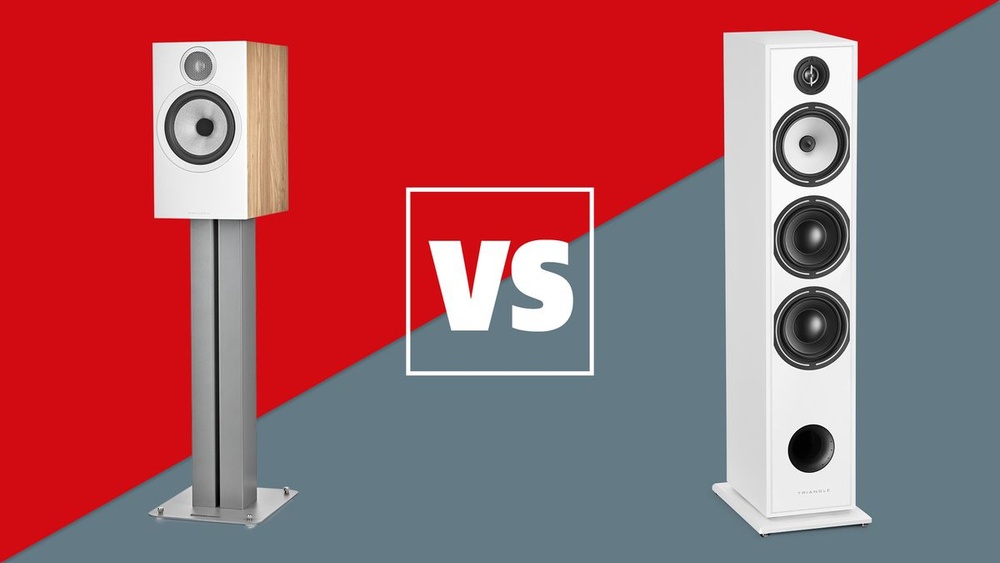
Bookshelf speakers are small- to medium-sized loudspeakers designed to sit on a shelf, stand, or desk. Typically, they measure between 10 and 18 inches tall and use a two-way design (a woofer and a tweeter) to cover most of the audible frequency range. Their compact size allows for flexible placement, making them a favorite for apartments, offices, and multi-use rooms.
Key Advantages Of Bookshelf Speakers
- Space efficiency: Their smaller size fits easily on shelves, desks, or specialized stands without dominating the room.
- Versatility: Can be used in stereo setups, as rear or surround speakers in home theaters, or in desktop audio systems.
- Price range: Entry-level to high-end models are available, often costing less than floorstanding speakers of comparable quality.
- Imaging and clarity: Smaller cabinets can sometimes provide more precise stereo imaging and detail retrieval.
Common Limitations
- Bass response: Due to smaller woofers and cabinets, bookshelf speakers often lack deep bass, requiring a subwoofer for full-range sound.
- Maximum output: Lower sensitivity and smaller drivers mean they may not fill large rooms or reach high volumes without distortion.
- Stands or mounting needed: To achieve optimal sound, bookshelf speakers usually require stands, which is an extra investment.
Example: Urban Apartment Setup
Consider an urban apartment with limited floor space. In this scenario, a pair of high-quality bookshelf speakers on stands, paired with a compact subwoofer, delivers clear, detailed sound without overwhelming the room or clashing with decor. The system is easy to reposition or upgrade as needs change, making it ideal for renters or those who move frequently.
Exploring Floorstanding Speakers
Standing tall and proud, floorstanding speakers (also known as tower speakers) are the go-to choice for those seeking powerful, immersive audio. Let’s explore what sets them apart and how they fit into different listening environments.
What Are Floorstanding Speakers?
Floorstanding speakers are large, freestanding loudspeakers designed to sit directly on the floor. Ranging from 3 to 4 feet tall, these speakers often incorporate multiple drivers, woofers, midrange, and tweeters, stacked vertically within a sizable cabinet. Their design allows for deeper bass, greater dynamic range, and higher output.
Key Advantages Of Floorstanding Speakers
- Full-range sound: Multiple, larger drivers deliver deeper bass and more powerful dynamics without the need for a subwoofer.
- Room-filling output: Higher sensitivity and power handling enable them to fill large spaces with sound.
- Visual presence: Their stature adds a premium, high-performance look to home audio setups.
- All-in-one design: No need for stands or extra bass modules; floorstanders provide a complete sound from a single enclosure.
Common Limitations
- Size and weight: Large cabinets require significant floor space and can be challenging to move or integrate into smaller rooms.
- Cost: Generally more expensive than bookshelf speakers, especially at higher performance levels.
- Room interaction: Larger speakers can overwhelm small rooms, causing bass boominess or uneven sound if not properly placed.
Example: Dedicated Listening Room
Imagine a dedicated listening room or home theater with ample space. Here, a pair of premium floorstanding speakers can take full advantage of the room’s acoustics, delivering powerful, immersive sound with deep bass and lifelike dynamics, no subwoofer required. For audiophiles, this setup offers a “concert at home” experience.

Credit: totemacoustic.com
Head-to-head: Sound Quality Comparison
Sound quality is the ultimate benchmark for any speaker. The differences between bookshelf and floorstanding speakers are not just about size, they impact every aspect of the listening experience, from bass extension to imaging and dynamics.
Bass Response And Frequency Range
Floorstanding speakers excel in bass reproduction due to their larger cabinets and additional woofers. They typically reach down to 30-40 Hz, providing impactful low-end for music and movies. In contrast, most bookshelf speakers bottom out around 50-70 Hz, missing the deepest bass notes unless paired with a subwoofer.
| Speaker Type | Typical Frequency Range | Bass Extension (Hz) | Need for Subwoofer |
|---|---|---|---|
| Bookshelf | 50 Hz, 20 kHz | ~50-70 Hz | Recommended for full-range |
| Floorstanding | 30 Hz, 20 kHz | ~30-40 Hz | Optional |
Imaging, Soundstage, And Clarity
Bookshelf speakers can excel in imaging and soundstage, especially when placed on quality stands and positioned away from walls. Their smaller cabinets reduce internal resonances, often resulting in clearer midrange and more pinpoint stereo imaging. This makes them favorites for critical listening in nearfield or small-room setups.
Floorstanding speakers, with their larger driver arrays, produce a broader, taller soundstage that can mimic the scale of live performances. However, in small rooms or with poor placement, their bass can overwhelm, muddying the midrange and reducing overall clarity.
Volume, Dynamics, And Room Size
Larger drivers and greater cabinet volume give floorstanding speakers the edge in dynamics and maximum output. They handle high volumes and large dynamic swings effortlessly, ideal for home theaters or parties. Bookshelf speakers may struggle to deliver the same impact in large rooms or at high volumes, but in small to medium spaces, they can offer a surprisingly dynamic performance.
Example: Small Room Vs. Large Room Performance
In my experience, a pair of high-end bookshelf speakers with a well-integrated subwoofer outperformed entry-level floorstanders in a 12’x15’ room, delivering tighter bass and better imaging. However, in a 20’x30’ living room, floorstanding speakers provided the necessary scale and impact that bookshelf speakers could not match, even with a subwoofer.
Credit: www.ooberpad.com
Practical Considerations: Placement, Space, And Aesthetics
The choice between bookshelf and floorstanding speakers isn’t just about sound, it’s also about how the speakers fit into your life and living space.
Room Size And Acoustics
- Small rooms (under 200 sq ft): Bookshelf speakers often perform better, avoiding bass overload and fitting comfortably.
- Medium to large rooms: Floorstanding speakers can fill the space with sound, providing a more immersive experience.
Placement Flexibility
Bookshelf speakers offer versatile placement options:
- On stands for optimal sound quality.
- On shelves or desks for convenience (though bass may suffer).
- Wall-mounted in some cases for surround sound setups.
Floorstanding speakers require floor space and careful positioning, typically at least 1-2 feet from walls to prevent bass boominess. Their size makes them less flexible, but they eliminate the need for stands.
Visual And Decor Considerations
- Bookshelf speakers blend easily with modern or minimalist decor, often available in a range of finishes.
- Floorstanding speakers make a statement but may clash with some interiors or dominate smaller spaces.
- Cable management and stand selection add to the visual footprint of bookshelf speakers.
Example: Home Office Vs. Living Room
A home office benefits from discreet bookshelf speakers on a desk or shelf, providing high-quality sound for music and video calls. In a family living room, floorstanding speakers become a centerpiece, delivering cinematic sound for movies and music.
Budgeting For Performance: Cost, Value, And Long-term Upgrades
Your budget has a major influence on which speaker type will offer the best value. Both bookshelf and floorstanding speakers come in a wide price range, but their cost-to-performance ratios can differ.
Entry-level And Midrange Options
- Bookshelf speakers: High-quality models are available starting around $150, $400 per pair. Adding a decent subwoofer can extend the budget by $150, $300, but often results in better overall sound than similarly priced floorstanders.
- Floorstanding speakers: Entry-level floorstanders start around $300, $600 per pair, but may compromise on driver quality or cabinet construction compared to bookshelf models at the same price.
High-end And Audiophile Setups
- Bookshelf speakers: Premium models can cost $1,000, $3,000 per pair, sometimes surpassing the clarity and imaging of midrange floorstanders.
- Floorstanding speakers: Top-tier floorstanders range from $2,000 to $10,000+ per pair, delivering uncompromising performance in large spaces.
Upgrade Paths And System Flexibility
Bookshelf speaker systems are often easier to upgrade:
- Start with a stereo pair, add a subwoofer, then expand to surround sound.
- Replace or move speakers to other rooms as needs change.
Floorstanding speakers are a more “complete” solution but may require a larger initial investment and are less flexible if you move or redecorate.
Example: First Hi-fi System On A Budget
A college student with a $500 budget could purchase a pair of respected bookshelf speakers and a compact subwoofer, achieving excellent full-range sound for music and movies. This setup can be expanded or relocated as their living situation evolves, offering long-term value.
Real-world Case Studies And User Experiences
Examining real-world scenarios helps clarify how these speaker types perform in practice. Here are three concrete examples:
Case Study 1: Apartment Living, Maximizing Sound In Minimal Space
Emily, a music enthusiast in a 600 sq ft apartment, chose high-quality bookshelf speakers with stands and a subwoofer. This setup delivered clarity and impact without overwhelming her small living room. The compact footprint allowed her to reconfigure the system as her space changed, highlighting the flexibility of bookshelf speakers.
Case Study 2: Home Theater Enthusiast, Pursuing Cinematic Sound
Mark invested in a home theater in his 400 sq ft basement. After testing both options, he selected floorstanding speakers for the front channels and bookshelf models for the surrounds. The floorstanders provided the dynamic range and bass needed for action movies, while the bookshelf speakers handled ambient effects.
This hybrid approach showcased how both types can work together in a single system.
Case Study 3: Audiophile Listening Room, Detail Versus Scale
In my experience setting up a listening room for classical music, I compared a $2,000 pair of bookshelf speakers with a $2,500 pair of floorstanders. The bookshelf speakers excelled in imaging and midrange detail, making solo piano and chamber music sound lifelike.
The floorstanders, however, brought orchestral recordings to life with a wider soundstage and more powerful bass. The choice ultimately came down to musical preferences and room acoustics.
Bookshelf Vs Floorstanding: Data-driven Feature Comparison
To provide a clear overview, here’s a direct, data-driven comparison of the two types across key features:
| Feature | Bookshelf Speakers | Floorstanding Speakers |
|---|---|---|
| Typical Dimensions (H x W x D) | 12″ x 8″ x 10″ | 40″ x 10″ x 15″ |
| Bass Extension | ~50-70 Hz | ~30-40 Hz |
| Maximum Output (dB SPL) | ~100 dB | ~110 dB |
| Placement Flexibility | High | Low |
| Recommended Room Size | Small/Medium | Medium/Large |
| Price Range (per pair) | $150, $3,000+ | $300, $10,000+ |
| Need for Stands | Yes | No |
| Visual Impact | Low/Medium | High |
Choosing The Right Speaker For Your Needs
With the data and real-world examples in mind, let’s explore how to match the right speaker type to your unique requirements.
Assess Your Room And Listening Habits
- Room size: Small rooms benefit from bookshelf speakers; large spaces need floorstanders for full impact.
- Listening distance: Close to speakers (within 6-8 feet)? Bookshelf speakers excel. Longer distances favor floorstanders.
- Music preferences: Bass-heavy genres (EDM, hip-hop) or cinematic soundtracks may call for floorstanders or a subwoofer. For jazz, classical, or acoustic music, high-quality bookshelf speakers can shine.
Consider Your Budget And Upgrade Path
- For limited budgets, prioritize quality bookshelf speakers with the option to add a subwoofer later.
- If you want a simple, all-in-one solution and have the space and funds, floorstanding speakers may offer better long-term value.
Evaluate Aesthetics And Lifestyle Needs
- Desire discreet audio? Bookshelf speakers blend into decor.
- Want to showcase your audio system? Floorstanding speakers make a strong visual statement.
Example: Multi-purpose Living Room
A family room used for both TV and music may benefit from a compact 2. 1 system (bookshelf speakers plus subwoofer) for flexibility and easy integration with existing furniture. Alternatively, dedicated music rooms may warrant investing in floorstanders to maximize listening enjoyment.
Pro Tip:
Always audition speakers in your own space if possible, as room acoustics and placement dramatically affect sound quality. Many audio retailers offer in-home trials or generous return policies.
Integration With Home Audio Systems
Today’s audio systems are more versatile than ever, supporting streaming, surround sound, and smart home integration. How do bookshelf and floorstanding speakers fit into modern setups?
Stereo And Surround Sound Applications
- Bookshelf speakers: Ideal for stereo listening, desktop systems, or as surround/rear channels in home theaters.
- Floorstanding speakers: Best suited for main front channels in home theaters or as the centerpiece of high-end stereo systems.
Pairing With Subwoofers
Bookshelf speakers almost always benefit from pairing with a powered subwoofer, especially for movies or bass-rich music. Floorstanding speakers may not require a subwoofer for music, but many home theater enthusiasts still add one for the deepest effects.
Amplification And Power Requirements
- Bookshelf speakers: Generally easier to drive, requiring less powerful amplifiers.
- Floorstanding speakers: May need more robust amplification, especially models with multiple woofers or low sensitivity.
Example: Wireless And Streaming Setups
Wireless bookshelf speakers are increasingly popular for multi-room audio systems, offering convenience and flexibility. While wireless floorstanding options exist, their size and power needs make them less common.
Environmental And Practical Factors
Beyond sound and aesthetics, consider practical and environmental factors when choosing your speakers.
Portability And Moving
- Bookshelf speakers are lightweight and easy to move, making them ideal for renters or those who relocate frequently.
- Floorstanding speakers are heavy and bulky, which can be a challenge during moves or room reconfigurations.
Safety And Childproofing
- Floorstanding speakers can be a tip-over hazard if not stabilized, especially in homes with children or pets.
- Bookshelf speakers, when placed securely on shelves or stands, may pose less risk.
Sustainability And Materials
- Look for speakers made with sustainable materials or certified by environmental standards. Some manufacturers prioritize eco-friendly production.
Example: Small Business Office
A small business outfitted its lobby with durable, easy-to-move bookshelf speakers, allowing for flexible reconfiguration during renovations or events, a level of adaptability not possible with floorstanders.
Frequently Asked Questions
Are Bookshelf Speakers Enough For Home Theater Use?
Bookshelf speakers can serve as effective front or surround speakers in a home theater, especially in smaller rooms. However, for the most immersive experience, it’s advisable to pair them with a subwoofer to handle deep bass effects. In larger home theaters, floorstanding speakers may provide a more cinematic presence and fuller sound without needing a sub.
Do Floorstanding Speakers Always Sound Better Than Bookshelf Speakers?
Not necessarily. While floorstanding speakers offer more bass and higher output, high-quality bookshelf speakers can outperform entry-level floorstanders in terms of clarity, imaging, and detail. The best choice depends on room size, budget, and listening preferences.
How Important Is Speaker Placement For Sound Quality?
Speaker placement is critical for both types. Floorstanding speakers should be positioned away from walls to avoid bass boominess, while bookshelf speakers need stands or solid surfaces at ear level for optimal imaging. Careful placement can dramatically improve sound quality, regardless of speaker type.
Can I Use Bookshelf Speakers With A Floorstanding Center Channel In My Surround System?
Mixing speaker types is possible, but for the most cohesive soundstage, it’s ideal to use the same brand and series for the front left, center, and right channels. If you do mix types, ensure that the timbre (tonal quality) is well-matched to avoid noticeable differences in sound as effects move across the front stage.
What Is The Lifespan Of Bookshelf Vs Floorstanding Speakers?
Both bookshelf and floorstanding speakers can last for decades with proper care, as they contain few moving parts. Lifespan is influenced more by build quality, usage, and environmental factors (like humidity or sunlight) than by form factor. Some vintage speakers remain in excellent working condition after 30+ years.
Choosing between bookshelf and floorstanding speakers is a decision that combines science, art, and personal taste. By weighing your room size, budget, listening habits, and aesthetic preferences, you can build an audio system that brings your favorite music and movies to life. For more detailed audio advice, you can explore resources like Wikipedia’s Loudspeaker entry or consult brands’ official guides. Remember, the right choice is the one that makes you want to listen more.
If your interests also extend to food preservation and kitchen essentials, check out guides like Choosing the right canning jar makes preserving food easier or explore the science behind freeze-drying vs canning for long-term storage tips. Whatever your passion, the right gear can elevate the experience, whether that’s through your speakers or your pantry.
Products related to this article
Sponsored / affiliate links. As an Amazon Associate I earn from qualifying purchases. I may earn additional commission from eligible campaigns.
 Acovy 40 Inch Floating Shelves, 12" Deep Floating Shelf Wall Mounted, 40" Wall Shelves, Rustic Deep Bookshelf, Extra Deeper & Thicker Display Shelves for Bedroom, Living Room, Oak, Set of 2
 Acovy 24 Inch Floating Shelves, 12" Deep Floating Shelf Wall Mounted, 24" Wall Shelves, Rustic Deep Bookshelf, Extra Deeper & Thicker Display Shelves for Bedroom, Living Room, Brown, Set of 2