How to Anchor a Bookshelf Without Studs
Anchor a bookshelf without studs by matching the hardware to the shelf’s load, bracket style, and wall surface. Simple rule: if the estimated loaded shelf weight is light, use drywall anchors; if it is medium, use molly bolts; if it is heavy or a long-span full-book load, use toggle or strap-toggle anchors. If the drywall is damaged, patched, crumbly, or the unit is tall, stop and find a stud. For light shelf loads, use drywall anchors in sound drywall; for medium loads, use molly bolts; for the heaviest units, use toggle bolts or strap-toggle anchors, not plastic plugs. The lowest-rated component sets the limit: anchor, screw, bracket, and shelf all have to match the same load target. (Wikihow)
Bookshelf anchor table
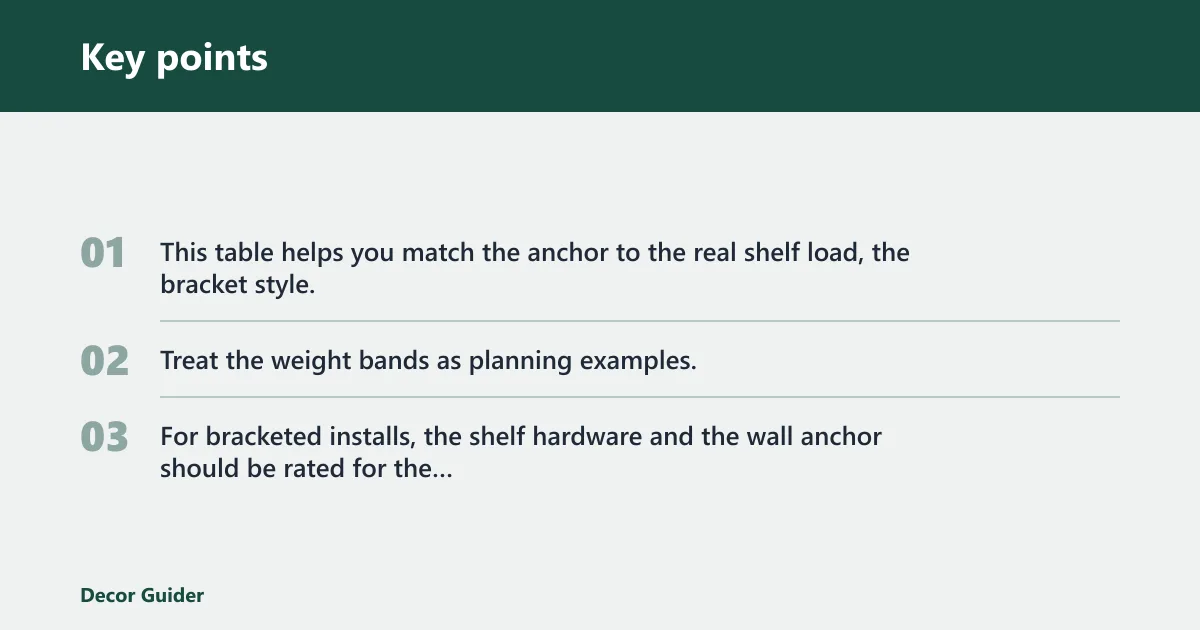


This table helps you match the anchor to the real shelf load, the bracket style, and the wall material before you drill. Treat the weight bands as planning examples, then check the maker’s listing for the shelf hardware and anchors before committing. For bracketed installs, the shelf hardware and the wall anchor should be rated for the same load, because the weakest part controls the final limit.
| Shelf weight band | Loaded shelf estimate | Bookshelf type | Bracket count/spacing | Wall condition | Recommended hardware | Pilot-hole guidance | When to stop and find a stud | Common failure signs |
|---|---|---|---|---|---|---|---|---|
| Light decor shelves, up to about 10 lb | Light décor only, a few small items, no dense books | Short wall shelf, framed display shelf, light floating shelf | One bracket pair or a short bracket set with close spacing | Sound, intact drywall with no soft spots or crumbling edges | Drywall anchor for drywall, with shelf mounting brackets or built-in supports | Drill a pilot hole that matches the anchor size exactly | Stop if the shelf is wider than expected, has more than one loaded span, or the wall feels soft or crumbly | Minor sagging, screw spin, crushed drywall around the hole |
| Average book storage, about 10 to 30 lb | Mixed books and decor, moderate weight per shelf | Standard shelf with books, small wall-mounted book ledge, bracketed shelf | Two or more bracket points, spaced to keep the shelf flat | Drywall in good shape, with no patch edges or loose paper facing | Molly bolt with metal shelf mounting brackets | Drill the pilot hole to the anchor’s listed bit diameter before setting the bolt | Stop if the bracket has only one screw hole per side, or if the wall is damaged, patched, or hollow in an odd way | Bracket pull-out, loosening after tightening, widening hole, shelf tilt |
| Full bookcase loads, over about 30 lb, or dense books | Heavy books, full rows, or a long-span shelf with concentrated weight | Heavy wall shelf, long bracketed shelf, floating shelf with a long horizontal bracket | Multiple anchors or closely spaced brackets, with no unsupported span under the load | Only sound drywall; if it is old, patched, or crumbly, do not rely on drywall alone | Toggle bolt, ideally with multiple bracket screws and bracket hardware rated by the maker | Drill the pilot hole to match the toggle size exactly, then feed the hardware through the bracket and wall | Stop and locate a stud if the shelf will carry many heavy books, if the drywall is old or damaged, or if the bracket layout misses solid wall space | Sagging, toggle movement, crushed drywall, bracket pull-out, visible wall flex |
| Not suitable for drywall alone | Tall bookcases, very heavy full-book loads, or shelves with a tipping risk | Tall units, deep shelves, long spans, or storage meant to hold many hardcover books | Any layout that leaves large gaps between supports or needs tipping restraint | Damaged, patched, crumbly, soft, or repaired drywall; also any wall where the surface is suspect | Find a stud or use a different mounting location; drywall anchors alone are not enough | Do not drill for drywall-only attachment until the wall condition is verified | Always stop and find a stud for tall units, heavy full-book loads, or questionable wallboard | Wall flex, shelf sway, repeated loosening, torn paper face, visible pull-out |
What you need
Gather the tools and materials before you mark the wall. The right anchor still fails if the pilot hole is wrong, the bracket layout is ignored, or the load estimate is too optimistic.
Tools and materials
- Drywall anchors, molly bolts, or toggle bolts matched to the load
- Drill and the bit size listed for the anchor
- Bubble level
- Pencil
- Measuring tape
- Shelf mounting brackets or the shelf’s built-in bracket hardware
- Screwdriver or driver bit that fits the fasteners
- Wall patch material for misdrilled holes, if needed
Wall and hardware checks
Drywall is the common surface for a studless install. Plaster, old drywall, and damaged wallboard need extra care because anchor grip depends on wall condition as much as anchor type. If the wall sounds hollow in spots, crumbles at the surface, or has prior patches, treat it as a weaker base. For anchor basics and load limits, compare the shelf plan with a general guide such as Wall anchors spread and the shelf’s own hardware listing before you decide on the fastener.
Safety checks before drilling
Confirm the shelf is for wall mounting, not a freestanding bookcase that needs separate anti-tip restraint. If the piece is tall or likely to be used by children or pets, do not rely on weak fasteners for tipping control. Follow the shelf maker’s bracket layout and stop if the wall cannot support the planned hardware.
How to map the shelf on the wall
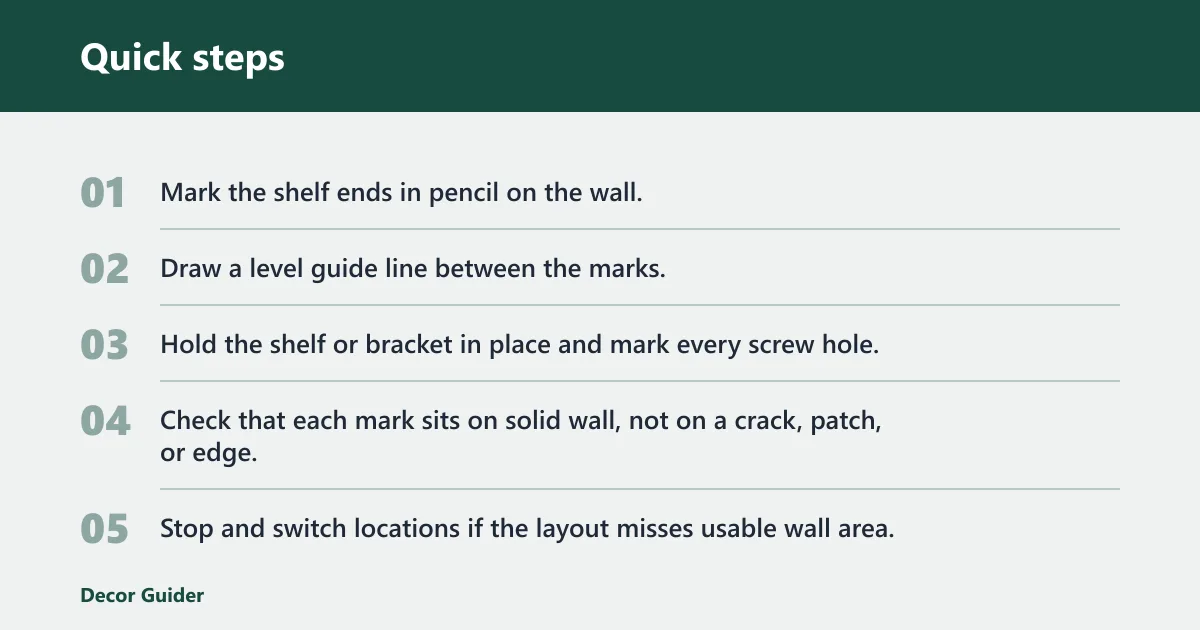
Mark the shelf ends on the wall in pencil first, then use a bubble level to draw a straight guide line between the two wall marks. That line keeps both endpoints aligned before you drill, and it helps you see when the shelf or bracket layout drifts toward an edge.
Find the mounting points
Locate the shelf mounting brackets or built-in supports before you mark anything. Standard shelves usually rest on metal brackets or have built-in brackets, and floating shelves use a long horizontal bracket with pegs. Some mounting brackets have multiple screw holes, so plan for every hole the bracket needs. When you compare styles, the bracket choice should match both the shelf width and the total load, not just the number of visible holes.
Use a bubble level for the layout
Place the level on the guide line and adjust until both ends read straight. Say your 36-inch shelf has two end brackets and a center support: if the left mark is right but the right mark drifts upward, the shelf will sit crooked and the holes will not line up cleanly.
Mark screw holes and stop if the layout misses the wall edge
Trace each screw hole location after the shelf is level. If a hole lands too close to a corner, trim, or damaged section of wall, stop and reconsider the layout. Moving the shelf an inch or two now is better than forcing an anchor into weak drywall later.
- Mark the shelf ends in pencil on the wall.
- Draw a level guide line between the marks.
- Hold the shelf or bracket in place and mark every screw hole.
- Check that each mark sits on solid wall, not on a crack, patch, or edge.
- Stop and switch locations if the layout misses usable wall area.
Which anchor should you use?
Choose by load first, then by bracket count and wall condition. Molly bolts fit medium shelves with reliable bracket holes. Toggle bolts are the strongest choice for the heaviest units, but only when the wall surface is still worth anchoring into. For more context on shelf and room fit, see wall-mounted shelves before deciding on the hardware.
Drywall anchor for light loads
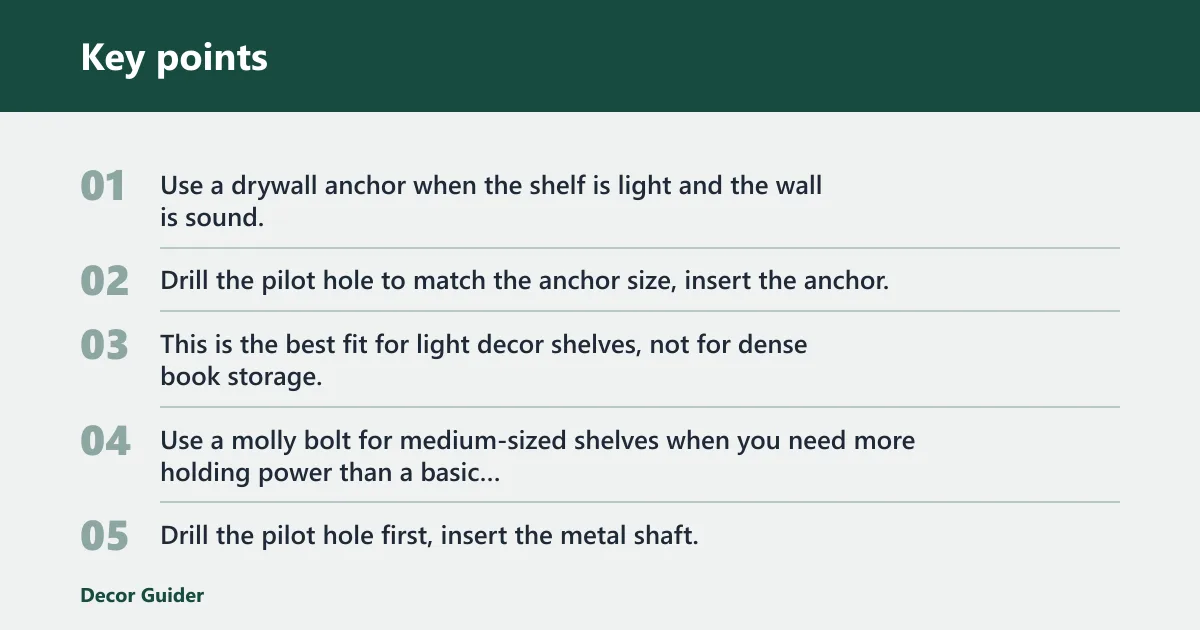
Use a drywall anchor when the shelf is light and the wall is sound. Drill the pilot hole to match the anchor size, insert the anchor, then run the screw through the bracket into the anchor. This is the best fit for light decor shelves, not for dense book storage.
Molly bolt for medium loads
Use a molly bolt for medium-sized shelves when you need more holding power than a basic plug can give. Drill the pilot hole first, insert the metal shaft, then tighten so the metal expands and sets inside the wall. It suits bracketed shelves that need a firmer grip around the screw hole.
Toggle bolt for heavier loads
Use a toggle bolt for the heaviest units and the longest shelf spans. The metal flanges pass through the wall, then open behind it to spread the load. This works best with bracket hardware that gives you enough room to seat the toggle and tighten the fastener evenly. Strap-toggle anchors can be a practical variation when the wall cavity and bracket layout allow it.
When to stop and find a stud
Stop and locate a stud if the shelf is tall, the books are dense, the wall is old or damaged, or the bracket layout demands more support than the drywall can carry well. A common first-timer mistake is assuming every wider shelf needs only stronger anchors; width, load, bracket spacing, and wall condition all matter.
How do you install the anchor?
Drill the pilot hole first, then set the anchor, then fasten the bracket or shelf. The hole size must match the anchor size, and all three anchor types in this guide need a pilot hole. If the hole is oversized, the anchor can spin or pull free under load.
Drill the pilot hole
Use the bit diameter listed for the anchor package. Drill straight into the marked point, keep the bit steady, and stop as soon as the bit reaches the needed depth. If the hole wall looks torn or fuzzy, the bit may be too large or the wall material may be too weak for that anchor.
Set the anchor in the wall
Push the drywall anchor in flush, set the molly bolt as directed by its design, or feed the toggle through the wall until the flanges open behind the drywall. If the wall surface crushes while you tighten, stop and move to a new point rather than forcing the hardware.
Fasten the bracket or shelf
Align the shelf mounting brackets with the anchors and start every screw before fully tightening any one of them. That keeps the bracket from twisting. Tighten in sequence, then recheck level. If one screw bottoms out early, the hole may be oversized or the bracket may be off line.
- Drill the pilot hole to the anchor’s listed diameter.
- Insert the anchor or toggle hardware.
- Hold the bracket in place and start every screw by hand.
- Tighten each fastener evenly until the bracket sits flat.
- Recheck the bubble level before loading the shelf.
- Add books or decor in small increments of about 5 lb, then recheck for sag or movement.
Common mistakes
Most failures come from mismatch, not from the wall alone. The wrong hole size, the wrong bracket count, or a load that exceeds the shelf plan will show up quickly once the shelf is loaded. Manufacturer load ratings and major home-improvement references agree on the same point: the anchor, screw, bracket, and wall condition all set the ceiling together, not separately.
Oversized holes
If the pilot hole is too large, the anchor can spin or never grip fully. That often shows up as a screw that turns without tightening. Patch the hole and move the anchor point rather than trying to rescue a loose fit.
Ignoring crushed drywall
Crushed drywall around the screw hole means the wall face is failing. That can happen with overtightening, a weak bit match, or aged drywall. Stop and shift to a fresh point, because crushed wallboard will not hold a heavy shelf reliably.
Using the wrong bracket count
A shelf with multiple screw holes needs every hole supported as designed. Leaving out a fastener can let the bracket twist, which then shifts load onto the remaining screws. Picture a 30-inch shelf with three bracket holes on one side and only two anchored: the loose point becomes the first failure.
Prevention: before you load the shelf, check that the screws sit tight, the bracket is flat, and the shelf stays level after a few minutes. If anything shifts, unload it and correct the wall attachment first.
If the wall is damaged, the shelf is very heavy, or the piece is a tall bookcase used near children or pets, a no-drill alternative is the safer route: use a freestanding bookcase with manufacturer anti-tip restraint hardware, or choose a different mounting location with a stud available.
Frequently asked questions
How to anchor a shelf without studs
Mark the ends in pencil, draw a level line between the marks, then drill pilot holes and install the anchor that fits the planned load. Drywall anchors work for light shelves, while molly bolts and toggle bolts suit heavier shelves. Do not rely on loose plugs for book weight.
How to anchor a bookshelf without drilling
For a true no-drill option, use a freestanding bookcase with separate anti-tip restraint hardware or move the shelf to a stud-backed location. Adhesive-only methods are not a good match for book loads on drywall. If the piece is tall, child and pet safety should come first.
How to anchor a bookshelf to drywall
Use drywall as the base, but match the anchor to the load and the wall condition. Light shelves can use drywall anchors, medium shelves usually do better with molly bolts, and heavier shelves need toggle bolts. Drill the pilot hole first and do not use crushed or damaged drywall.
Do you need wall anchors for shelves?
Yes, if the shelf does not land on a stud. Wall anchors spread the load across drywall or another hollow wall surface, and the anchor type should match the shelf weight and bracket style. A shelf with multiple screw holes still needs each usable hole supported.
Which wall anchor is best for a heavy bookshelf?
For the heaviest wall-mounted shelves, toggle bolts are commonly considered the strongest of the three options covered here. They pass through the wall and open behind it, which helps them carry more load than basic drywall anchors. If the shelf is very tall or the wall is damaged, find a stud instead.
Products related to this article
Sponsored / affiliate links. As an Amazon Associate I earn from qualifying purchases. I may earn additional commission from eligible campaigns.