Article Bookshelf Review: Is It Worth It?
Article’s bookshelves are a good buy for style-first shoppers, with the best picks landing in the solid-wood, wall-anchorable midrange; avoid them if you need maximum storage or the easiest assembly. A poor pick can mean wobble, scratched floors, and a bookshelf that looks better online than in your living room. This review checks design, materials, stability, assembly, and value so you can judge which Article bookshelf is worth ordering.
Verdict on the article Krossa
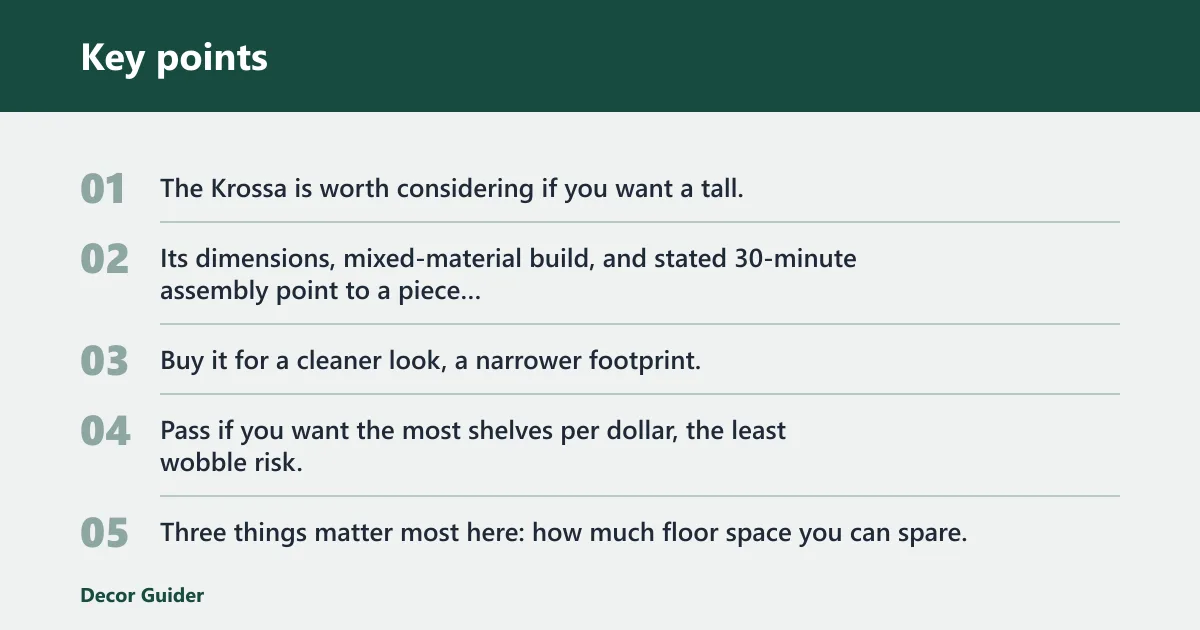


The Krossa is worth considering if you want a tall, compact shelf with a midcentury-leaning profile and you can accept moderate storage instead of bulk capacity. Its dimensions, mixed-material build, and stated 30-minute assembly point to a piece that should suit many living rooms and home offices, but the value depends on whether you need display-first shelving or heavy-duty storage.
Bottom-line judgment
Buy it for a cleaner look, a narrower footprint, and a room that feels more design-led than basic shelving usually allows. Pass if you want the most shelves per dollar, the least wobble risk, or the easiest setup among flat-pack options.
What the verdict depends
Three things matter most here: how much floor space you can spare, how much weight each shelf must carry, and whether the shelf is going into a room where visual balance matters more than sheer volume. That makes the Krossa a better fit for books, decor, and mixed display than for dense storage bins or a long row of archive boxes.
Article Krossa bookshelf overview
Article is a Canadian direct-to-consumer furniture brand known for stylish flat-pack furniture, and the Krossa Shelving Unit fits that profile well. It measures 70.5 inches high, 32.5 inches wide, and 15 inches deep, and Article lists a 30-minute assembly time. The unit uses solid and veneered oak, solid rubberwood, MDF, and steel.
Design and material snapshot
The Krossa leans Scandi, with a midcentury aesthetic and a tapered, ladder-esque shape. The lower shelves start wider and deeper, then get narrower higher up, which makes the profile feel lighter than a boxier shelving unit. That shape helps the piece read as furniture rather than storage hardware.
The mixed-material build matters. Solid wood and veneer usually signal a warmer finish and better surface presence than all-MDF shelving, while steel adds support where the frame needs it. MDF still deserves scrutiny, because it can be more sensitive to moisture, edge damage, and hard impacts than solid wood.
Bookshelf review scorecard
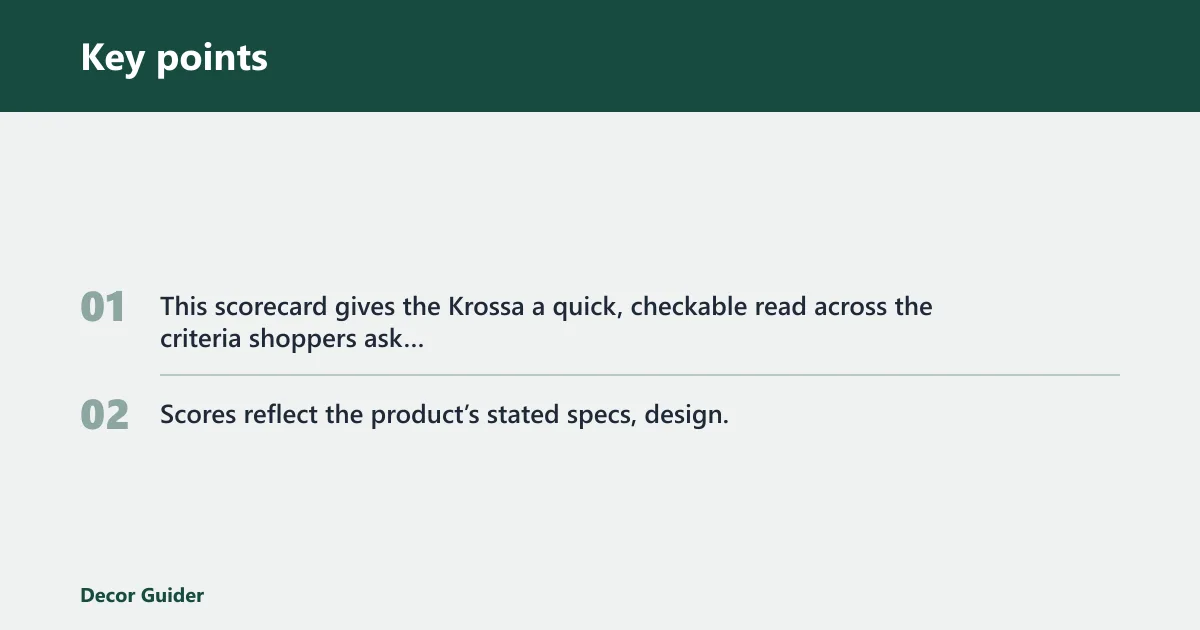
This scorecard gives the Krossa a quick, checkable read across the criteria shoppers ask about most. Scores reflect the product’s stated specs, design, and likely buyer tradeoffs rather than a hands-on lab result.
| Criterion | Score | Short justification |
|---|---|---|
| Dimensions fit | 4/5 | At 70.5 inches high, 32.5 inches wide, and 15 inches deep, it fits many living rooms and offices without dominating the wall. |
| Material quality | 4/5 | Solid and veneered oak plus rubberwood and steel suggest better material presence than bargain all-particleboard shelving. |
| Assembly difficulty | 4/5 | Article lists 30 minutes, which points to manageable setup for a flat-pack unit if the parts arrive cleanly packed and labeled. |
| Storage capacity | 3/5 | The shape favors display and moderate storage, not maximum shelf volume or oversized bins. |
| Stability | 3/5 | The tapered form may need wall anchoring and careful loading, especially if the top shelves hold heavier items. |
| Style flexibility | 4/5 | The Scandi and midcentury cues should work in warm, simple, or mixed-decor rooms better than highly ornate settings. |
| Room fit | 4/5 | Its footprint suits apartments, offices, and bedroom corners where vertical storage matters more than wide-span shelving. |
| Warranty value | 4/5 | Article offers a 30-day satisfaction guarantee and one-year furniture warranties, which is solid support for online furniture buying. |
| Delivery and return confidence | 4/5 | Free exchanges and an online-first model reduce buying friction, though flat-pack damage should still be inspected on arrival. |
| Overall value | 4/5 | Good value if you want design and usable dimensions; less compelling if price-to-storage is your main metric. |
Is the Krossa bookshelf worth it?
Yes, if your priority is a bookshelf that looks considered and fits smaller rooms without feeling bulky. It is less compelling if you want maximum storage, the most forgiving assembly, or a shelf you can load heavily without thinking about balance and anchoring.
Where it delivers
The Krossa delivers on proportion and visual fit. The 15-inch depth is useful for standard books, decor, and storage baskets, while the narrower top helps it feel less heavy against a wall. The mixed woods and steel also suggest a higher-end look than basic budget shelving.
Suppose you need one shelf for a 10-by-12-foot office and want books on the lower shelves with a lamp, a framed print, and a few objects above. The Krossa suits that kind of mixed use better than a plain cube unit, because the shape already reads like furniture rather than utility storage.
Where buyers may hesitate
The tradeoff is capacity. A ladder-esque profile often looks airy because it gives up square storage volume, and that can leave the top shelves better suited to lighter items. If you plan to stack heavy hardcovers, binders, or record boxes, you should treat stability and shelf load as real constraints, not afterthoughts.
What should you check before buying?
Check room clearance, likely load, and what the shelf will hold before you order. The Krossa’s size is friendly to many rooms, but the shape can create placement issues if you need a tight corner fit, full-width storage, or a shelf that will carry dense items on every level.
Room clearance and scale
At 32.5 inches wide and 15 inches deep, the Krossa is not oversized, but the 70.5-inch height means it still needs a wall and ceiling relationship that feels intentional. Measure the wall width, nearby outlets, baseboards, vents, and the path it must take through the door.
Weight, wobble, and load concerns
Any tall shelf with a narrower top can be more sensitive to uneven loading. Put heavier books and objects lower, reserve upper shelves for lighter decor, and use wall anchoring if the instructions provide that option. If a review does not mention load guidance or anchoring, treat that as a gap, not a harmless omission.
A common first-timer mistake is stacking hardcovers on the top shelf before checking whether the brackets are anchored firmly enough. That can raise the center of gravity and make a tall shelf feel less settled, especially on hard floors or in rooms with foot traffic nearby.
What to inspect after delivery
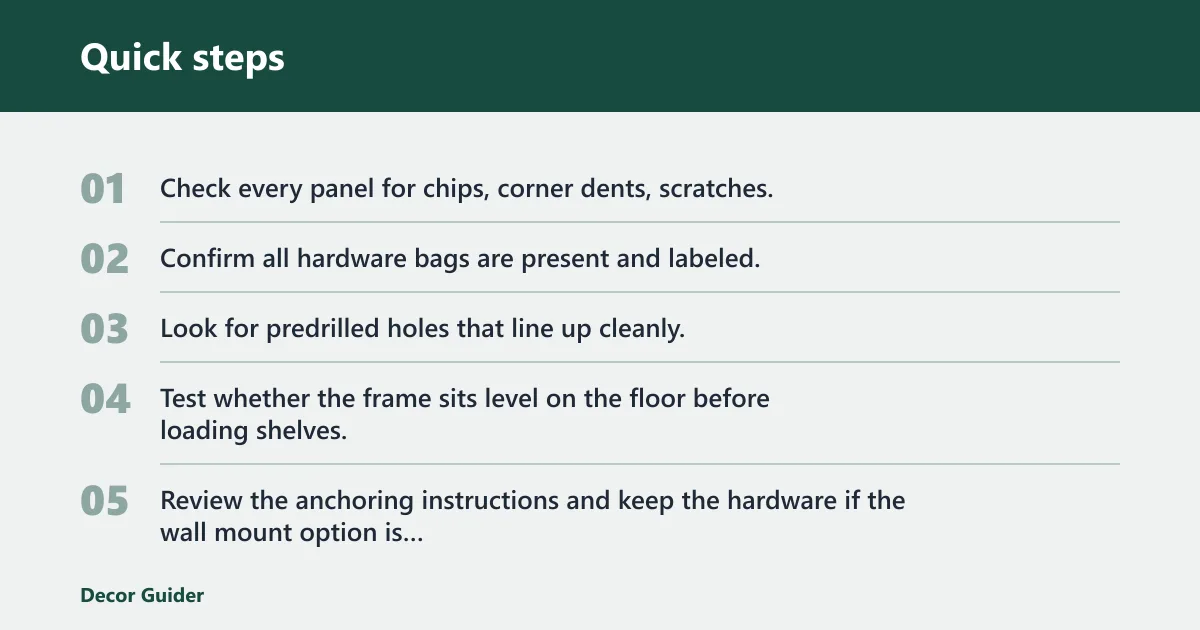
- Check every panel for chips, corner dents, scratches, and veneer damage before assembly starts.
- Confirm all hardware bags are present and labeled.
- Look for predrilled holes that line up cleanly.
- Test whether the frame sits level on the floor before loading shelves.
- Review the anchoring instructions and keep the hardware if the wall mount option is included.
How does it compare with other shelves?
The Krossa sits between decorative display shelving and full storage furniture. It gives you more presence than floating shelves, less bulk than cube storage, and a more tailored look than many ladder shelves, but each alternative wins on at least one practical point.
Ladder shelves
Compared with standard ladder shelves, the Krossa appears more substantial and more furniture-like. Ladder shelves often sacrifice stability and shelf depth for a lighter profile, while the Krossa’s wider lower shelves should make it more useful for books and mixed objects. If you want a stronger visual anchor, the Krossa has the edge.
Cube storage
Cube storage usually wins on raw capacity and bin-friendly organization. It is better for toys, files, and standardized containers. The Krossa wins when the room needs a softer silhouette and a more polished look, but it is not the first choice for maximum hidden storage.
Floating shelves
Floating shelves are best when floor space is extremely tight and the goal is display only. They can carry less, require wall installation, and offer no vertical cabinet-like storage. The Krossa gives you a freestanding solution with more usable shelf area, so it is the better pick if you want a single piece to do more than hold decor.
Pros and cons
Pros
- Midcentury and Scandi styling that fits many modern rooms.
- Moderate footprint with a tall, space-saving vertical shape.
- Mixed material build with oak, rubberwood, MDF, and steel.
- Stated 30-minute assembly time is reasonable for flat-pack furniture.
- 30-day satisfaction guarantee, one-year furniture warranty, and free exchanges.
Cons
- Not the best choice for maximum storage.
- Top-heavy loading could raise wobble concerns if you fill it poorly.
- Higher shelves may not suit bulky or awkward items.
- MDF parts deserve careful handling during assembly and cleaning.
- Style-first value is weaker if you only compare price per shelf.
Who it’s for
The Krossa is best for shoppers who want a bookshelf that reads as part of the room, not just a storage frame. It suits apartment living rooms, bedrooms, offices, and entry spaces where display matters and the shelf will hold books, ceramics, framed art, or a small mix of both.
Best fit users
Choose it if you want a shelf with a lighter profile, prefer midcentury or Scandi cues, and value a cleaner visual line over deep, box-style storage. It also fits buyers who want online ordering with a clear return path and a warranty-backed purchase.
Less suitable buyers
Skip it if you need heavy-duty archive storage, the simplest possible assembly, or a bookshelf that will sit under a lot of load without anchoring. It is also a weaker match for buyers who only care about shelf count and storage volume per dollar.
How to write a critical furniture review
A credible furniture review starts with a clear judgment, then supports it with specs, limits, and use cases. Do not stop at style praise. A useful review explains dimensions, materials, assembly, stability, room fit, and failure cases, then ends with a verdict a shopper can act on.
What a strong review should include
Start with the summary verdict, then move to the product overview, then break the body into criteria such as materials, assembly, and stability. Finish with a conclusion that tells readers who should buy and who should skip. That structure keeps the piece analytical instead of opinion-only.
When a review is credible, it names tradeoffs. If a shelf may wobble when overloaded, say so. If its shape limits awkward items, say so. If the warranty or return terms reduce risk, say that too. The goal is a decision, not a mood.
How to tell if a review is trustworthy
Look for exact dimensions, stated materials, assembly time, and clear room-fit guidance. A solid review also notes what was not verified, such as weight limits or anchoring needs, rather than pretending every concern has been measured. That honesty matters more than polished praise.
Style the Krossa with a light hand so the shape stays readable. Place heavier books on the lower shelves, use a few upright stacks, and leave open space on the upper levels. Because the shelf already has a midcentury lean, simple ceramics, matte frames, and one or two plants usually fit better than crowded decor.
Practical styling order
- Put the heaviest books on the lowest shelf.
- Mix vertical and horizontal stacks to avoid a flat line.
- Use one box or basket for loose items.
- Keep the upper shelves lighter and less crowded.
- Repeat one material or color twice for visual consistency.
Frequently asked questions
Is the Article Krossa bookshelf worth it?
It is worth it for buyers who want a design-forward shelf with a compact footprint and a more refined look than basic storage furniture. It is less compelling if your top needs are maximum capacity, ultra-simple assembly, or the lowest price per shelf.
What should I look for when reviewing a bookshelf?
Check dimensions, material mix, assembly time, storage volume, stability, and room fit. A credible review should also cover failure cases such as wobble risk, awkward item size, and whether the shelf needs wall anchoring. If those details are missing, the review is incomplete.
How do I write an article review of a furniture product?
Lead with the verdict, then support it with specs, use cases, and limits. A strong review should separate summary, evaluation, and conclusion, and it should avoid vague praise. Readers need to know what the product is, where it works, and where it falls short.
What are the dimensions of article’s Krossa Shelving Unit?
Article lists the Krossa Shelving Unit at 70.5 inches high, 32.5 inches wide, and 15 inches deep. Those measurements make it tall enough for display and storage while still narrow enough for many apartments, offices, and smaller living rooms.
How much assembly does Article’s shelving unit require?
The same source lists a 30-minute assembly time for the Krossa. That suggests a manageable flat-pack build, though the real-world experience still depends on hardware organization, floor protection, and whether the parts arrive undamaged and correctly labeled.
What warranty does Article offer on furniture?
Article offers a 30-day satisfaction guarantee, one-year furniture warranties, and free exchanges. Those terms give shoppers a clearer path if a shelf arrives damaged, does not suit the room, or needs to be swapped after delivery.
What makes a bookshelf good for small spaces?
A good small-space bookshelf uses vertical height well, keeps depth under control, and avoids a boxy footprint that eats floor area. It should also suit the room’s traffic pattern. For small spaces, a shelf that feels open often works better than one that maximizes closed storage.
How do I compare a bookshelf to ladder shelves or wall shelves?
Compare by capacity, stability, and installation effort. Ladder shelves usually look lighter but may hold less; wall shelves save floor space but need mounting; a freestanding bookshelf like the Krossa gives more shelf area and easier placement, but it still needs careful loading.
Products related to this article
Sponsored / affiliate links. As an Amazon Associate I earn from qualifying purchases. I may earn additional commission from eligible campaigns.