West Elm Bookshelf Review: Is It Worth It?
West Elm bookshelves are worth paying for if you want a stronger visual finish than basic flat-pack shelving, but skip them if low price, scratch resistance, or heavy-load storage matters more than looks. Pick the wrong shelf, and you can end up with a piece that looks polished but feels too delicate for kids, books, or frequent reconfiguring. This review breaks down who should buy one, who should pass, and which durability tradeoffs matter most.
Verdict on the West Elm bookshelf


The West Elm Mid-Century Bookshelf makes sense for buyers who want a furniture-first bookcase, not a utility rack. At $699, with dimensions of 38 inches wide, 15 inches deep, and 70.25 inches tall, it is a visual piece with solid-wood structure in key areas, but it is not the best buy for rough use, dense book storage, or frequent rearranging.
Bottom line for design-first buyers
Buy it if the bookshelf will sit in a visible living room, office, or guest space and you want the Mid-Century line’s splayed legs and beveled edges to carry the room. The Acorn, White, and Dark Walnut finishes widen the match, and the two open shelves over one base drawer make it feel more styled than bare-bones storage.
Bottom line for budget-first buyers
Skip it if your main goal is cheap, flexible storage. An IKEA BILLY at about $200 handles shelving for far less, even though it has a very different look and less furniture-like presence. If you expect daily abuse, the West Elm piece asks for too much money for too little load clarity.
Quick rating snapshot
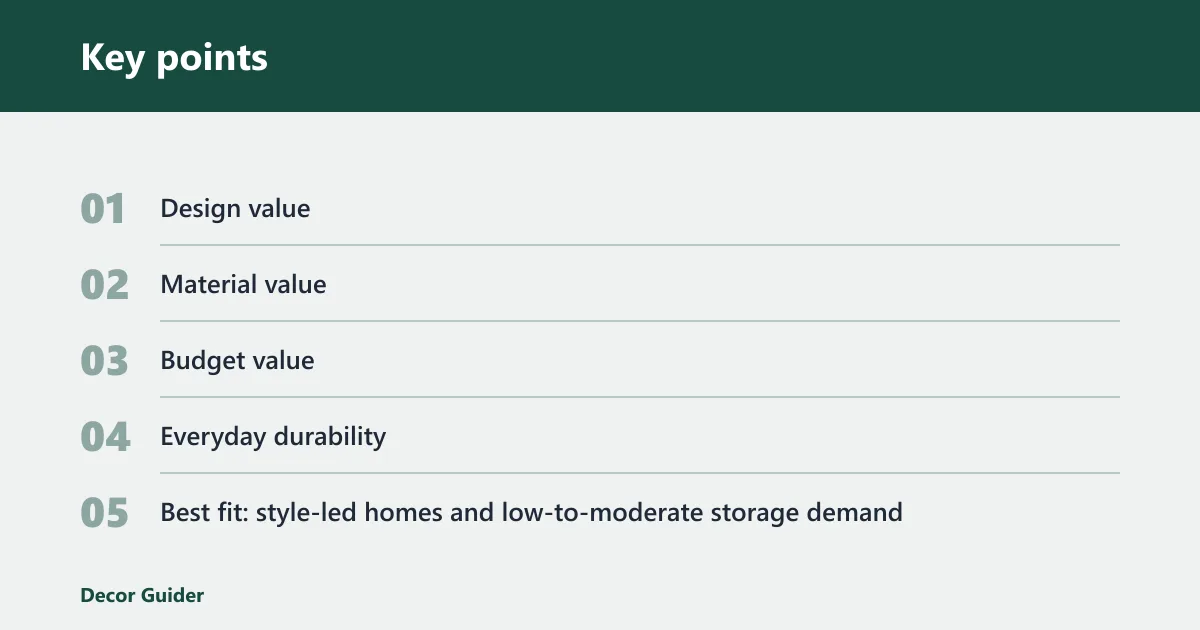
- Design value: strong
- Material value: mixed
- Budget value: weak
- Everyday durability: fair for normal use, not ideal for rough use
- Best fit: style-led homes and low-to-moderate storage demand
Pros and cons
The best case for this shelf is simple. It reads like furniture, not storage hardware. The case gets more complicated once you look at what is solid wood, what is veneer, and which parts are most likely to wear first.
Pros
- Acorn uses kiln-dried solid eucalyptus wood in the frame and legs, which gives the load-bearing structure real-wood value.
- The piece belongs to West Elm’s Mid-Century line, so it can coordinate with the dresser, nightstand, desk, and bed.
- Its proportions work well for a bookcase that also displays decor.
- GREENGUARD Gold certification is often treated as a useful indoor-air-quality signal for some buyers.
Cons
- Side panels use acacia wood veneer over engineered wood, which can chip at edges or corners if struck.
- The product page does not spell out the drawer glide system, so a common wear point is still unclear.
- $699 is a steep ask if you need storage more than styling.
- It may not suit heavy-book use as well as a simpler, less expensive shelf built for utility.

What the bookshelf is made
The construction is the main reason to consider this piece over a cheaper shelf. On the Acorn version, the frame and legs are kiln-dried solid eucalyptus wood, while the side panels are acacia wood veneer over engineered wood. That split is normal in this price tier, but it creates different wear behavior across the unit.
Kiln-dried eucalyptus frame and legs
Solid eucalyptus in the frame and legs matters because those parts carry the load and define the shelf’s long-term structure. Solid wood generally repairs and refinishes better than veneered panel stock, so the visible durability is better where the weight actually sits. That does not make the whole piece heavy-duty, though, because the rest of the case is not solid wood throughout.
Acacia veneer side panels
The side panels use acacia wood veneer over engineered wood, which helps control cost and can improve dimensional stability compared with all-solid construction. The tradeoff is repairability. If a panel edge chips or the veneer gets scraped, the fix is harder than touching up a solid wood surface. The most likely damage zones are corners, door-adjacent edges, and any face that catches a moving vacuum, toy, or chair.
Picture a narrow home office where the shelf sits beside a desk chair. If the chair arm keeps grazing the same side panel, that corner is the first place to show wear, not the solid eucalyptus legs.
GREENGUARD Gold and what it does, and does not, tell you
GREENGUARD Gold matters because it speaks to indoor-air-quality expectations, not to durability. It can matter in bedrooms, nurseries, or enclosed offices where buyers pay attention to emissions. It does not tell you whether the drawer hardware is durable, whether the veneer will chip, or how the shelf handles repeated loading.
Where it fits in the Mid-Century line
This bookcase is part of West Elm’s Mid-Century line, which also includes matching pieces such as the dresser, nightstand, desk, and bed. That matters because many buyers are not shopping for one standalone shelf; they are buying into a coordinated room plan with the same finish family and visual cues.
Matching pieces in the collection
The collection approach is useful if you want continuity across furniture categories. The Acorn-toned finish family gives the room a consistent wood note, and the shared design language makes it easier to mix storage and case goods without visual clash.
Design cues that make it read as West Elm
The bookshelf reads as West Elm because of the clean lines, splayed legs, and beveled edges. Those details pull it away from utilitarian shelving and toward a more tailored look. That is the main reason some buyers accept the price difference over a lower-cost bookcase with similar storage capacity.
Bookshelf decision matrix
This table is the fastest way to decide whether the West Elm piece fits your room and your tolerance for wear. The score reflects overall fit for that scenario, not just looks.
| Room type | Storage need | Visual priority | Durability tolerance | Better alternative | Score out of 10 |
|---|---|---|---|---|---|
| Living room | Medium, mostly books and decor | High | Medium | West Elm Mid-Century Bookshelf | 9/10 |
| Bedroom | Low to medium | High | Medium | West Elm Mid-Century Bookshelf | 8/10 |
| Rental apartment | Medium, flexible use | Medium | Low to medium | Target Linon Charlotte | 6/10 |
| Family room with kids | Medium, mixed storage | Medium | Low | IKEA BILLY bookcase | 5/10 |
| Home office | Medium to high, files plus decor | Medium | Medium | Crate & Barrel storage shelf | 6/10 |
| Design-led primary suite | Low to medium | Very high | Medium | West Elm Mid-Century Bookshelf | 9/10 |
Room type and storage need
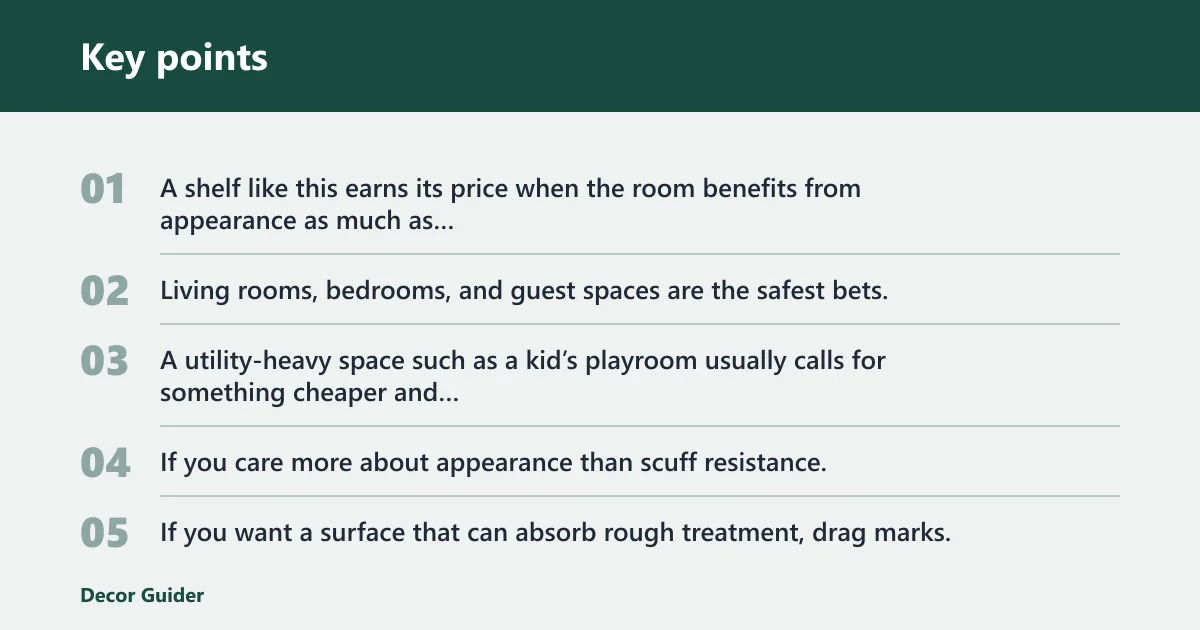
A shelf like this earns its price when the room benefits from appearance as much as utility. Living rooms, bedrooms, and guest spaces are the safest bets. A utility-heavy space such as a kid’s playroom usually calls for something cheaper and easier to replace.
Visual priority and durability tolerance
If you care more about appearance than scuff resistance, this is a sensible shortlist item. If you want a surface that can absorb rough treatment, drag marks, and fast reconfiguration, it is the wrong purchase. The veneered panels set the tone for that tradeoff.
Best alternative by scenario
For renters, a cheaper dupe-style option can make more sense if move-outs or wall scuffs are a concern. For families with kids, IKEA BILLY is easier to justify because damage hurts less at the register. For home offices, Crate & Barrel can make sense if you want a more premium finish and are willing to pay above this tier.
Who it’s for
This shelf is best for buyers who want a styled bookcase and are willing to pay for the West Elm look. It is not a strong fit for anyone whose main goal is maximum storage for the money, or for households that expect hard wear, frequent relocation, or rough handling around kids.
Best fit for renters
Renters who want a more finished-looking room and do not want to assemble a disposable shelf may like this better than a basic flat-pack unit. Still, the price is high enough that a move in a year or two can make the math less appealing. If your lease is short and your room is tight, a lower-cost shelf is easier to justify.
Best fit for families with kids
Families with kids should be cautious. The solid eucalyptus frame is a plus, but the veneer side panels and uncertain drawer hardware are not the best match for frequent bumps, climbing, or hurried toy clean-up. A cheaper shelf is easier to replace if damage becomes routine.
Best fit for home offices
Home office buyers are a decent fit if the shelf will hold books, files, and display items without constant rearranging. The style helps a work area feel more intentional. But if the drawer will be opened every day, that unknown glide system becomes a bigger question, not a smaller one.
Who should skip it?
Skip it if you want a low-cost shelving answer, if you need a very tough surface, or if you care more about capacity than appearance. Skip it too if you expect to load it heavily with reference books and move it often. That is where a simpler shelf usually wins.
Is the West Elm bookshelf worth it?
It is worth it for the right buyer, but only if the design premium matters enough to justify the construction tradeoffs. The shelf gives you solid-wood structure in key areas, yet its veneer panels, unclear drawer hardware, and $699 price keep it from being an all-around value winner.
Price versus construction tradeoffs
The strongest argument for the price is the mix of solid wood and a more refined profile than budget shelving. The weakest argument is that the visible case still relies on veneer over engineered wood in key panels. That means you are paying partly for look, partly for materials, and partly for brand positioning.
How it compares with IKEA BILLY
IKEA’s BILLY, which the comparison coverage puts around $200, is the smarter buy for budget-first storage. It targets a different shopper and a different role. BILLY is about utility and low cost. The West Elm piece is about furnishing a room with a shelf that reads like part of the decor.
When a sale changes the answer
A sale improves the equation because the price gap matters more than the styling gap. If the discounted price lands much closer to the low-to-mid range of premium shelving, the West Elm piece becomes easier to defend. At full price, the buyer needs a clear design reason.
Comparison with cheaper and pricier options
Price comparison only makes sense if you separate visual language from storage function. The West Elm shelf sits between true budget shelving and the next tier up in furniture-minded bookcases, which is why it competes differently in each category.
IKEA BILLY bookcase
BILLY is the lower-price benchmark at about $200. It is the value play, not the style equivalent. If you need inexpensive storage, BILLY is the practical answer. If you want the shelf to read as a design object, West Elm is in a different lane entirely.
Target Linon Charlotte
Target’s Linon Charlotte is a useful dupe-style reference for buyers chasing a mid-century look without West Elm pricing. It can satisfy the visual brief at a lower entry point, though it will not carry the same brand cachet or necessarily the same material mix.
Crate & Barrel and small-maker walnut alternatives
Crate & Barrel sits above this price tier, so you are paying for a more premium retail position. Small-maker solid-walnut equivalents around $1,500+ live in a different class altogether, where more of the budget goes to material and craftsmanship rather than mass-market styling. If your priority is pure wood quality, those options belong in the comparison set.
Frequently asked questions
Is West Elm good quality?
West Elm quality is uneven by product line, so the brand name alone is not enough to judge any one item. For this bookshelf, the solid eucalyptus frame and legs help, but the veneer side panels and unclear drawer hardware keep it from being a top-tier durability pick.
Is West Elm furniture good quality?
West Elm furniture can be good quality when the construction matches the price, but not every piece lands the same way. This bookshelf is a good example: the styling is strong, the load-bearing wood is better than all-veneer construction, and the wear points still need caution.
Is West Elm better than IKEA?
For looks and finish, often yes. For budget and basic storage, no. The West Elm shelf targets buyers who want a more finished piece of furniture, while IKEA BILLY targets shoppers who want storage for far less money and can accept a plainer visual result.
What is the west elm mid-Century bookshelf made of?
The Acorn version uses kiln-dried solid eucalyptus wood for the frame and legs, with acacia wood veneer over engineered wood on the side panels. The White colorway swaps in solid poplar for frame and legs, and the Dark Walnut version uses solid eucalyptus with engineered wood and a eucalyptus veneer.
How durable is a West Elm bookshelf over time?
Durability should be considered moderate rather than heavy-duty. The solid wood frame helps, but the veneered panels are more vulnerable to chips and edge wear. Long-term performance depends on how hard the shelf is used, how often it is moved, and whether the drawer hardware holds up well.
Does a West Elm bookshelf hold a lot of weight?
The product details provided here do not list a weight capacity, so it is safest not to treat it as a heavy-load shelf. It should be viewed as a mixed-use bookcase for books and decor, not as a documented high-capacity storage unit for very dense loads.
Is the west elm Mid-Century bookshelf worth it?
It is worth it if you want the Mid-Century look, can use the drawer and open shelves as part of a styled room, and do not need maximum abuse resistance. If your priority is low cost or rough-duty storage, the price is too high for the tradeoff.
Products related to this article
Sponsored / affiliate links. As an Amazon Associate I earn from qualifying purchases. I may earn additional commission from eligible campaigns.