Does a Bookshelf Need to Be Anchored?
A bookshelf should be anchored if it is tall, top-heavy, placed on an uneven floor, loaded with heavy items near the top, or accessible to children or pets. Many manufacturers and child-safety organizations recommend anchoring freestanding bookcases whenever possible. Unanchored units can tip, damage walls and floors, and injure people. This guide explains how to judge height, wall type, load placement, and room risk, then choose the right anchor.
When to anchor freestanding shelves versus built-ins
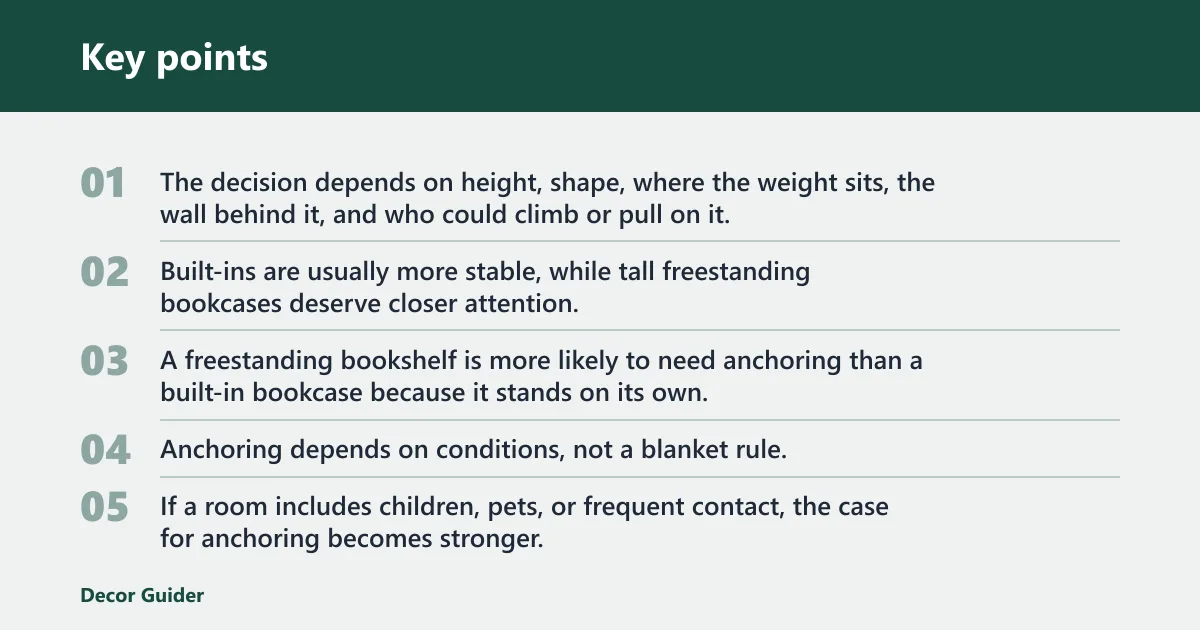


Many freestanding bookshelves should be anchored, and the safest default is to anchor whenever the product instructions allow it. The decision depends on height, shape, where the weight sits, the wall behind it, and who could climb or pull on it. Built-ins are usually more stable, while tall freestanding bookcases deserve closer attention.
Short answer for freestanding shelves
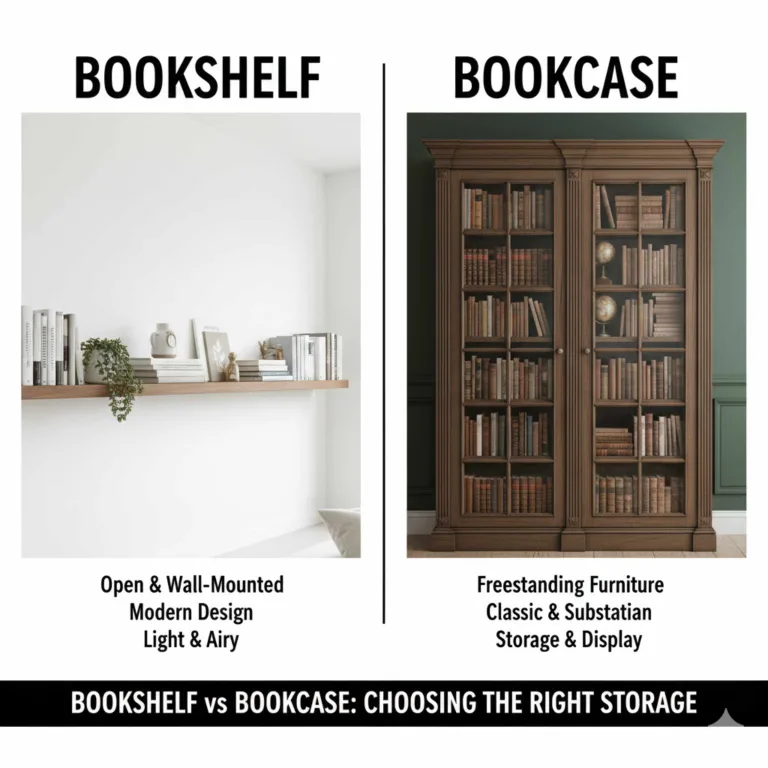
A freestanding bookshelf is more likely to need anchoring than a built-in bookcase because it stands on its own. Taller, narrower, or top-heavy units have a higher tip risk, especially if the top shelves hold dense books or objects that shift the center of gravity upward.
When built-ins are different
A built-in bookcase is tied into framing or a cabinetry system, so it is generally steadier than furniture that simply sits on the floor. Even so, the install still matters. If the unit is not fastened properly, or if shelves project far from the wall, it may still need fastening or other support.
Why the answer depends on risk
Anchoring depends on conditions, not a blanket rule. A shelf in a quiet room may seem less exposed, but the safest choice is still to anchor any freestanding bookcase whenever possible. If a room includes children, pets, or frequent contact, the case for anchoring becomes stronger.
What makes a bookshelf tip over?
Height, narrow bases, top-heavy loading, and activity around the shelf are the main drivers. A bookshelf becomes more tip-prone when its center of gravity rises or shifts forward. Climbing, pulling drawers, or bumping the unit can start a tipping event that a low, well-loaded shelf would resist.
Height and narrow base
Taller freestanding units are more tip-prone, especially narrow bookcases with a small footprint. The taller the cabinet stands relative to its base, the easier it is for force from a tug, bump, or climb to move it past its balance point.
Top-heavy loading
Heavy books on upper shelves raise tip risk. If the top shelf carries dense hardcovers, storage bins, or decor, the center of gravity moves upward. Placing heavier items low and lighter items high helps stability because the weight stays closer to the floor.
Who is around the shelf?
Household risk matters. Children, pets, earthquake-prone regions, and high-traffic rooms all increase the chance that a shelf gets pulled, climbed, or jarred. A low-risk guest room is one thing. A nursery with a toddler who can grab the front edge is another.
Say your 72-inch bookcase sits in a hallway and the top two shelves hold hardcovers. That same shelf in a quiet office is less exposed, but the loading still leaves it more tip-prone than a shorter unit with heavier items on the bottom shelves.
When can a bookshelf stay unanchored?
In practice, a bookshelf should stay unanchored only when the manufacturer does not require wall attachment and the unit is low-risk, low-height, and lightly loaded. Even then, anchoring is still the safer choice whenever possible. If the room includes children, pets, or frequent contact, the safer answer shifts toward anchoring.
Low, wide units in low-risk rooms
A short bookshelf with a broad base is less likely to tip than a tall, narrow one. A unit that sits flat, is not overloaded, and lives in a low-traffic space may be less risky, but anchoring is still preferred unless the maker says otherwise.
Light loading and lower shelves
Unanchored use is more reasonable when heavier items stay on lower shelves and the upper shelves carry light items only. Even loading keeps the center of gravity lower and reduces the forward pull that can cause a tip when a shelf is bumped or opened.
When manufacturer guidance allows it
Follow the product-specific hardware and instructions first. Some units are designed with anti-tip hardware in the package, and some include warnings that anchoring is required. If the instructions say to anchor, that instruction should override a general assumption that a shelf seems stable enough.
What wall type are you anchoring into?
Wall material changes the fastener choice. Drywall, wood studs, plaster, and masonry or concrete each need different hardware. A screw that works in a wood stud may fail in hollow drywall, and masonry needs fasteners made for brick, block, or concrete rather than standard wood screws.
Drywall and studs
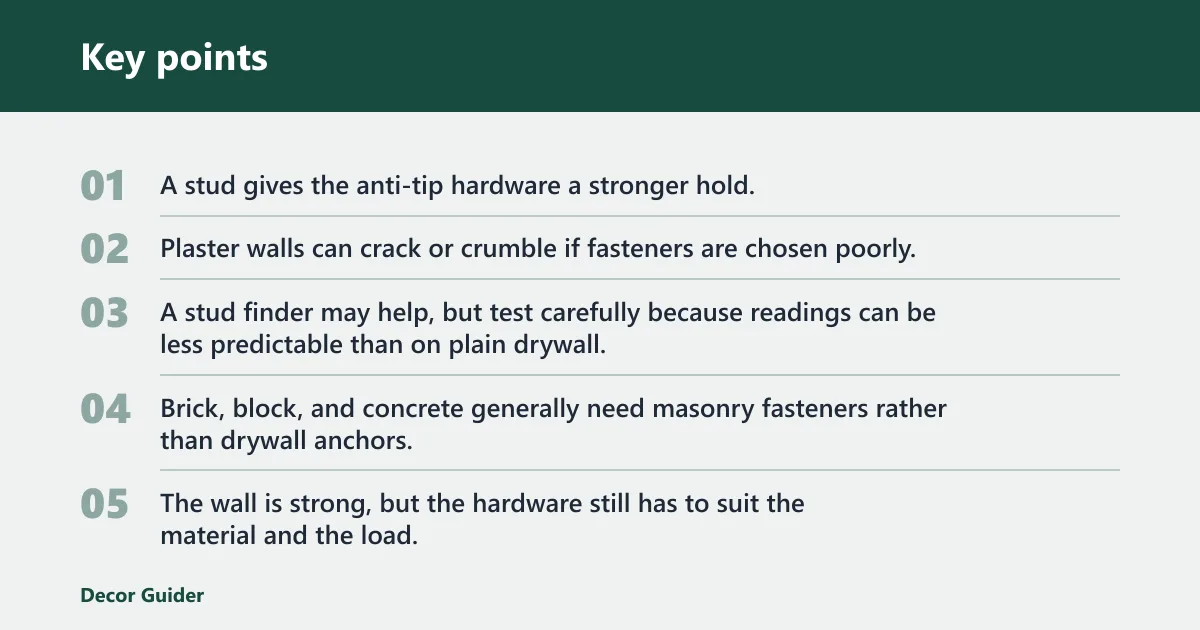
Drywall alone is generally weak for furniture anchoring, so use a stud finder to locate framing members whenever possible. A stud gives the anti-tip hardware a stronger hold. If you cannot hit a stud, choose a fastener specifically rated for the shelf weight and the wall type, and avoid assuming a generic drywall anchor will be enough for a tall or heavy bookcase.
Plaster walls
Plaster walls can crack or crumble if fasteners are chosen poorly. In older homes, the plaster may sit over wood lath or other backing, so the anchor plan must match what is behind the finish surface. A stud finder may help, but test carefully because readings can be less predictable than on plain drywall.
Masonry or concrete
Brick, block, and concrete generally need masonry fasteners rather than drywall anchors. The wall is strong, but the hardware still has to suit the material and the load. Use masonry anchors or concrete screws that match the product instructions and the shelf weight.
| Bookshelf type | Room risk factor | Recommended action |
|---|---|---|
| Tall narrow bookcase | High tip risk because of height and small base | Yes — anchor to the wall |
| Child’s room bookshelf | Climbing, pulling, and grabbing are more likely | Yes — anchor to the wall |
| Rental drywall shelf | Wall damage matters, but studs may still be available | Yes, use the least-damaging safe anchor |
| Masonry wall bookcase | Solid wall, but requires the right fasteners | Yes, anchor with masonry fasteners |
| Fully loaded top shelves | Weight is high and center of gravity shifts upward | Yes, move weight lower and anchor |
| Low, wide shelf in a quiet room | Lower exposure, lighter loading, less bumping | No, may stay unanchored if instructions allow |
What anti-tip hardware do you need?
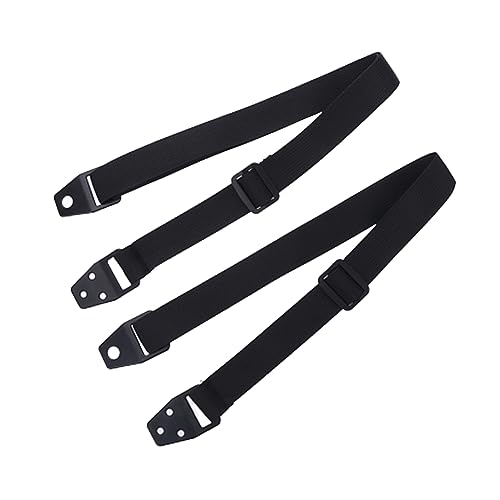
An anti-tip kit usually includes a nylon strap or metal bracket, screws, and wall fasteners. The purpose is to prevent tip-over by tying the bookshelf to the wall or a framing member. The right kit depends on the wall type, the shelf weight, and the product instructions.
Straps and brackets
Nylon straps are common in furniture anti-tip hardware because they can allow a little movement while still stopping a full tip. Metal brackets are stiffer and may suit some installations better. Use the style supplied with the furniture if the maker specifies one.
Screws, wall anchors, and toggle bolts
For drywall, you may need wall anchors or toggle bolts if the screw cannot go into a stud. For tall or heavy bookcases, a stud-mounted installation is the safer choice whenever possible. Toggle bolts can help in hollow walls, but they are not a free pass for any bookcase and any wall.
Masonry fasteners
Brick and concrete need masonry-specific fasteners, such as masonry anchors or concrete screws, chosen for the wall and the load. Do not swap in drywall anchors for masonry. The hole size, screw type, and embedment depth all matter for a secure attachment.
How to anchor a bookshelf safely
How to anchor a bookshelf to wall starts with matching the hardware to the wall and then fastening the unit at the points the manufacturer specifies. The goal is a secure tie to framing, masonry, or an approved anchor point, not a loose strap that only looks attached.
-
Check the instructions.
Read the anti-tip guidance that came with the bookshelf and note the hardware the maker expects. If the instructions name a strap, bracket, screw size, or wall type, follow that first because the furniture was designed around that setup.
-
Locate the wall structure.
Use a stud finder to locate framing members when anchoring into drywall, and confirm the chosen spot before drilling. If the wall is plaster or masonry, identify the surface type first so you do not use the wrong fastener.
-
Choose the correct fasteners.
Pick screws for studs, a fastening system rated for the wall and load if studs are not available where allowed, and masonry anchors for concrete or brick. Match the hardware to both the wall and the unit weight, since the wrong fastener can pull out under load.
-
Set the bookshelf in place.
Position the bookcase flush to the wall and level it before fastening. A shelf that sits crooked can place uneven force on the hardware and may shift after the first load change.
-
Attach the anti-tip hardware.
Fasten the strap or bracket to the bookcase and wall according to the kit directions. Tighten the hardware so there is no slack, but do not crush the furniture panel or strip the wall fastener.
-
Load the shelves carefully.
Put heavier books and objects on the lower shelves and lighter items up top. Recheck the shelf after loading, because a top-heavy setup can change the balance even if the empty unit felt stable.
Picture a rental with drywall and a narrow 6-foot bookcase. If the wall has studs where you need them, a stud-mounted anchor with small holes is usually the cleaner choice than relying on a hollow-wall fastener alone. The wall type still controls the fastener choice, even in a rental.
Bookshelf safety checklist
Use this checklist before deciding that a shelf can stay free-standing. The same unit can move from acceptable to unsafe if the room changes, the load changes, or the wall changes. A simple yes/no review catches most avoidable mistakes.
- Is the bookshelf tall and narrow? If yes, anchor it.
- Are heavy books on the top shelves? If yes, move them lower and anchor if needed.
- Is the room used by children or pets? If yes, anchor it.
- Is the wall drywall, plaster, or masonry? Choose fasteners for that wall type.
- Does the manufacturer require anchoring? If yes, follow the instructions.
- Is the unit low, wide, and lightly loaded? If yes, it may still be better to anchor it whenever possible.
Bookshelf anchoring checklist
Use this decision checklist to match the bookshelf, the room, and the wall. A yes in the last column means anchor now; a no means the unit may stay unanchored only if the room risk is low and the maker does not require wall attachment.
| Scenario | Risk factor | Anchor? |
|---|---|---|
| Tall narrow bookcase | Height and small base raise tip risk | Yes |
| Child’s room bookshelf | Climbing and pulling are more likely | Yes |
| Rental drywall shelf | Need the right fastener and lower-damage plan | Yes |
| Masonry wall bookcase | Strong wall, but hardware must match the material | Yes |
| Fully loaded top shelves | Weight high on the unit shifts balance upward | Yes |
| Low, wide shelf in a quiet room | Lower risk, lighter loading, little contact | No |
Frequently asked questions
Does a bookshelf need to be anchored to the wall?
Many freestanding bookshelves should be anchored, especially if they are tall, narrow, top-heavy, or used in a room with children or pets. A low, wide, lightly loaded unit in a low-risk room may seem less urgent, but anchoring is still the safer choice whenever possible.
How do I anchor a bookshelf to the wall?
Start with the product instructions, then locate studs or choose wall-specific fasteners, and attach the supplied strap or bracket with the correct screws. For drywall, a stud finder helps you reach framing members. For masonry, use masonry anchors or concrete screws that match the wall and the load.
When is it safe to leave a bookshelf unanchored?
It is safer to leave a bookshelf unanchored only when it is low, wide, lightly loaded, and placed in a room with low contact and no climbing risk, and only if the manufacturer does not require anchoring. Even then, anchoring is still the better choice if it can be done. If the shelf is tall or top-heavy, anchoring is the better choice.
What kind of anti-tip kit do I need for a bookshelf?
Look for a furniture anti-tip hardware kit with a nylon strap or metal bracket, plus screws and the right wall fasteners for your wall type. The kit should be rated for the shelf and installed per the maker’s instructions. Do not assume one universal anchor fits drywall, plaster, and masonry.
How do I secure a bookshelf in a rental without damaging the wall?
Use the least-damaging method that still suits the wall, such as a stud-mounted strap with small holes rather than a large hollow-wall fastener when possible. Renters still need the correct wall type and fastener choice. A lower-damage option is not the same as a no-risk option.
What height or load makes a bookshelf more likely to tip?
Risk rises as the unit gets taller and narrower, and it rises again when heavy items sit on the top shelves. Heavy upper loading makes the case stronger.
Products related to this article
Sponsored / affiliate links. As an Amazon Associate I earn from qualifying purchases. I may earn additional commission from eligible campaigns.