Room & Board Bookshelf Review: Is It Worth It?
Room & Board bookshelf reviews are generally favorable for buyers who want solid wood or steel, clean proportions, and better load-bearing than flat-pack bookcases, but the best fit depends on depth, shelf spacing, and wall-anchoring needs. Choose poorly and you end up with wasted floor space, sagging shelves, or a bookcase that looks high-end but stores less than a cheaper alternative. This guide breaks down construction, dimensions, storage capacity, and where Room & Board bookcases outperform mass-market options.
Verdict on Room & Board bookcases


Buy Room & Board if you want a bookcase that feels furniture-grade first and storage unit second. The premium makes sense when the piece carries heavy books, anchors a living room wall, or needs to read as part of the architecture rather than a temporary fix.
It makes less sense if your main goal is maximum cubic storage per dollar. In that case, a less expensive bookcase with deeper shelves, more hidden storage, or easier delivery may solve the problem better.
Where the premium feels justified
The value is strongest when construction and proportion matter as much as price. Solid wood and wood veneer can give a steadier, more furniture-like feel than particle board or basic MDF, especially on wider shelves that need to stay visually straight under books, binders, and records.
Room & Board-style pieces also tend to fit better in open-plan rooms because they are designed to look finished from more than one angle. That matters if the bookcase can be seen from a sofa, entry, or adjoining space.
Where it does not
The premium starts to look padded when the piece is mostly decorative and the shelves are lightly loaded. A tall, narrow open bookcase can cost more while still offering less practical storage than a broader cabinet with doors and deeper bays.
Pros and cons
Pros
- Cleaner proportions than many mass-market bookcases.
- Solid-wood or veneer construction options feel more furniture-grade.
- Better fit for heavy books, art books, and display objects.
- Open shelving can work well in living rooms and offices.
- Some models suit room-divider placement in open floor plans.
Cons
- Higher price does not always mean more usable storage.
- Open shelves collect dust and expose clutter.
- Tall, narrow units need careful wall-anchoring or anti-tip hardware. (Consumerreports)
- Assembly and delivery can be cumbersome for heavy pieces.
- Some profiles look good but do not fit baskets or binders well.

Who it’s for
Room & Board bookcases suit buyers who want a premium piece for a living room, office, or open-plan area and who care about how the shelf proportions look when loaded. They are less suited to shoppers who need maximum hidden storage, frequent rearrangement, or the lowest possible delivery burden.
Best for living rooms
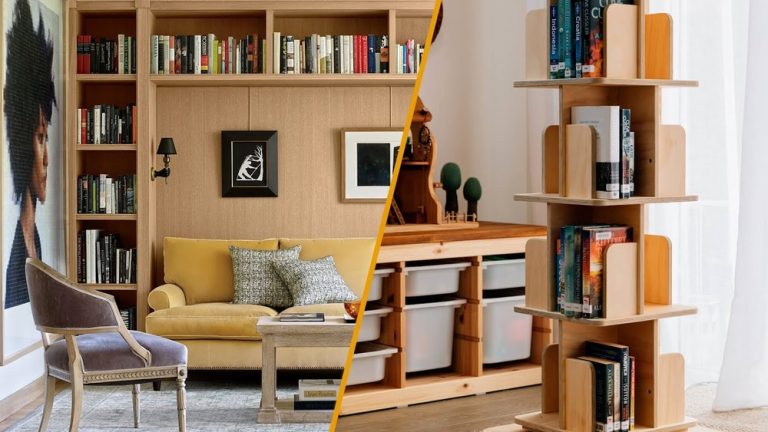
Choose these when the bookcase needs to hold a mix of books, framed art, ceramics, and a few storage boxes without reading as office furniture. Open shelves work especially well when you want the wall to feel planned, not crowded.
Best for home offices
They suit offices that need upright storage for reference books, binders, and electronics, especially if the shelves are deep enough to avoid overhang. A closed lower section is preferable if you want printer supplies, paper stock, or cables out of sight.
Best for small spaces
Smaller rooms need a narrower footprint, manageable depth, and a height that does not overpower the wall. A lower or shorter profile can be the better fit when ceiling height is limited or when the room already carries visually tall furniture.
Best for mixed display and storage
Buyers who want open display and hidden storage should look for combinations of shelves and cabinet sections. That split is useful for chargers, board games, candles, and other items that should not stay visible all the time.
What Room & Board bookshelf buyers get
Expect a premium bookshelf to be judged less by a single number and more by the relationship between material, depth, and shelf spacing. A good piece can still fail if the shelves are too shallow for records or too tight for taller art books and baskets.
Materials and finishes
The Krossa shelving unit uses white oak, walnut, and wood veneer. That mix matters because solid wood parts usually carry more of the tactile and structural feel buyers expect, while veneer can help control cost and keep panels visually consistent.
By comparison, the West Elm Pierce uses a metal frame and legs with kiln-dried wood and oak veneer. That sort of hybrid build often aims for a lighter visual profile, while still supporting substantial weight through the frame.
For premium bookcases, engineered wood and MDF can still work, but they usually change the value equation. They are often cheaper and lighter, yet they can feel less substantial and may be less forgiving under long-term shelf loads than kiln-dried wood, solid wood, or a well-designed metal frame.
Dimensions and shelf proportions
The Krossa shelving unit is 70.5 inches high, 32.5 inches wide, and 15 inches deep. A shorter Krossa option is available at 35.5 inches high, 36 inches wide, and 16 inches deep. The West Elm Pierce measures 42 inches wide, 17 inches deep, and 78.75 inches high.
Those dimensions tell you more than overall size alone. A depth of about 15 to 16 inches is usually friendlier to books and decor than very shallow shelving, while a depth around 17 inches can better handle larger objects and mixed storage without overhang.
Shelf clearance matters too. The Pierce has varying shelf heights, which gives it more flexibility for different objects. That is useful for art books, records, baskets, and binders, which each need different vertical space to sit properly.
Open and closed storage options
Open shelves are better for display and faster access. Closed storage reduces visual clutter, hides cords and small items, and is better for child safety because fewer objects sit within reach.
The West Elm Pierce includes a single cabinet storage level with sliding doors, designed to hide items like candles or snacks out of sight. That makes it more practical for mixed-use rooms than a fully open shelf if you want part of the load hidden.
What size fits your room?
Size is where premium bookcases win or fail. The right piece should match the room’s wall span, traffic flow, and what you actually store, not just the space you have left after everything else is in place.
Living room fit
For a living room, a bookcase with enough width to feel grounded on the wall usually works better than a very narrow vertical tower. A piece around the Krossa’s 32.5-inch width can work when paired with another object nearby, but larger walls often benefit from broader storage or a pair of matching units.
Office fit
Office use usually demands clearer shelf planning. Binders, printers, and reference books need predictable vertical clearance, so a unit with adjustable or varied shelf heights is more useful than one with fixed spacing that wastes vertical room.
Small-space fit
Small apartments need shallow depth, a compact footprint, and enough visual lightness that the room does not feel boxed in. A shorter Krossa option at 35.5 inches high, 36 inches wide, and 16 inches deep may suit a tighter wall where a full-height case would dominate the room.
Suppose your apartment has a 9-foot wall but only one clear section between a window and a doorway. A shorter, wider unit can store books and baskets without making the passage feel compressed, while a tall tower might block sight lines and make the wall feel heavier.
Corner and divider use
Corner placement works best when the depth leaves enough clearance for walking space and nearby furniture. For divider use, a bookcase should look finished from both sides and remain stable when loaded unevenly.
AD notes that the Krossa could work as a room divider in the right context, and that is the key phrase. A divider needs adequate depth, visual balance, and enough weight or anchoring to avoid wobble in open floor plans.
How sturdy are the shelves?
Sturdiness is not just a feel issue. It comes from material thickness, shelf span, joinery, and how the weight sits across the shelf. A premium bookcase should feel steady under books, not only under decor.
Per-shelf load limits
Manufacturers often list per-shelf weight limits, and that figure matters more than the overall product weight. Heavy hardcovers, binders, and records create a different load than framed photos or a small lamp.
For a shelf used mainly for books, look for a sturdier build and avoid wide spans with little center support. For decor, the load is lower, but shelf sag can still show if the board is long and thin.
Books versus decor versus electronics
Books are the hardest common load because they concentrate weight along the front half of the shelf. Decor is easier, but unevenly distributed objects can still tilt the visual line. Electronics need both weight support and cable clearance.
Say your shelf is 15 inches deep and you place a row of records at the front edge with a speaker and router behind them. The shelf may technically hold the weight, but the spacing becomes the problem if cords crowd the back and heat builds around the electronics.
Sag risk and shelf spacing
Long spans, low-cost board materials, and heavy books are the main sag risks. Shelf spacing matters too, because shelves that are too close force upright books to lean or stack awkwardly, while shelves that are too far apart waste vertical storage capacity.
A narrow bookcase can also become visually too tall if the width is small relative to height. That can make the unit feel top-heavy even before anything is stored on it.
Room Board bookshelf decision matrix
This matrix helps separate fit from finish. Use it to judge which Room & Board-style option makes sense for your room, your storage mix, and how much setup you are willing to handle.
| Buyer profile | Room size score | Storage type score | Material score | Assembly burden score | Display vs hidden storage score | Short recommendation |
|---|---|---|---|---|---|---|
| Living room display | High | Medium | High for white oak or walnut veneer | Medium to high | High for open shelving | Choose a taller, balanced unit if the wall can support it and you want books plus decor in one view. |
| Home office storage | Medium | High | High for kiln-dried wood and metal frame hybrids | Medium | Medium to high if a cabinet section is included | Pick adjustable shelf spacing and enough depth for binders, printers, and upright files. |
| Small apartment | High for compact or shorter sizes | Medium | Medium | Low to medium | Medium | Use a shorter or narrower option if wall space and circulation are tight. |
| Mixed-media storage | Medium | High | High when shelves are stiff and well-supported | Medium to high | High when open shelves and doors are both present | Choose a unit with both open shelves and hidden storage so books, records, and small items can live together without visual clutter. |
How does a Room & Board bookshelf compare to other premium bookcases?
Room & Board tends to compete on cleaner proportions, stronger furniture-like presence, and better material credibility than many mass-market options. Compared with the West Elm Pierce, the Krossa reads more like a substantial shelving piece built around wood presence, while the Pierce leans on a lighter metal-frame look with mixed storage.
The Pierce’s 42-inch width and 17-inch depth make it useful for varied shelf content, and its changing shelf heights help with object clearance. The Krossa’s 70.5-inch height, 32.5-inch width, and 15-inch depth position it more like a taller, narrower display unit for larger spaces and open floor plans.
Value depends on whether you need more shelf flexibility, more hidden storage, or a stronger furniture statement. If the room needs a divider-like piece, the Krossa has the better fit. If you want a cabinet level that hides smaller items, the Pierce has the edge.
Construction and material comparison
Solid wood and veneer usually give Room & Board-style bookcases a more premium tactile profile than particle board or basic MDF. Metal framing changes the visual weight and can improve rigidity, but it also shifts the look toward industrial or mixed-material styling.
Proportion and storage comparison
Room-fit is where dimensions decide the winner. A shelf that is technically premium still fails if its clearance does not fit your books or if the footprint blocks circulation. Wider, lower units can store more with less visual drama, while tall narrow units save floor space but can feel dominant.
Value for the price
The price is worth it when the shelf actually solves a storage problem better than a cheaper case: less wobble, better proportion, more useful clearance, and a finish that belongs in the room. It is not worth it when the piece is mostly there to look expensive.
Assembly and delivery
Assembly is a real part of the cost. The Krossa is described as needing assembly, and white-glove assembly is recommended. For a heavy premium bookcase, that matters because the time, handling, and wall-positioning can be more demanding than a basic flat-pack shelf.
White-glove delivery or in-home delivery can reduce the friction, especially for taller pieces that are awkward to move through a hallway or up stairs. Self-assembly is still common, but the burden rises with weight, number of parts, and the need to anchor the case safely.
- Measure the wall width, ceiling height, and baseboard depth before ordering.
- Check whether the shelf depth fits books, baskets, or records without overhang.
- Plan for wall anchoring or anti-tip hardware before the delivery date.
- Confirm whether the delivery includes in-home placement or assembly.
- Clear a straight path from the entry to the final location.
How to style bookshelves in living room
Start with the shelf’s proportions, then place objects by scale. Large books and closed boxes should sit low, medium objects should break up the height, and smaller decor should appear in groups that leave visible breathing room. That keeps the shelf from looking packed end to end.
A common first-timer mistake is loading the bookshelf with heavy ceramics on the top shelves, which can make the Room & Board piece feel crowded and less stable. The result looks busier than curated, especially on open shelving. Leave some negative space and repeat a few materials or colors so the arrangement feels intentional.
Frequently asked questions
Is a Room & Board bookshelf worth the price?
It is worth the price if you need better materials, more credible shelf proportions, and a piece that can carry books without looking flimsy. It is less worth it if your main need is maximum storage per dollar or a fully hidden cabinet-style solution.
How much assembly does a Room & Board bookshelf require?
Expect assembly on many models, and plan for extra effort with taller or heavier cases. White-glove assembly is recommended for pieces like Krossa, especially if you want safer handling and easier placement in a finished room.
Can a Room & Board bookshelf be used as a room divider?
Yes, in the right context. The bookcase needs enough depth, a finished look from multiple angles, and secure anchoring or a stable base. Open-plan rooms work best when the divider also helps define zones without blocking light too much.
What materials and finishes are common in Room & Board-style bookshelves?
Common choices include white oak, walnut, wood veneer, kiln-dried wood, and metal framing. These materials usually carry a more premium feel than particle board or basic MDF, though engineered wood can still be useful when the design keeps costs and weight in check.
Board room vs boardroom
For search purposes, “board room” usually refers to a room with a shelving unit or furniture piece, while “boardroom” is the corporate meeting space. If you are shopping for shelves, the relevant phrase is “bookcase” or “bookshelf,” not the meeting-room term.
Products related to this article
Sponsored / affiliate links. As an Amazon Associate I earn from qualifying purchases. I may earn additional commission from eligible campaigns.