Pottery Barn Bookshelf Review
Pottery Barn bookshelves are worth buying if you want coordinated, furniture-grade styling and are willing to pay for finish, scale, and brand consistency; they are usually not the best value when you want the most storage for each dollar. A bad pick can leave you with a costly piece that looks right but wobbles, scratches, or falls short in daily use. This Pottery Barn bookshelf review covers build quality, price trade-offs, durability risks, and which buyers get real value.
Verdict: is it worth the price?


The best case is a buyer who wants a bookcase that looks planned in a living room, home office, or dining space and does not want to fight a cheap finish or flimsy frame. The hard case is a buyer who mainly needs cubic feet of storage. In that scenario, a lower-priced, simpler shelf often wins on cost per shelf and cost per year.
Best value cases
Pottery Barn makes the most sense when the bookshelf is part furniture, part display piece. If you want adjustable shelves, a finished back or sides, and a piece that fits a traditional or curated room, the premium can be easier to justify.
When the price is hard to justify
The price is harder to defend when you only need basic storage for paperbacks, binders, or bins. In that use case, the brand’s design premium can outrun the function premium.
A common first-timer mistake is buying a tall, decorative bookcase for a narrow office wall and assuming the wall alone will solve stability. If the shelf depth is shallow and the load sits high, wobble becomes more obvious even when the piece looks solid on paper.
Pottery Barn bookshelf buyer checklist
Use this before you buy. It separates style value from functional value, which matters a lot at this price.
- Measure the wall width and depth first. A bookcase that fits visually can still block a walkway or crowd a desk chair.
- Check whether the shelves are adjustable. Adjustable shelves help with art books, binders, baskets, and mixed decor.
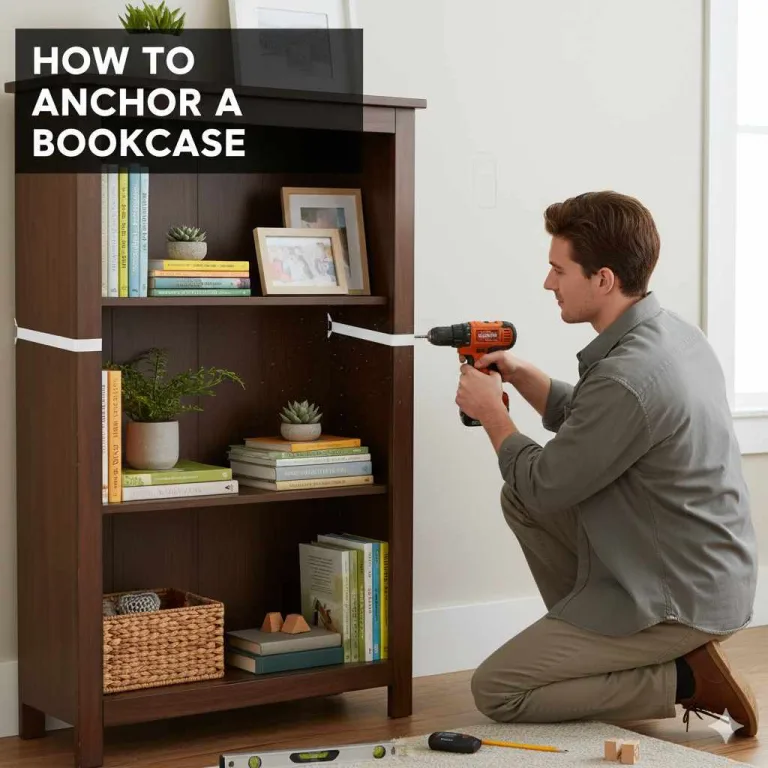
- Confirm anti-tip hardware is included. Tall furniture should be anchored, especially in homes with children or pets.
- Look for solid wood components, not only veneer. Solid meranti wood helps with structure; veneer mainly affects the look.
- Ask how much of the frame is engineered wood or MDF. That is normal in premium mixed-construction furniture, but it changes long-term expectations.
- Estimate shelf load before ordering. Heavy reference books need more support than decor objects.
- Review return timing and delivery windows. A return policy with restrictions leaves less room for a bad fit.
| Collection | Material mix | Adjustable shelves | Anti-tip hardware | Estimated storage depth | Likely room fit | Value risk flags | Best for / avoid if |
|---|---|---|---|---|---|---|---|
| Farmhouse Bookshelf | Solid meranti wood, mahogany veneers, engineered wood | Yes | Yes | About 12 to 15 inches | Living room, home office, dining room | Premium price; mixed materials can hide weak shelf support if overloaded; finish wear on edges | Best for: buyers who want a traditional look and flexible shelf spacing. Avoid if: you need the cheapest possible storage or plan to load every shelf with heavy books. |
| Open tall bookcase style | Engineered wood or MDF with veneer-facing parts | Often yes | Sometimes included, sometimes separate | About 10 to 14 inches | Apartment living room, bedroom corner, narrow wall | Wobble risk if tall and narrow; shelf sag if the span is long; finish chips show quickly on thin edges | Best for: lighter storage and display. Avoid if: you need a bookcase for encyclopedias, textbooks, or heavy binders. |
| Low bookcase / console-height case | Mixed wood construction with veneer finish | Sometimes yes | Usually less critical than on tall units | About 14 to 18 inches | Behind a sofa, under art, small office | Less vertical storage per dollar; can look underbuilt if priced like a statement piece | Best for: display-heavy rooms and lower visual mass. Avoid if: you need maximum shelves in a tight footprint. |
| Contract Grade case piece | Mixed construction with higher-duty hardware expectations | Usually yes | Yes or strongly recommended | About 12 to 16 inches | Home office, higher-use shared space | Higher upfront cost; quality still depends on shelf thickness and joinery, not the label alone | Best for: frequent use and heavier handling. Avoid if: you are paying only for the label and not for the build. |
What materials are used in Pottery Barn bookshelves?
Most Pottery Barn bookshelves use a mixed-material build rather than solid wood throughout. The Farmhouse Bookshelf is crafted from solid meranti wood, mahogany veneers, and engineered wood. That mix is common in premium furniture because it balances appearance, stability, and cost control.
Solid meranti wood
Solid meranti wood is the structural hardwood component in pieces like the Farmhouse Bookshelf. Its job is to provide more dependable strength than thin panel stock alone. In mixed-construction furniture, solid wood is most useful where the frame takes load, corners meet, and the piece needs long-term shape retention.
Mahogany veneers
Mahogany veneers are a surface layer, not the main structural body. They help create a more even grain appearance and a cleaner finish across visible panels. That matters on a bookshelf because the large flat surfaces are what you see first, especially in living rooms and offices with strong light.
Engineered wood and MDF
Engineered wood and MDF are common in premium furniture because they help control cost and keep panels flatter than some low-grade solid wood assemblies. They can perform well when used correctly, but they are less forgiving if shelf spans are too long, moisture is high, or hardware loosens over time.
Kiln-dried wood
Kiln-dried wood has been moisture-reduced to lower the risk of warp and split movement as indoor conditions change. That is useful in homes with seasonal humidity swings. It does not make a bookcase indestructible, but it does improve stability compared with wetter, less controlled stock.
How sturdy is it for heavy books?
Pottery Barn bookshelves can be sturdy enough for heavy books, but only if the shelf span, support system, and anchoring are right for the load. The real question is not whether the piece feels substantial in the room; it is whether the shelves resist sag, the frame resists wobble, and the unit is anchored correctly.
Shelf sag risk
Sag risk rises when a long shelf holds dense items such as hardcovers, binders, or boxed files. Engineered wood can be very serviceable, but shelf thickness and bracket design matter more than the brand name. If the shelf deflects under weight, the issue shows up first in the middle of the span.
Suppose you load a 36-inch shelf with a row of art books and binders. The ends may look fine while the center slowly bows. That is not a cosmetic problem only; it changes how doors, baskets, and adjacent shelves align over time.
Wobble and wall anchoring
Tall bookcases can wobble before they ever fail structurally. The most common trouble spots are loose fasteners, uneven floors, and a high center of mass. If the unit is not secured to the wall, a gentle push can turn into visible sway, especially on narrow models.
Anti-tip kit basics
The Farmhouse Bookshelf includes an anti-tip kit, and that is the right default for a tall unit. Anti-tip hardware is not optional decoration; it is part of the safe setup for freestanding furniture with height. Wall anchoring reduces the chance of tip-over and also helps limit day-to-day movement.
Contract Grade and durability expectations
Even so, a durability label should be read as a signal, not a blank check. A premium label cannot fix thin shelf stock, poor assembly, or overloading. It simply raises the baseline you should expect from the hardware and construction.
Pottery Barn bookshelf models compared
Pottery Barn’s best bookshelf for you depends on room size and load type. Think in terms of room fit first, then finish, then shelf duty.
Best fit for small rooms
For apartments and narrow walls, a narrower open bookcase or a lower console-height case usually works better than a tall, deep statement unit. You get a cleaner sightline and less crowding near doors or radiators. In a small room, an oversized bookcase can read as a storage mistake, not a design choice.
Best fit for display-heavy rooms
The Farmhouse Bookshelf suits display-heavy rooms where books sit beside framed art, ceramics, and baskets. The mahogany veneer helps the piece read finished rather than utility-only. Adjustable shelves are useful here because display objects often need odd spacing that fixed shelves cannot provide.
Best fit for heavier storage needs
If your priority is heavier storage, choose the model with the strongest shelf support and the shortest unsupported span. The look matters less than the structure in this case. Tall shelves with long spans are the ones most likely to sag if loaded like archive storage.
Most value-sensitive choice
The most value-sensitive choice is usually the simplest open bookcase with fewer decorative details. You give up some styling, but you often save enough to make the cost per shelf more rational.
Delivery, service, and return-policy tradeoffs
Delivery and service can change the real cost of ownership. The issue is not only speed; it is how much friction you can tolerate if the piece arrives late, damaged, or not quite right.
Delivery timelines
A long wait can be acceptable for many furniture buyers, but it still affects planning. If you are coordinating a move, a remodel, or a built-in replacement, that timing can matter. Delays also matter more when a room is waiting on one anchor piece that sets the rest of the layout.
Assembly and damage risk
Mixed-material furniture often arrives with enough parts and hardware to make assembly annoying if instructions are unclear or holes are slightly misaligned. Any damage to veneers or edges lowers the perceived value quickly. A premium finish looks good only until a chipped corner or scratched panel appears during setup.
Customer service and returns
The return policy can matter a lot because it limits your flexibility if the bookshelf looks too large, sits awkwardly in the room, or arrives with an issue.
What can raise the true cost?
The true cost rises when a premium piece needs a return pickup, replacement parts, or a second delivery attempt. It also rises if you choose the wrong size and end up storing less than expected. A bookshelf that costs more up front but lasts well can still be worth it; a stylish one that disappoints early is expensive at any price.
Pros and cons
Pros
- Classic, upscale styling that fits traditional and curated rooms.
- Mixed construction can balance appearance and stability well.
- Adjustable shelves add real flexibility for books and decor.
- Anti-tip hardware is included on at least some models, including the Farmhouse Bookshelf.
- Contract Grade positioning is useful for higher-use spaces.
Cons
- Price is high relative to mass-market alternatives.
- Value depends heavily on which model you choose.
- Heavy-book storage can expose shelf sag and wobble if the design is not right.
- Delivery, setup, and returns can add friction and cost.
- Finish wear and edge chipping are real risks on veneered surfaces.
Who it’s for
Pottery Barn bookshelves suit buyers who want a furniture-style piece with visible finish quality, adjustable storage, and a look that fits a refined room. They are less suitable for buyers who want the most shelf space for the lowest price, or for anyone filling shelves with heavy reference books and expecting utility-grade value.
Picture a home office with a 30-inch wall opening, a few art books, and display boxes. A Pottery Barn bookcase can be a good fit there because the room benefits from finish consistency and controlled proportions. Now picture a basement storage wall with binders, manuals, and archive boxes. That is where a cheaper, plainer shelf often makes more sense.
Frequently asked questions
Is the Pottery Barn bookshelf worth the price?
It can be, but only if you value finish, styling, and room fit as much as storage. The price is easier to defend for a visible living room or office piece than for plain utility storage. If your main goal is maximum capacity per dollar, a cheaper alternative usually wins.
How sturdy is a Pottery Barn bookshelf for heavy books?
It depends on shelf span, support, and anchoring. Heavy books are the hardest test because they reveal sag and wobble quickly. A bookshelf can still perform well, but you should prefer shorter spans, stronger shelf support, and wall anchoring if the unit is tall or the load is dense.
Does Pottery Barn bookshelf require anti-tip hardware?
For tall units, yes in practical terms. The included anti-tip kit on the Farmhouse Bookshelf shows the right setup approach. Any tall freestanding bookcase should be anchored to the wall to reduce tip risk and limit movement, especially in homes with children, pets, or uneven floors.
Are Pottery Barn bookshelves better than cheaper alternatives?
They are better when you care about styling, finish quality, and coordinated room design. Cheaper alternatives usually win on pure storage value. If you want a piece that looks like furniture rather than a utility shelf, Pottery Barn has an edge. If you want the lowest cost per shelf, it usually does not.
What are the common complaints about Pottery Barn furniture quality?
The main complaints usually center on price, delivery friction, finish wear, and occasional assembly problems. With mixed-material furniture, small flaws are easier to notice because the premium price sets a higher expectation. Return restrictions can also make a miss feel more expensive than it should be.
Is Pottery Barn good for durable shelving and storage?
It can be, especially for moderate household storage and display. Still, durability depends on the specific collection, shelf thickness, and how much weight you place on each shelf. It is good for careful buyers, not careless loading.
Products related to this article
Sponsored / affiliate links. As an Amazon Associate I earn from qualifying purchases. I may earn additional commission from eligible campaigns.
 12 Pack L16 x H 10" Black Heavy Duty Shelf Brackets with Screws Metal Shelf Brackets Shelf Support Angle Brackets for Shelves L Brackets Heavy Duty Floating Shelf
 Large Picture Hanging Strips Heavy Duty, 32-Pairs(64 Strips) Sticky Picture Hangers for Walls No Damage Wall Picture Hangers Without Nails Refill Adhesive Poster Strips