Pottery Barn Pouf Review: Is It Worth It for You?
Buy Pottery Barn poufs only after you confirm the exact product page and SKU. As a category, they can be worth it if you want a polished accent with better visual consistency than most budget poufs, but the price makes sense only when the specific listing has firm fill, clean seam work, and a cover that matches the photos closely.
Bottom line on Pottery Barn poufs
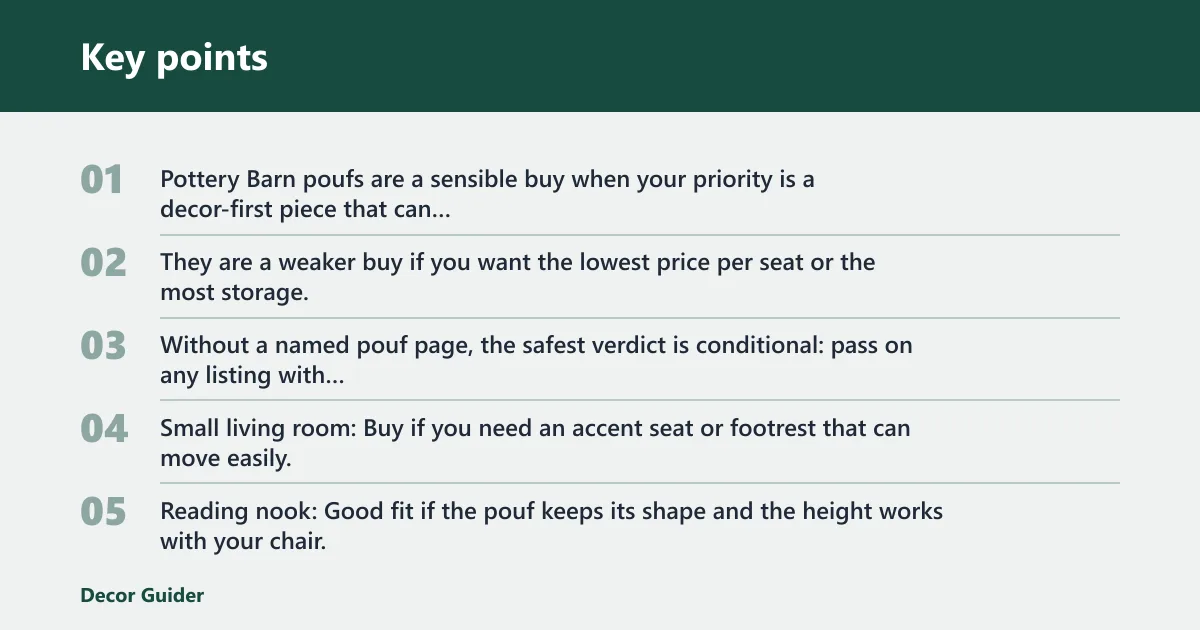


Pottery Barn poufs are a sensible buy when your priority is a decor-first piece that can also handle light daily use. They are a weaker buy if you want the lowest price per seat or the most storage. Without a named pouf page, the safest verdict is conditional: pass on any listing with vague materials, weak fill detail, or unclear cover construction.
Verdict by room type
Small living room: Buy if you need an accent seat or footrest that can move easily. Reading nook: Good fit if the pouf keeps its shape and the height works with your chair. Family room: Only worth it if the fabric is clearly easy to clean and the fill is dense enough to resist flattening. Guest room: A fair choice if you want a soft, finished look more than storage.
What this review can and cannot judge without a named SKU
This article can judge Pottery Barn’s brand-level quality signals, upholstery options, shopping support, and the checks you should apply to any pouf listing. It cannot honestly confirm a specific pouf’s firmness, seam strength, or color match without the exact product page, because those details vary by model and fabric.
Pottery Barn’s seating line does show a wide customization range. The York collection, for example, has over 125 upholstery options, and the brand also offers made-to-order pieces with longer lead times; one reviewer chose a piece with an eight-week lead time. That breadth is useful, but it also means the exact pouf listing matters more than the brand name alone.
Pouf scorecard
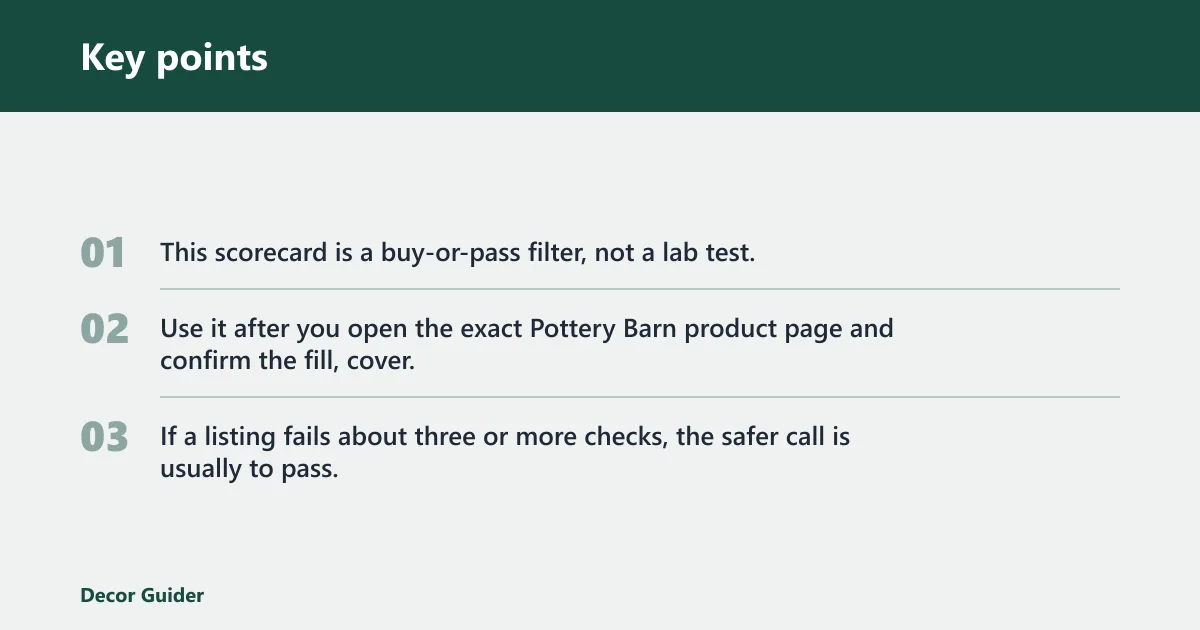
This scorecard is a buy-or-pass filter, not a lab test. Use it after you open the exact Pottery Barn product page and confirm the fill, cover, and dimensions. If a listing fails about three or more checks, the safer call is usually to pass.
| Check | Pass or fail guide | Plain-language reason |
|---|---|---|
| Fill firmness | Pass if the listing suggests dense, supportive fill; fail if it sounds soft or understuffed. | Good poufs should hold their top surface without collapsing the moment you sit down or rest your feet. |
| Edge support | Pass if the edges look structured; fail if the sides are visibly slouchy. | Edge support helps the pouf keep a clean silhouette instead of spreading outward. |
| Cover fit | Pass if the cover looks snug and tailored; fail if it appears baggy or wrinkled. | A loose cover can sag, twist, or show uneven stuffing over time. |
| Fabric durability | Pass if the upholstery is clearly meant for regular use; fail if it is purely decorative. | Poufs take foot traffic, so the fabric should resist fuzzing, abrasion, and seam stress. |
| Stain risk | Pass if the fabric is a performance type or otherwise easy to spot-clean; fail if it is highly absorbent. | Light colors and textured weaves can hide marks, but they also vary in cleanability. |
| Color accuracy | Pass if photos and swatches are consistent; fail if the page shows heavy lighting shifts. | Color mismatch is one of the most common online furniture disappointments. |
| Weight | Pass if it sounds heavy enough to stay put; fail if it seems too light to use safely. | A pouf that is too light can slide during use, especially on smooth floors. |
| Portability | Pass if one person can move it easily; fail if moving it feels awkward. | Good poufs should shift between sofa, chair, and bed without strain. |
| Room versatility | Pass if it works as footrest, extra seat, or accent; fail if it only fits one setup. | The best poufs earn their keep in more than one room or use case. |
| Value for price | Pass if the materials and finish justify the premium; fail if it is mostly paying for the logo. | Pottery Barn prices can make sense, but only when construction and fabric seem strong enough to last. |
Is a Pottery Barn pouf worth it?
Yes, if the specific pouf has sturdy construction, a tight cover, and upholstery you can maintain without stress. No, if the listing is mostly style with little detail on fill, fabric performance, or care. Pottery Barn is usually a premium-price brand, so the value test has to be stricter than it would be for a basic decor store.
When the price makes sense
The price makes sense when you need a piece that looks intentional in a finished room and you expect it to sit in view every day. That is where Pottery Barn’s brand consistency matters: buyers often pay for predictable styling, broad fabric choice, and smoother in-store or online shopping support.
That value is stronger if the pouf uses a performance fabric, has a cover that fits tightly, and looks stable enough to keep its shape after repeated use. Pottery Barn’s higher-end seating pieces often emphasize customization, and the same logic should apply to poufs.
When a cheaper pouf is the better buy
A cheaper pouf is often the better buy if you mainly want a casual footrest, a backup seat for occasional use, or something for a low-traffic room. It is also the smarter choice if you need storage, because a storage ottoman usually gives you more function for the money.
Suppose you want a neutral pouf for a playroom where snacks and crayons are common. If the Pottery Barn listing does not clearly spell out cleanability, a budget performance pouf or a wipeable storage ottoman may be the better match.
What should you check on the product page?
Before you buy, verify the model name, SKU, dimensions, fill, and cover fabric on the current product page. That is the only way to judge whether the pouf matches your room and whether the price fits the materials you are getting.
Exact model name and SKU
The model name matters because Pottery Barn may sell multiple versions of a similar-looking piece. A pouf can look identical in photos and still differ in fill, cover, or care instructions.
If the page does not show a clear SKU or a detailed product spec block, treat that as a warning sign. You should not pay a premium for a listing that hides the basics.
Materials, fill, and cover details
Look for the fill type, whether the cover is removable, and whether the fabric is labeled performance or standard. Pottery Barn upholstery options often vary in texture, hand-feel, and maintenance demands, so a bouclé-like fabric may read softer while a tightly woven fabric may be easier to clean.
Performance fabric matters most in family rooms and homes with pets. It is usually the safer call for spills and stains, though you should still expect routine spot cleaning rather than zero maintenance.
Lead time, delivery, and setup notes
Made-to-order Pottery Barn pieces can take longer than ready-made items. One Pottery Barn reviewer chose a made-to-order piece with an eight-week lead time, which is a useful reminder that custom finishes can slow delivery.
Check whether the pouf ships fully assembled or requires any setup. Even when a pouf is simple, delivery timing and packaging can affect whether it is worth ordering for a deadline.
How do materials affect comfort and durability?
Materials determine whether a pouf feels supportive or too soft, and whether it keeps its shape after repeated use. For a pouf, the cover matters, but the fill and internal structure matter just as much. A nice fabric on weak stuffing is still a weak pouf.
Upholstery options to look
Pottery Barn is known for broad upholstery choice across its seating lines. The York collection has over 125 upholstery options, which shows how much the brand leans into customization. That same breadth can be useful on a pouf if the exact listing offers multiple fabrics, textures, or colors.
Look for fabrics that balance texture and cleanability. A soft hand can look more expensive, but a tighter weave usually handles foot traffic better. For homes with pets or kids, a fabric that hides minor wear can be more practical than a highly delicate weave.
Performance fabrics versus standard fabrics
Performance fabrics are the safer bet for spills, stains, and frequent use. They usually suit family rooms, pet households, and high-traffic seating zones better than standard fabrics that may absorb marks more quickly.
Standard fabrics can still work in low-use rooms, especially if the pouf is mostly decorative. The tradeoff is simple: more texture and softer hand-feel often mean more care.
What affects shape retention over time
Shape retention depends on fill density, seam strength, and how tightly the cover is cut. A pouf with too much give will flatten in the center, while one with weak edges will start to slump at the sides.
Common first-timer mistake: buying a soft-looking pouf for a busy living room and expecting it to stay crisp. If the room gets daily use, a firmer fill and a more structured cover are safer choices than a plush, sink-in style.
Is Pottery Barn good quality?
Pottery Barn is generally seen as a good quality brand, but quality is not uniform across every item. Its value comes from consistent design language, broad fabric choice, and higher-end construction on many products. Still, each listing needs its own check, especially for a pouf where internal support can vary a lot.
Brand-level signs point in the right direction. Apartment Therapy tested 16 Pottery Barn sofas and sectionals in-store and used six criteria: overall sit, seat firmness, customizability, nap-ability, multi-functionality, and appearance. That does not prove pouf quality, but it does show the brand gets judged on the same practical details buyers care about in seating.
Brand reputation, shopping support, and consistency
Pottery Barn is a well-known home brand with strong in-store and online shopping support, which helps when you want to compare fabrics before buying. The brand is usually positioned above mass-market decor retailers on price, with more room for customization and a more polished finish.
Customer service signals vary by order, but that is common in made-to-order furniture. The key is to expect a better design selection, not perfect delivery every time.
How furniture quality signals translate to poufs
Good Housekeeping surveyed more than 5,800 sofa owners and included more than 100 Pottery Barn sofa owners in the pool. It described the Pearce sofa as supportive yet sink-in soft, and noted steel springs for cushion support plus a kiln-dried hardwood frame. Those details are sofa-specific, but they show the brand can build support into its seating.
For a pouf, the lesson is narrower: look for a similar commitment to structure in the fill and cover, not just in the fabric name. A decorative pouf with no internal stability will not perform like a well-made sofa, even if it shares the same brand.
Who is a Pottery Barn pouf for?
A Pottery Barn pouf is for someone who wants a finished look and is willing to pay for it. It is a better match for buyers who care about fabric choice, room styling, and moderate daily use than for shoppers who want the cheapest seat or the most storage for the dollar.
Small spaces and reading corners
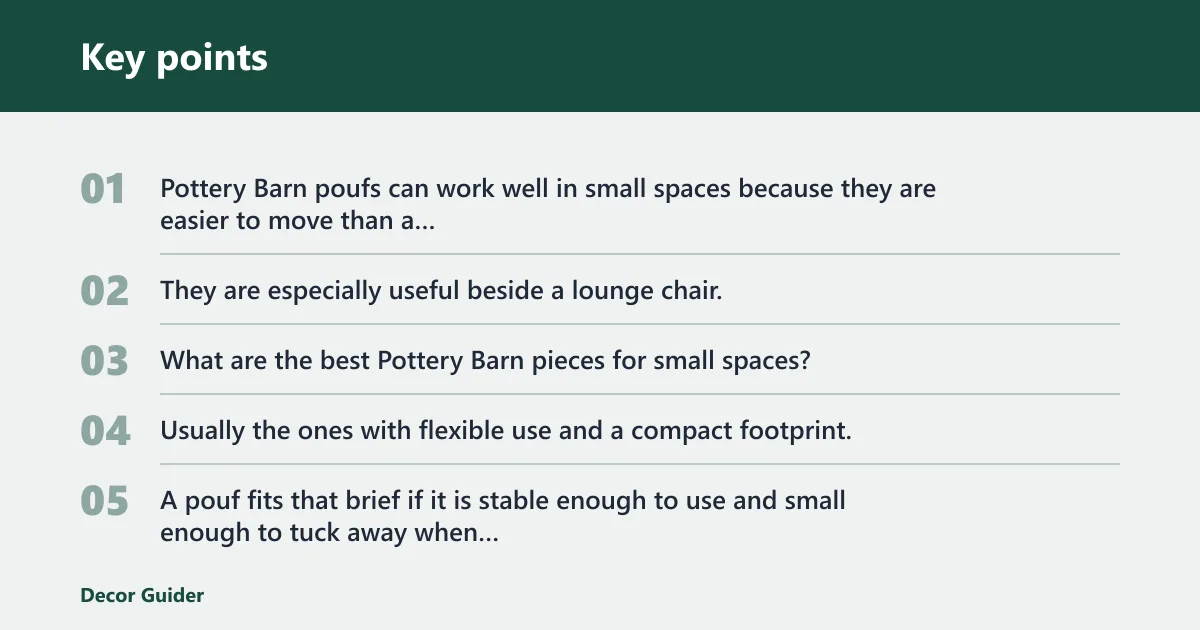
Pottery Barn poufs can work well in small spaces because they are easier to move than a chair and less visually heavy than a ottoman with a frame. They are especially useful beside a lounge chair, where they can act as a footrest without overwhelming the room.
What are the best Pottery Barn pieces for small spaces? Usually the ones with flexible use and a compact footprint. A pouf fits that brief if it is stable enough to use and small enough to tuck away when you need floor space.
Family rooms and casual seating
In a family room, the best pouf is one that handles traffic and cleanup without drama. That usually means a performance fabric, a dense fill, and a shape that will not spread out after a few weeks.
If the room needs real extra seating, compare the pouf with a storage ottoman. The ottoman may be the more practical buy if you need a hard top, hidden storage, or a piece that stays put.
Decor-first buyers versus utility-first buyers
Decor-first buyers are the best fit when the pouf is meant to finish a room visually. Utility-first buyers should be more selective and may prefer a sturdier ottoman or a bench if they need more support.
Picture a 12-by-14-foot living room with one sofa, one accent chair, and a low coffee table. A compact pouf can add softness and extra footrest space. In the same room, a bulky pouf can make traffic flow awkward fast.
Pros and cons
Pros
- Polished, premium look that fits finished interiors.
- Potentially better fabric choice than many budget poufs.
- Good option when you want decor value and light function.
- Brand shopping support is stronger than many smaller sellers.
Cons
- Price can feel high if the pouf is mostly decorative.
- Without a named SKU, quality can vary more than buyers expect.
- Some fabrics will need more care than shoppers assume from photos.
- It may lose value versus a storage ottoman or lower-cost pouf.
Frequently asked questions
Which Pottery Barn fabric is most durable?
The most durable Pottery Barn fabric is usually the one labeled for performance use, especially in homes with kids or pets. The exact best choice depends on the listing, but tighter weaves and performance finishes generally handle spills, abrasion, and repeated use better than delicate decorative fabrics.
Is Pottery Barn a good brand?
Yes, if you value broad upholstery choice, in-store and online shopping support, and a more premium finish. It is not the cheapest option, so the brand is best for buyers who care about how a piece looks and feels in the room, not only the sticker price.
Are Pottery Barn poufs worth the price?
They are worth the price only when the specific pouf has solid fill, a snug cover, and a fabric that suits your room use. If the listing is vague, or if you mainly need utility and storage, a lower-cost pouf or storage ottoman may deliver better value.
How do Pottery Barn fabrics hold up over time?
They can hold up well when you choose the right fabric for the room and care for it properly. Performance fabrics usually age better in high-use areas, while softer decorative fabrics may show wear sooner. Regular use, sunlight, and spill exposure all affect long-term appearance.
Does Pottery Barn furniture match what the photos show?
Usually it is close, but fabric texture and color can shift with lighting, screen settings, and the weave itself. Swatches and in-store viewing help reduce surprises. If exact color matters, treat the photo as a guide, not a guarantee.
Products related to this article
Sponsored / affiliate links. As an Amazon Associate I earn from qualifying purchases. I may earn additional commission from eligible campaigns.