Corduroy Pouf Review: What to Know Before Buying
I would buy a corduroy pouf if you want a soft footrest that hides small scuffs better than smooth cotton or velvet, but I would only pay more when the cover comes off and the insert stays firm enough to hold its shape.
Verdict


Buy the wrong one and it slumps, pills, traps crumbs, and starts looking worn fast. This corduroy pouf review breaks down comfort, size, durability, cleaning, and whether corduroy beats chenille, cotton, and faux fur for daily use.
For most homes, corduroy makes the most sense as a footrest-first pouf ottoman, light extra seating for guests, or a floor seat that gets moved often. It is a weaker buy when the household needs wipe-clean maintenance, heavy adult seating, or a fabric that keeps a crisp shape after repeated use without much care.
Pros
- Soft, warm hand feel from the raised wale texture.
- Better at hiding minor scuffs than flat cotton.
- Works well for footrests and occasional seating.
- Usually lighter and easier to move than rigid ottomans.
Cons
- Can trap lint, crumbs, and pet hair.
- Low-fill models flatten and slouch over time.
- Cleaning is slower than on leather or coated fabric.
- Texture can wear shiny or crushed on high-contact spots.
According to Corduroy Pouf Ottoman: Our Top 10 Picks & Reviews — The BIRDROCK HOME round pouf measures 18.5 inches deep, 18.5 inches wide, and 15 inches high.
Specs at a glance
| What to compare | Why it matters | Practical buying note |
|---|---|---|
| Size | Room fit and seating comfort | Common corduroy pouf sizes include several smaller and medium options, ranging from roughly 18 to 26 inches across or in length, with heights around 15 inches. |
| Fill type | Shape retention and comfort | Foam chunk filling feels plush; memory foam gives firmer support; dual-layer support helps resist flattening. |
| Cover style | Cleaning and upkeep | Removable cover and zipper access are the biggest maintenance advantages. |
| Construction | Long-term wear | Stitching, seam strength, and cover thickness matter more than the marketing copy. |
| Use case | Whether it earns its space | Best for footrest use, occasional extra seating, decorative accent use, and portable floor seating. |
Common fillings and support levels
Foam chunk filling is common in stuffed poufs and usually gives the softest feel, but it is the most likely to shift or compress if the pouf is used as a chair every day. Memory foam filling tends to feel firmer and better for sitting, while a dual-layer support system pairs a firmer base with a softer top so the shape holds up longer under load.
Cover details to check before ordering
Look for a removable cover, a durable zipper, and enough fabric thickness to resist seam pull. For an unstuffed pouf cover, check the seller’s fill amount or a clear target so the pouf does not end up overfilled and lumpy. A washable cover is a real advantage in homes where spills happen.
Who it is for
A corduroy pouf is a good fit for someone who wants a footrest-first piece with a softer look than flat woven fabric and does not mind routine upkeep. It also suits buyers who move furniture often, because a pouf ottoman takes less effort to shift than a full ottoman or chair.
It is a weaker fit for households that need a wipe-clean surface, constant kid traffic, or a daily chair replacement. If the pouf is going to take heavy adult seating every night, the fill system matters more than the fabric, and corduroy alone will not protect a weak insert.
Best for footrest-first buyers
Buyers who mainly want a footrest should put corduroy high on the list. The soft wale texture feels warmer than smooth synthetics, and it masks light wear better than bare woven covers. That said, footrest use still picks up dust and pet hair, so cleaning habits matter.
Best for small-space seating
Corduroy poufs can work as portable floor seating in small rooms because they save floor space and are easy to tuck away. The right size matters here. A small pouf is easier to move, but a too-small model can feel unstable for adults and slide around the room visually.
When to skip corduroy
Skip corduroy if the room needs wipe-clean furniture after snack time, crafts, or pet messes. Skip it too if the household wants a firm seat that keeps a sharp shape without routine fluffing. Leather and coated materials win on cleaning; tighter woven upholstery usually wins on maintenance.
What works
Corduroy fabric has raised cords called wales, and that texture is the reason people buy it. The surface feels soft and warm, and the woven construction is durable enough for everyday decorative use when the filling is decent. A lower wale count usually looks broader and more casual, while a tighter wale often feels smoother and reads a little cleaner visually.
As a pouf ottoman, it works best as a footrest, an occasional extra seat, or a soft accent piece that can be moved out of the way. That portable footprint is practical in living rooms, bedrooms, and multipurpose spaces where a hard side table would feel bulky.
Texture comfort and warmth
The raised wale texture is pleasant under bare feet and less slick than leather or coated synthetic covers. It also gives a pouf more visual depth than plain cotton. The tradeoff is maintenance: the same texture that feels good can also trap dust, lint, and crumbs.
Portability and space-saving footprint
Most poufs are easier to move than framed ottomans, and that matters in small rooms. A lightweight model can shift from sofa side to reading corner without much effort. The drawback is that lighter fill often means less support, so portability and firmness move in opposite directions.
How well it fits cozy decor
Corduroy works naturally in boho, relaxed, and soft-edged rooms because the texture adds warmth without needing loud pattern. It pairs especially well where the goal is to soften hard furniture lines. It looks less convincing when everything else in the room is sleek, glossy, or sharply tailored.
What does not hold up as well
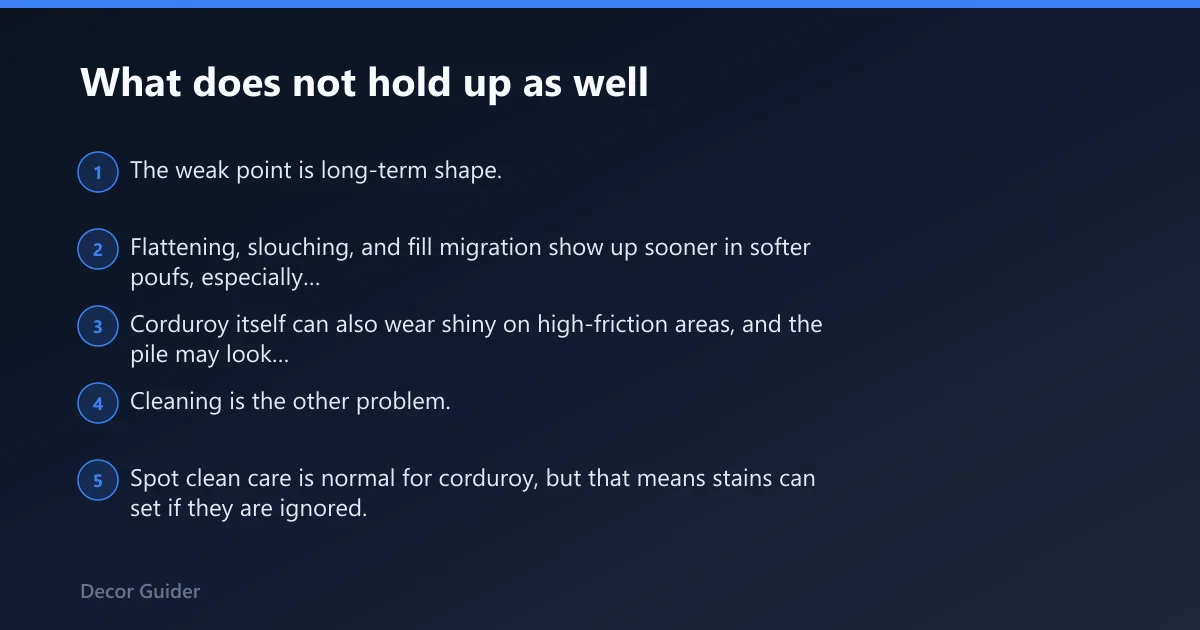
The weak point is long-term shape. Flattening, slouching, and fill migration show up sooner in softer poufs, especially when the same spot gets used as a seat every day. Corduroy itself can also wear shiny on high-friction areas, and the pile may look crushed where legs or feet land repeatedly.
Cleaning is the other problem. Spot clean care is normal for corduroy, but that means stains can set if they are ignored. Pet hair tends to cling to the wale texture, and lint can collect in the ridges, so the upkeep burden is higher than many shoppers expect.
Flattening and shape loss
Low-density fill, loose seam construction, and thin covers all push a pouf toward sagging. A foam chunk fill may feel nice at first, then compress unevenly. Memory foam and dual-layer builds resist that better, but any soft pouf will soften further if it is used like a daily chair.
Cleaning headaches
Spot cleaning is usually the starting point, but the real issue is stain risk. Drinks and food marks can settle into the fabric if not treated quickly, and washing the wrong cover can distort the wale texture. Removable covers make a clear difference because they give the owner a real cleaning path instead of a careful blot-and-hope routine.
Wrinkling, lint, and pet hair
Corduroy wrinkles more visibly than smoother upholstery when the filling shifts. The ridges can also catch lint and pet hair, so a lint roller or vacuum brush is often needed. In a pet home, darker colors show fur less in some cases, but the texture still holds onto it.
Are corduroy poufs comfortable for everyday use?
Corduroy poufs can be comfortable for everyday footrest use and light sitting, but they are not all-day chairs. Comfort depends more on filling density and pouf size than on the fabric alone. A firmer insert and a wider base make the biggest difference when the pouf gets regular use.
For daily lounging, a dual-layer or memory foam fill is the safer choice. Foam chunk filling is softer and more relaxed, but it usually gives up shape sooner. If the goal is only to rest feet, even a softer model can work well and feel pleasant.
Which filling is better in a corduroy pouf: foam, memory foam, or bean fill?
Memory foam is usually the best pick for sitting comfort and shape retention, while foam chunk filling is better for a plush, casual feel. Bean fill is the loosest option and can shift a lot, which is fine for a floor lounge feel but weaker for stable seating. For most buyers, memory foam or a dual-layer design is the cleaner choice.
A dual-layer support system is especially useful on larger poufs because it keeps the base from collapsing under the sitter’s weight. One reviewed Fabulcozy model uses a dual-layer support system with a soft chunk-foam top and a firm foam base, which is the kind of structure that helps a pouf keep its body after repeated use.
How to choose the right size
The right size depends on how the pouf will be used and how much traffic the room has. Smaller models tuck in more easily, but larger ones are more usable for sitting. Always check the space around a sofa or chair so the pouf does not block a walkway or force awkward foot placement.
Small room picks
For compact rooms, the 18.5 x 18.5 x 15 inch class is easier to place without overwhelming the floor plan. A 20 x 15 inch pouf also works when the goal is a low-profile footrest or a movable perch. In very tight areas, lighter weight and a smaller footprint matter more than a decorative shape.
Living room picks
For a main seating area, the 23.6-inch class or larger is easier to use as a guest seat and feels more anchored beside a sofa. The BIRDROCK HOME round pouf measures 18.5 inches deep, 18.5 inches wide, and 15 inches high, weighs 6 pounds, and has a 200-pound weight capacity. That is useful when the buyer wants a compact option that still has a clear support rating.
A 26 x 18 inch pouf is closer to a lounge-scale piece and makes more sense in rooms with enough open floor around it. One reviewed HIGOGOGO pouf measures 20 by 15 inches, which sits in the middle and is better for footrest use than for a full-size guest seat. The Signature Design by Ashley Absalom pouf measures 16 by 16 inches, which is more of an accent or compact footrest size than a primary seat.
Traffic path and scale checks
Leave enough room so the pouf does not sit in a daily walking line. If the room already has a coffee table and an ottoman, the pouf should fit without turning the center of the room into an obstacle course. In smaller spaces, the best model is the one that gets moved often without becoming visual clutter.
Do corduroy poufs hold their shape over time?
They can, but only if the filling and cover are built well. Corduroy itself does not decide shape retention. The insert, seam quality, and how often the pouf is used as a seat determine whether it stays plump or starts to sag at the top and sides.
Shape loss usually shows up first as a soft crown, then as side slouching, then as uneven fill distribution. Heavier adult seating speeds that process. Models with firmer inserts, dual-layer construction, or denser foam are the safer bet for long-term shape.
Should you buy an unstuffed pouf cover?
An unstuffed pouf cover is a good choice when you want custom firmness or already have suitable filler materials at home. The Marrakesh Gallery pouf cover is unfilled and holds 10 to 12 pounds of filling, which gives a clear starting point for buyers who want control over the feel. The downside is that underfilling leaves the pouf flimsy, and overfilling can strain seams.
Are corduroy poufs good as extra seating or just footrests?
They can do both, but the safe answer depends on fill and size. Many corduroy poufs are better as footrests first and guest seats second. If the model is small or loosely filled, it should be treated as an occasional perch, not a daily chair replacement.
For adult seating, a firmer insert and a larger diameter are important. The BIRDROCK HOME model’s 200-pound weight capacity is the kind of detail buyers should look for, because a nice-looking pouf with no support data can disappoint quickly under real use.
How do you clean a corduroy pouf?
Cleaning usually starts with vacuuming the wale texture, then spot cleaning the stain gently before it sets. A removable cover is the easiest path because it reduces the risk of deep-set marks. Without that, the cleaning process is slower and more careful, especially around seams and zipper lines.
Pet hair, crumbs, and lint should be removed regularly because corduroy holds onto surface debris more than smooth upholstery. A soft brush attachment helps lift debris from the ridges. Blot rather than scrub, since scrubbing can flatten the pile and leave a worn patch that is visible in natural light.
Cleaning and maintenance checklist
- Check whether the cover is removable before ordering.
- Vacuum the ridges regularly to reduce lint and crumb buildup.
- Blot spills fast; do not rub the fabric hard.
- Use a lint roller or soft brush for pet hair.
- Inspect the zipper and seams after several cleanings.
What should I look for in a corduroy pouf before buying?
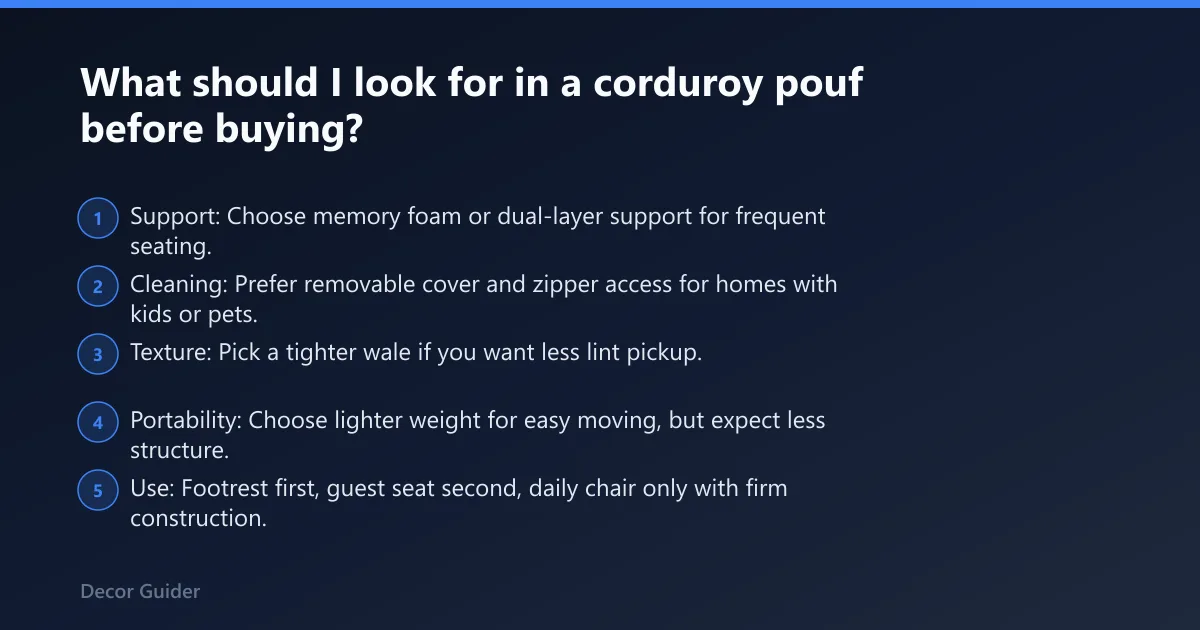
Start with the fill type, then check the size, zipper quality, and whether the cover can be removed. A good corduroy pouf should feel firm enough to keep its shape but soft enough to function as a footrest. If the listing hides those details, that is usually a warning sign.
Also look at cover thickness and seam construction. Thin corduroy can crush quickly, and weak stitching tends to fail where the top and side panels meet. If the model is unstuffed, confirm the fill amount and the kind of filler allowed before ordering.
Decision checklist
- Support: Choose memory foam or dual-layer support for frequent seating.
- Cleaning: Prefer removable cover and zipper access for homes with kids or pets.
- Texture: Pick a tighter wale if you want less lint pickup.
- Portability: Choose lighter weight for easy moving, but expect less structure.
- Use: Footrest first, guest seat second, daily chair only with firm construction.
| Product | Badge | Best for | Price | ||
|---|---|---|---|---|---|
|
lihtsofty Round Stuffed Pouf Ottoman, Foot Stoollihtsofty | Budget pick | Corduroy pouf with foam filling | $50.99
Price as of 2 Oct 2026
|
View |
 |
LumiSource Braided Round 24" Velvet Ottoman, Large Ottoman,LumiSource | Upgrade pick | Luxury velvet round ottoman with foam cushion | $159.37
Price as of 2 Oct 2026
|
View |
 |
Asuprui 20×14 Inch Unstuffed Ottoman Pouf Cover –Asuprui | Also great | Unstuffed corduroy pouf cover | $14.22
Price as of 2 Oct 2026
|
View |
Use-case matrix
| Household type | Support score | Cleaning difficulty | Texture comfort | Kid and pet suitability | Buy or no-buy |
|---|---|---|---|---|---|
| Single adult, light use | Moderate | Moderate | High | Moderate | Buy if removable cover and firm fill |
| Couple with occasional guests | High | Moderate | High | Moderate | Buy if larger size and clear capacity data |
| Home with kids | Moderate | High | High | Mixed | Buy only with washable cover and tougher fill |
| Home with pets | Moderate | High | High | Mixed | Buy only if hair pickup and spot cleaning are acceptable |
| Daily guest-seat use | High | Moderate | High | Moderate | Buy only with dual-layer or memory foam support |
| Low-maintenance household | Moderate | High | High | Low | No-buy; choose leather or wipe-clean fabric instead |
Alternatives
The LumiSource Braided Round 24″ Velvet Ottoman is the cleaner choice if the room leans more polished than casual. Based on the spec sheet and review data, its velvet upholstery and foam cushion should feel more body-contoured than many soft poufs, but velvet also shows wear and marks differently, and the price is much higher than the corduroy options here.
The Asuprui 20×14 Inch Unstuffed Ottoman Pouf Cover is the practical pick for buyers who want to control firmness and cleanability. The unstuffed format and washable cover make maintenance easier, and the lightweight build is good for storage. The drawback is simple: it depends entirely on the filler chosen, so support can range from decent to flimsy.
Should you buy it
Buy a corduroy pouf if the room needs a soft footrest, occasional extra seating, or a small accent piece and you are willing to maintain it. The best versions have a removable cover, a strong zipper, and fill that resists flattening. That is where the corduroy premium starts to make sense.
Skip it if you want wipe-clean upkeep, a firm daily seat, or a piece that stays crisp with almost no attention. For many buyers, corduroy is the right fabric only when the comfort gain is worth the extra lint pickup and cleaning time.
Frequently asked questions
What size corduroy pouf is best for a living room?
A living room usually does best with a medium or large pouf, especially if it might double as guest seating. The 23.6-inch class and larger sizes are easier to use for people, while smaller pieces work better as footrests. Measure traffic space before choosing.
Is a corduroy pouf good for small spaces?
Yes, if the model is sized carefully. Corduroy poufs take less floor space than chairs and are easy to move, which helps in compact rooms. The best pick is one that fits beside the sofa without blocking pathways or crowding other furniture.
Products related to this article
Sponsored / affiliate links. As an Amazon Associate I earn from qualifying purchases. I may earn additional commission from eligible campaigns.