Macrame Pouf Review: What to Know Before Buying Today
A macrame pouf is worth buying only if you want decor first and occasional seating second; choose one with a dense insert, tight hand-knit cord, and a stitched or zippered cover that resists sagging and snagging. Otherwise, it can flatten fast, catch on jewelry and pet claws, and feel unstable under weight. This guide explains the build details that separate a good buy from a pretty but weak one.
Verdict

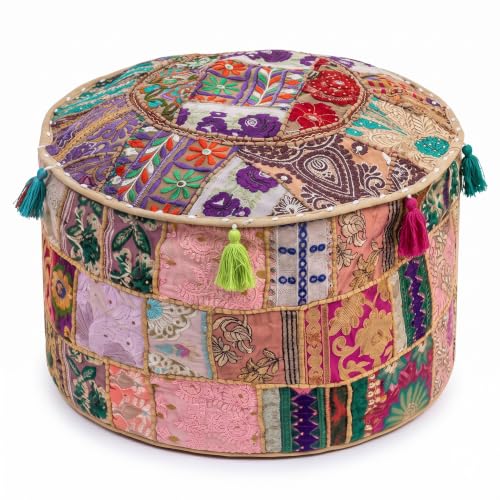
- Large 14×22 inches fits indoor and outdoor use
- Bohemian patchwork design adds vintage decor flair
- Skin-friendly cotton linen material offers comfort
Macramé is generally made by knotting cord rather than weaving or knitting, and that construction choice can matter here. The best poufs keep their shape because the outer cordwork is tight, the seams are reinforced, and the inner pouf insert is firm enough to limit sink-in. If one of those pieces is weak, the pouf becomes decor only.
Pros and cons
- Pros: strong visual texture, useful as a footrest, can work in small rooms, and fits boho decor without looking bulky.
- Pros: good versions offer a stable insert, tidy seam work, and a cover that can be removed for cleaning.
- Cons: loose cord tension can sag quickly, decorative fringe can snag, and textured surfaces often need more care than smooth ottomans.
- Cons: many designs are better for occasional seating than daily use.
Who it’s for
This suits you if you want a decor-first accent that can handle light, occasional seating in a room with little foot traffic. It is a weaker fit if you need a daily chair substitute, have very active pets, or want a surface that wipes clean like a smooth ottoman.
Specs at a glance
| Spec | What to look for | Why it matters |
|---|---|---|
| Outer material | Cotton twine, linen, hemp, jute, leather, or yarn | Changes hand feel, drape, snag risk, and durability |
| Cord construction | 3-ply cord is common | Affects texture, strength, and how much the pattern holds its edge |
| Knots used | Square knot, half-hitch knot, lark’s head knot | Signals how the cover is built and how consistent the pattern can stay |
| Cover | Macrame pouf cover, ideally removable | Determines fit over the insert and how practical cleaning will be |
| Insert | Firm inner pouf insert with supportive filling | Controls seat height, compression, and anti-sag performance |
| Best use | Accent seating, footrest, low-traffic decor | Sets realistic expectations for comfort and wear |
Who is a macrame pouf for?
A macrame pouf is a good fit for small living rooms, guest corners, and other rooms where the seat needs to do light duty while adding texture. It works best when you want one object to read as decor first and as occasional seating second. It is not ideal for constant, heavy use.
Small rooms and low-traffic spaces
In a small living room, the right pouf can replace a bulky ottoman and still leave room to walk. Look for a compact profile, a firm insert, and a cover that does not flare too far beyond the base. That keeps the piece visually lighter and easier to move.
Homes with pets, kids, or frequent guests
Homes with pets or children need tighter cord tension and fewer loose fringe details. Frequent guests also change the equation, because a decorative pouf that handles one person for ten minutes may not hold shape through a full evening of use. A smooth ottoman often wins here.
What works
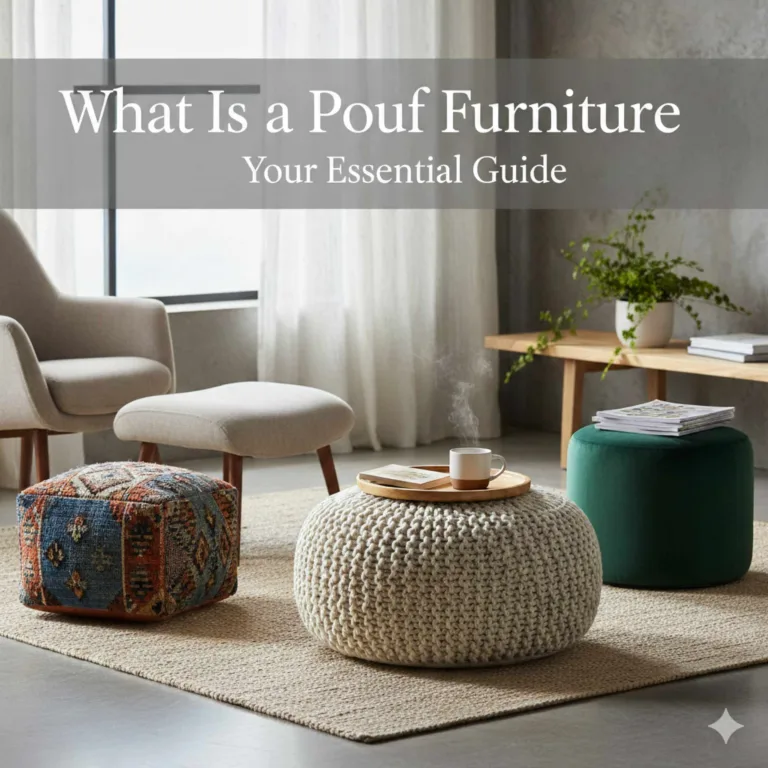
The best macrame poufs offer texture without turning into a lumpy floor cushion. They create instant visual structure, especially in neutral rooms, and the better versions keep enough internal support to work as a footrest or an extra seat for short periods. Construction is the deciding factor.
Decor impact and surface texture
Macramé cord gives a pouf depth that plain fabric cannot match. Cotton cord is the most common material, but linen, hemp, jute, leather, and yarn also appear. Cord choice changes the final look and feel: softer cord drapes more, stiffer cord holds pattern edges better, and rougher fibers usually snag more easily.
Supportive filling and shape retention
The inner pouf insert matters as much as the cover. A firm insert and supportive filling reduce sink-in, help the seat stay level, and slow the soft collapse that makes a pouf feel cheap. If the fill is loose, the top dips, the sides bow, and the piece stops working as seating.
Why knot tension matters
Macramé is built from knots, commonly including the square knot and hitching variations. Tight, even tension keeps the cover orderly and helps prevent the outer shell from stretching out of shape. A knotting board is often used to mount cords for work, and a wooden or metal dowel can help with larger pieces.
A common first-timer mistake is judging a macrame pouf only by the pattern. A dense pattern with weak seam work still sags. Suppose a mid-sized pouf looks full in the listing but the insert is soft; after some use, the top can flatten enough that your knees sit higher than your hips. That is a comfort problem, not a style issue.
What does not
The weakest macrame poufs sag, shed fibers, and snag on anything sharp. Decorative fringe looks good in a quiet room, but it can catch on rings, pet nails, and vacuum brush heads. Cleaning also gets harder once dust settles into the cord texture, especially on lighter colors.
Sagging and flattening
Low-density fill is the main failure point. When the insert compresses too much, the pouf loses its height and stops feeling stable under weight. That is especially noticeable if you use it as a footrest every day or as occasional seating for adults rather than for short, light use.
Snag risk, shedding, and unraveling
Textured cord surfaces can shed loose fibers during early use, and poorly finished edges may unravel over time. Half-hitch patterning can create attractive diagonal texture, but if the ends are not secured well, those raised sections are more likely to catch. This is where cover construction matters as much as style.
Cleaning limits
Macrame pouf covers usually need more careful cleaning than smooth upholstery. A removable cover helps, but the weave density still decides how much dust and lint collect. Spot cleaning is often the safest first step for textured cord, while full washing depends on the material and construction.
How do you judge build quality?
Judge a macrame pouf by the cord, the seams, the insert, and the fit. A good one keeps its shape, resists snagging, and feels stable enough for short seating. If the cover looks loose, the fill seems soft, or the stitching is thin, treat it as decor only.
Check the cord, knots, and seam strength
Start with the cord material and construction. Cotton twine feels softer, while hemp and jute tend to read rougher and more rustic. A 3-ply cord usually gives more body than a thin single strand, which helps the cover hold its pattern and resist early distortion. Square knot sections should look even; half-hitch areas should stay consistent in angle and spacing; lark’s head knots matter most where cords begin and attach.
Inspect the cover fit and insert firmness
The cover should sit close to the insert without bagging. A loose fit means the shell shifts when you sit down, which speeds sagging. The insert itself should feel firm enough to keep seat height from dropping too far under normal use. If a product is sold cover-only, plan for a separate insert of matching size and density.
One-page evaluation table
| Criterion | Score 1-5 | Pass / fail note | What good looks like |
|---|---|---|---|
| Construction | 4-5 | Pass if knots are even and seams are reinforced | Tight cord tension, secure edge finishing, no loose tails |
| Seat firmness | 4-5 | Pass if the top compresses only modestly under adult weight | Stable sit height, limited sink-in, no wobble |
| Cover texture | 3-5 | Pass if the texture is intentional, not scratchy or overly loose | Comfortable touch, defined pattern, no flimsy loops |
| Snag risk | 4-5 | Pass if fringe is restrained and cord ends are secured | Few exposed loops, minimal catch points |
| Cleaning ease | 3-5 | Pass if the cover is removable or the cord wipes clean easily | Low dust trap, clear care instructions, spot-clean friendly |
| Best-use scenario | 4-5 | Pass if the product is honest about light use only | Footrest, accent seat, low-traffic decor |
- Check whether the listing names the insert, not only the cover.
- Look for dense cord placement and even knot spacing.
- Confirm that seams, edge binding, or closures are reinforced.
- Decide whether the piece will be decor, a footrest, or actual seating.
- Reject any pouf that looks loose, overly fringed, or underfilled.
What are the best alternatives?
If you need frequent seating, a smoother alternative may be a better buy. A macrame pouf is strongest as an accent with limited load, while ottomans and storage poufs usually offer better structure, easier cleaning, and fewer snag points. The right choice depends on how often you plan to sit on it.
Macrame pouf versus floor cushion

- Waterproof and fade-resistant for year-round outdoor use
- Pre-filled high-density foam requires no assembly setup
- Durable fabric wipes clean easily after spills
A floor cushion is better if you want softer, low-profile seating and do not care as much about shaped texture. A macrame pouf usually looks more finished and stands taller, but a cushion often feels simpler to live with in kid-heavy or casual spaces. Based on specs and reviews, the choice is comfort-first versus texture-first.
Macrame pouf versus ottoman
An ottoman is the safer pick when you want a steadier seat and easier upkeep. The THE ART BOX cotton-linen pouf cover brings vintage boho patterning, but as a cover-only piece it depends entirely on the insert you pair with it. That gives you style flexibility and also more work to get the support right.
Macrame pouf versus storage pouf
A storage pouf wins when hidden utility matters. Macrame usually puts pattern and texture ahead of storage capacity, so it is a weaker choice if you need blanket storage or toy containment. Choose macrame when the surface itself is the point; choose storage when clutter control is the point.
Should you buy it
Buy a macrame pouf if you want a decorative piece that can still handle short, occasional use and you are willing to pay attention to fill quality, cover fit, and finish details. Skip it if you need daily seating, pet-proof durability, or fast, wipe-clean maintenance.
Look for a dense inner insert, tight knot work, and a cover that closes cleanly. Those three details do most of the work. Everything else, from fringe to color, is secondary to whether the pouf keeps its shape and stays usable after repeated compression.
Frequently asked questions
What is a macrame pouf used for?
A macrame pouf is usually used as decor first and light seating second. It can work as a footrest, an accent seat, or a soft visual anchor in a living room. The best versions balance texture with enough structure to avoid collapsing into a floor cushion.
Is a macrame pouf comfortable for sitting?
It can be comfortable for short sits if the insert is firm and the cover is tight. Comfort drops fast when fill density is low or the cover stretches. For longer sitting sessions, a smoother ottoman or a firmer chair will usually feel more stable.
How do I know if a macrame pouf is well made?
Check for even knot spacing, secure seams, and a cover that fits the insert closely. The strongest signs are dense construction, minimal loose fringe, and fill that resists deep compression. If the product listing avoids details about the insert, treat that as a warning sign.
What size macrame pouf works in a small living room?
A smaller, compact pouf usually works best in a tight room because it leaves walking space open and keeps the layout light. The key is proportion: the pouf should read as an accent, not a blocker. If it crowds a sofa or chair path, size down.
Are macrame poufs durable enough for daily use?
Some are durable enough for light daily footrest use, but daily seating is a harder ask. Durability depends on cord strength, seam quality, and insert firmness. If the pouf is meant for regular sitting, choose the most structured build available and avoid decorative fringe-heavy designs.
How do you clean a macrame pouf?
Start with gentle dust removal and spot cleaning, because textured cord traps debris. A removable cover is easier to manage than a fixed shell. Check the fiber type before using water or cleaner, since cotton, jute, hemp, and leather do not all tolerate the same routine.
Can a macrame pouf work as boho decor as well as seating?
Yes, and that is where it performs best. The cord texture, square-knot structure, and decorative fringe give it a clear boho look, while the insert gives it limited function. Just keep expectations modest: it is strongest as an accent that can also take occasional weight.
What materials are used in macrame poufs?
Macramé materials can include cotton twine, linen, hemp, jute, leather, or yarn, and cord construction may be listed as 3-ply cord. Cotton cord is common because it is soft and easy to work with. Rougher fibers usually feel more rustic and can wear differently over time.
What is a macrame pouf used for?
It is mainly used for low-profile seating, a footrest, or a decorative accent. Because macramé is knotting rather than weaving or knitting, the surface has more texture than a standard upholstered cube. That texture adds style, but it also increases the need to watch for snagging and wear.
Products related to this article
Sponsored / affiliate links. As an Amazon Associate I earn from qualifying purchases. I may earn additional commission from eligible campaigns.