
How to Hang Stockings Without a Mantel
Use adhesive hooks for light stockings on smooth painted walls, over-the-door hooks for doors, tension rods for windows or alcoves, and screw-in hooks only if you can patch afterward. Match the hanger to the surface and the finished stocking weight. Pick the method by surface, room layout, and how full the stocking will be; otherwise you risk fallen stockings, damaged paint, or hardware that will not hold through Christmas morning. This guide compares the safest stocking-hanging methods by surface, weight, cost, and damage risk.
Best ways to hang stockings


Command hooks and other adhesive hooks
Adhesive hooks are the best no-drill option for smooth, clean surfaces such as painted walls, finished wood, tile, and some cabinet fronts. They work best for lighter or moderately filled stockings, and the hook’s listed weight limit matters more than the brand name. Follow the manufacturer’s surface-prep and removal directions so the adhesive can bond properly and release cleanly later. According to Command, the strip needs a clean, dry, smooth surface, and weight ratings should be treated as the maximum load, not a target. See also 3M’s guidance on painted surfaces and removal: fresh paint should cure before adhesive application, and delicate or textured finishes can be at higher risk of damage on removal.
For renters, adhesive hooks are usually the first place to start because they avoid holes. They are not the right choice for overstuffed stockings, textured walls, flaky paint, or damp surfaces. If the stocking will hold heavy gifts, choose a higher-capacity support or switch to a freestanding option instead.
Freestanding stocking holder
A freestanding stocking holder is the easiest no-wall option. It is a standalone metal or wooden format that can sit in a corner, on an entry table, or beside a sofa, and many versions include multiple hooks. This is the lowest-damage choice when you want no wall damage at all.
It also handles filled stockings better than most adhesive options because the load sits on the stand, not the wall finish. The tradeoff is floor space. In a narrow room, it can create a traffic snag, so choose a base that stays out of walk paths.
Stair railing or banister
If your home has stairs, the banister is a classic stocking spot. You can hang stockings from the rail structure without drilling, and you can wrap the rail with garland or ribbon to hide clips or ties. Use this setup only if the stockings and clips do not block the handrail or create a tripping or snagging hazard; stairways should stay clear and easy to use. American Farmhouse Style recommends stairs as a stocking-hanging spot.
This method works well for medium-weight stockings, especially when the rail has a stable profile. Check that hooks or ties do not slide. If the staircase gets heavy use, keep stockings on the side that does not catch sleeves, backpacks, or pets.
Curtain rod
A curtain rod is a low-cost place to hang stockings when you already have window or drapery hardware in place. Rent. A curtain rod is commonly listed as a place to hang stockings, and eHow notes that a decorative curtain rod is an attractive option. It works best when stockings are not overstuffed and the rod already has enough support for the extra load.
This option is useful in apartments and smaller rooms because it uses existing hardware. Keep the stockings light enough that the rod does not bow and the rings do not jam. If the rod carries heavy drapery already, skip stockings and choose a separate display point.
Stocking hanging decision table
Use this table to match the method to the surface, the likely stocking weight, and the damage risk you can accept. The cost bands are relative: free, low, moderate, or higher.
| Method | Surface needed | Approximate cost band | Damage risk | Weight suitability for filled stockings | Best room type |
|---|---|---|---|---|---|
| Command hooks or other adhesive hooks | Painted wall, tile, smooth wood, or other clean flat surface | Low | Low to moderate, depending on removal and surface prep | Light to medium if the hook rating and stocking load match | Bedrooms, living rooms, rental walls |
| Freestanding stocking holder | Floor space only | Moderate to higher | Very low | Medium to heavy, depending on base and hook design | Open living rooms, entry areas, corners |
| Stair railing or banister | Existing stair rail | Free to low | Low if tied or clipped carefully | Light to medium | Homes with stairs |
| Curtain rod | Window or drapery hardware | Free to low | Low if the rod is not overloaded | Light, sometimes medium if the rod is strong | Small apartments, window walls |
| String or wire line | Two anchor points on wall, shelf, or furniture | Free to low | Low to moderate, based on anchors | Light to medium | Bedrooms, shelves, compact rooms |
| Shelf with hooks | Wall-mounted shelf | Moderate | Low if installed well | Light to medium, sometimes heavier if shelf is strong | Living rooms, hallways, faux mantel setups |
| Ladder leaning against wall | Floor and wall clearance | Free to moderate | Low to moderate, depending on stability | Light to medium | Rustic rooms, multipurpose spaces |
| Suction cup window hooks | Clean glass window | Low | Low if suction holds and glass stays clean | Light only for most setups | Windows, front-facing displays |
Choose by stocking weight and room type
For a fully stuffed stocking, move away from light-duty adhesives and toward a freestanding holder, shelf hooks, or a railing with stable attachment points. For a light stocking in a small apartment, a curtain rod or suction cup window hook often gives you enough support without visual clutter.
Picture a narrow studio with one bright front window and no spare wall space. A suction cup hook on clean glass can work for a slim stocking with lightweight filler, while a freestanding holder may block the room’s only walkway. The room shape should decide the method first.
Choose by renter status and kid or pet traffic
Renters usually need the lowest-damage path, which points to adhesive hooks, railings, curtain rods, and freestanding holders before anything drilled. If children or pets move through the area, keep stockings off low wall corners and away from any setup that can be tugged down.
A common first-timer mistake is hanging a heavy, stuffed stocking on a single adhesive hook in a hall that gets daily foot traffic. The problem is not the holiday decor itself; it is the mismatch between load, motion, and the surface holding it.
Can you use Command hooks for stockings?
Yes, Command hooks and similar adhesive hooks can hang stockings if the hook rating fits the finished weight and the wall surface is suitable. They are a good fit for painted walls and other smooth finishes, but they can fail if you overload them or mount them on dusty, textured, soft, or freshly painted surfaces.
Where adhesive hooks work best
Use adhesive hooks on surfaces that can stay clean and dry, such as cured painted drywall, finished trim, tile, or smooth cabinet fronts. Command’s own directions emphasize clean, dry, smooth surfaces for proper adhesion, and 3M cautions that freshly painted walls should fully cure before adhesive products are used. These hooks are useful behind a stocking row, near a doorway, or along a short wall segment where you want a clean look without visible hardware.
If you want the hooks to disappear, hang a short garland across the row or choose clear versions where the finish allows it.
When weight rating matters
Do not treat every adhesive hook as equal. Filled stockings can become much heavier after gifts, candy, and small hard items are added, and that extra weight can pull the adhesive down. Use the hook’s listed capacity as the ceiling, not a target, and leave a margin for the weight that gets added later.
If the stocking will be heavily stuffed, choose a stronger support such as a freestanding holder or a shelf with hooks. Adhesive works best when the stocking stays light and the wall is smooth enough for full contact.
How to hide hooks with garland
Garland, ribbon, and a short swag can hide the hardware and make a non-mantel setup look planned. Keep the covering light so it does not add enough extra pull to matter. The hook still needs full contact with the wall, and the ornament layer should not interfere with the latch or adhesive strip.
What can you use instead of a mantel for Christmas stockings?
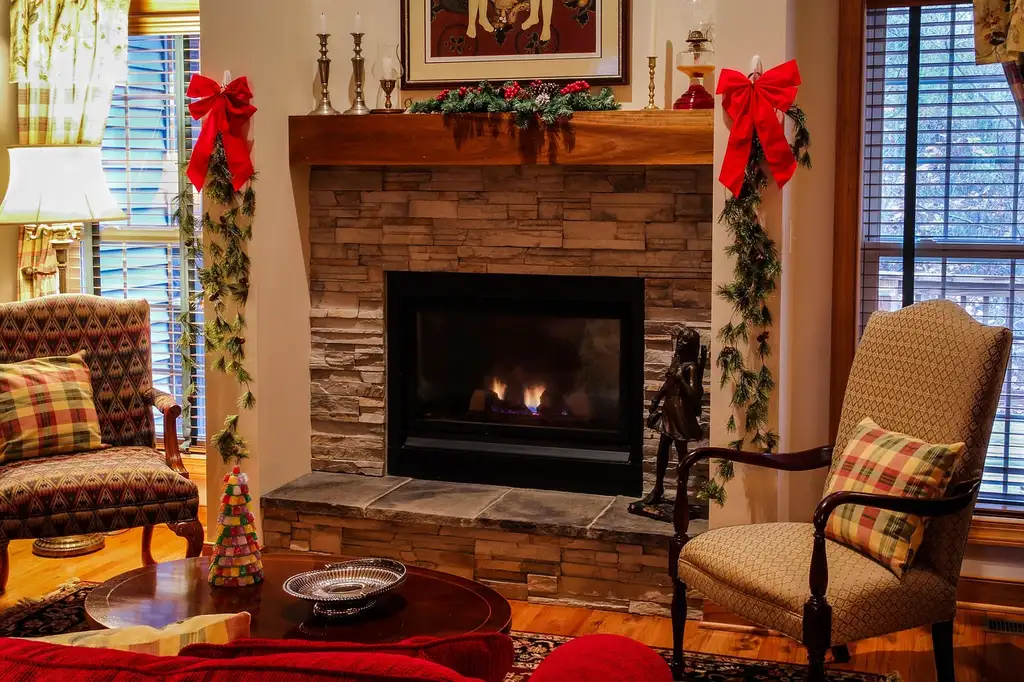
A shelf with hooks, a string or wire line, a ladder, and suction cup window hooks can all stand in for a mantel. These options work because they create their own hanging points. They are useful when you want the stockings visible but do not have a fireplace surround to anchor them.
Shelf with hooks
Faux mantel setups often start with a shelf that includes hooks underneath. Decoist includes a shelf with hooks as a faux mantel idea. This gives you a display surface above and hanging points below, so you can layer framed art, candles, or greenery on top while stockings hang beneath.
This is one of the best choices when you want the arrangement to look intentional rather than temporary. It also works well in rooms without a fireplace because the shelf becomes the focal point.
String or wire line
A string or wire line can stretch between two anchor points and hold stockings with clothespins or S-hooks. Decoist suggests using a clothesline with clothing pins for stockings, and also says a branch can be hung with two pieces of wire. The result can feel rustic without requiring a mantel.
This method works on walls, shelves, or between furniture pieces if the span is short and the line is tight. Keep it for lighter stockings, because sagging line is a common failure point. Use it where a casual look is welcome.
Ladder leaning against the wall
A leaning ladder gives you rungs to hang from and adds a vertical holiday display without wall mounting. Rent. A ladder as resting against the wall with string or wire, and Decoist recommends a wooden ladder as a stocking holder option. It also keeps working after the season as a throw or plant display.
Choose a ladder that sits flat and does not wobble. The bottom should not slide on a smooth floor, especially in homes with kids or pets. For a lighter look, place stockings on every other rung rather than crowding one side.
Suction cup window hooks
Suction cup window hooks are useful when you want no wall damage and a visible display from inside and outside. eHow says walls and windows are great locations without a fireplace. Pair the hooks with craft wire or hanging loops, and keep the stockings light so the suction stays secure.
For best results, clean the glass first, avoid using suction on textured or dirty surfaces, and re-seat the cup if it loses grip. Suction works best on smooth, nonporous glass and should be checked periodically, especially if temperature swings or condensation are likely.
How do you hang stockings without damaging the wall?
Start with no-drill surfaces and avoid any method that depends on permanent anchors. Adhesive hooks, curtain rods, railings, shelves, windows, and freestanding holders all reduce wall damage risk. If you must use a drilled hook, treat it as a patch-and-paint choice, not the default.
Pick no-drill surfaces first
The lowest-damage choices are surfaces that already exist and can take an accessory without new holes, such as a banister, curtain rod, shelf, window, or freestanding holder. These options are especially useful in rentals and in finished rooms where wall repair would be visible.
Shut off the urge to overbuild the display. A simple setup often survives better than a crowded one because each hanging point takes less strain.
Avoid overstuffing when using light-duty hardware
Light-duty hardware should stay paired with light stockings. If the stocking will hold small boxed gifts, candy, or heavier items, shift to a stronger method. The failure mode is simple: the hook or line holds at first, then creeps, then falls once the load changes.
That matters most in busy rooms where a fallen stocking can pull finish off a wall or knock decor onto the floor. A small load now is fine; a holiday haul later may not be.
Check finish type before mounting
Painted drywall, smooth tile, wood trim, glass, and metal each behave differently. Adhesives bond best to clean, smooth, dry finishes. Textured paint, flaky older paint, damp surfaces, and dusty trim make removal and holding power less predictable. On paint, follow the hook manufacturer’s cure-time guidance before mounting, since fresh paint can fail before the adhesive does.
If the surface is delicate, start with a test location that is hidden by decor or choose a support that never touches the wall finish directly. That is the safer path when you want the display to come down cleanly in January.
Small apartment setup ideas
In a small apartment, the best answer is usually the one that uses existing hardware and stays out of traffic flow. Windows, shelves, doors, and a compact freestanding holder can all work. Avoid anything that blocks a hallway, tight corner, or main seating area.
Use windows, shelves, and doors
Windows are useful because suction hooks do not need wall damage. A wall shelf with hooks can turn one blank section into a holiday focal point. Over-the-door hooks or a doorframe-based setup can also work if the stockings remain light and the door still opens freely.
Rent. A curtain rod is commonly listed as a place to hang stockings, which helps in apartments where the window wall already carries the room’s visual weight. If your drapery is light, this can be the fastest no-install option.
Keep the display off high-traffic paths
Keep stockings away from paths where coats, bags, rolling chairs, and pets pass through. A display that looks great but sits in the middle of a walkway will not stay looking that way for long. The safer location is usually one wall edge, a corner, or a window wall.
Choose compact or freestanding options
A compact freestanding holder is often the best choice when floor space allows it. If not, a single shelf with hooks or a short line between two anchor points usually takes less room than a full decorative setup. Smaller spaces reward methods that do one job well.
Frequently asked questions
How do I hang stockings without a fireplace mantel?
Use a surface that already exists: a wall with adhesive hooks, a banister, a curtain rod, a shelf with hooks, a window with suction cups, or a freestanding stocking holder. Match the method to stocking weight. Light stockings open more options; heavily filled ones need stronger support.
Can I use Command hooks to hang stockings?
Yes, if the hooks are rated for the actual load and the surface is smooth, clean, and dry. They work best with light to medium stockings. If the stocking will be heavily filled, choose a stronger method because the added weight can pull adhesive hooks down.
Where can I hang stockings in a small apartment?
Use a window with suction hooks, a curtain rod, a compact wall shelf with hooks, or a freestanding holder that fits a corner. Keep the setup away from narrow walkways and door swings. In small spaces, a single compact display often works better than a wide arrangement.
What are renter-friendly ways to hang Christmas stockings?
Renter-friendly choices usually avoid drilling: adhesive hooks, curtain rods, stair rails, windows, string lines, and freestanding holders. These methods let you decorate without permanent holes. If you do use adhesive hardware, keep the stocking weight within the listed limit and remove it carefully later.
Sources
- Command, official product guidance on surface prep, weight limits, and removal: https://www.command.com/3M/en_US/p/c/command/
- 3M, guidance on painted surfaces and adhesive-hook use: https://www.3m.com/3M/en_US/p/d/b5005055007/
- American Farmhouse Style, stair-hanging inspiration: https://www.americanfarmhousestyle.com/
- Rent., apartment-friendly stocking-hanging ideas: https://www.rent.com/
- eHow, stocking-hanging alternatives and window ideas: https://www.ehow.com/
- Decoist, faux mantel and ladder/shelf ideas: https://www.decoist.com/
Products related to this article
Sponsored / affiliate links. As an Amazon Associate I earn from qualifying purchases. I may earn additional commission from eligible campaigns.