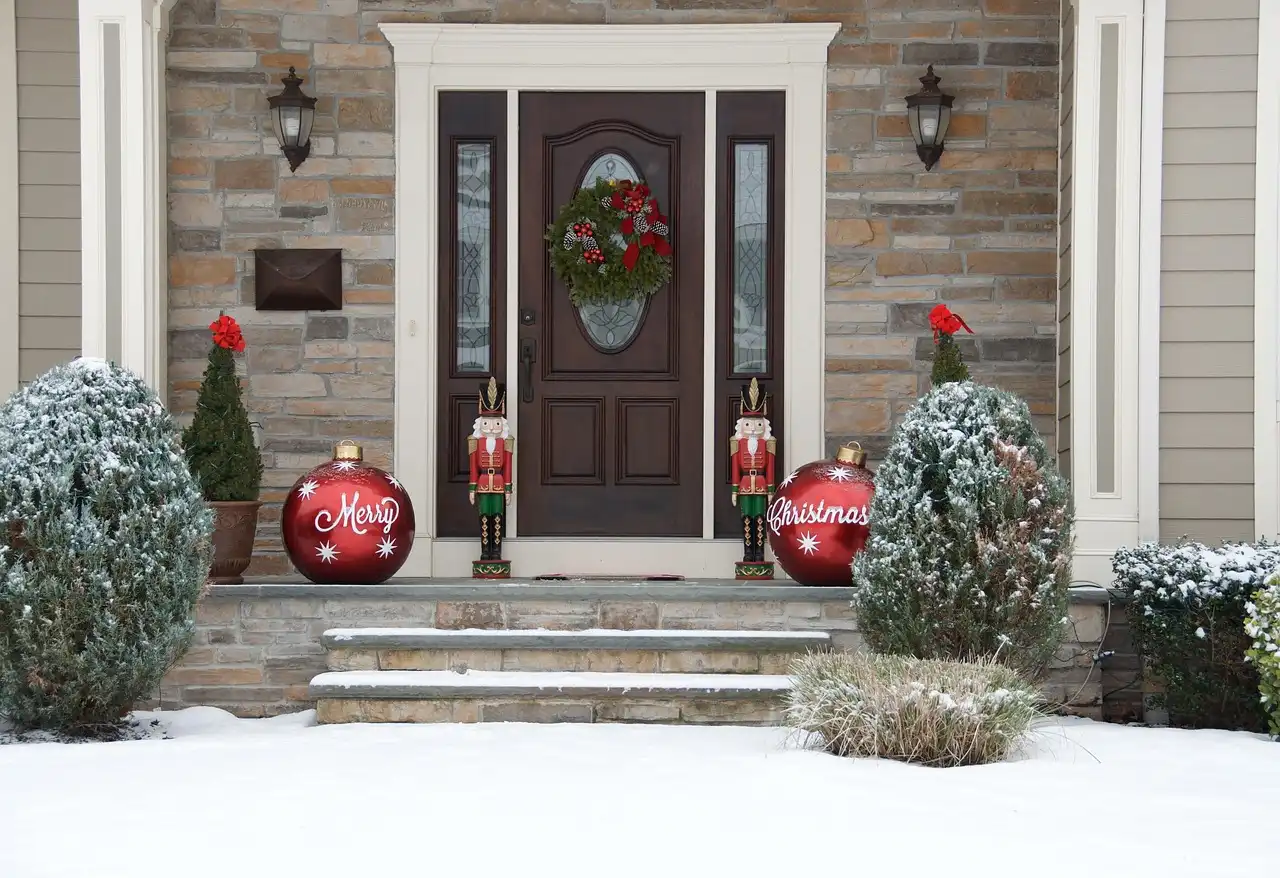
How to Hang Garland on a Door Without Damage
Use the lightest damage-free hanger that fits the door: adhesive hooks for painted wood or metal, suction hooks for glass, and removable clips for rental trim. If the garland weighs around 2 pounds or gets bumped often, a mechanical hanger is recommended instead of adhesive. Bad placement can peel paint, leave residue, or drop the garland onto a walkway. This guide shows which method fits wood, glass, painted trim, metal, and rental-friendly frames, plus how weight and traffic should change your choice.
Quick answer and setup
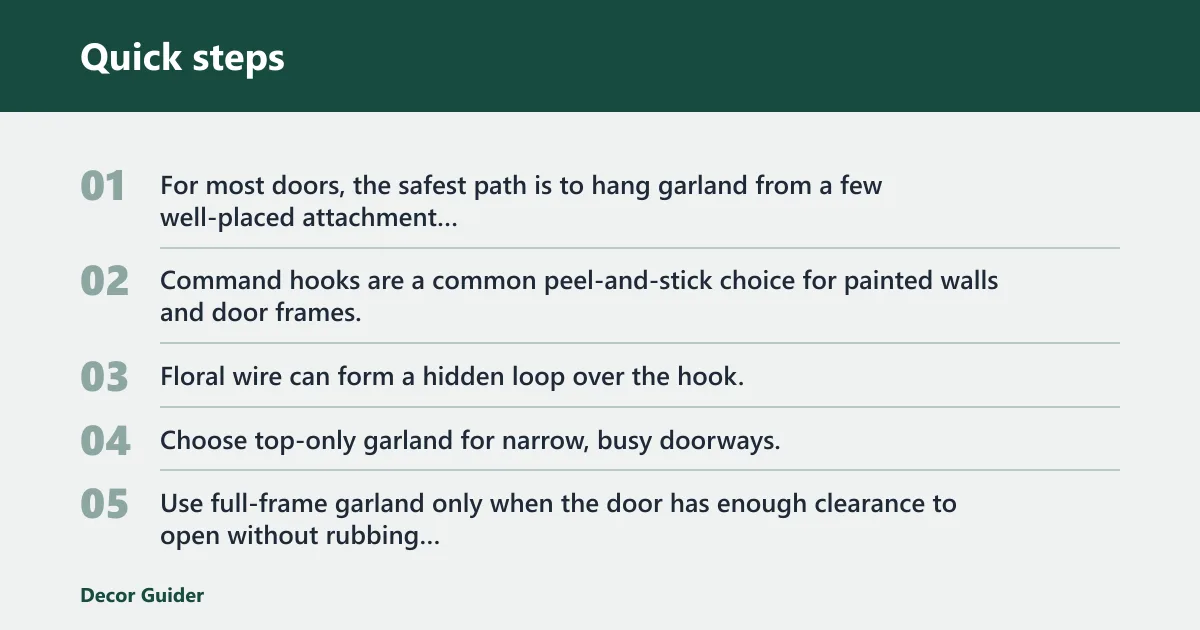


For most doors, the safest path is to hang garland from a few well-placed attachment points rather than from the garland itself. Command hooks are a common peel-and-stick choice for painted walls and door frames, and Maison de Pax says to press them firmly for 30 seconds and wait about 1 hour before adding weight. Floral wire can form a hidden loop over the hook, and ribbon or twine can cover the support point.
Choose top-only garland for narrow, busy doorways. Use full-frame garland only when the door has enough clearance to open without rubbing the greenery. A heavier, fuller garland needs extra support points, especially if you add lights, bows, bells, or ornaments.
What changes for doors that open often
Frequent movement changes the risk. A front door that opens daily needs more clearance, more support points, and less decorative weight than a static interior doorway. If the garland touches the door edge, the motion can shift the hanger, scuff paint, or loosen suction on glass.
📊 wikiHow recommends 1–2 inch nails depending on door thickness. Source: Wikihow.
What you’ll need
- Command hooks or other adhesive hooks
- Ribbon or twine
- Floral wire
- Painter’s tape
- Decorative garland ties
- Measuring tape
- Clean cloth
Best damage-free method by door type
| Door material | Recommended hanger method | Hold strength | Risk of damage | Best garland weight range | Common failure mode |
|---|---|---|---|---|---|
| Painted wood door or painted trim | Command hooks with floral wire or ribbon | Light to medium | Low if paint is sound and clean | Light garland; medium only with multiple hooks | Adhesive lifts paint on weak or dusty finish |
| Glass door or sidelights | Suction hooks on clean glass | Light | Low on intact glass, higher if dirty | Light garland only | Suction slips on dust, moisture, or temperature swings |
| Metal door | Adhesive hooks rated for smooth metal | Light to medium | Low to moderate | Light garland; medium with more than one hanger | Hook slides if the surface is textured or oily |
| Rental-friendly frame | Removable clips, tension rod, or decorative garland ties | Light to medium | Low when sized correctly | Light garland; medium if the frame is rigid | Garland sags because the support spans too wide a gap |
| Cabinet front | Painter’s tape for low-traffic, temporary placement | Light | Low on smooth, clean surfaces | Very light garland only | Tape loosens under repeated opening |
Wood doors and painted trim
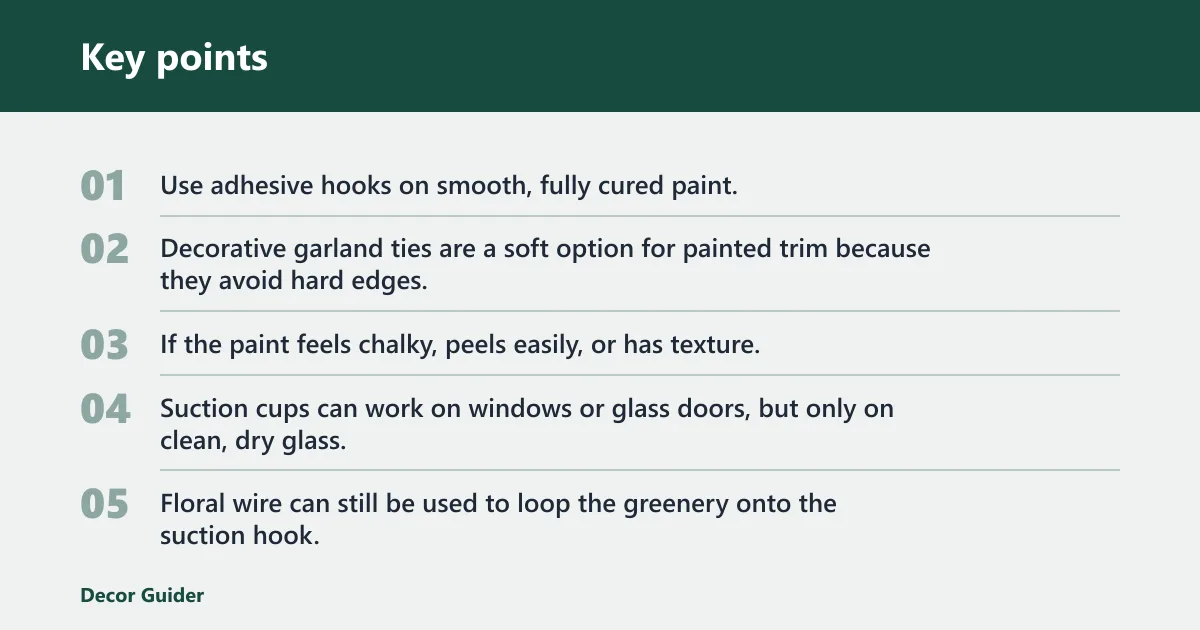
Use adhesive hooks on smooth, fully cured paint, then hide the attachment with ribbon or twine. Decorative garland ties are a soft option for painted trim because they avoid hard edges. If the paint feels chalky, peels easily, or has texture, reduce the load and add more support points.
Glass doors and sidelights
Suction cups can work on windows or glass doors, but only on clean, dry glass. They are best for light garland. Floral wire can still be used to loop the greenery onto the suction hook, keeping the support point less visible.
Metal doors
Use smooth-surface adhesive hooks rather than a hanger that can scrape the finish. A metal door can seem sturdy, but texture, powder coating, dust, or condensation can weaken adhesion. If the garland is dense, split the weight across two or three hooks.
Rental-friendly frames and cabinet fronts
A tension curtain rod can span a doorway or cabinet opening when you need a temporary top support. Maison de Pax lists tension rods among damage-free options, and painter’s tape can help hold ribbon on cabinet-style surfaces in low-traffic spots. Keep the display light.
How much garland do you need for a doorway with swag?
Measure the width first, then add the amount needed for the drape. For a simple top swag, plan for the doorway width plus extra length for each dip in the center and each wrap around a corner or hook. For full-frame coverage, include both vertical sides and any overlap at the top. A single door needs less length than a double door, but a deep swag can quickly add several feet.
Measure doorway width and surrounding space
Start with the clear opening, then measure the trim or frame area where the hanger will sit. That tells you whether the garland can hang inside the frame or needs to stay above the moving edge. If a door opens into the garland path, reserve more clearance than you would for a fixed frame.
Choose full-frame or top-only coverage
Top-only garland works best for narrow, busy doors because it keeps the greenery away from hinges and handles. Full-frame garland looks more complete, but it needs more attachment points and more slack control. Use full-frame only when the door can move without brushing the garland.
How do you hang garland around a door without damage?
Attach the garland to a clean, dry surface with the lightest method that matches the door. Command hooks, ribbon, twine, floral wire, painter’s tape, and decorative garland ties can all work when they suit the material. The goal is to hold the weight without letting the greenery rub, slide, or pull at the finish.
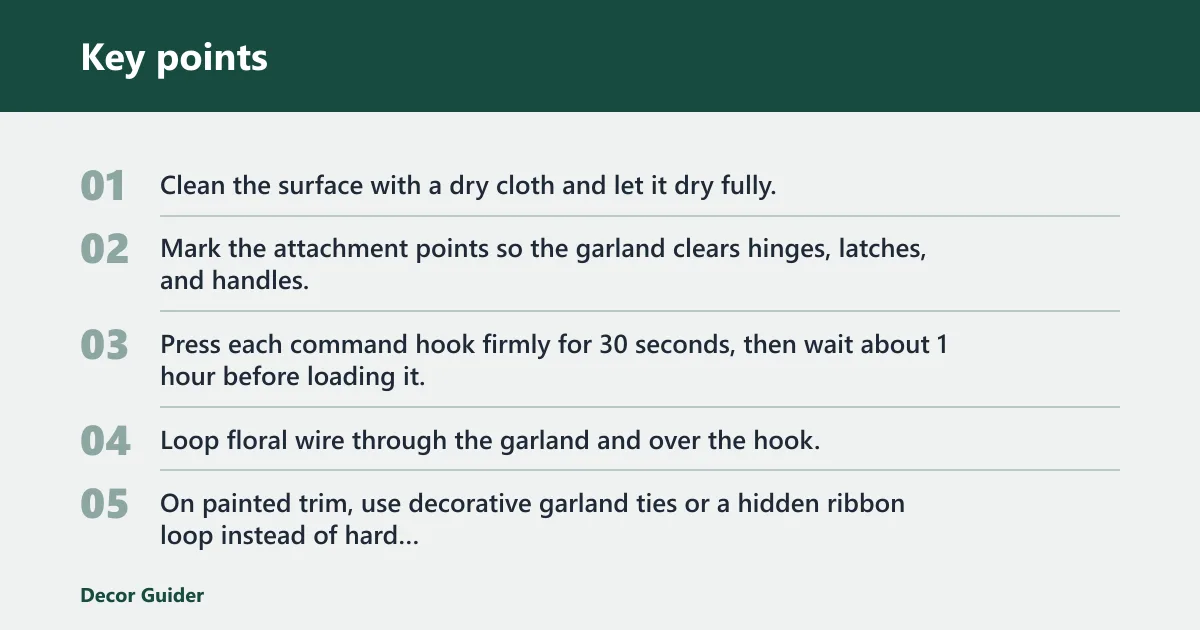
- Clean the surface with a dry cloth and let it dry fully.
- Mark the attachment points so the garland clears hinges, latches, and handles.
- Press each command hook firmly for 30 seconds, then wait about 1 hour before loading it.
- Loop floral wire through the garland and over the hook, or use ribbon or twine to suspend the garland from the support point.
- On painted trim, use decorative garland ties or a hidden ribbon loop instead of hard metal ties.
- For cabinet-style surfaces, use painter’s tape only for lightweight, temporary placement.
- Hang the garland and adjust the drape so the lowest point stays clear of the door swing.
- Add 6 to 12 inches of extra length at a time if you need more sag, then recheck the balance.
Suppose a painted front door needs about a 6-foot swag across the top. Two hooks placed near the upper corners can hold a light garland, but a dense piece with ornaments will need more support points so the center does not pull the ends down.
How do you keep garland from slipping or scratching?
Match the support to the garland’s weight, and keep hard edges off finished surfaces. Floral wire is thin and less visible than zip ties, so it is useful for looping garland onto hooks or adding discreet support to layered sections. Ribbon or twine can also be decorative if the attachment point stays hidden.
Match weight to the hanger method
Light garland can sit on adhesive hooks or suction cups. Heavy garland generally needs more than one anchor point, especially if lights or ornaments are added. If the garland keeps sliding, reduce the span between supports before adding more weight.
Protect painted trim and finished edges
Do not let wire rub directly on paint. Use ribbon, twine, or decorative garland ties where the greenery touches the frame. If the surface is soft or freshly painted, choose a lower-load setup and keep the garland away from corners that get bumped.
Reduce friction where the door moves
Leave enough clearance for the door to open and close without dragging the garland. A door that closes often needs a tighter top-only design or a support point placed outside the swing path. If the garland shifts after the first few openings, move the lowest point up before it marks the finish.
Common mistakes
Most failures come from using the wrong support on the wrong surface. Adhesive hooks can fail on textured paint, suction can fail on dirty glass, and hard metal hangers can scratch trim. A door that opens often also needs more clearance than a decorative wall display.
- Using the wrong hanger for the surface: match adhesive, suction, or removable clips to wood, glass, metal, or trim.
- Skipping set time: press adhesive hooks for 30 seconds and wait about 1 hour before loading them.
- Overloading a single hook: split heavier garland across multiple support points.
- Ignoring dust, texture, or moisture: clean the surface first, especially on glass and metal.
- Letting the garland hit the door: reposition the drape so movement does not pull on the hanger.
A common first-timer mistake is hanging a heavy, decorated garland from one hook on a painted frame. The hook may hold for a while, then the weight slowly shifts and the garland tilts into the door path. Adding a second hook usually fixes the balance more safely than tightening the first one.
Frequently asked questions
What is the best way to hang garland around a front door without nails?
For most front doors, adhesive hooks plus floral wire give the cleanest hold with the least visible hardware. If the door is glass, suction cups are a better fit. For a heavy garland, add more than one support point instead of relying on a single hook.
Can I use Command hooks to hang garland on a painted door frame?
Yes, if the paint is smooth, dry, and fully cured. Press each hook firmly for 30 seconds, then wait about 1 hour before adding weight. Use floral wire or ribbon to connect the garland to the hook so the hook carries the load, not the paint edge.
How do I hang garland around an outside door without nails?
Use the most weather-aware option the surface allows. Adhesive hooks are best only on sheltered areas, while suction works only on clean glass. If wind or frequent use makes the setup shift, choose a more secure support such as a tension rod or a non-marking mechanical hanger.
What should I use on a wood door versus a glass door?
On wood, use adhesive hooks or removable clips, then connect the garland with wire or ribbon. On glass, use suction cups on a clean, dry surface and keep the garland light. A wood door tolerates more support options, while glass needs a cleaner, lighter setup.
How do I keep garland from scratching or slipping on a door?
Use soft or hidden ties at every contact point, and keep the garland off hard trim edges. Floral wire is useful for discreet loops, while ribbon or twine can cover the attachment point. If the garland moves when the door opens, shorten the span or move it higher.
What’s the safest way to hang garland on a door that closes often?
Use a top-only layout with multiple light attachment points and enough clearance for the swing path. A frequently used door should not carry a heavy, dangling swag that brushes the frame. Recheck the setup after the first few openings and move the lowest point up if it shifts.
Products related to this article
Sponsored / affiliate links. As an Amazon Associate I earn from qualifying purchases. I may earn additional commission from eligible campaigns.