Bookshelf vs Floating Shelves: Which Fits Best for Rooms?
Choose a bookshelf for heavy book loads, rentals, and layouts that change often; choose floating shelves only when the wall is solid and the load is light to moderate, usually paperbacks and a few hardcovers per shelf. Pick the wrong one and you get sagging shelves, wall damage, wasted floor space, or storage you replace twice. I compare them here by weight, wall type, room size, rental limits, and how often you move things around.
This guide is part of our Bookshelf guide: build, style, and organize series.
Bookshelf vs floating shelves: the real trade-off



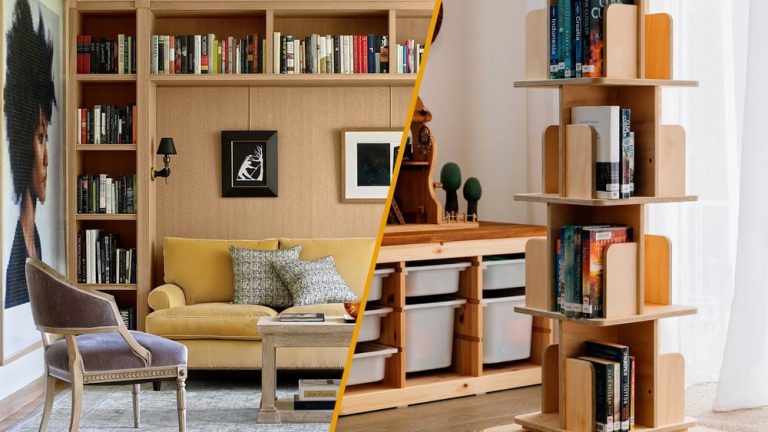
The real choice is wall support, load, and room flow. Floating shelves attach to wall studs with concealed brackets, so the floor stays open. A bookshelf sits on the floor, takes more weight, and tolerates daily use better.
That difference matters most with heavy collections, drywall, or a tight room. A floor unit is easier to move and usually safer for books, bins, and mixed media. Floating shelves fit best when the wall is sound, the objects are lighter, and the goal is display with some storage, not a full library.
| Decision factor | Bookshelf | Floating Shelves | Winner |
|---|---|---|---|
| Book weight | Higher shelf load, better for dense book collections | 25-75 pounds per stud-mounted shelf depending on bracket design | Bookshelf |
| Floor footprint | Uses a footprint, often 30-48" wide by 12-18" deep | Takes no floor space | Floating Shelves |
| Rental safety | Usually fewer wall holes; may still need anti-tip anchoring | Needs wall holes, anchoring, patching, and repainting later | Bookshelf |
| Flexibility and rearrangement | Portable and repositionable | Fixed after install | Bookshelf |
| Visual lightness | More furniture-like presence | Floating look with concealed supports | Floating Shelves |
| Storage depth and mixed use | Better for books, bins, decor, and closed storage formats | Best for light display and small items | Bookshelf |
| Installation effort | Lower setup complexity | Needs stud location, accurate leveling, and secure anchoring | Bookshelf |
| Total cost | Basic traditional bookshelves can cost $50-200 | $20-150 each, plus $10-40 hardware and sometimes $50-150 installation | Bookshelf |
Weight capacity and book load
Bookshelves win on load because quality traditional bookshelves support 50-200+ pounds per shelf. That matters for hardcover rows, textbooks, reference books, and mixed storage that includes baskets or decor with weight. Floating shelves are better treated as light-duty storage unless the load is carefully limited and the wall is strong.
A few paperbacks and framed art fit fine. A row of heavy hardcovers does not. When a shelf begins to bow, the problem is usually not the book type alone; it is the total shelf load, the bracket design, and whether the wall can carry that force safely.
Floor footprint and circulation
Floating shelves win when every inch of walking space matters. They take no floor footprint, which makes them useful in apartments, narrow hallways, compact bedrooms, and small home offices where a bookcase would interrupt movement or block a door swing.
Bookshelves need room to stand, and that footprint changes a tight room fast. A unit that is only 12-18 inches deep can still narrow a passage enough to get in the way. In a room where circulation width is already tight, wall storage often solves a problem that floor furniture creates.
Installation effort and wall impact
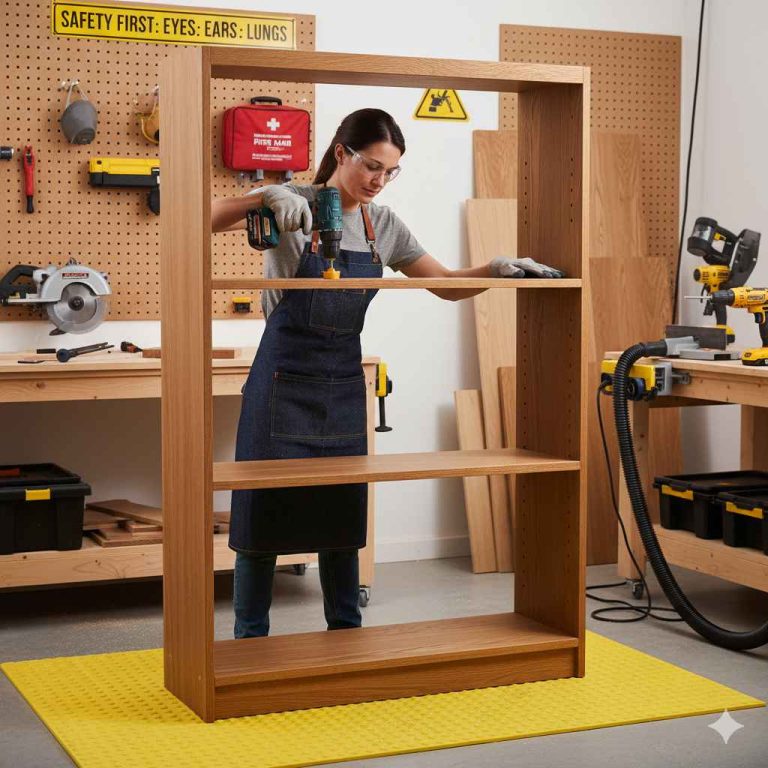
Bookshelves are simpler to place, but floating shelves are simpler only after the wall work is done. Studs matter because concealed brackets depend on secure attachment points, especially in drywall. In masonry, the wall type changes the anchoring method, which changes the safety picture and the labor.
Rental impact is not just about drilling. It is about wall holes, anchor repair, patching texture, repainting, and the chance that a landlord sees the work as damage rather than normal wear. A bookshelf often avoids that chain of repair entirely, while floating shelves create it from the start.
Flexibility, portability, and future layout changes
Bookshelves are the better choice when the room layout changes often. A freestanding unit can move from a living room to a bedroom, or from one wall to another, without leaving a trail of patched holes. That flexibility matters in rentals and in homes where furniture gets rotated seasonally.
Floating shelves stay put once installed. That makes them useful for a fixed wall plan, but poor for someone who changes storage every few months. If the room may become an office later, or if the wall will need a different arrangement, a bookcase is usually the safer bet.
Storage capacity and mixed-use storage
Storage capacity is not only about how many books fit on a shelf. It is also about shelf depth, linear shelf space, and whether the unit can hold bins, decor, or mixed media without looking overloaded. A standard 6-shelf bookcase provides 30+ linear feet of storage, which is why it handles collections so well.
Floating shelves work well for small spaces, narrow walls, and awkward corners, but they are not efficient for bulky storage. They can hold display items and lighter books cleanly, yet they give up closed storage and much of the volume a bookcase can offer. That trade-off shows up fast in bedrooms and home offices.
Are floating shelves any good for books?
Yes, floating shelves can work well for books when the books are light, the spans are short, and the wall is properly anchored. They work well for paperbacks, a few hardcovers, and mixed displays where books are part of the design rather than the entire storage load.
When floating shelves handle books well
They perform best on stud-mounted installs with moderate spacing and limited shelf depth. A few rows of paperbacks, design books, or a small reading collection are a comfortable fit. They also work when books share the wall with framed art or plants and the goal is visual lightness.
When the load becomes a problem
Heavy hardcovers and reference books are the common failure point. Their weight stacks quickly, and the shelf can sag or pull at the anchors when the load creeps upward. If one shelf is expected to hold a dense book run, a bookcase is the safer answer.
How studs and wall material change the answer
Studs are critical because they carry the load into the wall structure. Drywall without solid anchoring is generally a poor base for a substantial book load. Masonry changes the fastening method, but it does not remove the need to treat load and attachment carefully.
Do floating shelves work in rental apartments?
They can work, but they often create more risk than renters expect. Floating shelves need holes, anchors, and later patching, and the real cost includes repainting and any landlord concern about visible damage. A rental-friendly choice is the one that leaves the wall easiest to return to original condition.
Hole repair, repainting, and landlord risk
Even small wall holes can become a hassle if the paint is aged, textured, or hard to match. Patch work may be simple, but repainting a wall section often is not. If the lease is strict, the risk of being charged for imperfect repair can outweigh the visual benefit of wall shelving.
When a bookcase is the safer rental choice
A freestanding bookcase keeps the wall mostly intact and moves out with the tenant. It is usually the better choice for heavy collections, repeated moves, or rooms where the layout may change before the lease ends. Anti-tip anchoring may still be wise, but the damage risk is lower than with multiple wall-mounted shelves.
When floating shelves still make sense
They make sense when the apartment has a stable wall, the landlord allows holes, and the shelves are for light display rather than bulk storage. A narrow entry wall, a small reading nook, or a hallway can be a good fit if the shelves stay modest in size and load.
Which is better for small rooms and narrow walls?
Floating shelves are usually better when floor space is the limiting factor, because they leave circulation open and avoid a bulky footprint. Bookshelves win only when the room can spare the floor area and the storage need is large enough to justify a taller or wider unit.
Hallways, bedrooms, and compact home offices
In hallways and small bedrooms, a bookcase can crowd movement fast. Floating shelves keep the path clear and can fit over a desk, beside a doorway, or on a short wall that would not suit a standing unit. In compact home offices, they often work well for display plus a small working library.
Where a tall bookcase beats wall shelving
When the collection is large, a tall bookcase usually beats multiple floating shelves. Vertical storage uses wall height efficiently while keeping books, bins, and office items together. If the room has enough floor width, one tall unit often stores more with less visual disorder than several shallow wall shelves.
Choose bookshelf if… / choose floating shelves if…
Choose a bookshelf when the load is heavy, the room layout may change, or the wall is not the right place for anchors. Choose floating shelves when the room is tight, the wall is solid, and the goal is light storage or display rather than a full book system.
Choose bookshelf if…
- Your collection includes hardcovers, reference books, or mixed media with real weight.
- You rent and want the lowest wall-repair risk after moving out.
- You expect to move the piece or change the layout often.
- You need open, closed, cube, or tall storage in one furniture piece.
Choose floating shelves if…
- The wall has studs or another secure anchoring method.
- You need to preserve walking space in a small apartment, hallway, or narrow room.
- The load is light to moderate, mostly paperbacks and decor.
- You want the wall to feel lighter and less furniture-heavy.
Decision matrix: score your wall, weight, and room
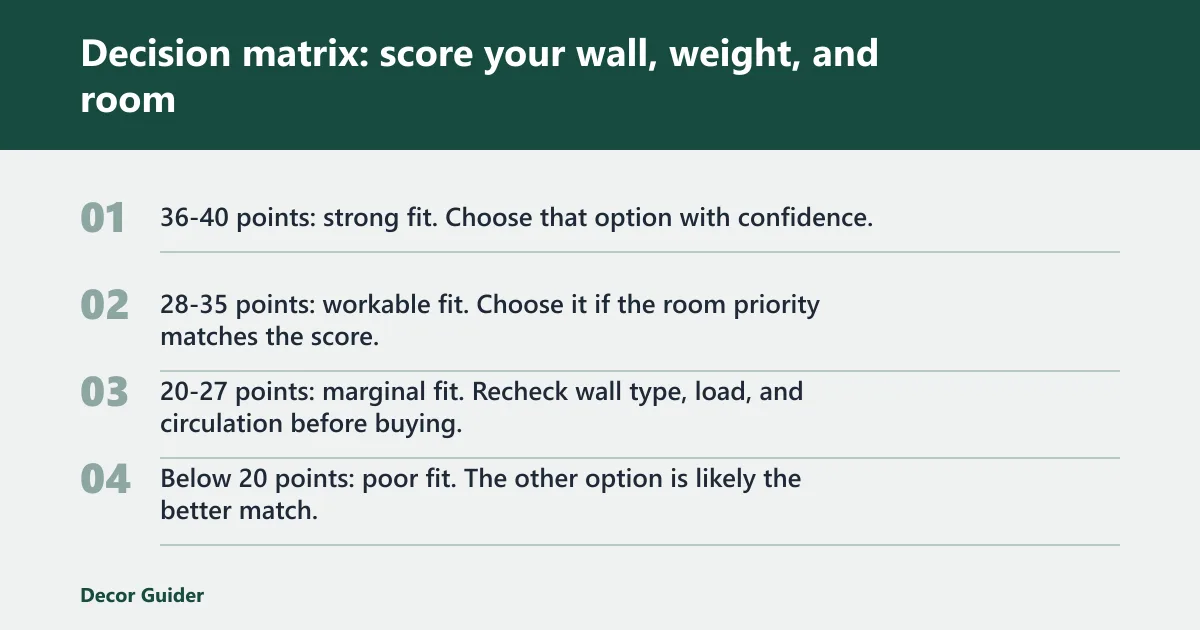
Use this matrix when the choice is unclear. Score each criterion from 1 to 5 for the option that fits your room, then total the points. A higher score means the option matches the constraint better, not that it is always the better product.
| Criterion | How to score Bookshelf | How to score Floating Shelves | Recommendation outcome |
|---|---|---|---|
| Book weight | 5 for heavy or mixed loads | 5 for light display loads | Heavier collections favor Bookshelf |
| Wall type | 4 if wall mounting is a concern | 5 only if studs or secure anchoring are available | Weak or uncertain walls favor Bookshelf |
| Rental safety | 5 when you want fewer wall repairs | 2 if patching and repainting are a problem | Renters usually favor Bookshelf |
| Floor space | 2 in tight rooms; 5 in roomy rooms | 5 when every inch of floor space matters | Small rooms favor Floating Shelves |
| Visual lightness | 3 | 5 | Minimalist walls favor Floating Shelves |
| Flexibility | 5 for portable, repositionable layouts | 2 after installation | Changing layouts favor Bookshelf |
| Installation effort | 4 for simple placement | 2 for drilling, leveling, and anchoring | Low-effort setups favor Bookshelf |
| Total cost | 4 with basic units at $50-200 | 3 once hardware and install are included | Budget-focused buyers often favor Bookshelf |
How to read the score
- 36-40 points: strong fit. Choose that option with confidence.
- 28-35 points: workable fit. Choose it if the room priority matches the score.
- 20-27 points: marginal fit. Recheck wall type, load, and circulation before buying.
- Below 20 points: poor fit. The other option is likely the better match.
Frequently asked questions
bookshelf vs wall shelf
A bookshelf is usually the better answer when weight, flexibility, and storage volume matter. A wall shelf works better when floor space is tight and the load is light. If the room needs a permanent library, the floor-standing unit is usually safer and easier to live with.
are floating shelves any good
Yes, if the goal is light storage or display and the wall can take the load. They are not a general substitute for a full bookcase. Their value is in preserving floor space and keeping the wall visually lighter, not in carrying the heaviest collections.
are floating shelves good for books
They are good for books that are light to moderate in weight, especially paperbacks and a few hardcovers. They are less suitable for dense rows of heavy books. For a real book library, shelf load and wall anchoring should be checked before buying.
are floating shelves a good idea
They are a good idea when the wall is solid, the room is small, and the storage need is modest. They are a weaker idea when the collection is large or the installation must be easy to reverse. The best use is targeted, not universal.
are floating shelves strong
They can be strong enough for light to moderate use when they are stud-mounted with proper concealed brackets. The strength limit is still lower than a quality bookcase shelf, and wall material matters. In drywall, the anchoring detail often decides whether the shelf is truly safe.
which is better for books, a bookshelf or floating shelves?
A bookshelf is better for most book collections because it carries more weight, stores more volume, and handles rearrangement better. Floating shelves are best when the books are only part of the display and the wall space is limited. Heavy collections should default to the bookshelf.
Products related to this article
Sponsored / affiliate links. As an Amazon Associate I earn from qualifying purchases. I may earn additional commission from eligible campaigns.