Best Bookshelf Ideas for Rental Homes That Fit Tight Spaces
For rental homes, a practical bookshelf choice is often a freestanding unit with anti-tip hardware, or cube stacks for small spaces; one rule of thumb is to pick a unit a little narrower than the wall span and leave baseboards exposed. Use the wrong size or finish, and you get wobble, scuffed walls, blocked outlets, and move-out repair charges. This guide covers room-by-room setups, load limits, no-drill styling, and failure cases to avoid.
This guide is part of our Bookshelf guide: build, style, and organize series.
What makes a bookshelf rental-safe?
A rental-safe bookshelf can go in, get used, and come out without breaking the lease, chewing up drywall, or tipping. I look at the lease first, then load limits, then stability. If those three checks fail, the shelf does too.
Lease rules that matter before you buy
Start with the lease clause on wall attachment, paint repair, and approved hardware. Some units allow small anchors, some require written approval, and some treat every patch as a deposit issue. A bookshelf that needs drilling is only rental-safe when the lease allows it and the wall can be restored cleanly.
Drilling, wall repair, and deposit risk
Drilling is not automatically a dealbreaker, but it changes the risk profile. Drywall patches, paint touch-ups, and matching texture are often harder than renters expect. If the wall is plaster, brick, or freshly painted, even a small anchor hole can become a restoration job at move-out.
When a shelf is movable but still unsafe
Movable does not mean safe. A narrow tall bookcase can slide, wobble, or tip even if it never touches the wall. A lightweight unit loaded with books also shifts weight high, which makes it unstable on uneven floors, thick rugs, or in homes with active kids or pets.
Best bookshelf ideas for rental homes by type
The best rental bookshelf depends on how many books, bins, and display items it must hold, how often it moves, and whether the lease tolerates holes. In practice, freestanding units fit most renters, cube systems fit mixed storage, ladder shelves fit narrow rooms, and floating shelves are best for light decor only.
Freestanding bookshelf: easiest no-drill choice
A freestanding bookcase is the safest default for renters because it works without wall attachment. MDF is common, wood lasts longer, and metal works well in tighter spaces where a lighter visual profile helps. For small rooms, low and mid-height versions are easier to relocate and less likely to overwhelm a wall.
Cube storage shelf: modular storage for books and bins
Cube storage shelves work well when the room needs both display and concealed storage. They can stand horizontally as a bench-height unit or stack vertically if the maker allows it. Weight limits matter here, especially for hardcover books, so bins often carry the lower shelves while decor stays up top.
Ladder shelf: narrow footprint with display space
A ladder shelf uses a wall-leaning silhouette and takes less floor width than a boxy bookcase. It is usually better for light-to-moderate display than for heavy book loads. Stability depends on the base design and any wall restraint the manufacturer recommends, so it is a poor choice for homes with pets that bump furniture.
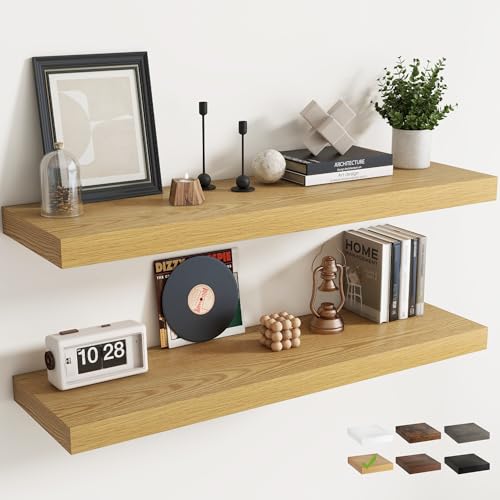
Floating shelves: best for light decor, not heavy loads
Floating shelves can look built-in, but they are the least forgiving in rentals because they usually need anchors. Some temporary support systems exist, yet weight limits are still low compared with a bookcase. They are generally better for a few paperbacks, framed art, and small objects than for stacks of novels.
Which bookshelf works best in a rental apartment?
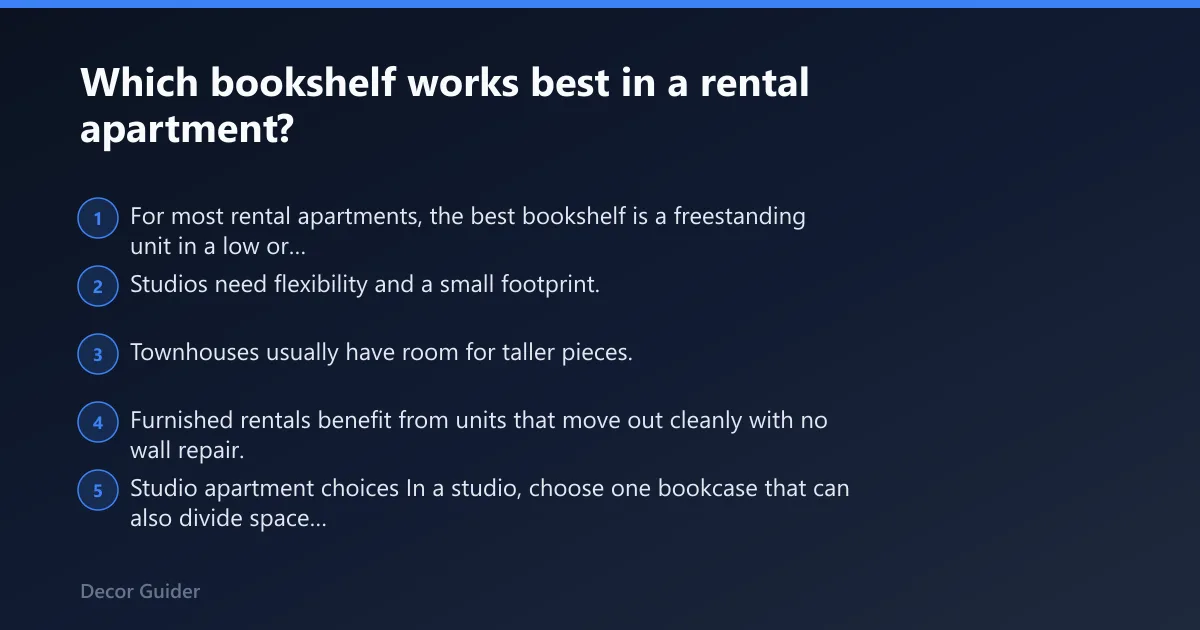
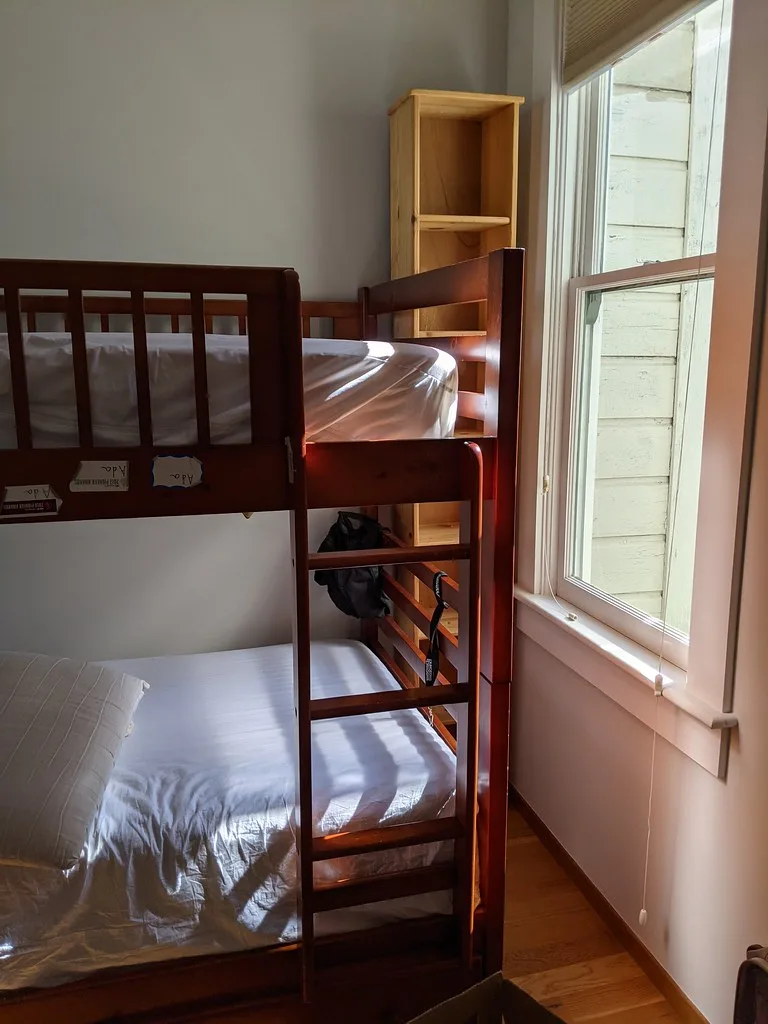
For most rental apartments, the best bookshelf is a freestanding unit in a low or mid-height profile, or a cube system if storage needs change often. Studios need flexibility and a small footprint. Townhouses usually have room for taller pieces. Furnished rentals benefit from units that move out cleanly with no wall repair.
Studio apartment choices
In a studio, choose one bookcase that can also divide space without blocking light, and still leave a clear path for the room to breathe. A low cube shelf near a sofa can often hold books, baskets, and a lamp. A tall unit may work only if it sits against a solid wall and leaves enough clearance for ceiling height and door swing.
Townhouse and multi-room choices
Townhouses often tolerate larger storage pieces because rooms are deeper and walls are less cramped. A pair of matching freestanding bookcases can frame a media wall or dining nook without looking temporary. Mid-height units are easier to move upstairs and less likely to feel top-heavy on older floors.
Furnished rental choices
In a furnished unit, the goal is usually to add storage without making the space feel crowded. Low cube shelves or narrow metal bookcases are easier to place around existing furniture. Any choice should avoid blocking vents, outlet access, or landlord-owned pieces that must remain reachable.
How do you keep a bookshelf from damaging rental walls?
Keep a bookshelf from damaging rental walls by controlling contact points, limiting sway, and using the lightest safe attachment method allowed by the lease. Anti-tip hardware, wall-safe mounting systems, and careful placement away from tight corners reduce scuffs, dents, and repair costs.
Anti-tip hardware and when it is worth using
Anti-tip hardware is worth using for tall units, homes with children or pets, and any bookcase that carries dense book loads on upper shelves. A wall strap or anchor spreads force and reduces tipping risk. In many rentals, this is the difference between a safe setup and a liability.
Wall-safe mounting options and their limits
Tension-based systems can work in specific layouts, especially where floor-to-ceiling pressure is possible. Command-style supports are better suited to very light decor than to shelving loaded with books. They reduce damage risk, but they do not replace proper anchors when the unit is tall or heavily loaded.
Preventing scuffs, wobble, and overloaded shelves
Leave a small gap from the wall so molding and baseboards are not crushed. Use adjustable feet or shims on uneven floors. Put heavier books on the lowest shelves, and keep decorative objects higher only if the shelf rating allows it. Wobble is usually a placement or load problem, not a style problem.
Use height and scale to make the shelf feel built-in
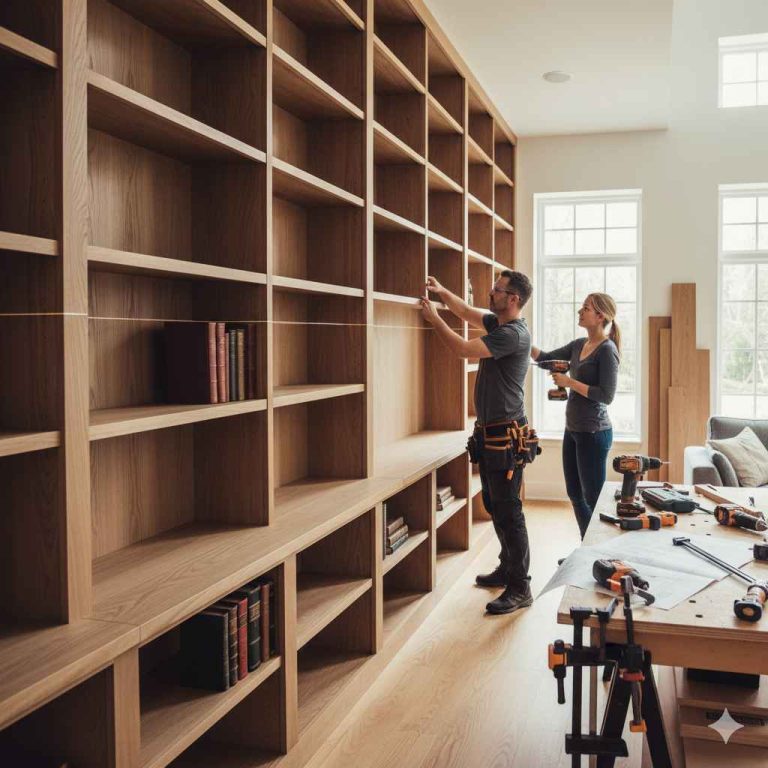
Height and scale do more for a rental room than finish alone. Low units feel quieter and can sit under windows. Mid-height bookcases work well beside sofas and desks. Tall pieces make a wall feel intentional, but only when overhead clearance and anchoring needs are addressed first.
Low, mid, and tall bookcase height
Low bookcases create horizontal lines that suit small rooms and keep sightlines open. Mid-height units are the safest all-purpose choice because they hold a useful amount without dominating the wall. Tall bookcases create the strongest built-in effect, but they also demand better stability and more careful load placement.
Overhead clearance and room proportion
Leave clearance above the top shelf so the unit does not press into crown molding, window trim, or ceiling fixtures. A bookcase that is too tall for the room looks forced and is harder to move through doorways. A shorter shelf often reads more custom when paired with art above it.
When tall units need anchoring
Tall units often benefit from anchoring when they are loaded with books, sit on soft flooring, or stand where people pass frequently. The taller the bookcase, the more force it has during a bump. If the lease allows anchors, use them. If not, shorten the unit or switch to stacked cube storage.
Renter-safe bookshelf decision table
This table compares the four common choices by the issues renters actually feel at move-out: drilling, moving, stability, storage density, and lease risk. The best option is usually the one that balances load and repair risk, not the one with the lowest sticker cost.
| Type | Drilling required | Moveability | Stability | Storage density | Likely lease risk |
|---|---|---|---|---|---|
| Freestanding bookshelf | No for basic use; anchors optional on tall units | High | Good if level and loaded low | Medium to high | Low |
| Cube storage shelf | No for basic use; stackable systems may need safety ties | High to medium | Good when wide and low | High | Low to medium |
| Ladder shelf | Usually no, unless wall restraint is added | High | Moderate | Low to medium | Medium |
| Floating shelves | Usually yes | Low | Low to moderate | Low | High |
Choose by room type and book load
Heavy book collections belong on freestanding or cube units with strong lower shelves. Small rentals with mixed decor can use ladder shelves or floating shelves, but only if the load stays light. The more paperbacks and hardcovers a shelf carries, the less attractive wall-mounted options become.
Move-out checklist for disassembly and repairs
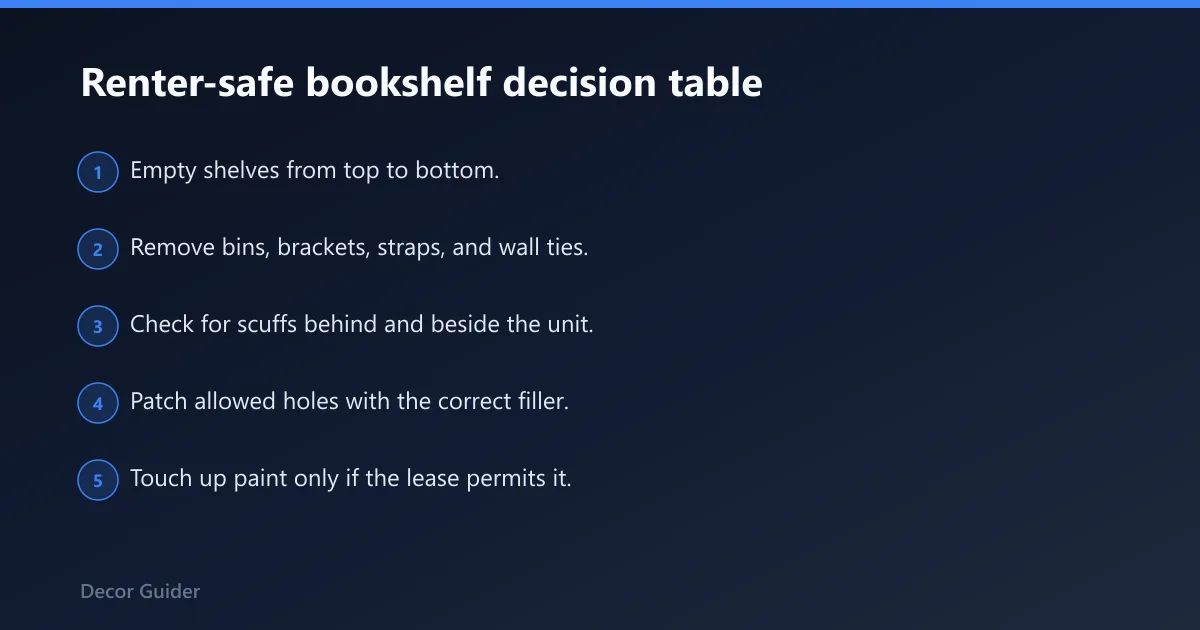
- Empty shelves from top to bottom.
- Remove bins, brackets, straps, and wall ties.
- Check for scuffs behind and beside the unit.
- Patch allowed holes with the correct filler.
- Touch up paint only if the lease permits it.
- Keep screws, cam locks, and shelf pins in a labeled bag.
- Measure the unit for the next apartment before moving it.
How do you style a rental bookshelf so it looks custom?
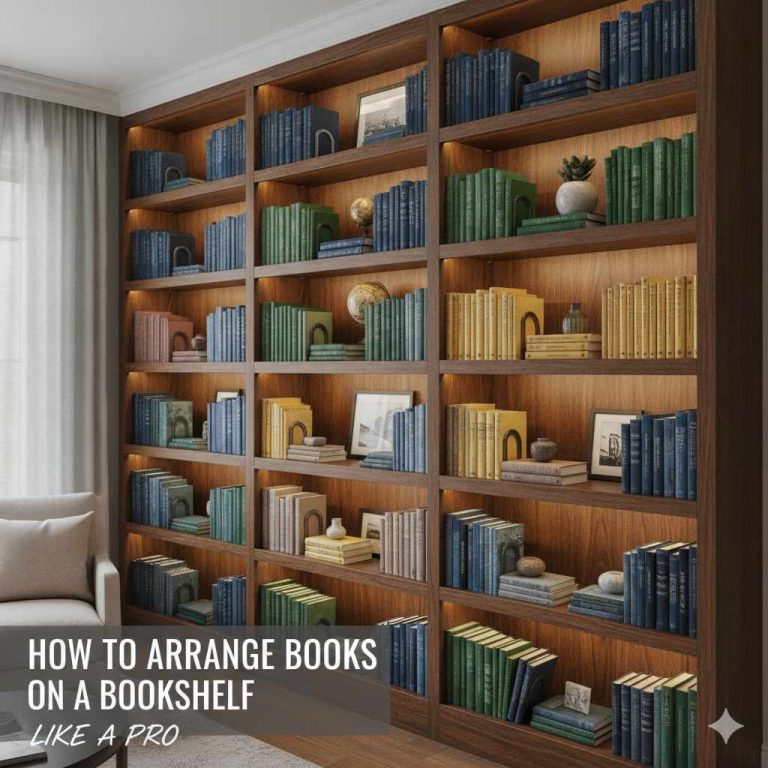
A rental bookshelf looks custom when it mixes books, storage, and open space with restraint. Use baskets for clutter, place objects in small groupings, and leave some cubbies or shelf sections partly empty. That balance reads intentional and avoids the packed look that makes cheap shelving stand out.
Books plus baskets for mixed storage
Put bulkier items in baskets or bins on lower shelves, then keep books and decor above them. This works especially well in cube storage because each cubby can serve a different function. Matching baskets can help the whole unit feel more like one piece instead of a pile of separate containers.
Object spacing, negative space, and visual balance
Leave space around taller objects like vases and use shorter stacks beside them to break up the line of spines. Negative space matters because every shelf does not need to be full. A few empty sections can make a rental unit feel more built-in than a shelf packed wall to wall.
Cheap shelf upgrades that read more built-in
Painted or wrapped back panels, consistent basket colors, and simple bookends can make a budget unit look deliberate. Swapping mismatched knobs or adding low-profile lighting can help too, if the lease allows it. The key is consistency, not decoration for its own sake.
How do I add storage in a rental without built-ins?
Add storage without built-ins by choosing furniture that fills the wall like architecture but still comes out intact. Freestanding bookcases, cube shelves, and modular shelving systems are the most practical options. They create volume, hold books and decor, and move with the renter from one apartment to the next.
Modular shelving system choices
Modular shelving systems are useful when the layout may change. A unit can start as a low console, then expand upward or sideways later. That flexibility matters in rentals where room dimensions, lease rules, and storage needs can shift with each move.
Failure cases to avoid
The most common problems are wobble, tipping, wall scuffs, overloaded shelves, and a bad fit for the room. A shelf that blocks a return vent or outlet is also a bad rental choice. If the unit feels cramped on paper, it usually feels worse once the boxes are unpacked.
Frequently asked questions
What bookshelf is best for a rental apartment?
A freestanding bookcase is usually the best first choice for a rental apartment because it avoids drilling and moves with the renter. If storage needs are mixed, a cube shelf can be better. The safest pick is the one that fits the wall width, load, and lease rules.
What bookshelf options are easiest to move when I relocate?
Freestanding bookcases and modular cube systems are the easiest to move because they break down or lift as separate pieces. Ladder shelves are also fairly portable, though they need careful handling. Floating shelves are the hardest to reuse because removal often leaves wall repair and custom placement issues.
Can I use tall bookcases in a rental without drilling?
Yes, but only if the unit is stable, leveled, and not overloaded near the top. Tall bookcases without anchors are more sensitive to bumps, floor slope, and pet traffic. If the lease forbids drilling, choose a lower profile or a wider cube system instead.
What should I put on a bookshelf in a small rental home?
Use books, one or two basket sizes, and a few object groupings rather than filling every inch. Small rentals look better when shelves mix closed storage with open display. Keep heavier books on lower levels and leave some negative space so the room does not feel boxed in.
Are cube shelves or open bookcases better for renters?
Cube shelves are better when the renter needs hidden storage for clutter, toys, or mixed items. Open bookcases are better for display and quick access to books. If the collection changes often, cubes are usually the more flexible rental choice because baskets can hide what does not need to be visible.
How do I make a cheap bookshelf look custom in a rental?
Use a shelf height that suits the wall, repeat basket colors, and keep the styling consistent across the unit. A cheap bookshelf looks more custom when it aligns with trim, avoids crowding outlets, and mixes books with a few objects instead of random clutter. A calm layout reads intentional.
Products related to this article
Sponsored / affiliate links. As an Amazon Associate I earn from qualifying purchases. I may earn additional commission from eligible campaigns.