How Much Does a Cubby Bookshelf Cost?
A cubby bookshelf is often reported in a few broad ranges: about $60 to $400 ready-made, about $80 to $300 as a DIY build, and about $800 to $3,500+ for a custom built-in, before delivery or installation. Skip the full cost check and you may buy a unit that is too small, pay more for assembly than the shelf itself, or blow the budget on trim and labor. This guide breaks down price ranges, size drivers, materials, assembly, and install costs so you can compare each option.
Three purchase paths compared with total cost ranges
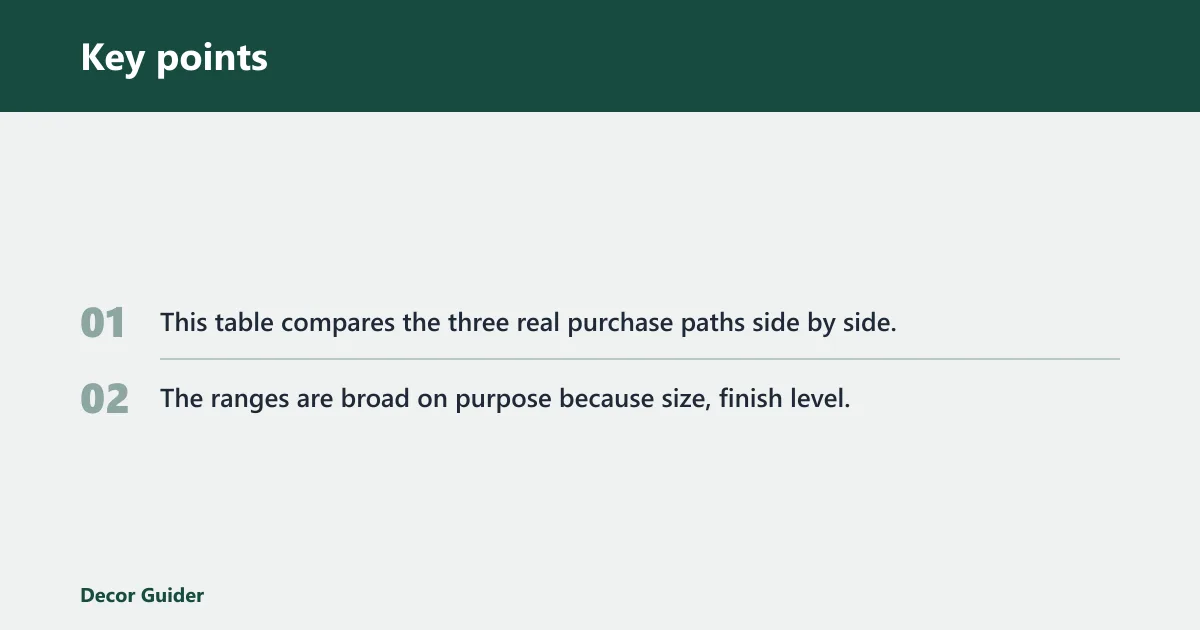
This table compares the three real purchase paths side by side. The ranges are broad on purpose because size, finish level, and labor can move the total fast.
| Purchase path | Typical size band | Low estimate | Mid estimate | High estimate | Assembly labor range | Delivery range | Anchoring cost | Paint/trim allowance | Sample all-in total | Key cost drivers | Hidden add-ons to budget for |
|---|---|---|---|---|---|---|---|---|---|---|---|
| Ready-made flat-pack cubby bookshelf | About 24 to 72 in wide; usually 3 to 12 cubbies | $60 | $180 | $400 | $34 to $100+ if assembled by a pro, depending on item size and market | $0 to $120+ | $15 to $50 for basic anti-tip hardware, more if wall type needs special anchors | $0 to $75 if touch-up is needed | About $125 to $620 all-in for a small to medium unit after assembly, delivery, and anchoring | Size, number of cubbies, material, finish, whether it ships flat-packed or assembled | Delivery, furniture assembly, anchoring hardware, wall repair after anchoring |
| DIY cubby bookshelf build | About 24 to 84 in wide; usually 3 to 12 cubbies | $80 | $165 | $300 | $0 if self-built; if hiring help, labor often lands in the same assembly range as other furniture | $0 to $80 for lumber and sheet goods delivery | $15 to $50 for anti-tip hardware | $25 to $125 for paint, stain, primer, and trim | About $120 to $525 all-in, and more if new tools are needed | Plywood or solid stock choice, cut list, joinery, paint or stain, tool purchases | Paint, fasteners, saw blades, clamps, sandpaper, anchoring hardware, touch-up supplies |
| Custom built-in cubby bookshelf | About 6 to 12+ linear feet; often wall-to-wall or floor-to-ceiling | $800 | $1,800 | $3,500+ | Included in carpentry total, but labor rises with fit work and finish detail | $0 to $250+ | $50 to $200+ if the project includes secure fastening or wall-specific hardware | $150 to $600+ for paint, trim, and finish work | About $1,050 to $4,550+ all-in once trim, paint, and site work are included | Linear footage, carpentry labor, materials, trim detail, finish quality, site conditions | Design time, demo, trim, paint, delivery of materials, wall repair, electrical or baseboard changes |
What a cubby bookshelf
A cubby bookshelf is a shelving unit with open cubby compartments for books, bins, toys, or display items. It works well when you want storage and display in one piece, and it fits especially well in kids’ rooms, living rooms, and shared family spaces.
Open cubby compartments
The open layout is the point. Instead of a closed cabinet front, you get visible compartments that make it easy to sort books, baskets, and decor. That open format is also why finish quality matters; every edge and panel stays visible.
Common room uses
In living rooms, cubby bookshelves often hold books, framed pieces, and baskets. In kids’ rooms, they can keep books or toys organized, which is why practical storage systems are popular for family spaces. Lower units are easier for children to reach and safer in tight spaces.
Why dimensions change price
More height, more width, or more cubbies means more material and more labor. A compact shelf unit may be inexpensive, while a wide wall-filling case or a tall bookcase with many parts costs more to buy, build, move, and anchor.
How much does a cubby bookshelf cost to buy?
For a ready-made unit, most shoppers land in the $60 to $400 range before assembly and delivery. Entry-level flat-pack cubby bookshelves sit at the low end, while larger, better-finished, or preassembled versions move up fast. The main price jump comes from size, number of compartments, and finish quality.
Entry-level ready-made units
Basic flat-pack shelving is the cheapest path. These units are designed to ship efficiently and are usually the first stop for renters or anyone furnishing a room on a tight budget. A smaller cubby shelf can do the job if you only need light storage and display.
Midrange storage units
Midrange ready-made shelves usually add more cubbies, stronger-looking finish options, or a larger footprint. That is where many buyers land when they want a piece that looks more finished in a living room or playroom without paying custom pricing.
What changes the price
Material choice matters. Particleboard, engineered wood, veneer, and solid wood do not cost the same, and a better finish usually adds cost too. If the unit arrives assembled instead of flat-packed, the purchase price can rise because the seller has already absorbed more labor and handling.
How much does a cubby bookshelf cost to assemble?
Furniture assembly labor often starts at about $34 per hour, and marketplace estimates for common shelving work typically land around $50 to $80 for a single item, with larger or more complex pieces moving higher. The final bill depends on part count, access, and whether the installer also has to anchor the unit to the wall.
Furniture assembly labor rates
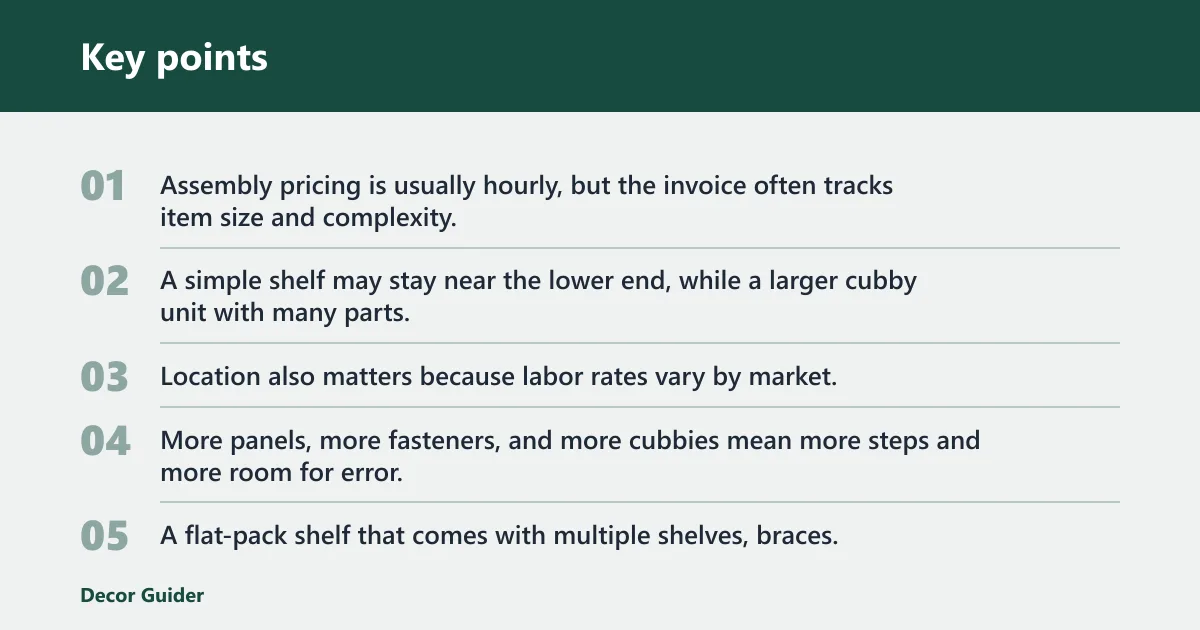
Assembly pricing is usually hourly, but the invoice often tracks item size and complexity. A simple shelf may stay near the lower end, while a larger cubby unit with many parts, doors, or drawers takes longer and costs more. Location also matters because labor rates vary by market.
What affects assembly time
Number of parts is a big one. More panels, more fasteners, and more cubbies mean more steps and more room for error. A flat-pack shelf that comes with multiple shelves, braces, and hardware bags can take much longer than a simple two-section unit.
When anchoring adds labor
Anchoring adds time when the unit is tall, top-heavy, or placed in a room with children. Wall type also matters because drywall, plaster, and masonry need different hardware. A common first-timer mistake is paying for assembly but skipping the anti-tip step, then calling back later for a second visit.
Picture a 72-inch cubby shelf in a child’s bedroom. If the unit arrives flat-packed and needs wall anchoring, the assembly bill can be closer to a medium item than a quick one-piece setup, because the installer has to assemble, position, and secure it before leaving.
How packed size affects delivery and labor
Flat-packed furniture is easier to move through stairs and narrow halls. A 5-shelf bookcase can arrive in a carton roughly 73 x 18 x 7 in and weigh nearly 100 lb packed, which helps explain why delivery and handling can add cost even when the shelf itself is not custom-made.
How much do built-in cubby bookshelves cost?
Built-in cubby bookshelves often start around $800 for a small, basic project and can move into the low thousands once carpentry, trim, and paint are included. A simple linear-foot estimate can help, but you need a full project total to see the real bill after labor, materials, and finish work.
Per-linear-foot pricing
For planning, it helps to think in linear feet. A short wall run costs less than a full room wall because the carpenter spends less time cutting, fitting, and finishing. The useful number is the converted project total, not the raw per-foot quote alone.
For example, if a built-in is quoted at about $250 per linear foot and the run is 8 linear feet, the base project comes to about $2,000 before trim, paint, or wall repair. That is why per-foot pricing is only a starting point.
Materials and carpentry labor
Materials and labor drive the built-in total together. Plywood grade, face frames, shelf thickness, and site fit all matter. If the wall is uneven or the room has baseboards to work around, carpentry time rises and so does the final invoice.
Finish level and trim
Finish level can move a built-in from plain storage to a finished architectural piece. Paint, crown, base trim, and filler work all cost money. The more the shelf has to look integrated with the room, the more you should budget above the bare carpentry price.
Cost factors that move the total
Three things move the total most often: size, material, and labor. After that come delivery, anchoring, and wall repair. Those extras are easy to miss on a quick quote, but they are part of the real cost when the shelf is large or the room needs careful installation.
Size and shelf count
More shelves and more cubbies mean more material and more labor. A 3-cube unit is not priced like a wall-length 12-cube system. The same logic applies to built-ins, where more linear footage usually means a larger invoice.
Material choice
Ready-made units are often cheaper because manufacturers can spread material and labor across many units. DIY builders can save money if they choose modest materials and keep the design simple. Custom work costs more when the finish must look clean from every angle. If you are comparing wood options, start with the solid wood premium against engineered panels, then decide whether the look justifies the jump.
Delivery, anchoring, and wall repair
Delivery matters when the unit is bulky or heavy. Anchoring matters for tall or top-heavy shelves and for child safety. Wall repair can follow if anchors leave marks or if an existing wall needs patching after removal. These are small line items individually, but they add up fast.
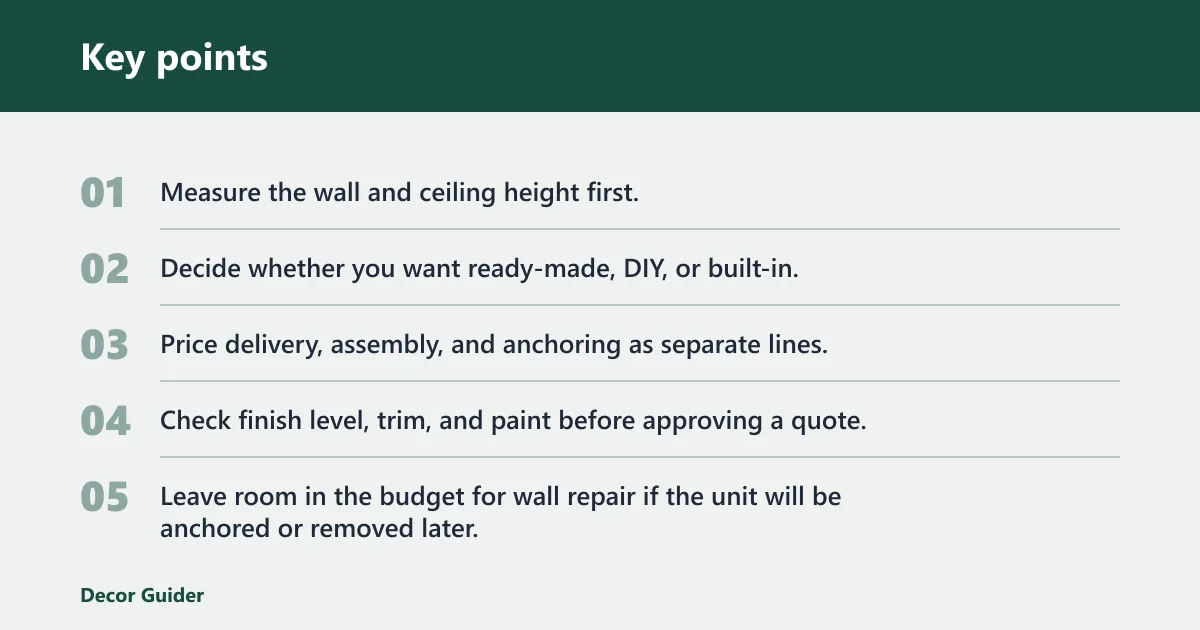
- Measure the wall and ceiling height first.
- Decide whether you want ready-made, DIY, or built-in.
- Price delivery, assembly, and anchoring as separate lines.
- Check finish level, trim, and paint before approving a quote.
- Leave room in the budget for wall repair if the unit will be anchored or removed later.
Suppose you are choosing between a $180 flat-pack unit and a $1,900 built-in for a playroom. The shelf itself is only part of the decision; if the built-in needs trim and paint, the gap between the two options gets wider once labor is added. DIY can look cheaper too, but once tool purchases are added, a one-time build can end up costing more than a budget ready-made unit.
Is a cubby bookshelf good for kids’ rooms?
Yes, a cubby bookshelf can be a strong fit for kids’ rooms because the open compartments make books and toys easy to sort. It also works best when the unit is low enough to reach safely and anchored to the wall if it is tall or tip-prone.
Safety and anti-tip hardware
Anchoring hardware matters for stability. Tall units should be secured, especially in children’s rooms, where climbing can turn a shelf into a hazard. The right hardware depends on the wall type, so check the manufacturer’s listing for your model and match the anchor to the wall surface.
Storage and display tradeoffs
Open cubbies are convenient because they keep everyday items visible. That is useful for books and toys, but it also means clutter shows quickly. Baskets can help, and they are often cheaper than adding doors or drawers to a custom piece.
When a lower unit makes sense
A lower unit usually makes more sense when the goal is child access and simple cleaning. It can also reduce anchoring complexity. If the room is small, a shorter shelf gives storage without taking over the wall or raising the cost into custom territory.
Frequently asked questions
How much does a bookshelf cost?
A basic bookshelf can be inexpensive, but the total changes with size, material, and assembly. For cubby styles, ready-made units often start around $60, while custom built-ins start much higher because they include carpentry, fit work, and finish. Delivery and anchoring can change the final total.
How much is a bookshelf?
That depends on buying, building, or installing it. A ready-made cubby shelf is usually the least expensive path, a DIY build sits in the middle, and a custom built-in costs the most. The more compartments and finish detail you want, the higher the bill climbs.
How much do built in bookshelves cost?
Built-in bookshelves usually start around $800 for a small project and can move past $3,500 once materials, carpentry labor, trim, and paint are included. If the run is long or the room needs wall repair, the total can rise again. Linear-foot quotes should always be converted into project totals.
How much should built in bookshelves cost?
A fair built-in price depends on length, finish, and room conditions. A simple built-in with basic trim should cost far less than a wall-length piece with paint, filler, and custom details. Ask for a breakdown of materials, labor, trim, paint, and any wall prep before you agree.
Custom bookshelves cost vs ready-made
Ready-made cubby bookshelves usually cost far less than custom work because they are mass-produced and easier to ship. Custom bookshelves cost more, but they fit the room, wall, and storage need more closely. If budget matters most, compare a flat-pack unit first before paying for custom carpentry.
What affects the price of a cubby bookshelf?
Size is the biggest factor, followed by material, number of cubbies, and finish quality. Delivery, assembly, anchoring, trim, and wall repair can also change the total. Location affects labor rates too, so a quote in one city may not match another city for the same shelf.
Products related to this article
Sponsored / affiliate links. As an Amazon Associate I earn from qualifying purchases. I may earn additional commission from eligible campaigns.