How To Secure A Bookshelf To Wall
Bookshelves are more than just functional pieces of furniture, they showcase your personality, store your favorite reads, and often hold cherished keepsakes. Yet, without proper securing, a tall or heavily-loaded bookshelf can pose a serious risk of tipping over, especially in households with children, pets, or in earthquake-prone areas.

Booda Brand
Furniture Anchors 10 Pack, Anti-Tip Earthquake Straps…
- Peace Of Mind With Furniture Wall Anchors: This metal furniture straps are designed to withstand earthquakes,windstorms and also b…
- Widely Application To Anchor Different Furniture: The anti-tip furniture straps includes all hardware including screws, adjustable…
- Anti Tip Straps With High Bearing Capacity: The furniture wall straps are made of sturdy metal which has the features of impact re…
As an Amazon Associate I earn from qualifying purchases.
Each year, thousands of injuries are attributed to unsecured furniture, highlighting the critical importance of anchoring bookshelves to the wall for both safety and peace of mind.
Understanding how to secure a bookshelf to a wall is an essential home improvement skill. The process might seem intimidating, but with the right guidance, tools, and materials, even beginners can confidently complete the task. This comprehensive guide will walk you through the methods, tools, and best practices, offering professional insights, real-world examples, and practical tips to ensure your bookshelf remains stable and your household stays safe.
Key Takeaways
- Securing a bookshelf to the wall is essential for preventing tip-overs, especially in homes with children, pets, or seismic activity.
- Preparation and choosing the right anchoring method are crucial for stability and safety; options include anti-tip straps, brackets, or custom solutions.
- Identifying wall type (drywall, plaster, concrete) determines the best hardware and installation technique.
- Routine safety checks and maintenance ensure long-term security and effectiveness of the anchoring system.
- Professional installation may be warranted for large or valuable shelving units, or when wall conditions are uncertain.

Credit: www.wikihow.com
Why Securing Bookshelves Is Non-negotiable
Unsecured bookshelves present dangers that are often underestimated. According to the U. S. Consumer Product Safety Commission, more than 18,000 people are treated annually for injuries related to falling furniture, with children under six being particularly vulnerable. The risk is not just theoretical, tragic accidents occur every year, prompting safety campaigns and legislative changes in some areas.
Common Scenarios Where Bookshelves Tip Over
Bookshelves are most at risk of tipping when:
- Children climb or pull on shelves
- Heavy items are placed unevenly or on upper shelves
- Earthquakes or vibrations occur
- Pets jump on or bump the furniture
- Bookshelves are placed on uneven flooring
Real-world Example: A Close Call
In one reported case, a family in California narrowly avoided injury when their unsecured bookshelf toppled during a minor earthquake. The event spurred them to anchor all large furniture, highlighting how a few preventive steps could avert disaster.
Safety Standards And Recommendations
Organizations like the American Academy of Pediatrics and the CPSC recommend always anchoring tall furniture to the wall. Many modern furniture manufacturers now include anti-tip hardware with their products, but studies show that fewer than half of consumers actually install them.
Proper anchoring is a simple yet critical safeguard.

Credit: www.youtube.com
Choosing The Right Anchoring Method
Selecting the best way to secure your bookshelf involves understanding your wall type, the bookshelf’s design, and your household needs. There is no one-size-fits-all solution, each method has unique strengths and limitations.
Types Of Wall Anchors
| Anchor Type | Best For | Strength | Typical Use Case |
|---|---|---|---|
| Anti-tip straps | Drywall, plaster, concrete | Moderate to high | Homes with children/pets |
| Metal L-brackets | Drywall, studs, masonry | High | Heavy/large bookshelves |
| Furniture tipping kits | Most wall types | Moderate | Light to medium units |
| Custom solutions (e.g., French cleat) | Stud/masonry | Very high | Professional/large units |
Anti-tip Straps
Anti-tip straps are flexible, often nylon or metal, and attach the bookshelf to the wall. They allow some movement but prevent a full tip-over. Straps are ideal for renters, as they can be less invasive and are relatively easy to remove.
Metal L-brackets
Metal L-brackets provide a rigid, highly secure connection. They are best for heavy or tall bookshelves, offering maximum strength when screwed directly into wall studs. This method is common in libraries and commercial settings.
Furniture Tipping Kits
Furniture tipping kits combine straps, brackets, and screws, offering a convenient all-in-one solution for typical home use. Kits often include hardware for different wall types and clear instructions.
Custom Solutions
Custom anchoring solutions like French cleats or heavy-duty anchors are sometimes necessary for unique wall materials, unusually shaped shelves, or professional installations. They may require advanced tools and skills.
Comparing Anchoring Methods
| Method | Installation Difficulty | Removability | Cost |
|---|---|---|---|
| Anti-tip straps | Easy | High | Low |
| L-brackets | Moderate | Moderate | Low to medium |
| Tipping kits | Easy | High | Low to medium |
| Custom solutions | Advanced | Low | High |
Preparing For Installation
Proper preparation is key to a secure and lasting installation. Rushing through this phase can lead to ineffective anchoring or wall damage.
Assessing Your Bookshelf
- Size and weight: Heavier, taller units need stronger anchors.
- Back panel construction: Solid backs are easier to anchor than open or thin backs.
- Material: Particleboard and MDF require careful drilling to avoid cracking.
Identifying Wall Type
Walls typically fall into three categories:
- Drywall (gypsum board): Most common; anchors must hit studs for best security.
- Plaster: Older homes; more brittle, may need specialized anchors.
- Concrete/masonry: Requires masonry bits and anchors.
Tools And Materials Checklist
- Stud finder
- Drill and appropriate bits
- Screwdriver
- Level
- Tape measure
- Anchoring hardware (straps, brackets, kits)
- Pencil for marking
Having all materials on hand ensures a smooth process. For more tips on prepping for DIY projects, check out Choosing the right canning jar makes preserving food easier.
Safety Considerations
- Clear the area: Remove items from shelves to prevent accidents.
- Wear safety glasses: Protect eyes when drilling.
- Check for wires/pipes: Use a stud finder with wire detection to avoid hazards.

Credit: www.wikihow.com
Step-by-step Guide: Securing Your Bookshelf
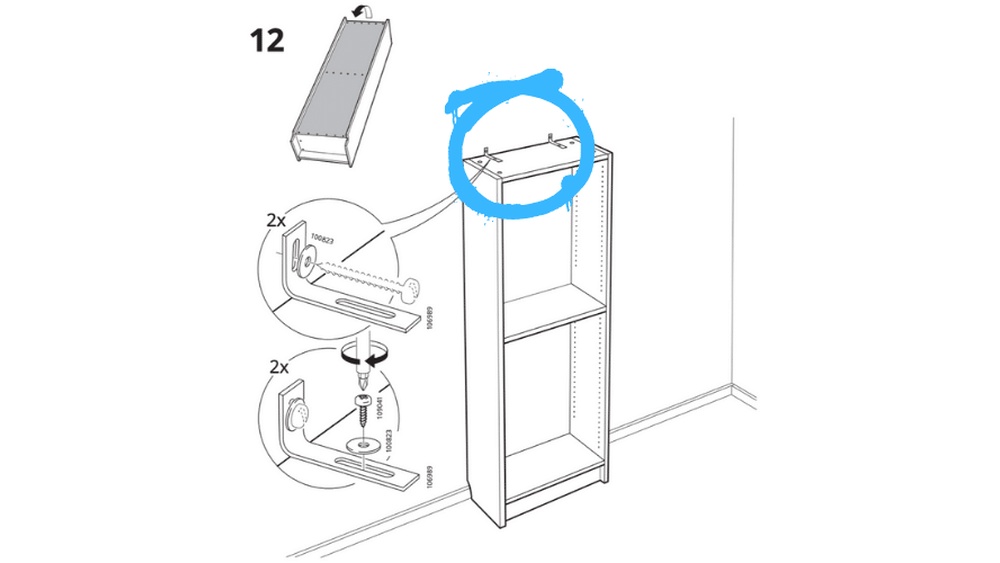
This section provides a detailed, practical walkthrough for anchoring a bookshelf to the wall, using both anti-tip straps and L-brackets.
Step 1: Locate Wall Studs
- Use a stud finder to identify studs behind the wall.
- Mark stud locations at the desired bookshelf height.
- If no stud is available, use heavy-duty wall anchors appropriate for your wall type.
Step 2: Prepare The Bookshelf
- Move the bookshelf away from the wall.
- Remove all books and items to lighten the load and prevent damage.
- If possible, pre-drill small holes in the top-back of the bookshelf for easier anchor installation.
Step 3: Attach Anchors To Bookshelf
Anti-tip Straps
- Secure the strap brackets to the upper back edge of the bookshelf with provided screws.
- For units with thin or hollow backs, use toggle bolts or reinforce with a wooden block.
L-brackets
- Position the bracket at the top back corner of the shelf.
- Mark and pre-drill holes for screws.
Step 4: Secure Anchors To Wall
- Align the bookshelf with the wall, matching anchor points with your stud marks.
- Use a level to ensure the bookshelf is upright.
- Drill pilot holes into the studs or use wall anchors.
- Attach the wall side of the straps or brackets with the appropriate screws.
Step 5: Connect And Test
- For straps, connect and tighten according to instructions.
- For brackets, screw tightly and check for any wobble.
- Carefully push on the bookshelf to ensure it does not tip or shift.
Step 6: Restore And Inspect
- Return items to the shelf, placing heaviest items on lower shelves.
- Inspect anchors for movement or stress.
- Recheck after one week and then quarterly.
Example: First-time Diy Installation
When I first installed anti-tip straps in my apartment, I was surprised by how quickly the process went once I had the right tools and hardware. The peace of mind was immediate, especially after seeing my curious cat attempt (and fail) to jump onto the shelf.
Pro Tip:
Always anchor bookshelves into wall studs for the strongest hold. If studs aren’t available, use toggle bolts rated for at least 100 lbs.
Special Considerations For Wall And Bookshelf Materials
Not all walls or bookshelves are created equal. The method and hardware you choose must match the construction material for both safety and durability.
Securing To Drywall
- Studs: Use screws at least 2 inches long, driven directly into wood studs.
- No Studs: Heavy-duty toggle bolts or molly bolts are required.
- Avoid plastic expansion anchors for heavy units, they may pull out under stress.
Securing To Plaster Walls
- Drill slowly to avoid cracking.
- Use anchors designed for brittle materials, such as zinc-plated toggle bolts.
- Consider reinforcing the anchoring point with a wood block behind the plaster if possible.
Securing To Concrete Or Masonry
- Use a masonry drill bit and hammer drill.
- Install heavy-duty concrete anchors or shield anchors.
- For best results, pre-drill holes and clean out dust before installing anchors.
Bookshelf Material Matters
- Solid wood: Handles screws and anchors well.
- Particleboard/MDF: Pre-drill holes to avoid splitting; use anchors designed for composite materials.
- Metal shelves: Use self-tapping screws or appropriate hardware.
Case Study: Anchoring In An Older Home
In a 1920s house with plaster walls, a homeowner found that standard drywall anchors failed to hold a loaded bookshelf. Switching to toggle bolts and drilling carefully prevented wall damage and provided a secure hold.
Best Practices For Bookshelf Placement And Loading
Even the best anchoring system can be undermined by poor placement or improper loading. Strategic decisions on where and how you use your bookshelf will optimize safety.
Ideal Placement
- Place bookshelves on level flooring away from high-traffic areas.
- Avoid positioning near doors, windows, or in areas prone to moisture.
- For earthquake zones, keep bookshelves away from beds or seating areas.
Safe Loading Techniques
- Store heaviest items on bottom shelves to lower the center of gravity.
- Distribute weight evenly from left to right and front to back.
- Avoid overloading upper shelves with heavy objects.
Regular Safety Checks
- Inspect anchors and wall connections every 3-6 months.
- Tighten screws and replace worn hardware as needed.
- Check for any new wall cracks or movement.
Example: Family Room Safety Upgrade
A family with young children rearranged their living room to place all bookshelves against walls with accessible studs. By anchoring each unit and placing toys on the bottom shelves, they eliminated tipping risks and created a safer play environment.
Comparison Table: Bookshelf Safety By Loading Method
| Loading Method | Stability | Tip-Over Risk | Recommended? |
|---|---|---|---|
| Heavy items on top shelves | Poor | High | No |
| Evenly distributed weight | Good | Low | Yes |
| Heaviest items on bottom | Excellent | Very low | Best |
Advanced Techniques And Professional Solutions
For unique situations, such as antique bookshelves, commercial installations, or high-value collections, standard DIY anchoring methods may not suffice. Advanced approaches or professional help can provide additional security and preserve the integrity of both furniture and walls.
French Cleats And Custom Bracing
French cleats involve interlocking angled wood strips, one attached to the wall and one to the bookshelf. This method distributes weight evenly and allows for easy removal if needed. Custom bracing, such as steel cable systems, can be designed for oversized or irregular units.
Earthquake-resistant Hardware
In seismic regions, specialized anchors and flexible bracing systems, like those recommended by the Federal Emergency Management Agency, offer added protection. These systems allow for controlled movement without detachment.
Hiring A Professional Installer
If your bookshelf is particularly large, valuable, or you lack confidence in your DIY skills, consider hiring a licensed contractor or handyman. Professional installation ensures compliance with local building codes and maximizes safety.
Example: Library Installation
A public library in Seattle retrofitted all tall shelving units with industrial-grade L-brackets anchored into concrete walls, following a professional assessment. The upgrade met stringent safety standards and protected both visitors and collections during minor seismic activity.
When To Upgrade Your Anchoring System
- If you move to a new home with different wall types
- After significant renovations or earthquakes
- When adding significantly more weight to the bookshelf
For more on choosing preservation methods for household items, see vacuum sealing vs canning.
Maintenance, Troubleshooting, And Common Mistakes
Securing your bookshelf is not a one-time task. Ongoing maintenance and awareness of common pitfalls will keep your home safer in the long run.
Maintenance Checklist
- Inspect anchor points every 3-6 months for loosening or damage
- Re-tighten screws and replace worn straps or brackets as necessary
- Examine the wall for new cracks or signs of anchor pull-out
- After moving furniture, always re-anchor as soon as possible
Troubleshooting Tips
- Anchor won’t hold: Upgrade to a stronger anchor or move to a stud location.
- Wall damage: Patch with spackle and re-anchor using larger or more robust hardware.
- Shelf wobbles: Check for uneven flooring or loose connections.
Common Mistakes To Avoid
- Failing to anchor into wall studs where possible
- Using inadequate hardware for the bookshelf’s weight
- Ignoring the wall type and using the wrong anchors
- Overloading upper shelves or placing heavy items unevenly
- Forgetting to check anchors after moving or adding weight
Example: Learning From Experience
In my experience, skipping the step of checking for wall studs led to a failed installation on my first attempt. The anchors eventually pulled out, and I had to redo the job, reinforcing the lesson that preparation is everything.
Frequently Asked Questions
How Do I Secure A Bookshelf If I’m Renting And Can’t Drill Holes?
If you’re unable to make permanent modifications, consider using removable adhesive wall anchors rated for heavy loads. Some anti-tip straps are designed for rental use and can be removed with minimal wall repair. Alternatively, wedge the bookshelf tightly between existing furniture or within a closet for extra stability, though this is not as secure as wall anchoring.
Can I Use Command Strips Or Adhesive Hooks To Anchor A Bookshelf?
Command strips and basic adhesive hooks are not recommended for anchoring bookshelves, especially tall or heavy units. They lack the holding power necessary to prevent tip-overs and may fail under sudden force. Always use hardware rated for the bookshelf’s weight and intended for anchoring furniture.
What Should I Do If My Wall Has Metal Studs?
For walls with metal studs, use self-drilling metal stud anchors or toggle bolts specifically designed for use with metal framing. Avoid standard wood screws, as they won’t provide a secure hold in metal. If in doubt, consult a hardware specialist or contractor.
How Often Should I Check The Stability Of My Anchored Bookshelf?
It’s best to check the stability every 3-6 months, or after any event that could affect the bookshelf or wall (such as earthquakes, moving, or renovations). Look for loose screws, worn straps, or signs of wall damage. Regular inspections help catch issues before they become hazards.
Are There Building Codes Or Regulations About Securing Bookshelves?
While residential building codes rarely mandate bookshelf anchoring, some regions (especially earthquake zones) have guidelines for securing furniture in public or commercial spaces. Always follow manufacturer instructions, and check local ordinances if you live in an area with specific safety requirements. For valuable collections or public areas, consulting with a licensed contractor is advisable.
Securing your bookshelf to the wall is a simple but profoundly important step in creating a safe and stable home environment. With the right method, tools, and attention to detail, you’ll protect your loved ones and possessions, giving you confidence every time you walk by your sturdy, anchored shelves.
Related pick: Check today's price on Amazon
Products related to this article
Sponsored / affiliate links. As an Amazon Associate I earn from qualifying purchases. I may earn additional commission from eligible campaigns.
 APWOJY No Drill Furniture Anchors (4 Pack), Anti-Tip Adhesive Wall Anchors for Baby Proofing, Heavy Duty Furniture Straps for Securing Dresser, Bookshelf, Cabinet (Home Safety Kit)
 Large Picture Hanging Strips Heavy Duty, 32-Pairs(64 Strips) Sticky Picture Hangers for Walls No Damage Wall Picture Hangers Without Nails Refill Adhesive Poster Strips