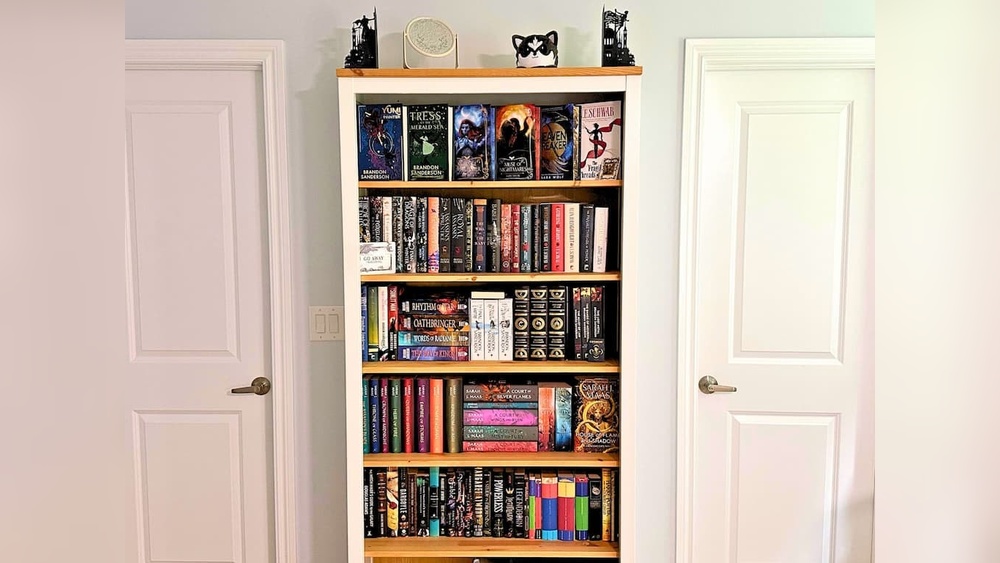
How To Organize A Bookcase
Organizing a bookcase is more than just stacking books on shelves, it’s about creating order, maximizing space, and expressing personality. A well-organized bookcase can transform a room, make your collection accessible, and showcase your interests. Whether you’re an avid reader with hundreds of volumes or someone who enjoys displaying a mix of books and décor, a thoughtfully arranged bookcase brings both functionality and style to your space.
For many, bookcases become a catchall for random objects, paperwork, and neglected novels. Over time, this leads to clutter and frustration. But with a strategic approach, you can turn your bookcase into a focal point that’s both beautiful and practical.
This guide walks you through every step of organizing a bookcase, from decluttering to styling, using proven methods and expert tips. Whether you’re working with a single shelf or an entire wall, you’ll discover solutions suited to your collection, preferences, and space.
Key Takeaways
- Assess your collection before you organize, donating or relocating books you no longer need.
- Choose an organizing system (by genre, color, author, etc.) That matches your habits and visual preferences.
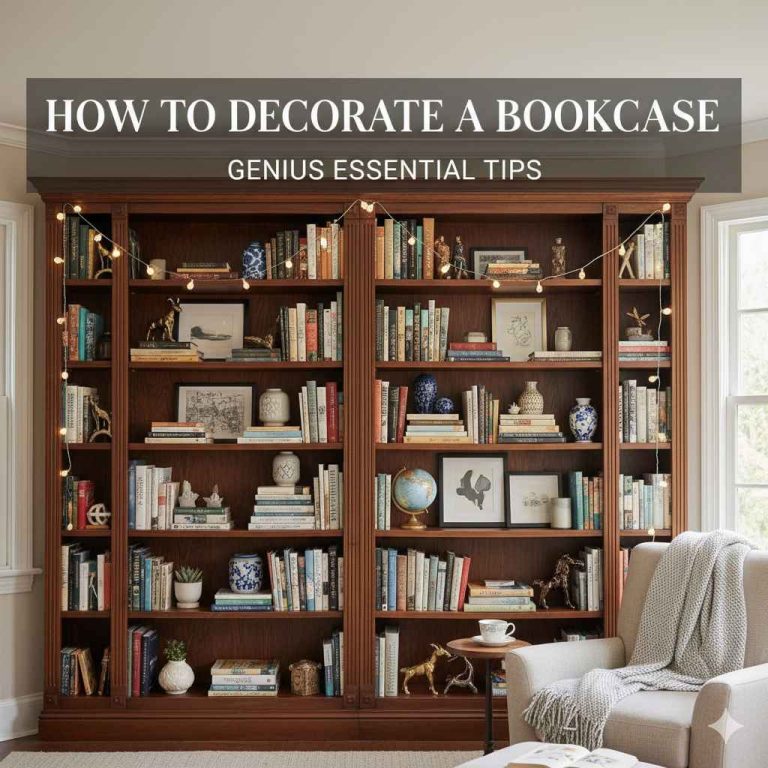
- Combine books and décor for a balanced, visually appealing bookcase.
- Use vertical and horizontal space with creative stacking, shelf dividers, and adjustable shelving.
- Maintain your organization with periodic reviews and a simple cleaning routine.

Credit: thebookcasebeauty.com
Step 1: Assess And Declutter Your Collection
Before diving into arranging books, start with a clear-eyed assessment of what you own. This step lays the foundation for a functional and attractive bookcase.
Gather And Sort Everything
Take all the books and items off your bookcase. Spread them out on a large surface, such as the floor or a dining table. Seeing your full collection at once helps you make informed decisions.
- Group books by broad categories (fiction, non-fiction, reference, cookbooks).
- Sort non-book items like photos, mementos, or decorative objects separately.
Evaluate Each Item
Ask yourself key questions:
- Have I read this book? Will I read it again?
- Does this book hold sentimental or reference value?
- Is this item adding beauty or clutter?
Keep only the items you truly value or use. In my experience, most people can reduce their collections by 10-30% without regret.
Donate, Sell, Or Relocate
- Donate gently used books to local libraries, schools, or charities.
- Sell valuable editions online or at used bookstores.
- Relocate items that belong elsewhere, such as paperwork or unrelated gadgets.
Pro Tip: If you’re unsure about a book, set it aside in a “maybe” box. Revisit these after finishing the main organization process.
Clean The Bookcase
Wipe down shelves with a damp cloth and dry thoroughly. Vacuum corners to remove dust. Consider this your “fresh start. ”

Credit: www.neathousesweethome.com
Step 2: Choose Your Organizational System
Selecting an organizing principle makes your bookcase both intuitive and visually cohesive. The right system depends on your habits and goals.
Organizing By Genre Or Category
This classic approach is ideal for avid readers and researchers.
- Arrange fiction and non-fiction separately.
- Subdivide by genre (mystery, fantasy, biography, etc. ).
- Place most-used categories at eye level.
Alphabetical Order
Perfect for large collections or shared bookcases.
- Sort by author’s last name or book title.
- Use bookends or shelf labels for easy navigation.
Organizing By Color
For those who prioritize aesthetics, arranging books by color creates a striking, artistic display.
- Group books into color blocks (red, blue, yellow, etc. ).
- Works best with hardcover books or dust jackets for uniformity.
Chronological Or Series Order
Ideal for collectors of series, history buffs, or those who track reading habits.
- Arrange by publication year or order in a series.
- Use shelf dividers or labels for clarity.
Size Or Format
When shelf height varies, organizing by size maximizes space.
- Group tall art books or magazines together.
- Stack small paperbacks horizontally.
| Organizing System | Best For | Pros | Cons |
|---|---|---|---|
| Genre/Category | Active readers, researchers | Easy to find books; intuitive | May not look visually uniform |
| Alphabetical | Large/shared collections | Efficient for searching | Less decorative; time-consuming setup |
| Color | Design-focused displays | Striking visual impact | Harder to locate specific books |
| Chronological/Series | Collectors, historians | Great for series and tracking | Can disrupt visual balance |
| Size/Format | Mixed-format collections | Makes the most of space | May separate related books |
Combining Systems
You can mix methods, such as organizing by genre, then by color within each genre, to achieve both function and style.
Step 3: Plan Your Shelf Layout
A well-planned layout makes your bookcase efficient and stylish. The key is balancing accessibility with visual appeal.
Map Out Shelf Space
- Measure shelf heights and consider adjustable shelves for flexibility.
- Allocate prime space (eye level) to your favorite or most-used books.
- Reserve higher or lower shelves for less-used items.
Vertical And Horizontal Stacking
Alternate vertical rows with horizontal stacks to break up monotony and fit more books.
- Vertical rows create classic library lines.
- Horizontal stacks can double as platforms for decorative objects.
Include Non-book Items
Add personal touches with:
- Framed photos
- Art objects
- Plants (such as succulents)
- Decorative bookends
Pro Tip: Use the “rule of thirds”, leave one-third of each shelf for décor or empty space to avoid overcrowding.
Shelf Dividers And Containers
- Use shelf dividers to prevent books from toppling.
- Incorporate baskets or boxes for magazines or loose items.
Example: Family Bookcase Transformation
A family with a mix of children’s books, cookbooks, and novels used adjustable shelves to keep kids’ books accessible, cookbooks near the kitchen, and novels at adult eye level. Baskets held library books and small toys, reducing daily clutter.

Credit: themillions.com
Step 4: Arrange And Style Your Bookcase
With a plan in place, it’s time to arrange books and décor for both function and beauty.
Start With The Largest Items
Place the tallest books or items first, often on the ends or bottom shelves. This establishes structure.
Fill In By Category Or Color
Follow your chosen organizational system, working from largest to smallest.
- Stand books upright for easy access.
- Stack horizontally where shelf height exceeds book height.
Balance Books And Décor
- Vary book and object placement from shelf to shelf.
- Avoid crowding by leaving some negative space.
- Place decorative items in front of books you rarely use.
Layering And Depth
- Layer small objects in front of vertically stacked books.
- Use art prints or framed photos as backdrops behind books.
Maintain Accessibility
- Keep most-used books at arm’s reach.
- Store valuable or fragile items on higher shelves.
| Styling Technique | Visual Impact | Best Use Case |
|---|---|---|
| Vertical/Horizontal Alternation | Breaks monotony, adds interest | Large or diverse collections |
| Rule of Thirds | Creates balance, avoids clutter | Mixed books and décor |
| Layering Objects | Adds depth and dimension | Showcasing art or collections |
| Color Blocking | Bold, modern look | Design-centric spaces |
Example: Minimalist Living Room Bookcase
A minimalist used white bookends, monochrome décor, and horizontal stacks to highlight select art books. A single plant and a framed photo added warmth without clutter.
Step 5: Optimize For Space And Growth
A bookcase should adapt as your collection evolves. Smart space management prevents future clutter.
Adjust Shelving
Many bookcases offer adjustable shelves. Move shelves up or down to:
- Fit oversized books upright
- Create more (or fewer) rows as needed
- Allow for decorative objects or storage baskets
Double-rowing: When And How
- Double-rowing (placing one row of books behind another) is a last resort for small spaces.
- Use for seldom-read books at the back, with most-used titles in front.
- Label hidden rows or keep a digital inventory for reference.
Use Bookcase Tops And Bottoms
- Store baskets or boxes on top for seasonal items or overflow.
- Use lower shelves or closed cabinets for magazines, files, or children’s books.
Expand With Modular Units
- For growing collections, consider modular shelving systems that can be added to over time.
- Floating shelves above the main bookcase can also add space without cluttering the floor.
Example: Small Apartment Bookcase
In a studio apartment, a narrow bookcase with adjustable shelves and baskets on the bottom doubled as a divider and storage for both books and kitchenware. Modular cubes stacked beside the main case provided space for a growing collection.
Step 6: Maintain And Refresh Your Bookcase
Consistent upkeep keeps your bookcase organized and appealing.
Regular Cleaning
- Dust shelves and books every few weeks.
- Remove and clean decorative objects as needed.
Periodic Editing
- Review your collection every 6-12 months.
- Donate or relocate books you no longer need.
Rotate Décor Seasonally
- Swap out framed photos, art, or small plants to keep the display fresh.
- Update décor for holidays or personal milestones.
Manage New Arrivals
- Designate a spot for new books before incorporating them into the main system.
- If space is limited, follow a “one in, one out” rule.
Prevent Overcrowding
- Avoid stacking books on top of rows or stuffing shelves beyond capacity.
- Leave 10-20% of each shelf empty for flexibility.
Pro Tip: Snap a quick photo of your organized bookcase. This makes it easier to restore order after cleaning or moving items.
Step 7: Special Cases And Creative Solutions
Some book collections or spaces require tailored approaches. Here’s how to handle unique situations.
Children’s Bookcases
- Place shelves at child height for independence.
- Use baskets or bins for board books or toys.
- Rotate books regularly to keep kids interested.
Shared Or Family Bookcases
- Allocate separate shelves or sections for each person.
- Use color-coded labels or bookends for clarity.
Displaying Collectibles
- Combine books with collectibles like vinyl records, cameras, or art.
- Use stand-alone shelves or cubes within the bookcase for prized items.
Small Space Bookcases
- Opt for tall, narrow bookcases to maximize vertical space.
- Consider corner units, floating shelves, or wall-mounted racks.
- Store seldom-read books elsewhere to keep prime real estate open.
Case Study: Library-inspired Home Office
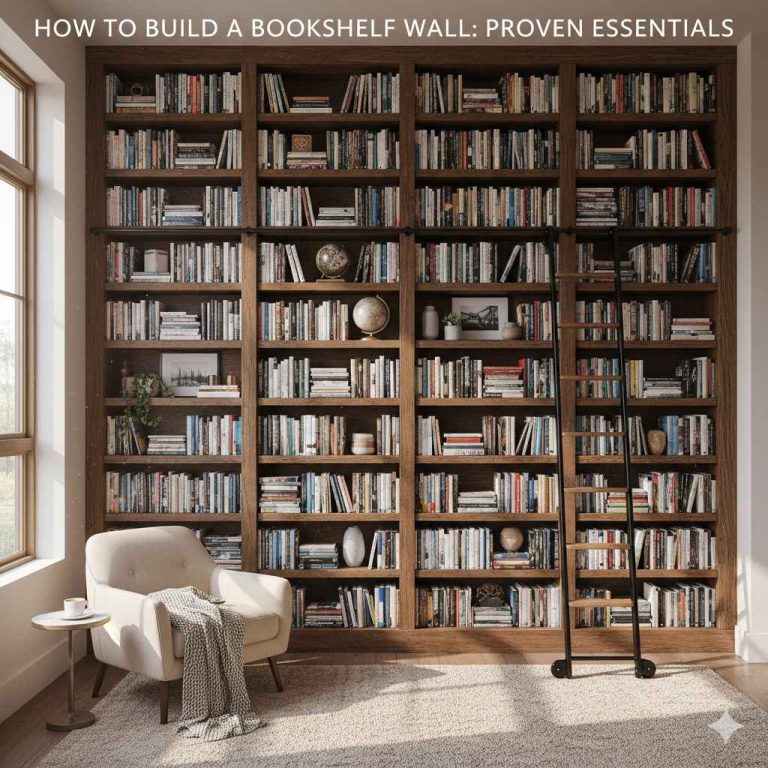
A home office with a wall-to-wall bookcase used a rolling ladder for upper shelves and labeled sections by genre and author. Decorative boxes on lower shelves held office supplies, keeping the workspace tidy and efficient.
| Bookcase Type | Best For | Key Features | Space Efficiency |
|---|---|---|---|
| Standard Bookcase | General use | Fixed or adjustable shelves | Good |
| Modular System | Growing collections | Expandable, customizable | Excellent |
| Wall-Mounted Shelves | Small spaces | Freed-up floor space | High |
| Corner Unit | Unused corners | Triangular shape | Moderate |
| Built-In Bookcase | Custom designs | Integrated with room | Varies |
Step 8: Resources And Inspiration
For more guidance and ideas, explore expert resources and community inspiration.
Books On Organization
- “The Life-Changing Magic of Tidying Up” by Marie Kondo: Offers a philosophy for decluttering and organizing any space.
- “The Home Edit” by Clea Shearer and Joanna Teplin: Focuses on stylish, accessible organization.
Online Inspiration
- Browse design blogs and platforms like Pinterest and Instagram for visuals.
- Join online forums or Facebook groups dedicated to book lovers and home organization.
Professional Help
- Hire a professional organizer for large or overwhelming projects.
- Custom carpenters can design built-in solutions for unique spaces.
External Resources
- For more design inspiration, see Architectural Digest.
- For library organization systems, visit the Library of Congress Classification Outline.
Frequently Asked Questions
How Do I Organize A Bookcase When I Have Both Books And Decorative Objects?
To organize a bookcase with a mix of books and décor, start by deciding on your main organizing system for the books (such as by genre or color). Allocate about two-thirds of each shelf to books and the remaining third to decorative items.
Place décor objects in areas with extra space, such as on top of horizontal book stacks or at the ends of shelves. Rotate décor seasonally to keep the look fresh, and avoid overcrowding by leaving some empty space.
What Should I Do With Books I Don’t Want To Display But Want To Keep?
If you have books that you want to keep but not display, consider storing them in labeled boxes or storage bins in a closet, under the bed, or on less-visible shelves (such as the bottom of your bookcase). For valuable or rarely used books, climate-controlled storage is best to prevent damage.
Catalog these books digitally for easy reference.
How Can I Organize A Bookcase In A Small Space?
For small spaces, maximize vertical storage by using tall, narrow bookcases or wall-mounted shelves. Consider modular cubes that can be stacked or rearranged as your collection grows. Use baskets or bins for small or irregularly shaped items, and store less-used books elsewhere.
Keep only your favorite or frequently read books on display to avoid crowding.
How Do I Keep My Organized Bookcase From Becoming Cluttered Again?
To maintain an organized bookcase, establish a routine for periodic editing, review your collection every few months and donate or relocate books you no longer need. Clean shelves regularly to prevent dust buildup. Designate a spot for new arrivals, and use the “one in, one out” rule if space is tight.
Taking a quick photo of your organized shelves makes it easier to restore order after cleaning or rearranging.
Are There Bookcase Organization Methods For Readers With Disabilities Or Accessibility Needs?
Yes, bookcase organization can be adapted for accessibility. Place most-used books on shelves at waist or arm height to avoid excessive bending or reaching. Use large, clear labels for easy identification, and consider audiobooks or e-books for those with visual impairments.
For wheelchair users, opt for lower shelves or adjustable units. Voice-controlled smart shelves and digital cataloging apps also increase accessibility.
A well-organized bookcase elevates both your space and your experience as a reader or collector. By assessing your collection, choosing a system that fits your needs, and balancing style with function, you create a bookcase that’s both practical and a source of daily inspiration. With regular maintenance and a willingness to adapt, your bookcase will remain a highlight of your home for years to come. For more on organizing essentials and home solutions, explore related guides like choosing the right canning jar or freeze-drying vs canning for multipurpose storage ideas.
Products related to this article
Sponsored / affiliate links. As an Amazon Associate I earn from qualifying purchases. I may earn additional commission from eligible campaigns.