Why Does My Bookshelf Sag? Fixes That Work
A bookshelf sags when its span, shelf thickness, and load exceed the board’s bending strength; if the bow shows up when the shelf is empty or lightly loaded, the fix should be structural, not cosmetic. Left alone, the shelf can keep bending, dump books, and damage the carcass joints. This guide shows how to find the weak point and choose the least invasive repair that will hold.
Why does my bookshelf sag?


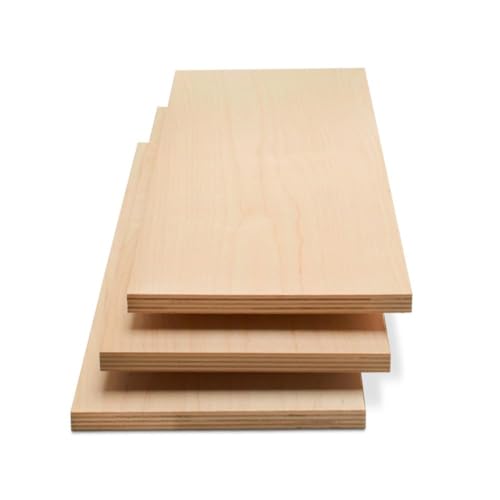
The longest unsupported span is usually the first problem. A 36-inch shelf carrying heavy hardcovers will usually flex more than a 24-inch shelf made from the same board, and thin MDF or particleboard generally bends sooner than plywood or solid wood. Load placement matters too: a stack in the center creates more bending than the same weight spread across the full width.
Look for the part that fails first, not only the visible bow. Shelf pins can crush or tilt, side panels can rack, and a rear panel can loosen enough to make the whole bookcase move out of square. Wall anchors help stop tipping, but they do not stop shelf deflection.
What you’ll need
- Tape measure, ruler, or straightedge
- Flashlight
- Level
- Square or a right-angle card
- Camera or phone for before-and-after photos
- Pencil and paper
- Screwdriver or drill for hardware checks
- Wood glue, replacement shelf pins, brackets, or a support cleat, if needed
- Anti-tip wall anchor kit for wall mounting
Bookshelf sag diagnosis worksheet

Use this table to match the shelf to the lightest fix that still makes sense. Measure the unsupported span between supports, note the actual shelf thickness, identify the material, and record the sag at the center with the shelf unloaded if possible. The span rules below are practical rule-of-thumb limits, not universal engineering limits, because load and shelf depth change capacity.
| Shelf span | Shelf thickness | Shelf material | Practical maximum span | Observed sag | Decision |
|---|---|---|---|---|---|
| 24 in / 610 mm | 3/4 in / 19 mm | Plywood | Light loads: longer span; medium loads: 24 in / 610 mm; heavy loads: shorter span | 1/32 in / 1 mm | PASS: redistribute load |
| 30 in / 760 mm | 5/8 in / 16 mm | Solid wood | Light loads: 30 in / 760 mm; medium loads: shorter span; heavy loads: shorter span | 1/16 in / 2 mm | PASS: add light support if loaded with hardcovers |
| 36 in / 915 mm | 1/2 in / 12 mm | MDF | Light loads: 36 in / 915 mm; medium loads: shorter span; heavy loads: much shorter span | 1/8 in / 3 mm | FAIL: add center support or reinforce |
| 48 in / 1219 mm | 5/8 in / 16 mm | Particleboard | Light loads: 48 in / 1219 mm only with close support; medium loads: shorter span; heavy loads: shorter span | More than 1/8 in / 3 mm or visible bow when empty | FAIL: reinforce or replace |
A common rule of thumb is: if the shelf rebounds when unloaded and sag stays under about 1/16 in, redistribute weight first. If sag is around 1/16 to 1/8 in, add support or a cleat. If sag stays visible when the shelf is empty, or the pins, side panels, or shelf edge are damaged, replacement is usually the better call. Treat those thresholds as practical triggers rather than exact engineering limits.
How do you support a sagging shelf?
Start with the least invasive fix that addresses the weak point. For a shelf that only bends under load, move the heaviest books to lower shelves and place them near the side supports, then leave the center lighter. If that does not hold, add a bracket, cleat, or rail before the bow becomes permanent.
- Remove the heavy load. Take the shelf down to a lighter load so you can see whether the bow relaxes. If it does not, the shelf may already have permanent deflection.
- Check the supports. Inspect shelf pins, adjustable holes, and any fixed shelf joints for wobble, crushing, or split material. A damaged support system can fail even when the board itself is still usable.
- Spread the weight. Put the heaviest hardcovers at the ends or on lower shelves, and keep dense stacks from sitting in one center pile. Distributed load is easier on the board than a point load.
- Add a support rail. Install a center bracket, support cleat, or anti-sag rail at the midpoint if the span is long and the shelf still flexes. Recheck after adding each support point rather than loading it all at once.
- Measure the result. Use a straightedge across the shelf and measure the gap at the center. A change of 1/16 in after reloading is worth tracking; if the gap returns quickly, the repair is not enough.
Say your 36-inch shelf holds two rows of hardcovers and dips 1/8 inch in the middle. Move six heavy books to the lower shelf, and the visible bow may stop. If the sag remains after that change, a center support is the next step.
Do you need a center support?
Long spans need help sooner than short ones. If a shelf is 36 inches or longer and made from 1/2-inch MDF, particleboard, or thin engineered wood, a center support often makes the difference between temporary flex and lasting shape. Wider shelves also need closer attention when the load sits in one heavy cluster.
Long spans and middle support
The span-to-thickness relationship matters. A thicker shelf resists deflection better, but a 3/4-inch board can still sag if the span is long and the load is heavy. For long bookcase shelves, adding support near the middle shortens the free span and lowers bending force.
Bracket, cleat, or rail
Use a small metal bracket when the shelf and side panel are both sound and you only need a modest boost. Choose a support cleat or anti-sag rail when the shelf is long, the load is heavy, or the board is already showing some permanent bow. A rail spreads force better than a single point support.
- Find the midpoint. Mark the center of the shelf span and the corresponding point on the bookcase frame. Keep the support centered unless the load is clearly off to one side.
- Confirm stud location. If you are anchoring the bookcase to the wall, locate a stud and fasten the anti-tip hardware there. Wall anchoring stops tipping, but it does not replace shelf support.
- Install one support. Add one bracket, cleat, or rail, then reload the shelf and check sag again. If the shelf still bows more than 1/16 in, add a second support rather than compressing the board farther.
- Retest under load. Put the books back in the same arrangement and remeasure after 24 hours. Slow creep under load is a sign that the board needs more help or needs replacement.
A common first-timer mistake is fixing the wall instead of the shelf. Anti-tip hardware is smart for homes with children or in earthquake-prone areas, but it does not correct a bowed shelf board.
When should you replace the shelf?
Replace the shelf when the bend stays after unloading, the board has split at a pin hole, or the side panels no longer hold square. Repair is rarely worth it if the shelf has permanent deflection plus damaged supports, because the weak point is no longer just the span.
Bowed shelves that do not rebound
Lightly bowed shelves can sometimes recover after the load is reduced, but a board that remains visibly curved is past the point where a simple support change will fully fix it. In that case, a new shelf of greater thickness or a stronger material is the cleaner repair.
Split pins, damaged side panels, and frame failure
If shelf pins have crushed the holes, the side panel is torn, or the rear panel has pulled loose, the bookcase frame has lost racking resistance. Replace or rebuild the damaged part before adding more books. Otherwise, the new support only transfers stress to a failing case.
Suppose a particleboard bookcase has a 48-inch shelf, the middle pin hole is ovaled out, and the rear panel has popped loose at one corner. That is a replacement case, not a bracket-only fix. The shelf board, the support system, and the frame are all part of the failure.
Common mistakes
- Adding wall anchors and calling the shelf fixed. Anchors reduce tip risk; they do not correct sag.
- Loading hardcovers in one center stack. That creates a point load and raises the bend in the middle.
- Ignoring shelf thickness. A 1/2-inch board and a 3/4-inch board do not behave the same over the same span.
- Trusting damaged shelf pins. Loose or split pins can fail suddenly, especially in particleboard.
- Keeping a bowed shelf in service after it stays curved when empty. That is permanent deflection, not a temporary load issue.
Prevention comes down to span and load. Keep heavy books on shorter, lower shelves, and choose thicker shelves or added support before the first bow appears.
Frequently asked questions
Why is my bookshelf sagging in the middle?
The middle is where bending shows up first on a long unsupported span. Heavy books placed there increase the force, and thin MDF or particleboard moves more than plywood or solid wood. If the center stays low when unloaded, the shelf has likely taken a permanent set.
How much weight can a bookshelf hold?
There is no single number that fits every bookcase. The safe load depends on shelf span, thickness, material, and support system. A short 3/4-inch plywood shelf can hold far more than a long 1/2-inch particleboard shelf, so measure the shelf before guessing.
How do I fix a leaning bookshelf?
First level the bookcase and check that all joints are tight. Then install anti-tip wall anchors into a stud. If the case still leans because a side panel is split or the frame is racked, the lean is structural and the damaged part needs repair or replacement.
What material is best for shelves that won’t sag?
Plywood usually performs better than particleboard or MDF for the same thickness because it resists bending and holds fasteners better. Solid wood can also work well, especially when it is thicker and the span is shorter. For long spans, thickness matters as much as material.
When should I replace a sagging bookshelf?
Replace it when the shelf stays bowed after unloading, the shelf pins or holes are damaged, or the side panels no longer hold square. If the bookcase frame is failing, more brackets will not solve the problem. A new shelf or a new case is the safer fix.
Products related to this article
Sponsored / affiliate links. As an Amazon Associate I earn from qualifying purchases. I may earn additional commission from eligible campaigns.
 12 Pack L16 x H 10" Black Heavy Duty Shelf Brackets with Screws Metal Shelf Brackets Shelf Support Angle Brackets for Shelves L Brackets Heavy Duty Floating Shelf
 CBtone 4 Pack Heavy Duty Shelf Brackets 12 Inch L Brackets for Shelves Stainless Steel Shelving Brackets Silver Wall Mounted Brackets for Floating Shelves, Thicken 4mm