Bookshelf Anchor Problems: Not Working Troubleshooting
If a bookshelf anchor pulls out or will not hold, stop using it. Check the wall type first, then the fastener, then the furniture load. If the anchor hole is stripped or oversized, a new mounting point is usually the right fix, not a larger screw. A failed anchor can let the bookshelf tip, damage drywall, and pull free under load. This guide shows how to diagnose the most common bookshelf anchor problems and what to do in each case.
Bookshelf anchor problems and what they mean
Most anchor failures come down to three causes: the wall was identified wrong, the fastener did not match the wall, or the bookcase load exceeded what that setup could safely handle. Start with the substrate, then the hole, then the bracket or strap. That order matters.
Fastest diagnosis checklist
- Stop using the bookcase if the anchor has pulled loose, spun, or torn the wall surface.
- Identify the wall material before choosing any replacement hardware.
- Check whether the hole is still round and tight or now enlarged, oval, or crumbling.
- Confirm whether the furniture is top-heavy, racking, or rocking at the base.
- Use the hardware rating printed by the manufacturer and the wall thickness you actually have.
A bookshelf anti-tip strap tethers the top of the bookcase to the wall. A rigid anti-tip bracket does the same job with a firmer connection, but both fail if they sit off-line, if the screw bites into weak material, or if the furniture leans under top-heavy loading. Installation instructions from the hardware maker matter here because the furniture-side connection can fail before the wall fastener if the strap, bracket, or top panel is the weak point.
What you’ll need
- Stud finder with fresh batteries
- Painter’s tape
- Small level
- Drill and driver
- Correct drill bits for wood, drywall, plaster, or masonry
- Pilot-hole bit matched to the screw size
- Drywall anchors, toggle bolts, or masonry anchors as needed
- Replacement screws of the correct diameter and length
- Anti-tip strap or anti-tip bracket
- Wood filler or patch material for abandoned holes
Why is the anchor failing?
The quickest fix depends on how it failed. A spinning anchor usually means the hole is too large or the wall is too soft for that anchor type. A pulled-out strap often means the wall fastener may have been adequate, but the furniture-side screw, bracket position, or shelf load failed under movement or top-heavy weight.
- Check the wall type. Tap the wall and look at the dust and edge of the hole. Drywall sounds hollow and crumbles cleanly, plaster feels harder and may chip, masonry resists drilling, and paneling may flex on a thin backing. Wrong wall ID leads to the wrong anchor.
- Test the stud reading. Use a stud finder, then cross-check by tapping and by drilling a tiny pilot test hole in an unseen spot. Battery level, calibration, and textured walls can throw off the reading. If the finder is wrong, the screw will miss structure.
- Measure the hole. Compare the hole to the anchor body and screw size. If the hole is wider than the anchor’s gripping surface, the anchor can spin or pull out. For wood or drywall, an oversized pilot hole can reduce holding power quickly.
- Inspect the furniture load. Shift heavy books, binders, or decor to lower shelves. Tall bookcases with a light base and full top shelves pull harder on the wall connection. If the shelf still racks or leans, the load is part of the problem.
Say your 72-inch bookcase is anchored with a strap into drywall, but the top shelf holds dense books and the bottom shelf is nearly empty. The strap may look tight while the cabinet still leans forward at the top. That is a load problem, not just a hardware problem.
How to troubleshoot the wall and fastener
Work from the wall outward. A stud hit with a proper screw is the most secure result. If no stud is available, the next choice depends on the wall material and the bookcase load, because not every drywall anchor is meant for a tall or top-heavy piece.
Confirm the wall before choosing hardware
Drywall, plaster, masonry, and paneling each need different hardware. Use the anchor package rating and the wall thickness you actually have, not a generic claim on the box. For heavier furniture, the wall material and the fastener rating matter more than the anchor style alone.
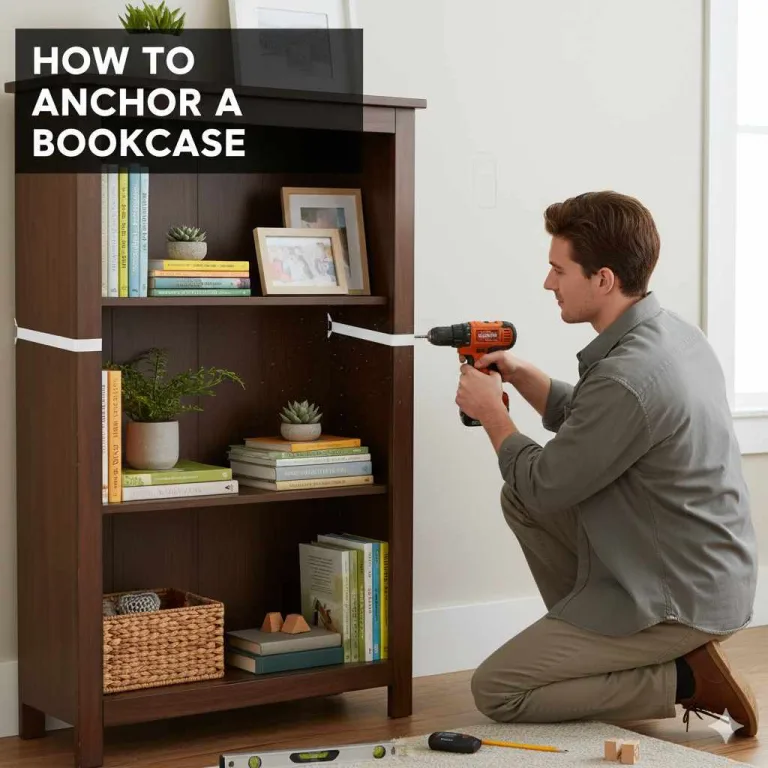
- Mark the attachment point. Remove the strap or bracket and tape the intended location on the wall. Use a level so both sides of the furniture land at the same height. Misalignment can make the strap twist and loosen.
- Drill the correct pilot hole. Use the bit size called for by the screw or anchor. A pilot hole that is too small can split wood or strip the screw head, while one that is too large reduces holding power in the bookshelf top or wall.
- Install the proper fastener. Use a stud screw when you hit framing. If studs are unavailable, choose a drywall anchor matched to the wall thickness and the hardware rating printed by the maker: plastic expansion for lighter duty, self-drilling for moderate duty, or toggle bolts for hollow walls when the load is higher. With heavy bookcases, the furniture-side screw and top panel can fail before the wall fastener, so do not rely on the wall anchor alone.
- Tighten only until snug. Over-tightening can crack drywall, deform a strap, or spin a plastic anchor in the hole. Stop when the connector sits flat and the furniture no longer moves at the top during a firm push.
A common mistake is tightening the screw again and again after the drywall anchor has started turning in place, which only strips the hole farther. That usually enlarges the hole and makes the next repair harder. Stop, remove the failed piece, and move to a fresh hole instead.
Should you remount into studs or use another anchor?
Remount into studs if the current hole is stripped, the wall is damaged, or the bookcase is tall and top-heavy. Use another anchor only when the wall substrate can support it and the load is modest. For a rental, removable hardware and minimal wall repair usually matter, but safety still comes first.
- Choose studs first. If a stud is within reach of the bookcase top, use it. A stud finder is only the start; confirm the location with a tap test or pilot test so you do not trust one reading alone.
- Use a toggle bolt next. For hollow drywall or plaster where a stud is not available, install a properly sized toggle bolt. It spreads load behind the wall and is generally stronger than a basic plastic anchor, but the hole needs to match the hardware and the wall thickness has to suit the fastener.
- Switch substrates when needed. If the wall is paneling over voids, very thin plaster, or damaged drywall, move the attachment to a different wall section or another stud line. There is no reliable fix if the substrate cannot grip.
When drywall anchors are and are not appropriate
Drywall anchors work best when the wall thickness matches the anchor and the load stays modest. For a tall or top-heavy bookcase, a stud remains the safer choice when one is available. A toggle bolt can be the better hollow-wall option, but only if the wall condition and hardware rating fit the job.
When plaster needs extra caution
Plaster is harder and more brittle than drywall. Use a pilot hole and a fastener designed for plaster or a toggle behind the lath if the cavity allows it. If the plaster is crumbly around the hole or the paper face is damaged, stop and move the attachment point.
When masonry needs different hardware
Brick, block, and concrete need masonry anchors and the correct masonry bit. A drywall anchor will not hold in masonry. If the drill bit wanders or the hole dust stays gritty and hard, the wall is likely masonry and needs different hardware.
When paneling is not enough
Thin paneling can hide a weak backing layer. A fastener into paneling alone is usually not enough for a top-heavy bookshelf. Find a stud behind it or move to a different wall. If the panel flexes by hand, treat it as non-structural.
Bookshelf anchor troubleshooting matrix
This matrix matches the symptom to the most likely cause, the wall type, the failed hardware, the severity, and the safest temporary action before remounting. If the same hole has already been enlarged, stop reusing it. Move to a fresh mounting point or a stud.
| Symptom | Likely cause | Wall type | Failed hardware | Severity/risk level | Safe temporary action | When to stop and remount into studs | Safest fix |
|---|---|---|---|---|---|---|---|
| Spinning anchor | Hole is too large or wall is soft | Drywall | Plastic expansion anchor | High risk | Unload the bookcase top and keep hands off the furniture until remounted | If the anchor spins twice in the same area | Move to a new hole and use a toggle bolt or stud screw |
| Pulled-out strap | Strap was overloaded or misaligned | Drywall or plaster | Furniture-side screw or wall screw | High risk | Clear the top shelves and prevent further tipping movement | If the hole is torn or oval | Realign the strap and reinstall with a stud or rated anchor |
| Stripped screw | Pilot hole too large or driver over-tightened | Wood top or stud | Wood screw | Moderate risk | Do not keep driving the same screw; remove load from the top shelf | If the wood fibers are crushed | Use a larger screw only if the wood still has meat; otherwise shift location |
| Oversized hole | Bit size did not match the screw | Drywall, wood, or plaster | Any screw | High risk | Support the furniture so it cannot tip while the damaged point is abandoned | Always, if the hole no longer grips | Patch the hole and drill a new one at the correct size |
| Uneven floor | Bookcase racks before the anchor loads evenly | Any | Bracket or strap | Moderate risk | Keep the case unloaded enough that it cannot rack farther while you level it | If the case still rocks after shimming | Level the case with shims, then recheck the anchor |
| Bracket pulls off the furniture | Fastener too short for the top panel | Wood furniture top | Anti-tip bracket screw | High risk | Do not rely on the same top-panel hole; lower the load and keep the case steady | If the top panel is thin or hollow | Use a longer wood screw within the panel thickness |
| Anchor pulls through drywall | Load exceeded anchor rating | Drywall | Plastic anchor | High risk | Remove weight from upper shelves and prevent any forward pull | If the bookcase is tall and top-heavy | Switch to a toggle bolt or stud mounting |
| Wall plaster chips out | No pilot hole or wrong bit | Plaster | Drywall screw | High risk | Stop driving hardware into the damaged spot and support the furniture temporarily | If the plaster keeps breaking away | Drill a smaller pilot hole and use plaster-rated hardware |
| Screw bottoms out | Wrong screw length for anchor thickness | Drywall or masonry | Anchor screw | Moderate risk | Do not force the screw; remove the connection and hold the bookcase steady | If the screw cannot reach usable material | Replace with the length called for by the anchor package |
| Bookcase still wobbles | Furniture load is uneven or the floor is uneven | Any | Strap or bracket | Moderate risk | Reduce top-shelf weight and keep the case from rocking further | If rocking continues after shimming | Rebalance the shelves and shim the base before retightening |
| Metal stud slip | Wrong screw type for thin-gauge framing | Drywall over metal studs | Standard wood screw | High risk | Stop using the connection and shift load away from the attachment point | If the screw will not bite cleanly | Use fasteners rated for metal studs or move to a different stud line |
| Bracket misalignment | Wall point and furniture point do not line up | Any | Anti-tip bracket | Moderate risk | Keep the bookcase supported and do not twist the bracket into place | If the bracket must twist to fit | Redrill so both halves sit square and flat |
Common mistakes
Most repeat failures come from treating every wall like drywall and every anchor like a universal fix. The substrate sets the limit, not the hardware package. A strap can also fail if it is over-tightened, because the connection shifts instead of settling flat.
- Using a drywall anchor in masonry or damaged plaster
- Trusting one stud finder reading without a cross-check
- Reusing a hole that has already spun or widened
- Driving the screw until the strap twists
- Putting the heaviest books on the top shelf
- Ignoring a rocking base before retightening the wall connection
Suppose a renter wants a low-damage fix for a 68-inch bookcase in drywall. A toggle bolt into a fresh hole may be acceptable if no stud is available, but a wall that is already torn out needs a different mounting point. Minimal damage still has to be safe.
Prevention: load the bottom shelves with the heaviest books, check the strap after moving the bookcase, and keep the attachment point aligned with the wall stud or rated anchor. Small shifts add up.
Frequently asked questions
Why does my bookshelf keep pulling away from the wall?
The wall fastener is usually slipping, the strap is misaligned, or the bookcase is top-heavy. Check whether the attachment is in a stud or a rated anchor, then look for an enlarged hole, a loose bracket, or a full top shelf that is pulling the cabinet forward.
What should I do if the bookshelf anchor is not working?
Remove the failed piece, inspect the hole, and remount at a fresh point. If the wall is drywall and no stud is available, move to a toggle bolt or another wall section. A bigger screw in the same damaged hole usually gives only temporary grip.
How do I anchor a bookshelf into drywall studs correctly?
Find the stud, confirm it with a tap or pilot test, then drive a screw long enough to bite solid wood through the bookcase bracket or strap. Keep the connector flat and snug. If the furniture still rocks, level the base before retightening.
Can I use drywall anchors for a heavy bookcase?
Only if the anchor is rated for the wall thickness and the load is modest. For a tall or top-heavy case, a stud mount is better. If studs are not available, use a toggle bolt rather than a basic plastic anchor, and follow the hardware rating rather than assuming all anchors behave the same.
Why do screws keep stripping in the wall or bookshelf top?
The pilot hole is often too large, the screw is the wrong size, or the driver is over-tightening. Use the correct bit for the pilot hole and stop when the hardware is snug. If the wood fibers are crushed, move to a new location.
How can I fix a bookshelf that wobbles even after anchoring?
Level the base with shims, move the heaviest items to lower shelves, and confirm the wall bracket sits square. If the bookcase still rocks, the anchor may be fine but the floor or furniture frame is not. In that case, remount to a different point or to a stud.
Products related to this article
Sponsored / affiliate links. As an Amazon Associate I earn from qualifying purchases. I may earn additional commission from eligible campaigns.