Corner Bookshelf vs Standard Bookshelf: Which Fits Best?
Choose a corner bookshelf when the corner is dead space, traffic paths need clearing, or the room is small and oddly shaped; choose a standard bookshelf when you need easier access, broader shelf options, or the wall area is already usable. Pick the wrong one and you waste floor space or make books harder to reach. This guide compares room fit, access, and storage tradeoffs so you can choose the better option for bedrooms, offices, living rooms, hallways, and rentals.
This guide is part of our Bookshelf guide: build, style, and organize series.
Corner bookshelf vs standard bookshelf: which fits your room better?


The main trade-off is plain: a corner bookshelf is built for a 90-degree corner, while a standard bookshelf is a freestanding rectangular unit that needs open wall space. The corner unit can free main walls in a cramped room, but the standard bookcase usually gives you wider shelves and simpler access.
That difference matters more than looks. In a room with an empty corner, a corner bookshelf can turn unused space into storage. In a room with a long free wall, a standard bookcase usually fits with fewer compromises and less awkward reaching.
| Decision factor | Corner Bookshelf | Standard Bookshelf | Winner |
|---|---|---|---|
| Footprint fit | Designed around a 90 degree corner; often triangular, L-shaped, or stepped | Freestanding rectangular unit that sits flat against a wall | Corner Bookshelf |
| Daily access | Angled, slightly tighter access | Wide and easy-to-reach shelves | Standard Bookshelf |
| Storage room | Can be enough for mixed books and decor, but usually less shelf room | Usually offers more total shelf room and wider shelves | Standard Bookshelf |
| Room fit | Best for awkward corners and tight rooms | Best for free walls and bigger storage | Corner Bookshelf in tight rooms; Standard Bookshelf in open rooms |
| Wall use | Frees main walls | Occupies a wall | Corner Bookshelf |
| Stability and anchoring need | Often benefits from anchoring if tall, narrow, or open | Also may need anchoring if tall, but stance is usually simpler | Tie |
Shape and footprint
A corner bookshelf is designed to fit a corner, so its footprint is better thought of in corner space than as a straight wall run. A standard bookcase uses a rectangular footprint and needs a clear section of wall to sit against.
That difference changes circulation. A corner unit can keep the middle of the room clearer, while a standard unit can feel more predictable beside a sofa, desk, or bed.
Shelf access and browsing comfort
Standard bookcases usually win for daily browsing because the shelves are straight, wide, and easier to scan. Corner shelves tend to be angled, and that tighter access makes it harder to see spines at a glance or pull out oversized items.
Say your bedroom has a narrow walking path beside the bed. A corner shelf may fit neatly, but the top shelf can be annoying if you reach for the same books every night. A standard wall bookcase may take more wall length, yet it can be easier to use every day.
Storage capacity and load pattern
Standard bookcases often offer more total shelf room because the shelves tend to be wider and more uniform. Corner units often trade raw shelf width for footprint efficiency, so they can hold enough paperbacks, but they are less efficient for long rows of books or larger decor pieces.
Load pattern matters too. Dense book storage favors the straight shelves of a standard bookcase, while a corner unit often makes more sense for a mixed display of books, baskets, and a few objects where perfect shelf width is less important.
Wall anchoring and stability
Both types can need anchoring when tall, especially if they are narrow, open, or top-heavy. Corner pieces may feel stable because they tuck into two walls, yet that does not remove the risk of wobble if the frame is light or the load sits high.
Keep heavier books on the lower shelves either way. If the unit is open-backed or has thin side frames, wall anchoring is a practical safety step, especially in homes with children or in rental spaces where the floor may not be perfectly level.
Material and frame structure
Standard bookcases are often built as straightforward rectangular frames, sometimes with a back panel that helps square the unit and reduce sway. Corner shelves can vary in structure: some are open and triangular, others are stepped or L-shaped, and the frame may be wood or metal depending on the design.
A back panel usually helps rigidity. Open sides can look lighter, but they place more demand on the frame and on anchoring if the unit is tall or narrow.
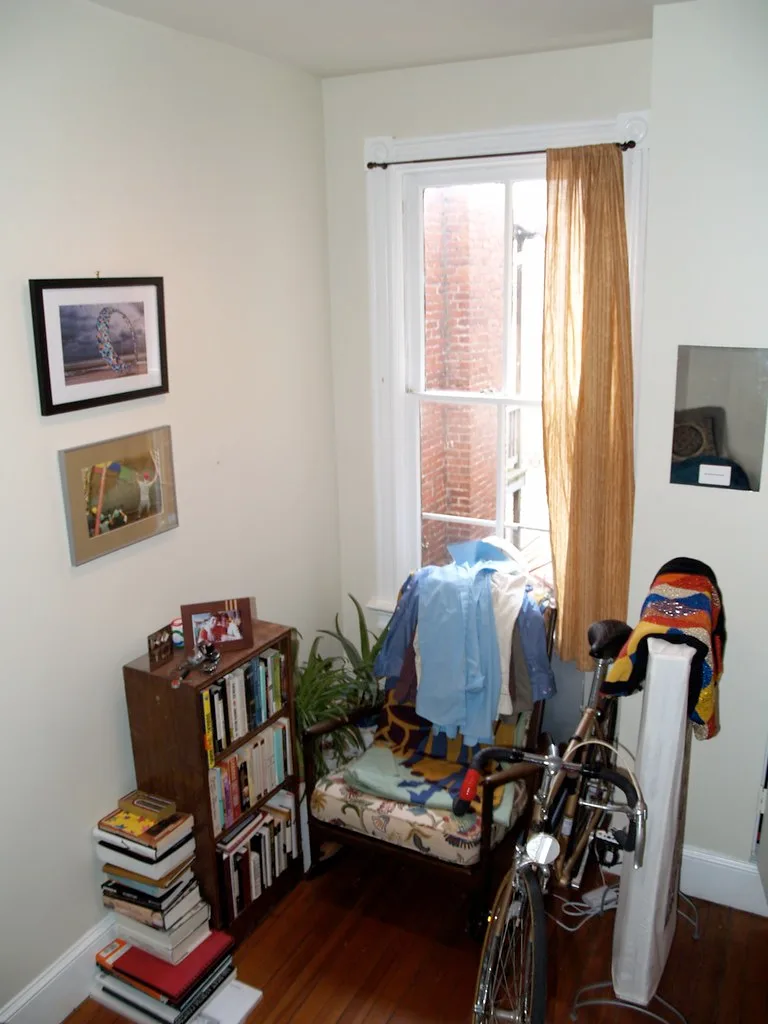
📊 A corner bookshelf is designed around a 90 degree corner. Source: Corner Bookshelf vs Bookcase: Form, Function & Style.
Does a corner bookshelf actually save more floor space?
Yes, when the corner is truly unused. A corner bookshelf can reclaim dead corner space and free the main walls for seating, art, or a desk, but it does not always reduce the total floor area in the room if the corner is already serving circulation or furniture placement.
The better question is whether the unit preserves usable wall length. In a small room, saving a few feet of straight wall can matter more than saving a similar amount of square footage.
How corner depth changes usable footprint
A corner unit can occupy a smaller-feeling footprint because it breaks into two wall directions rather than taking one long wall run. That can help in square bedrooms, compact offices, and tight entry areas where a rectangular bookcase would block a path.
But baseboards, trim returns, and protruding electrical covers can reduce that advantage. If the back edges cannot sit cleanly into the corner, the shelf may still project into the room more than expected.
When wall length matters more than square footage
Wall length matters whenever the room already has planned furniture on the straight walls. A standard bookcase removes one wall section from circulation, which can be a problem near a doorway, desk, or sofa. A corner bookshelf can keep those straight walls open.
That is why the “saves space” claim is incomplete. It only helps if the space saved is the space you actually need.
Where baseboards, vents, and door clearance change the answer
Baseboards can keep a corner shelf from sitting flush, and vents or outlets can block the lower back section. Door swings matter too: a door that opens toward the corner can make a corner unit a poor choice even if the room looks large enough on paper.
Suppose a hallway has a fairly deep recess and a nearby return vent. A corner shelf may fit visually, but the vent conflict can force an awkward gap that wipes out the space-saving benefit.
Which bookshelf gives you more storage space?

Standard bookcases often provide more storage because they tend to have wider shelves and a more efficient rectangular layout. A corner bookshelf can still store a fair amount, but its shelf room is often shaped by the corner rather than by maximum width, so it gives up some capacity to gain fit.
The right answer depends on what you store. Books-heavy users usually get better results from standard shelves, while mixed decor storage can work well in a corner unit if the goal is to keep the room open.
Why standard bookcases usually hold more total shelf room
A standard bookcase spans wall space in a straight line, so each shelf can run full width. That makes it easier to line up rows of books, bins, and framed items without wasting side space.
For bulk storage, that matters more than the shape of the room. If capacity is the main goal, a standard bookcase is usually the stronger choice.
When a corner unit stores enough despite a smaller footprint
A corner bookshelf can be enough when you are storing a curated mix rather than a full library. It works well for a few shelves of novels, display pieces, and baskets, especially when a narrow room would otherwise lose usable wall space to a larger unit.
It is a good fit when the goal is balance, not maximum count. That is common in bedrooms, small studies, and hallways.
Books versus decor: which load type favors each option
Books favor the standard bookcase because spines line up better on straight shelves and the depth is easier to use efficiently. Decor favors the corner unit when the display can spread across several shorter planes and does not need long uninterrupted shelf runs.
Heavy items should sit low in either format. If you plan to store large art books or dense stacks, the standard unit usually handles the layout with less awkward overhang.
Are corner bookshelves harder to access than standard bookcases?
Usually, yes. A corner bookshelf often has angled shelves and tighter reach zones, while a standard bookcase gives you wider, easier-to-see shelves that support daily browsing and quick item retrieval.
That does not make corner shelves bad. It means they are better when fit matters more than speed of access.
Daily reach and shelf visibility
Standard shelves are easier to scan because the shelf fronts are straight and the sides do not pinch inward. On a corner unit, the inner angles can hide items and make it harder to see what sits in the back or along the sides.
If you pick books often, that difference becomes obvious fast. If you only access the shelves occasionally, it matters less.
Why angled shelves can feel tighter in use
Angled shelves reduce the uninterrupted width of each level, so your hand and eye work harder to reach items. They also make oversized decor pieces harder to place without crowding the shelf edge.
A common first-timer mistake is choosing a corner unit for a large paperback collection and then realizing the shelf width forces uneven stacking. The room fit is good, but the daily use is clumsy.
When access matters more than capacity
Access matters more in workrooms, reading corners, and shared family spaces where books are taken down often. In those settings, a standard bookcase is usually the safer pick because easier reach lowers friction every day.
If the shelf is mostly for display, the access penalty of a corner unit is easier to accept.
Decision matrix: choose based on 8 room constraints
Use this matrix as a practical filter, not a style quiz. The strongest choice is the one that matches the room’s geometry, the traffic pattern, and the kind of items you plan to store.
| Constraint | Corner Bookshelf | Standard Bookshelf | Best when… |
|---|---|---|---|
| Corner depth | Works well when the corner is deep enough and unobstructed | Needs a free wall instead | Corner Bookshelf |
| Wall length | Preserves straight wall space | Uses up wall length | Corner Bookshelf if wall space is scarce |
| Door clearance | Can avoid the door swing if placed correctly | May block swing or trim if the wall is tight | Corner Bookshelf |
| Outlet or vent conflict | Risk of conflict at the back corner | Usually easier to place along a clear wall | Standard Bookshelf |
| Daily reach | Angled, slightly tighter access | Wide and easy-to-reach shelves | Standard Bookshelf |
| Book load | Good for lighter or mixed display loads | Better for heavier, book-dense loads | Standard Bookshelf |
| Anchoring need | Important for tall or open units | Important for tall units as well | Tie |
| Visual balance | Can reduce visual bulk in a small room | Can feel more balanced on a long wall | Depends on room shape |
- Measure the corner depth and nearby trim.
- Check wall length, door swing, and traffic path.
- Locate outlets, vents, and baseboard obstacles.
- Decide whether you browse books daily or mainly store decor.
- Estimate load weight and place the heaviest items low.
- Anchor the unit if it is tall, narrow, or open.
Choose Corner Bookshelf if… / Choose Standard Bookshelf if…
Choose a corner bookshelf if the room has a true dead corner, the straight walls are already spoken for, or you need to keep traffic moving through a small room. It is also the better fit when you want to soften visual bulk in a bedroom, hallway, or compact office.
Choose a standard bookshelf if you want the easiest browsing, the widest shelf options, or the most total storage. It is usually the safer pick for book-heavy collections, open walls, rentals with fewer placement surprises, and rooms where symmetry matters more than reclaiming corner space.
Bedroom
In a bedroom, a corner bookshelf often works best when the bed, nightstand, and closet already consume most wall space. A standard bookcase makes more sense if you have one long open wall and want easy access to bedtime reading.
Office
In an office, choose the corner unit when the desk needs the free wall and the bookshelf is secondary storage. Choose the standard bookcase when you reference books often or need uniform shelving for binders and supplies.
Living room
In a living room, a corner bookshelf can keep the main seating wall open and reduce crowding near the sofa. A standard bookcase is better when you want a grounded, symmetrical anchor for a media wall or a larger decorative display.
Hallway or rental
Hallways and rentals favor the corner bookshelf when you need storage without blocking movement or committing to a bulky wall unit. If the wall is clear, the floor is level, and you expect heavier use, the standard bookcase is usually the cleaner long-term choice.
Frequently asked questions
Is a corner bookshelf better than a standard bookshelf for a small room?
Often, yes, if the corner is truly unused and the room needs its main walls left open. A corner bookshelf can free circulation space and reduce visual bulk. A standard bookshelf still wins if you need easier access or if the room already has a clear wall that can take the unit without crowding.
What is the difference between a corner bookshelf and a standard bookshelf?
A corner bookshelf is designed around a 90 degree corner and may be triangular, L-shaped, or stepped. A standard bookshelf is usually a freestanding rectangular unit with multiple shelves that sits flat against a wall. The difference is mainly about footprint, access, and how each uses room geometry.
Does a corner bookshelf save more floor space?
It can, especially when the corner would otherwise go unused. But the better measure is usable room space, not just floor area. If a corner shelf avoids blocking a door swing or preserves a wall for another piece, it saves more practical space than a standard bookcase in that room.
When should I choose a standard bookshelf instead?
Choose a standard bookshelf when you need quick access, broader shelves, or higher storage capacity. It is also the safer pick for book-heavy loads, simple placement, and rooms with a clear wall and fewer obstacles such as vents, outlets, or tight door clearances.
Products related to this article
Sponsored / affiliate links. As an Amazon Associate I earn from qualifying purchases. I may earn additional commission from eligible campaigns.