Is a Ladder Shelf Worth It? Storage, Style, and Limits
A ladder shelf is worth it only if you need light storage in a tight spot and can wall-anchor it. For heavy books or bulky items, a standard bookcase is the better buy. Skip that check, and you can lose floor space and invite wobble, tipping, or shelf sag.
Verdict
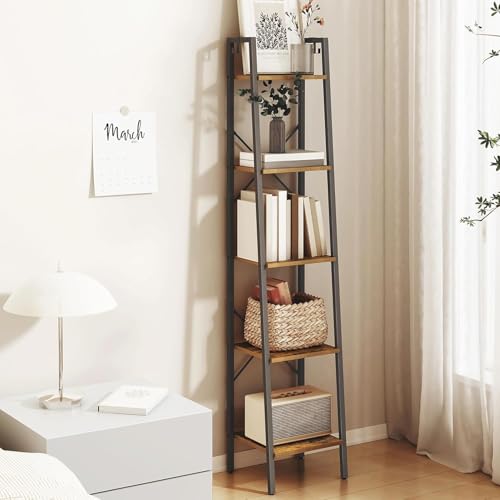
- Reinforced X-shaped bars ensure stable, sturdy structure.
- Narrow freestanding design easily fits small spaces.
- Includes two hooks for extra storage.
This guide judges the piece by stability, usable load, and room fit. The leaning shape matters less than shelf depth, material, anti-tip hardware, and whether each tier can carry what you plan to store without bowing or turning top-heavy.
📊 Consumer Reports says extension ladders are the first choice for projects more than 17 feet off the ground. Source: Best Ladder Buying Guide.
Specs at a glance
| Spec | Hzuaneri ladder shelf | Why it matters |
|---|---|---|
| Footprint | 11.8″ D x 13.4″ W | Fits narrow corners and small rooms. |
| Height | 63″ H | Uses vertical space without a wide base. |
| Material | Not stated in the provided listing | Material affects sag risk and long-term flatness. |
| Load rating | Not stated in the provided listing | Check per-tier capacity before you buy. |
| Anti-tip hardware | Not stated in the provided listing | Wall anchoring matters for top-heavy furniture. |
| Extra storage | Two hooks | Useful for keys, cords, or small accessories. |
| Assembly | Freestanding, narrow frame | Compact parts often mean manageable setup, but anchor it after assembly. |
Who it
A ladder shelf makes sense for decor-first storage, a few books, and small items you want off the floor. It is a better fit when you care about a narrow footprint more than maximum load, and when you can put the unit near a wall that will accept anchoring.
Decor-first storage
Use it for framed photos, small plants, candles, and baskets that do not push a shelf toward its limit. The open frame leaves a room feeling less boxed in than a solid cabinet, but the storage stays shallow.
Light book storage
It can work for paperbacks and a short row of hardcovers, provided the shelf depth and rating line up with the load. A single row of hardcovers runs 25-40 lbs, so a thin shelf with no clear rating is a poor place to stack them.
Corners and narrow rooms
Small apartments, entry corners, and compact home offices are the best match when you want vertical storage without a deep footprint. The shape helps you claim unused wall space, but only if the room leaves enough clearance for the angle and the wall anchor.
What works
The main advantage is space efficiency. A ladder shelf gives you vertical storage with a small footprint, so it can hold display items in places where a standard bookcase would eat too much floor space.
Space-saving profile
For corners and narrow walls, the usable inches per square foot can be better than a wide bookcase. That matters most when the room is tight and the shelf is doing display duty rather than bulk storage.
Easy visual lightness
The open sides and stepped shelves keep the piece from looking blocky. That can help in a small room where a full-height bookcase would feel heavy, especially if you want the wall to stay visually open.
Flexible display zones
The tiers work well for separating object types: a plant on one shelf, baskets on another, books on the bottom. That flexibility is useful only if each item stays within the shelf’s actual load limit and does not shift the center of gravity upward.
What does not?
A ladder shelf is a poor fit for dense storage, tall stacks of books, or rooms where you cannot anchor furniture to the wall. It can also become unstable if you fill the upper shelves first or use deep, heavy bins that pull weight away from the base.
Heavy book stacks
Books are the main stress test. The Lasting Home flags shelf units under 20 pounds per shelf as a problem, and it notes that a single row of hardcovers runs 25-40 lbs. That means a shelf with no stated load rating is risky for serious book storage.
Top-heavy styling
Large vases, stacked décor boxes, and big planters on the upper tiers can push the shelf toward a tip point. A ladder shelf is safest when the heavier items sit low and the top shelves stay light.
Rooms that cannot take wall anchors
If you rent, or if the wall surface will not support a fastener, the ladder shelf loses one of its main stability defenses. The Lasting Home says a ladder shelf lives or dies by its wall anchor, so skipping that step changes the risk profile fast.
Ladder shelf decision table
| Intended use | Minimum shelf load | Recommended material | Required anti-tip hardware | Beats a standard bookcase? |
|---|---|---|---|---|
| Decor and plants | 20 lbs per shelf or more | Particleboard for light duty; solid wood if you want better flatness | Wall anchor or anti-tip kit | Yes, if the goal is a lighter look and a narrow footprint |
| Paperbacks and a few hardcovers | 40 lbs per shelf or more | Solid wood or metal frame | Wall anchor, and use it | Sometimes, if the room is tight and the shelf depth fits the books |
| Baskets and catchall storage | 20-30 lbs per shelf | Metal or solid wood | Wall anchor recommended | Sometimes, if baskets stay shallow and light |
| Heavy or dense storage | Not a ladder shelf use case | Standard bookcase | Anti-tip kit required on the bookcase too | No |
Say your plan is a small office corner with six paperbacks, a printer, and a stack of notebooks. A ladder shelf may work only if the shelf depth fits the books and the lower tiers carry most of the weight. Put the printer on a standard bookcase instead.
Suppose you want a living-room shelf for plants and one basket per tier. That is the kind of load ladder shelves handle well, because the objects are lighter and the open frame keeps the room from feeling crowded.
Alternatives
If the shelf needs to do more than display, compare it with a standard bookcase, wall-mounted shelving, or cube storage. The right choice depends on weight, wall access, and how much of the room you can give up.

- Made from durable, premium aged rubberwood.
- Gradually widening tiers maximize usable display space.
- Stylish walnut finish adds natural warmth.
AQIMUELE walnut wooden ladder shelf is the strongest fit if you want a warmer finish and a more premium material. The aged rubberwood should hold up better than particleboard over time, and the gradually widening tiers give you more display room. The trade-off is price: at $219.99, it costs far more than a basic storage ladder, and the leaning form still needs careful anchoring and light upper-shelf styling.

- Reinforced X-shaped support bar ensures stability.
- Additional metal support bars strengthen shelves.
- Open design ideal for books and decor.
BON AUGURE 5 tier ladder shelf sits between budget and durability. The X-frame support bar and additional metal support bars point to better stiffness than a plain lightweight frame, and the open layout suits books and decor. The downside is that the industrial look is less subtle, and open shelves still demand disciplined loading if you want to avoid sag or wobble.
Should you buy it?
Buy a ladder shelf if you want vertical storage in a compact footprint, you can anchor it, and your items stay light enough to respect the per-shelf rating. Skip it if your main goal is dense book storage, heavy bins, or a long-term storage piece that needs to stay flat under load.
Best-value material pick
Particleboard is the budget choice. It keeps the price down, but it also brings lower durability and more sag risk, so it is best for decor, light baskets, and other low-stress uses. It is the least forgiving option when shelves run shallow or when weight lands near the front edge.
When solid wood is worth more
Solid wood costs more, yet it usually brings better long-term flatness and a more durable frame than particleboard. That extra cost is easiest to justify if the shelf will stay in place for years, hold mixed decor, and sit in a room where slight warping would stand out.
When particleboard is enough
Choose particleboard only when the shelf is for light display, the anchor hardware is included or easy to add, and the total load stays modest. If the unit will carry books often, or if you expect to move it around, the cheaper material can become a false savings.
Frequently asked questions
Is a ladder shelf worth it for small spaces?
Yes, if your room needs vertical storage more than deep storage. The narrow footprint helps in corners and tight walls, but the shelf only stays worth it when the items are light and the unit can be wall-anchored. Without those two conditions, a small bookcase is usually the safer buy.
Do ladder shelves tip over easily?
They can, especially when the top shelves carry heavier objects or the anchor is skipped. The lean gives the shelf its look, but it also shifts attention to wall support and weight placement. Treat the anti-tip kit as required for top-heavy setups, not as optional hardware.
How much weight can a ladder shelf hold?
There is no single answer that fits every model. A useful check is whether the shelf can handle at least 20 pounds per tier for light storage, and closer to 40 pounds if you plan to place books on it. The Lasting Home flags units under 20 pounds per shelf as a problem.
Are ladder shelves good for books or just decor?
They are better for decor, baskets, and a modest number of books than for dense book collections. A single row of hardcovers runs 25-40 lbs, so shelf depth, total rating, and anchor quality all matter. If you want a full home library shelf, a standard bookcase is the better choice.
How hard are ladder shelves to assemble?
Most are manageable, but difficulty rises with longer shelves, more support bars, and a wall anchor step at the end. Some DIY versions use angle cuts, wood glue, trim pieces, and a stain-plus-poly finish, and even then two-person assembly is often the safer approach for alignment and anchoring.
How do you style a ladder shelf so it does not look cluttered?
Keep heavier items low, leave some open space on each tier, and use a repeatable mix of two or three object types. Shallow baskets, a few books, and one plant often work better than many small pieces. The goal is visual order, not a packed shelf that loads the upper tiers.
Should I buy a ladder shelf or a standard bookcase?
Buy the ladder shelf if space is tight, the load is light, and the visual profile matters. Buy the standard bookcase if you need dense storage, a more forgiving shelf depth, or a better choice for books. If you are unsure, the bookcase is usually the safer long-term pick.
Products related to this article
Sponsored / affiliate links. As an Amazon Associate I earn from qualifying purchases. I may earn additional commission from eligible campaigns.