Drawer Slide Cost / Price / How Much
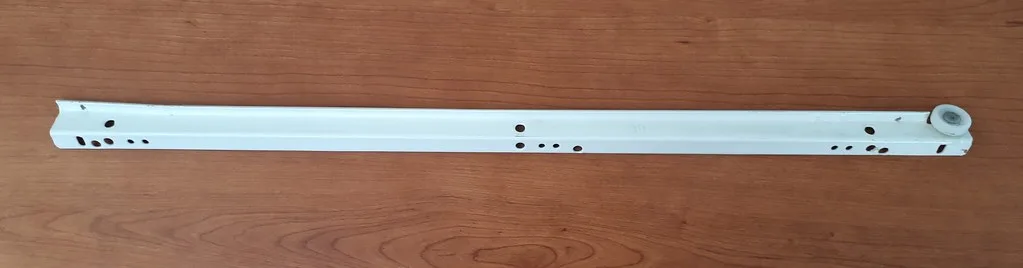
For many DIY drawers, epoxy-coated side-mount slides are often around $8–$20 per pair and are usually the most economical choice over time for light, infrequent use; ball-bearing slides commonly run about $15–$40, and undermounts about $25–$60. Choosing the wrong slide can lead to sag, sticking, or replacement costs that wipe out the savings from the cheaper pair. This guide breaks down drawer slide price, load rating, install cost, and which type costs least over time by drawer, cabinet, and skill level.
Drawer slide cost basics
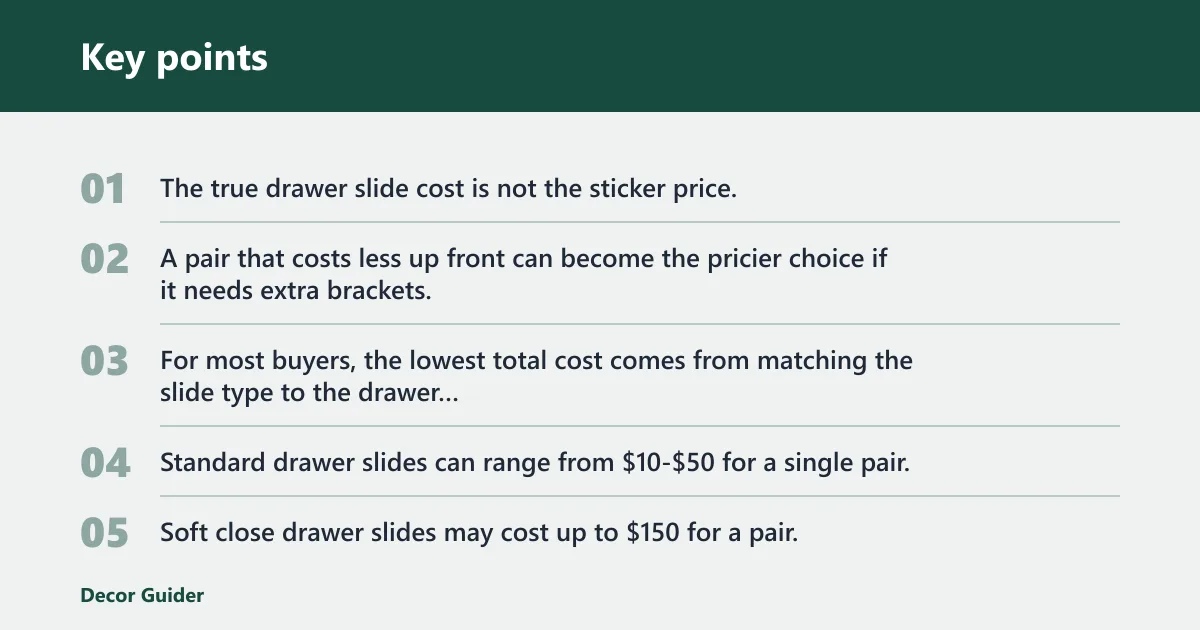


The true drawer slide cost is not the sticker price. A pair that costs less up front can become the pricier choice if it needs extra brackets, tighter tolerances, more labor, or early replacement. For most buyers, the lowest total cost comes from matching the slide type to the drawer load, cabinet style, and installation skill level.
What a pair of slides usually costs
Standard drawer slides can range from $10-$50 for a single pair. Soft close drawer slides may cost up to $150 for a pair. Slide-out shelving kits can cost anywhere between $90-$300, and full drawer systems can cost anywhere from $200-$1,000 or more. Those higher-price options often include more parts, more adjustment, and more finish work.
Why price changes by size, type, and finish
Length matters because the slide has to match the drawer opening and travel distance exactly enough to close properly. Type matters because side-mount slides are simpler and more forgiving, while undermount slides are hidden and usually need tighter tolerances. Finish matters too; corrosion-resistant coatings cost more, but they are worth it in kitchens, laundry rooms, and other humid spaces where rust shortens service life.
Where labor and hardware add to the bill
Installation adds more than labor time. Basic Drawer Slide Installation averages $50 – $150 per drawer, while Premium Drawer Slide Installation averages $150 – $300 per drawer. A rear-mount bracket can add $3-6 per drawer, and installation hardware can add $1-3 per drawer. If the cabinet needs spacers or modification, the total climbs again.
Drawer slide cost table
This table groups common jobs by total cost, not just part price. The best choice is the one that fits the drawer load, cabinet type, and expected replacement cycle.
| Scenario | Typical slide type | Estimated price per pair | Expected load rating | Install complexity | Best-fit cabinet type |
|---|---|---|---|---|---|
| Light utility | Side-mount, friction or light ball-bearing | $8–$20 | 35-45 lbs | Low | Frameless or simple face-frame retrofit |
| Utensil drawer | Side-mount, epoxy-coated ball-bearing | $10–$30 | 35-45 lbs | Low to moderate | Frameless, or face-frame with brackets |
| Cookware drawer | Ball-bearing, full-extension | $15–$40 | 75-100 lbs | Moderate | Frameless kitchen base cabinet |
| Pantry pull-out | Heavy-duty, often soft-close | $40–$150+ | 150+ lbs | Moderate to high | Tall pantry cabinet or appliance pull-out |
| Retrofit cabinet | Side-mount with rear-mount brackets | $10–$35 plus hardware | 35-75 lbs | Moderate | Face-frame cabinet |
| Premium soft-close | Undermount, soft-close, full-extension | $25–$60, or up to $150 for premium pairs | 75-100 lbs | High | Frameless premium kitchen cabinet |
Which slide type costs the least over time?
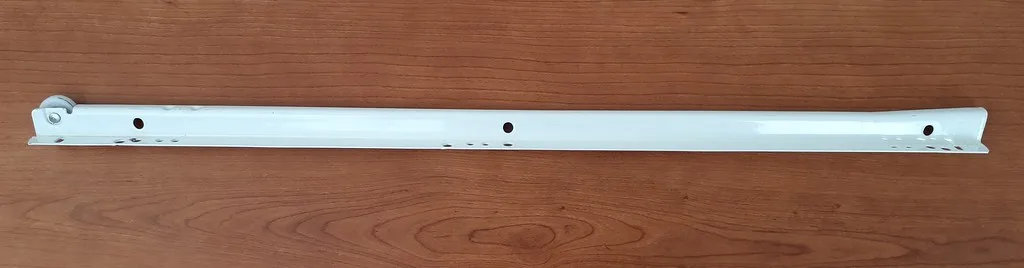
Side-mount slides usually cost the least over time for basic drawers because they are cheaper, easier to replace, and more forgiving during installation. Undermount slides cost more up front and demand tighter sizing, but they hide the hardware and suit premium kitchens. Soft-close adds comfort and reduces impact wear, yet it only pays off when the drawer is used often enough to justify the extra cost.
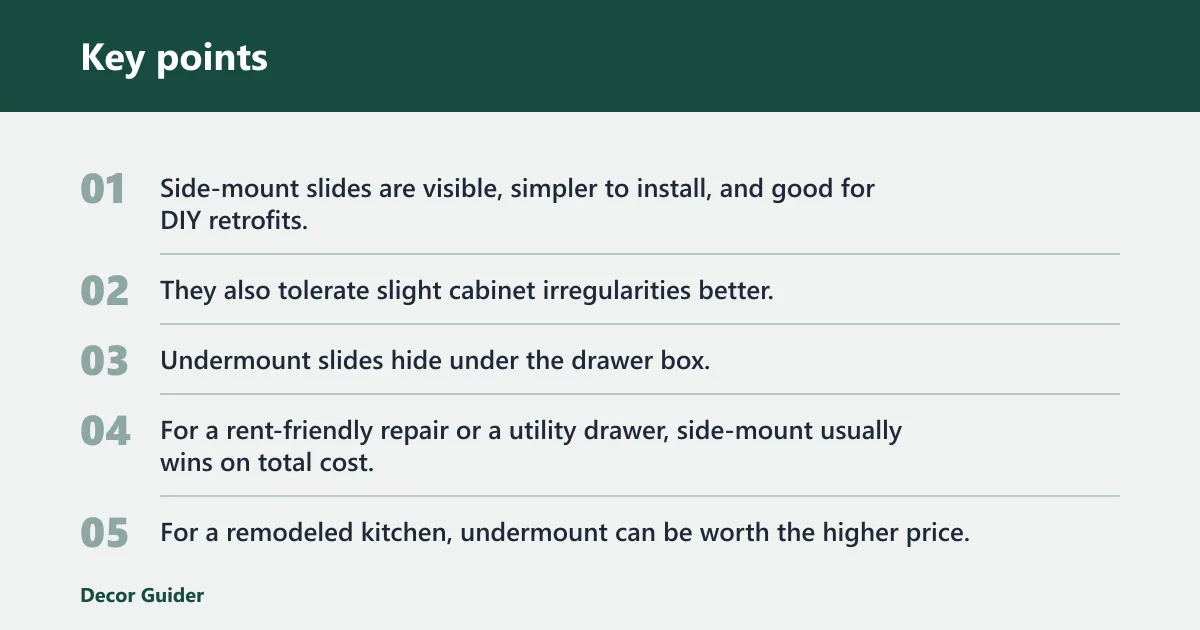
Side-mount vs undermount price tradeoff
Side-mount slides are visible, simpler to install, and good for DIY retrofits. They also tolerate slight cabinet irregularities better. Undermount slides hide under the drawer box, which gives a cleaner look but raises cost and alignment demands. For a rent-friendly repair or a utility drawer, side-mount usually wins on total cost. For a remodeled kitchen, undermount can be worth the higher price.
Soft-close cost versus comfort and wear control
Soft-close mechanisms add cost because they include dampening parts that slow the drawer at the end of travel. That can cut slamming noise and reduce impact on the box, front, and cabinet. Soft-close drawer slides are often about $80–$280 per drawer for installed projects, and the higher upfront price tends to make more sense on drawers opened many times a day.
When heavy-duty slides save money later
Heavy-duty slides usually cost more at the start, but they can prevent sagging and premature failure in tall pantry drawers, appliance pull-outs, and deep storage for cookware. Heavy-Duty Drawer Slides average $100 – $350 per drawer. If the drawer regularly carries 150+ lbs, buying a lighter slide often leads to sticking, bending, or replacement.
Say your 36-inch pantry pull-out holds canned goods, small appliances, and cereal bags. A light slide may seem cheaper, but repeated overload can pull the drawer out of square and make the runners bind. A heavier slide costs more, yet it avoids a second installation and a failed drawer front.
How much does installation add?
Installation cost depends on cabinet style, slide type, and how much alignment work the job needs. Face-frame cabinets usually add more labor and hardware than frameless cabinets, so the same slide can cost more to install in one kitchen than another.
Face-frame cabinets and rear-mount brackets
Face-frame cabinets often need rear-mount brackets to support the back end of the slide. That bracket adds $3-6 per drawer, and the added setup time is easy to miss when comparing shelf tags. These cabinets can also require more careful spacing so the drawer opens without rubbing the frame.
Frameless cabinets and easier alignment
Frameless cabinets are usually simpler because the slide mounts to a flat box interior. That makes alignment easier and reduces the chance of a drawer opening crooked or dragging on one side. Even so, the opening still has to match the slide length and clearances, or the drawer will not travel smoothly.
Screws, spacers, and other small extras
Installation hardware can add $1-3 per drawer. Spacers may be needed to center the slide, and some jobs need longer screws or extra mounting blocks. These small items sound minor, but they matter when you are pricing a full kitchen and multiplying the cost by 10 or 20 drawers.
How do you size drawer slides?
Size the slide to the drawer opening and the available depth, not to the old hardware alone. Measure the cabinet depth and the drawer box length, then choose a slide length that fits that opening and still lets the drawer close fully. Wrong sizing causes fit problems, wasted travel, and sticking at the front or back.
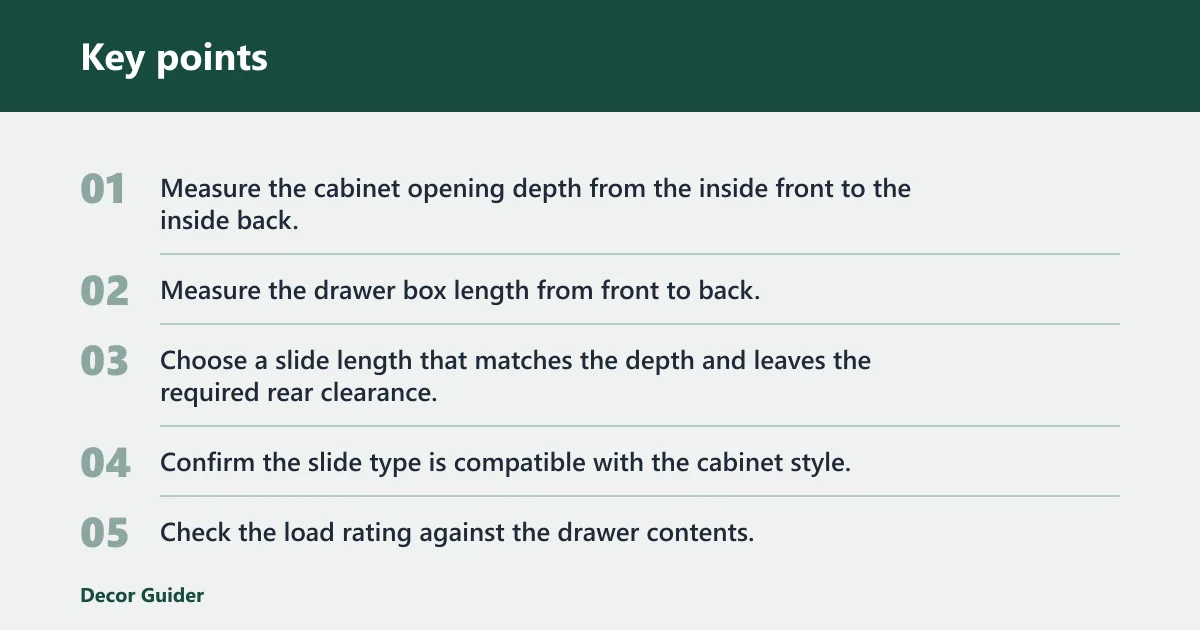
- Measure the cabinet opening depth from the inside front to the inside back.
- Measure the drawer box length from front to back.
- Choose a slide length that matches the depth and leaves the required rear clearance.
- Confirm the slide type is compatible with the cabinet style.
- Check the load rating against the drawer contents.
Measuring drawer opening length
Use the inside cabinet depth as the main number. On full-extension slides, the opening depth should support the slide length without forcing the drawer to stop short. If the slide is too long, the drawer may not clear the back panel. If it is too short, usable storage drops and the front can feel unsupported.
Common sizing mistakes that cause fit problems
A common first-timer mistake is choosing the cheapest drawer slide without checking the load rating, which can lead to paying for a second set later. Another is assuming every 22-inch drawer takes the same hardware, even when the box thickness or cabinet style changes the needed clearance. A third mistake is skipping the tolerance check on undermount slides, which need more precise sizing than side-mount hardware.
Suppose a 24-inch-deep cabinet gets a 22-inch slide with no room for brackets or the rear stop. The drawer may bind before full closure, or the front may sit proud. That error often costs more to fix than the price difference between the correct slide and the wrong one.
Drawer slides by load rating
Load rating should match the contents, not the drawer size alone. For cutlery and kitchen utensils, a load rating of 35-45 lbs is adequate. For dinnerware and cookware, a rating of 75-100 lbs ensures stability. For tall pantry pull-outs or appliance drawers, aim for ratings of 150 lbs or more.
35-45 lbs for cutlery and utensils
This range suits shallow kitchen drawers with silverware trays, tools, and light utility items. Side-mount or light ball-bearing slides usually make sense here. If the drawer starts to sag or stick, the problem is often overload, bad alignment, or a worn runner, not the front panel itself.
75-100 lbs for cookware drawers
Heavy pans, bowls, and dishes need more support because the weight concentrates near the front when the drawer opens. Full-extension ball-bearing slides are a practical choice here. They give better access and are less likely to twist under repeated loading than a light friction slide.
150+ lbs for pantry and appliance drawers
Tall pantry pull-outs and appliance drawers need a much stronger slide because the load is taller, deeper, and more likely to shift. A 150+ lbs rating helps resist sag, racking, and premature wear. For these jobs, the extra hardware cost is usually cheaper than a failed drawer system.
Frequently asked questions
How much does a slide cost?
For a single pair, standard drawer slides can range from $10-$50. Soft close drawer slides may cost up to $150 for a pair. If you are buying a full drawer system or slide-out shelving kit, the total can be much higher because the package includes more than the runner pair.
How much is a slide?
Most homeowners should think in pairs, not single pieces, because drawer slides are usually sold that way. A low-cost side-mount pair can stay under $20, while premium soft-close or undermount hardware can move far above that. Installation hardware and brackets can add a few more dollars per drawer.
Where can I buy drawer slides?
You can buy drawer slides from local home centers, cabinet supply stores, hardware retailers, and online sellers. Compare the slide length, mounting style, load rating, and finish before buying. For a retrofit, check whether face-frame cabinets need rear-mount brackets or spacers before you choose the lowest-priced pair.
How sturdy are drawer slides?
Sturdiness depends on load rating, slide type, and installation quality. A 35-45 lbs slide is fine for utensils, while 75-100 lbs works better for cookware. For tall pantry pull-outs or appliance drawers, look for 150 lbs or more. A strong slide still fails if it is the wrong length or mounted out of square.
Products related to this article
Sponsored / affiliate links. As an Amazon Associate I earn from qualifying purchases. I may earn additional commission from eligible campaigns.