Does a Headboard Need to Match the Bed Frame?
No, a headboard does not need to match the bed frame. If the styles clash, the room can look disconnected. If the hardware or dimensions do not fit, the headboard may wobble or fail to attach. This guide covers visual matching, fit checks, and the main mounting options.
This guide is part of our Chairs guide: types, buying and care series.
How to pair a headboard with a bed frame


A headboard and a bed frame do different jobs. The headboard often acts as the visual focal point and gives you something to lean against when sitting up, while the bed frame lifts the mattress and supports the structure below. Whether they need to match depends first on appearance, then on hardware.
Visual match: when it matters
Exact matching is not required. A wood headboard can work with a painted metal frame, and an upholstered headboard can pair with a simple platform base if the colors, lines, or proportions feel intentional. The room looks best when one piece leads and the other supports it.
Matching matters more when both pieces are highly visible. A low platform frame with a tall ornate headboard can feel deliberate if the proportions are balanced; it can feel accidental if the finishes fight each other. The goal is coordination, not duplication.
Physical fit: when it matters more
Fit matters more than style when the headboard has to attach to the frame. A headboard can fail to mount if the screw-hole spacing is off, if the bracket style does not match, or if an adjustable base moves into the headboard’s space. The hardware decides whether the setup works at all.
A headboard may be freestanding, wall-mounted, or attached to the bed frame. Those are different mounting paths, and each has its own clearance and fixing needs. If the frame type is unusual, treat compatibility as the first question.
Does a headboard have to match the bed frame?
No. A headboard does not have to match the bed frame material, color, or finish. What matters is whether the pieces look coordinated enough for the room and whether the mounting method fits the frame. A deliberate contrast can look better than a near-match that misses in scale or shape.
When mismatched pieces still look intentional
Mixed materials often work well when they repeat something else in the room. For example, a black metal frame can sit comfortably with a walnut headboard if the bedside table or lamp includes a similar dark accent. The pieces do not need to be identical; they need a visual link.
Suppose you keep a white upholstered headboard and swap in a brass-toned frame. That can look intentional if the bedding, hardware, or wall color softens the contrast. The mismatch becomes a design choice when the proportions and finishes stay calm together.
When a close visual match helps
A closer match helps in small bedrooms, rental rooms, or spaces with little else to tie the bed together. If the bed is the main object in view, a similar finish can reduce visual noise. This is especially useful when both pieces are large and the room has few other anchors.
Can a headboard attach to any bed frame?
No. A headboard can attach to many bed frames, but not to every frame without adapters, brackets, or a different mounting method. Compatibility depends on mounting points, the frame’s design, and the screw-hole spacing. Some frames accept bolt-on or hook-on hardware; others do not offer a practical attachment point at all.
Common frame types that accept brackets or struts
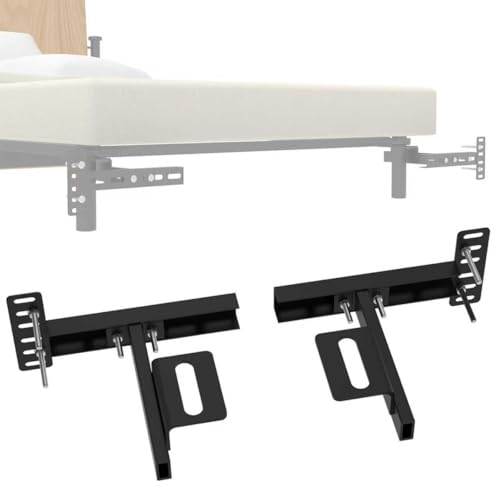
Platform, panel, sleigh, and many standard metal frames can often take a headboard if the hardware matches. Some use headboard brackets, and some use headboard struts that screw into the bed frame’s holes. The key check is whether the frame has the right fixing points at the right width.
Frames that usually need a different approach
Adjustable bases are the main exception. They may already include headboard brackets, but the moving sections need clearance so the headboard does not bind or rub. Floating-style frames, frames with no rear mounting points, and nonstandard designs often work better with a wall-mounted or floor-standing headboard.
Headboard compatibility table
This checklist helps you decide before buying. Measure the frame first, then compare the headboard hardware and mounting style. If any go/no-go item fails, choose a different bracket set or a wall-mounted or floor-standing option instead.
| Bed frame type | Likely attachment method | Go/no-go fit checks |
|---|---|---|
| Platform frame | Bolt-on brackets or struts | Measure horizontal screw-hole spacing; confirm rear rail has holes or bracket slots; check bolt diameter and washer clearance. |
| Panel bed | Headboard brackets or direct struts | Verify the distance between mounting points; confirm the headboard height clears the mattress; check that the frame has a solid fixing rail. |
| Divan base | Floor-standing headboard or bracket kit | Check whether the base has predrilled holes; confirm bracket width matches the base; make sure the headboard can stand without tipping. |
| Metal frame | Hook-on or bolt-on brackets | Confirm whether the frame accepts hook-on tabs or bolts; measure screw-hole spacing; verify that the headboard struts clear the side rails. |
| Adjustable bed | Special adjustable-bed brackets | Check for existing headboard brackets; leave room for moving sections; confirm the headboard does not block articulation at the head of the base. |
| Wall-mounted setup | Direct wall fixings, independent of the frame | Locate wall studs or suitable anchors; confirm headboard width and mounting height; make sure the mattress will not cover the lower fixing points. |
How do I know if my bed frame is compatible with a headboard?
Start with three checks: mounting style, screw-hole spacing, and clearance. If the frame has no usable attachment points, if the hole spacing does not match, or if the mattress and base move into the same space as the headboard, the setup is not a direct fit. The answer comes from measurements, not guesswork.
-
Measure the mounting width. Measure the horizontal distance between the bed frame’s fixing points. This is the most important fit measure because headboard brackets and struts have to line up with it.
-
Check the fixing style. Look for bolt-on or hook-on compatibility, or for a frame that accepts struts screwed into the frame’s screw holes. If the frame uses a bracket kit, confirm whether it includes channels, nuts, bolts, and washers.
-
Confirm height and clearance. Check that the top of the mattress will not cover the bracket area and that the headboard will not interfere with drawers, lifts, or moving sections. Adjustable beds need the most clearance at the head end.
-
Compare hardware sizes. Verify bolt size, washer size, and the depth of any slots or channels before purchase. A mismatch here can leave the headboard loose even when the spacing seems close enough.
A common first-timer mistake is measuring the headboard itself and skipping the frame. The frame controls the fit. If the headboard has about 62 cm between its side holes but the frame’s mounting points are about 58 cm apart, the hardware may not line up cleanly without the right adapter.
What type of headboard works with an adjustable bed?
An adjustable bed can still take a headboard with the right brackets, but the movement of the base changes the rules. The headboard has to stay clear of reclining sections, moving hinges, and motor travel. A wall-mounted or specially bracketed headboard is often the safest choice when the base moves a lot.
Why moving sections change the fit
Adjustable bases rise and bend at the head and foot, so a fixed headboard can press against the frame or interfere with movement. That can cause rubbing, noise, or limited travel. Compatibility is not only about width; it is also about clearance through the full motion range.
When wall mounting is the better choice
Wall mounting is the better choice when the base has no stable rear fixings, when the bracket fit is uncertain, or when the moving sections make attachment awkward. It removes dependence on the bed frame’s mounting points and keeps the headboard in a fixed position behind the bed.
Picture an adjustable bed with a tall upholstered headboard and a reclining head section. If the headboard is attached too close to the moving mechanism, it can touch the base as soon as the bed rises. A wall-mounted version avoids that conflict because the bed moves independently below it.
How do I make a bed look good without a headboard?
You can still make the bed look finished without a matching headboard. A wall-mounted headboard, a floor-standing headboard, or a well-placed arrangement of pillows and wall treatment can give the bed a clear focal point. The aim is to balance the frame visually without forcing a bad hardware match.
Use wall-mounted or freestanding options
A wall-mounted headboard is useful when the bed frame is nonstandard, when you want a cleaner look, or when the frame lacks useful hardware. A floor-standing headboard can sit behind the bed without direct frame mounting, which makes it a practical option for some divan-style beds.
These options also help when you want to keep the bed frame and headboard visually separate. The frame can stay simple, while the headboard supplies the height and focal point.
Keep the bed visually balanced without forcing a match
Use the headboard’s height and width to echo the mattress size rather than the frame finish. A low bed usually looks better with a lower headboard than with a towering one, unless the room has the ceiling height to support it. Bedding can also bridge materials that do not match exactly.
Headboards come in wood, metal, upholstered, and plastic versions, so the finish does not have to mirror the frame. What matters is that the combination feels purposeful and the mounting is secure.
What is the purpose of a headboard?

A headboard is not strictly necessary for a bed, but it does more than fill space. It provides support and comfort when sitting up, it can add insulation from a cold wall, and it often acts as the room’s focal point. It can also help protect the wall from scuffs and wear.
That mix of function and appearance is why the matching question has two answers. One answer is about style. The other is about fit. You can ignore exact matching if the room reads as coordinated, but you should not ignore the hardware requirements.
Frequently asked questions
Do you have to attach a headboard to the bed frame?
No. A headboard can be attached to the frame, mounted to the wall, or used as a floor-standing piece behind the bed. If the frame has the right brackets or screw-hole spacing, attachment is fine. If not, a wall-mounted or freestanding setup is usually the cleaner choice.
Can a headboard be attached to any bed frame?
No. Many frames can take a headboard, but not all can without adapters or a different mounting style. Check the mounting points, horizontal screw-hole spacing, and bolt or hook compatibility first. Adjustable beds need extra clearance checks because movement can interfere with a fixed headboard.
Products related to this article
Sponsored / affiliate links. As an Amazon Associate I earn from qualifying purchases. I may earn additional commission from eligible campaigns.