Best Entryway Benches for Small Spaces (2026): We Compared
Best entryway benches for small spaces are usually around 24–36 inches wide, 12–16 inches deep, and under 18 inches high, with storage chosen to match doorway clearance and how many shoes you need to park at the door. For small-space planning, the key is not just the seat size but the clear floor area around it. The ADA’s clear-floor-space guidance and access-route rules are a useful reference point for keeping an entry usable when furniture sits near a door swing, while ergonomics guidance commonly places comfortable seat height in the 17–19 inch zone. ADA 2010 Standards for Accessible Design BIFMA ergonomics overview
What bench size fits a small entryway?
A small entryway bench usually works best when it stays compact enough to preserve the door swing and a clean walking line. Start with a shallow footprint before chasing extra storage, because depth is what most often makes a narrow hall feel cramped. A bench that fits the route will look better and function better than a larger piece that forces people to squeeze around it.
Smallest usable dimensions
For truly tight spots, a bench near 22 inches wide can still function as a landing place, and a very slim seat around 12–13 inches deep is the safest starting point when the hall is narrow. The ADA’s maneuvering-space and clear-floor-space rules are a useful benchmark here: if the bench interferes with a usable passage, it is too big for the layout. ADA 2010 Standards for Accessible Design
When a 24- to 36-inch bench fits
A 24- to 36-inch bench is the most forgiving size for a compact foyer because it usually leaves room for one person to sit, one pair of shoes to land, and a door to open without clipping the furniture. This range also works well beside wall hooks, mirrors, or a narrow console, so the entry can stay organized without feeling crowded.
When to skip a bench and use a smaller option
If the bench would pinch the doorway, block a closet door, or narrow the walking route to an awkward squeeze, skip it. A stool, compact side table, or shoe rack can solve the same problem with a smaller footprint. In tight entries, the best solution is often the piece that leaves the door and traffic flow most intact.
How much clearance should a bench leave?
Clearance matters as much as the bench itself. A practical rule is to leave enough room for the door to open fully, for a person to step through without turning sideways, and for shoes or bags to land without crowding the floor. The ADA’s clear floor space and reach-range guidance are useful reference points for this kind of layout planning. ADA 2010 Standards for Accessible Design
Door swing clearance
Keep the leading edge of the bench outside the door’s swing arc whenever possible. If the door opens inward, measure from the hinge side and the furthest point of travel, then subtract enough room for a person to pass safely. A bench that forces the door to stop short is not a good fit, even if its width looks reasonable on paper.
Walkway clearance
The walkway should remain obvious and uninterrupted after the bench is placed. If the entry route becomes a side-step path, the bench is too deep or positioned too close to traffic. A compact bench is useful only when it still lets you move naturally from the exterior threshold to the rest of the home.
What seat height works best for an entry bench?
Seat height should make it easy to sit down, stand up, and tie shoes without feeling too low or too tall. A practical target is roughly 17–18.5 inches, which lines up with common seating ergonomics and keeps the bench comfortable for everyday use. That height range is especially helpful in an entry where the seat gets used in a hurry. BIFMA ergonomics overview
Lower seats
Lower seats can feel lounge-like, but they are less convenient in a busy entryway because they take more effort to rise from. They also tend to read visually larger, which can make a small foyer feel heavier than it is. Choose a lower seat only if comfort matters more than speed and visual lightness.
Higher seats
A slightly higher seat is often better in a compact entry because it is easier to use and keeps the bench from looking squat. It also pairs well with shoe storage beneath or beside the seat. If the entry serves multiple people, the higher end of the range is often the easiest day-to-day choice.
Storage bench: best for clutter control
A storage bench is the right choice when shoes, hats, and bags tend to pile up near the door. Hidden storage keeps the entry looking calmer, while open storage makes daily drop-off faster. The best version depends on whether you want the cleanest visual result or the quickest access.
Lift-top storage
Lift-top storage is useful for seasonal gear, gloves, scarves, and backup items that do not need to be grabbed every day. It hides clutter well, but it is slower to use than an open shelf. This style works best when the entry needs to look neat even when the bench is full.
Enclosed storage
Enclosed storage gives the most polished look because it hides shoes and small items from view. That makes it a strong fit for apartment entries, front foyers, and small hallways where visible clutter can quickly overwhelm the room. It is the best option when you want the bench to function like furniture, not just storage.
Basket and cubby storage
Baskets and cubbies are the easiest to sort through because you can see what goes where. They are especially handy for households that need a simple landing zone for everyday shoes, mittens, and backpacks. If the entry gets heavy daily traffic, this is often the fastest storage format to live with.
Upholstered bench: best for soft seating
An upholstered bench can soften a compact entry and make the space feel more finished. It works well when you want the bench to do double duty as seating and visual anchor. In a small hall, a soft seat can add warmth without increasing the footprint, as long as the bench stays slim.
Boucle and fabric finishes
Boucle and fabric read as softer than wood or metal, so they can make a narrow hall feel less severe. They also pair well with pale walls, mirrors, and other light finishes. The tradeoff is maintenance: lighter fabrics can show winter salt, scuffs, or shoe marks more quickly than wipeable materials.
When upholstery works in a narrow entry
Use upholstery when the bench sits where the door and traffic path will not brush it constantly. If the entry has enough clearance to protect the seat edge, the softer material can make the room feel more welcoming without sacrificing function. It is less ideal when the bench will take repeated contact from coats and shoes.
Cleaning and wear concerns
In a busy entry, upholstery should be chosen for cleanability as much as style. Removable covers or easy-to-spot-clean fabrics are the safer choice if the household deals with wet weather, pets, or frequent muddy shoes. If upkeep is a concern, wood or metal may be the more practical long-term fit.
Wood bench: best for low-profile style
A wood bench is often the easiest fit for a small foyer because it keeps the silhouette simple. Wood usually reads lighter than bulky upholstered storage pieces, and it can blend into a hallway without competing with mirrors, hooks, or a runner. It is a strong choice when you want the bench to stay visually quiet.
Solid wood forms
Solid wood is a good pick when durability and simplicity matter more than concealed storage. It handles everyday use well and tends to work with a wide range of finishes and floor types. In small spaces, the clean shape is often more important than adding extra features.
Rounded edges for tight walkways
Rounded corners help in narrow traffic paths because they reduce the chance of bumping a sharp edge while turning in from the door. In small halls, that small change can make the furniture feel easier to live with. If the bench sits close to the route, rounded edges are worth prioritizing.
Neutral finishes
Neutral wood finishes are useful in small foyers because they do not visually fight the rest of the entry. If the room already has a mirror, hooks, or a patterned rug, a simple wood bench usually keeps the layout calm. That restraint often makes the whole space feel more open.
Bench sizing decision table
| Entryway width | Door clearance | Bench depth | Seat height | Best bench style |
|---|---|---|---|---|
| Under 36 inches | Tight swing path | 11-13 inches | 16-17 inches | Stool, side table, or very slim shoe bench |
| 36-48 inches | Moderate swing path | 13-16 inches | 17-18 inches | Open shoe bench, compact storage bench, or wood bench |
| 48 inches or more | Clear swing path | 16-18 inches | 17-18.5 inches | Storage bench, enclosed bench, or wider cushioned bench |
This table is a fit-first shortcut: start with the narrowest wall-to-wall span, then check the door swing, then choose storage. If the door opens into the bench zone, use the smaller depth first and only increase size if the path still feels open after shoes and bags are added.
No-buy checklist for small entry benches
- Do not buy a bench that blocks the door swing or closet door.
- Do not choose depth first and hope the walkway will still work.
- Do not ignore handle clearance, trim, radiators, or wall hooks.
- Do not assume a wider bench is better if the entry is narrow.
- Do not pick a storage style that slows down your daily routine.
- Do not choose upholstery if the entry gets muddy, wet, or heavily scuffed and the fabric is hard to clean.
- Do not place a bench where people must turn sideways just to pass.
Which one should you buy?
If you rent or have the tightest entry, start with the smallest footprint that still works with the door. A compact storage ottoman is the best fit when hidden storage matters more than shoe-drop speed.
If the entry sees daily shoe traffic, choose an open or semi-open shoe bench so the routine stays quick. If the hall is wider, a larger shoe bench can hold more pairs without feeling cramped.
If you want the cleanest look, pick enclosed storage or a wood-forward bench with rounded corners. That style often looks the least cluttered in a small foyer, especially when paired with a wall hook and one narrow rug.
If you are still deciding, measure first and then compare bench depth against the door path. For more layout help, see our guides to shoe storage ideas, narrow hallway furniture, entryway rugs, and storage ottoman guides.
Product picks
WINWY rattan narrow entryway bench: best for hidden shoe storage

This is a strong pick for a foyer that needs shoes out of sight and a place to hang outerwear. The two flip drawers keep clutter hidden, and the built-in coat rack makes the bench work harder than a plain seat.
The drawback is that the all-in-one format can feel visually busy in a very tight hall, so it fits best when the entry has enough wall space to support the full setup.
Asense 24 inch storage ottoman bench: best for the tightest entry

This bench is for the smallest entry spots that still need hidden storage. The 24-inch size is easy to place in a corner, and the soft-close safety hinge is a useful detail when the lid will be opened often.
The tradeoff is that an ottoman style is less direct for shoe-dumping than an open shelf bench. If you need quick grab-and-go access, the hidden storage is more orderly than fast.
BON AUGURE entryway shoe bench: best for wider narrow halls
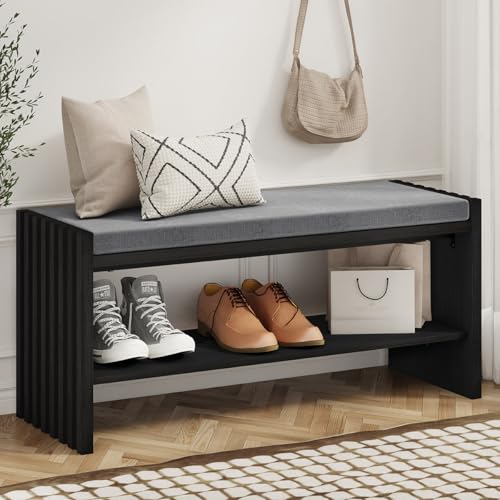
This is the best fit when a small entry still has enough length for a wider bench. The 40-inch span and 2-tier organizer give more room for shoes, and the removable cushion cover helps with cleaning.
The drawback is that 40 inches is at the upper end for compact entries, so it can crowd the passage more than a shorter bench would.
SONGMICS shoe bench: best budget shoe drop zone

This is a practical pick for a simple entry shoe station. The 31.9-inch width gives enough room for a daily drop zone, the 2-tier storage fits up to 8 pairs, and the padded seat makes quick stops more comfortable.
The drawback is that it is more open and utilitarian than enclosed storage. If you want shoes hidden from view, this style will still leave the contents visible.
VASAGLE boho shoe bench: best for soft style with storage

This bench suits an entry that needs a softer, more finished look without losing storage. The rounded corners, adjustable shelf, and rattan-look cabinet doors make it a good middle ground between closed storage and a lighter visual profile.
The drawback is that the cabinet style can take more care to keep aligned and tidy. It is less immediate than an open bench if your priority is fast shoe drop-off.
Frequently asked questions
How deep should an entryway bench be?
A bench depth of about 11-16 inches fits most small entryways well. Slimmer depths are safer in narrow halls because they protect walking space and reduce the chance of bumping the door or nearby trim. If the entry is especially tight, use depth as the first limit and treat width as the second.
How big should an entryway bench be for a small space?
For a small space, aim for roughly 24-36 inches wide, 12-16 inches deep, and under 18 inches high. That size usually gives one seated spot and a little storage without crowding the entry. If the space is tighter, shrink depth first, then width, before giving up on the bench entirely.
What width bench works in a narrow entryway?
In a narrow entryway, 24-32 inches is the safest working range, while about 22 inches can fit in especially tight spots. Wider benches can still work, but only if the wall, door swing, and walking route allow it. Measure the narrowest point first, then choose the bench width around that number.
Should a small entryway bench have storage?
Storage is worth it if shoes, bags, or seasonal items pile up near the door. If the entry already has a closet, basket, or another drop zone, you can keep the bench simpler and lighter. The right answer depends on whether you need a place to sit, a place to stash clutter, or both.
What seat height is best for an entryway bench?
A seat height between 17 and 18.5 inches is a strong target for most adults. That range usually feels natural for sitting, standing, and tying shoes without making the bench look too low. It is also a good benchmark if the bench will be used often throughout the day.
How much clearance do you need around an entryway bench?
Leave enough room for the door to open fully and for people to pass without turning sideways. A useful rule is to protect the swing path first and keep the walkway obvious after the bench is in place. If shoes on the floor make the route feel cramped, the bench is too large.
What type of bench looks best in a small entryway?
A wood bench or a lightly upholstered bench usually looks best because both can stay visually calm. Rounded wood forms are especially useful in small foyers, while boucle or fabric adds warmth if the entry needs softness. If the room is very narrow, less bulk usually looks better than more detail.
What is the smallest usable bench size for an entryway?
A very small usable bench can be about 22 inches wide, and some slim options are as little as 12-13 inches deep. At that scale, storage is limited, but the seat still works as a landing place. The key is making sure the bench does not interfere with the door or main traffic line.
Products related to this article
Sponsored / affiliate links. As an Amazon Associate I earn from qualifying purchases. I may earn additional commission from eligible campaigns.