What Size Rug Do You Need Under a Sofa?
Start with a rug that is at least as wide as the sofa plus about 6 to 24 inches on each side; for many sofas, 8×10 feet fits, while larger sectionals often need 9×12 feet or bigger. If the rug is undersized, the seating area can look cramped, and chair or table legs may hang off the edge. This guide shows how to size a rug from your sofa width, then adjust for room depth, coffee table clearance, and whether you want front legs only or all legs on the rug.
This guide is part of our Chairs guide: types, buying and care series.
What rug size fits a sofa?
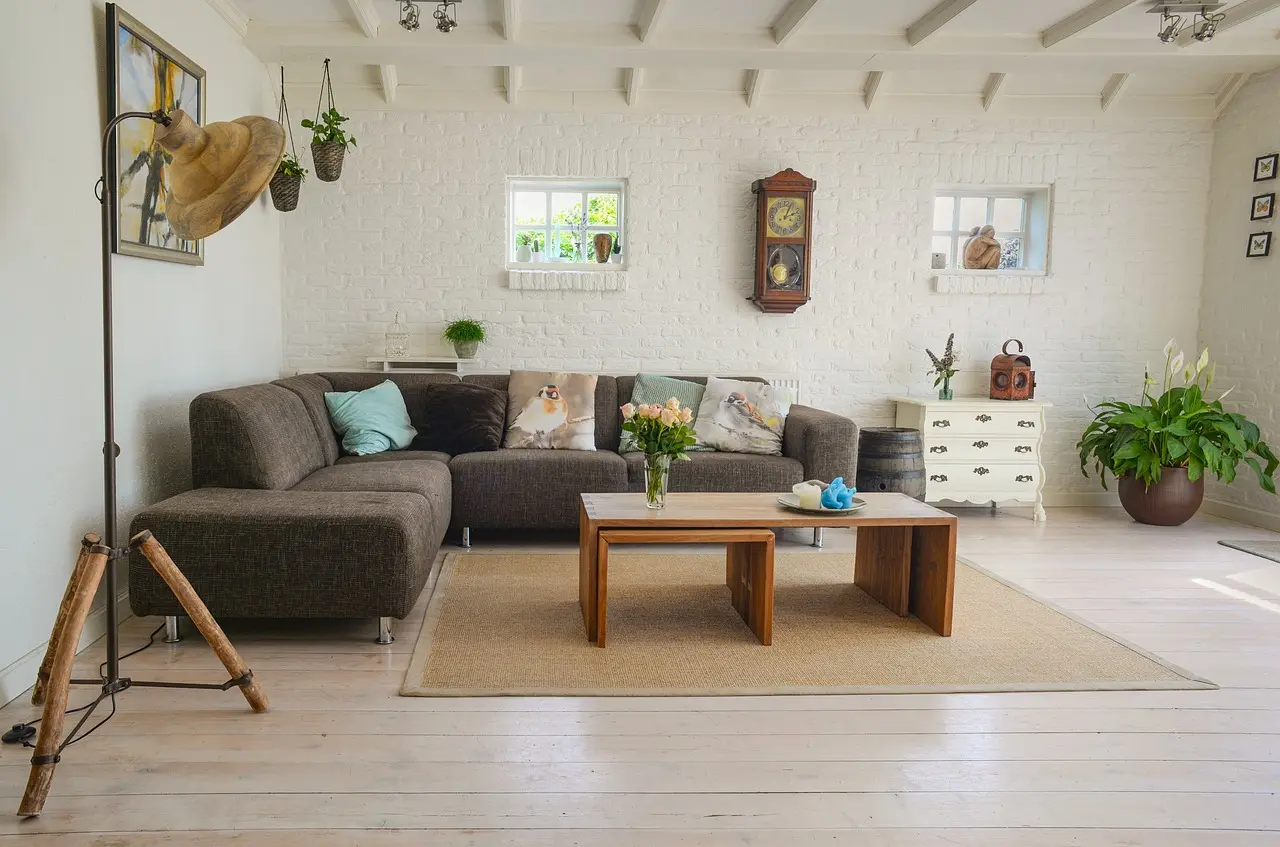


The right rug size usually starts with the sofa width, not the room perimeter. Choose a rug that is wider than the sofa, leaves a visible border at the walls, and gives the coffee table enough room to sit fully on the rug. In many living rooms, 8×10 feet is the default; smaller rooms can work with 5×8, and larger layouts often need 9×12.
Sofa-first sizing rule
The sofa should drive the decision before the room does. If the rug stops short of the sofa ends, the seating group tends to look cut off; if it extends too little past the arms, the rug can look accidental instead of planned. IKEA says a living room rug should be longer than the sofa, and it recommends at least one-third of the sofa stand on the rug.
Placement checklist
- Room depth allows a border at the walls: yes or no?
- Coffee table can sit fully on the rug: yes or no?
- Rug extends past the sofa arms: yes or no?
- All legs fit without crowding circulation: yes or no?
- Front legs only is the better fit for the room: yes or no?
Match rug size to room depth
Room depth can make a correct rug choice fail if the rug crowds the walls or blocks circulation. A 12- to 18-inch border is a strong target when the layout allows it; in tighter rooms, an 8-inch border is the more compact fallback. If sizing up removes that border, the larger rug is probably too much for the room.
Choose front legs or all legs on the rug
Front-legs-only placement is the smaller-room choice. It keeps the seating zone connected while using less rug area, and it works well when the coffee table can sit fully on the rug. All-legs-on placement is the larger-room choice. It creates a unified seating area, but it needs more rug on every side, especially in front of the sofa and around the coffee table.
Sofa to rug decision table
| Sofa type | Sofa width | Room depth | Front-legs-only | All-legs-on | Recommended rug size |
|---|---|---|---|---|---|
| Loveseat | 48 to 72 inches | 8 to 10 feet | Fits with a 5×8 rug | Usually too tight | 5×8 feet |
| Loveseat | 48 to 72 inches | 10 to 12 feet | Fits with an 8×10 rug | Possible if the room keeps a wall border | 8×10 feet |
| Standard sofa | 72 to 96 inches | 10 to 12 feet | Best fit with 8×10 feet | Often too small unless the sofa is narrow | 8×10 feet |
| Standard sofa | 72 to 96 inches | 12 to 14 feet | Works, but may leave extra floor around the group | Best fit with 9×12 feet | 9×12 feet |
| Sectional | Depends on chaise and return length | 10 to 12 feet | 8×10 feet for tighter layouts | Usually too small unless the sectional is compact | 8×10 feet |
| Sectional | Depends on chaise and return length | 12 to 14 feet | Possible, but often a compromise | Best when the rug extends past both sides | 9×12 feet |
This table is a starting point, not a substitute for measuring. The key check is whether the rug stays wider than the sofa, leaves bare floor at the walls, and gives the coffee table enough room to sit fully on the rug.
How much should a rug extend past a sofa?
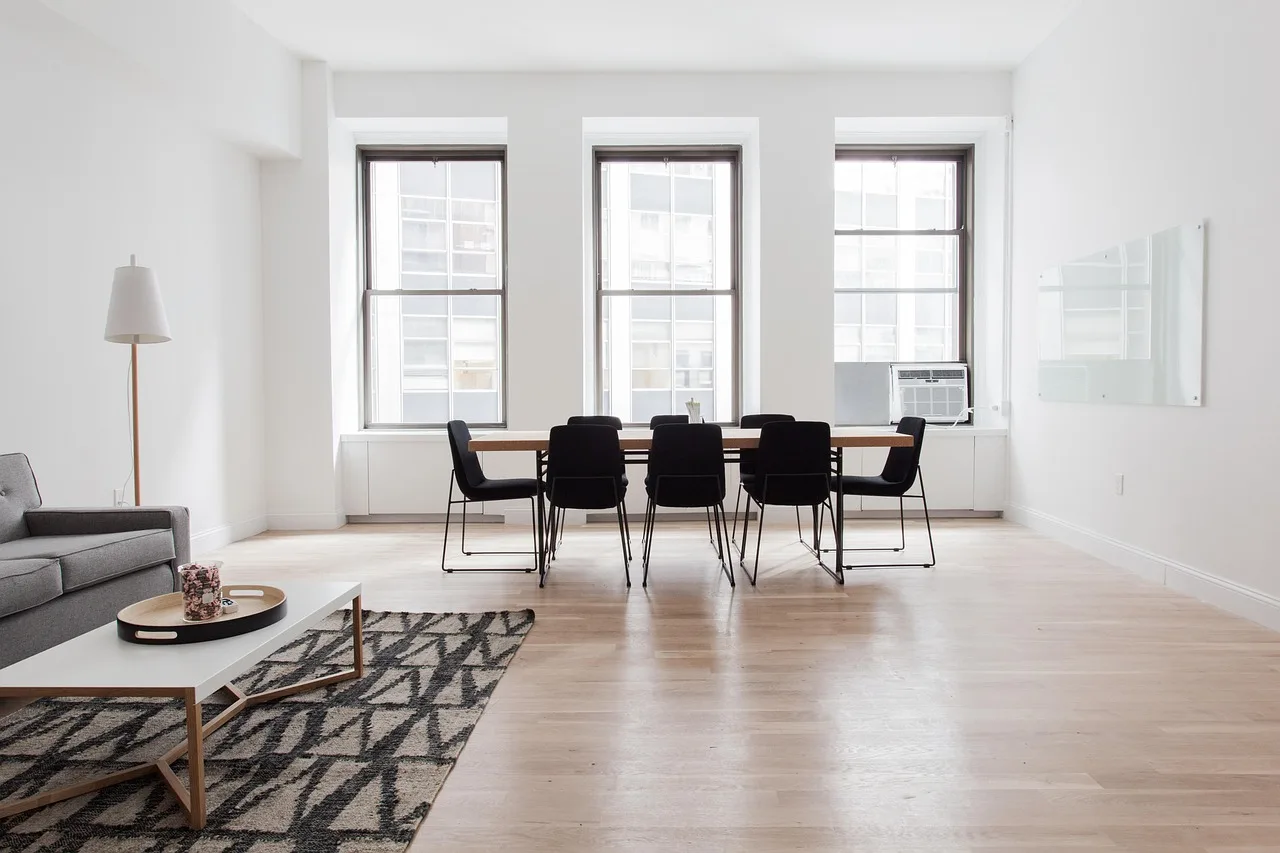
A rug should extend past the sofa far enough to frame the seating group, not merely sit under it. A practical target is about 6 to 12 inches beyond each side of the sofa, with 12 to 18 inches of bare floor at the wall when the room depth allows it. If sizing up removes that border, the larger rug can start to fight the room.
Width beyond the sofa
For a standard sofa, extra width keeps the rug from looking clipped at the ends. If the rug matches the sofa edge exactly, the layout can feel cut off. If it extends much farther than needed in a small room, the rug can overwhelm the floor plan, especially with oversized arms that already make the sofa read wide.
Bare floor around the rug
Leave open floor around the rug edge so the room keeps a border. That border frames the seating area and keeps the rug from touching the wall. FLOR also advises leaving an 8-inch border, which is the tighter-room fallback when a larger 12- to 18-inch gap is not possible.
Coffee table clearance
The coffee table should sit fully on the rug in front-legs-only layouts. That keeps the table anchored with the sofa, so the seating group reads as one area instead of three separate pieces. If the rug is sized to the sofa but not the table, the front edge of the table can land off the rug and make the setup feel undersized.
Say your sofa is 84 inches wide and your coffee table is centered in front of it. If the rug is only barely wider than the sofa, the table may land partly off the rug. A larger rug gives you enough depth to fit the table and still keep the front legs of the sofa on the rug.
Should a rug go under a couch?
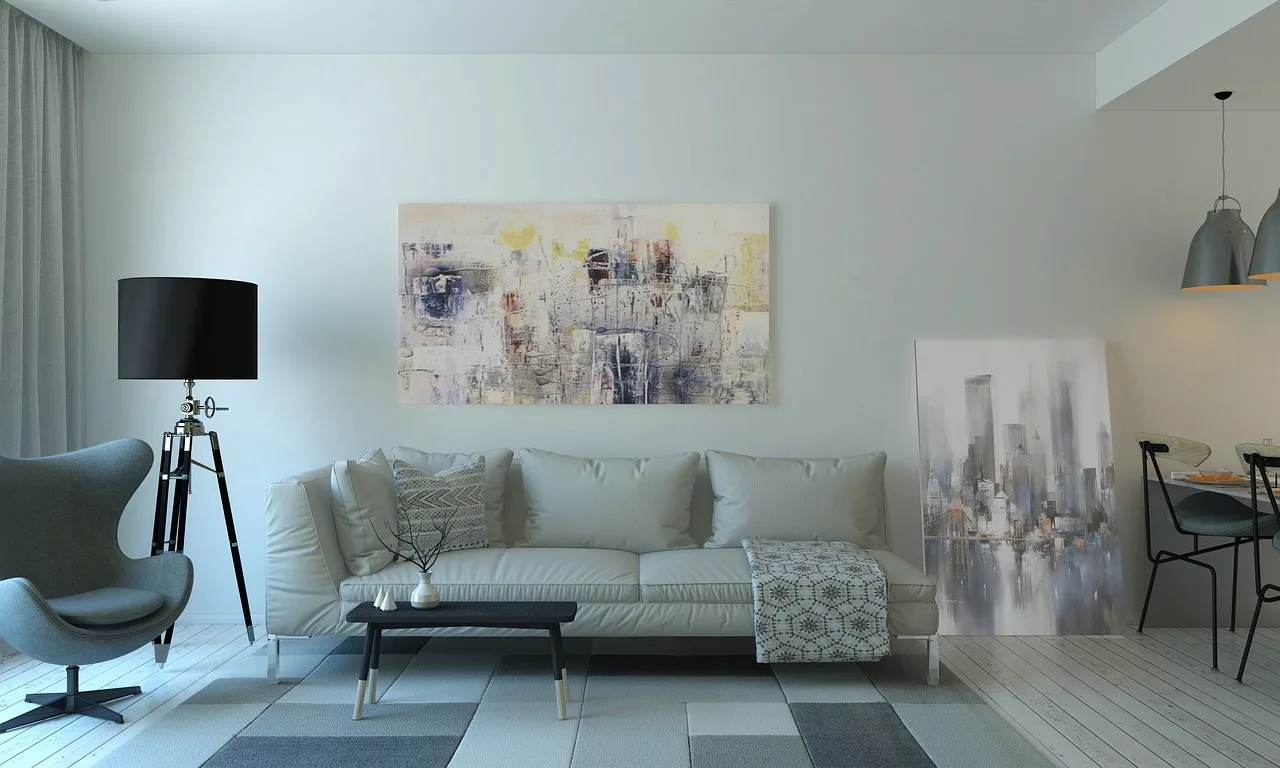
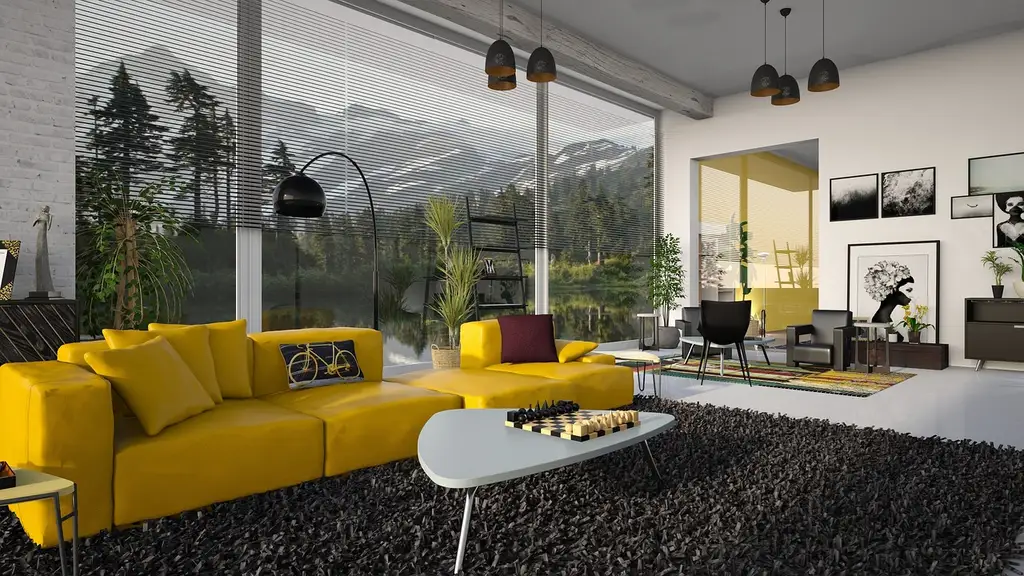
Yes, at least partly. In smaller rooms, the front legs of the couch should sit on the rug so the seating area feels connected. In larger rooms, all legs can sit on the rug if the rug is large enough to extend past the sofa on both sides and still leave space at the walls. The choice depends on room depth, not just sofa width.
Front-legs-only in smaller rooms
This is the best budget-friendly layout for many homes. It lets you use a smaller rug while still tying the sofa and coffee table together. A 5×8 rug often works here for a loveseat or compact sofa, especially when the room depth is limited or the room is narrow enough that sizing up would crowd the walls.
All-legs-on in larger rooms
All-legs-on placement often works best when the room is spacious and the rug can support the whole seating group. A 9×12 rug is often used for this layout, and larger rugs such as 10×14 can be useful in especially wide rooms. If the sofa has oversized arms or the seating group includes extra chairs, the rug often needs to size up to avoid looking compressed.
When a rug can be smaller than the sofa
A rug can be smaller than the sofa only in the sense that it can sit under just the front legs, while the sofa still overhangs the rug. It should not be so small that the seating group looks split apart or that the coffee table sits partly off the rug. Narrow rooms and chaise-heavy sectionals are the cases where an undersized rug fails fastest.
A common first-timer mistake is choosing a rug that fits the floor space but not the seating zone. Suppose a 90-inch sofa sits in a narrow room with a 5×8 rug placed too far forward. The rug may clear the walls, yet the sofa legs and coffee table no longer read as one group, and sizing up may break wall clearance instead of fixing the layout.
What size rug do you need for a sectional?
A sectional usually needs a larger rug than a standard sofa because the footprint is wider and deeper. The rug should extend past both sides of the sectional, and the right size often depends on whether the sectional includes a chaise and how much room depth you have. In many layouts, that means 8×10 or 9×12 feet, with the larger size becoming more important as the chaise length grows.
Standard sectional layouts
For a standard L-shaped sectional, the rug should sit under the main seating zone and extend beyond both outer ends. A smaller 8×10 rug may work in a tighter room if only the front legs are on the rug, but 9×12 is usually the cleaner choice when you want more coverage and a more balanced frame around the sofa.
Chaise sectionals
Chaise sectionals need extra attention because the chaise length can push the rug out of alignment. The rug should not stop at the shortest side of the sectional. Instead, it should extend under the central seating area and reach far enough to keep the chaise from looking like it is floating off the rug. If the chaise is the dominant piece, sizing up is usually safer than forcing a smaller rug to work.
Open-plan sectional placement
In open-plan rooms, a sectional often benefits from all-legs-on placement because the rug helps define the seating zone within a larger space. That is where 9×12 feet becomes a common target, with larger options if the sectional is oversized or the coffee table is substantial. If the room is open but not deep, a larger rug can solve one problem while creating another by eating into circulation.
Where should the rug sit with a coffee table
The rug should sit centered under the seating group, with the coffee table fully on the rug. That placement connects the sofa and table visually, keeps the layout grounded, and reduces the odds that the table feels too close to the wall or too far from the sofa. The rug should support the whole conversation area, not just the sofa.
Center the seating group
Center the rug on the sofa and the coffee table together, not on the room alone. A centered seating group makes the layout easier to read, especially in medium living rooms where the sofa and table are the main furniture pieces. If the rug is centered on the room but not the furniture, the space can look balanced yet still feel awkward.
Keep the table fully on the rug
In front-legs-only layouts, the coffee table should still sit entirely on the rug. If part of the table lands off the rug, the arrangement can look unfinished and the rug may feel too small for the furniture cluster. This matters even more in compact rooms, where a table that spills off the rug can make the whole layout feel crowded.
Avoid tight wall-to-rug spacing
Do not push the rug too close to the wall just to fit the table. The wall clearance matters as much as the coffee table clearance, because the room needs a visible border around the seating area. If you must choose, size up the rug before shrinking the border too much, unless sizing up would crowd circulation or force the sofa too near the wall.
Living room rug sizes by sofa type
Use the sofa type as a shortcut, then confirm the room depth and placement style. The right rug is the one that fits the sofa, supports the coffee table, and still leaves a clean border at the walls. A size that works in one room can fail in a narrower room with bulky arms or in a deeper room that can support all-legs-on placement.
5×8 rug for a loveseat or small sofa
A 5×8 rug is useful in small living rooms and for compact seating. It works best when only the front legs of the loveseat or small sofa are on the rug. FLOR notes that 12 tiles equals a 5×7 rug, which is close to this size family and helps explain why small layouts need less floor coverage.
8×10 rug for a standard sofa
An 8×10 rug is the common standard living room size and the right size for most medium living rooms. It fits a standard sofa plus a seating grouping, which is why it is often the default answer when the sofa is average in width and the room has moderate depth. In narrower rooms, though, an 8×10 can still feel large if the sofa arms are oversized or if the rug cannot keep a wall border.
9×12 rug for a sectional or large sofa
A 9×12 rug suits large or open-plan rooms and supports all furniture legs on the rug more comfortably. It is often the safer choice for a sectional, especially when the layout needs the rug to extend past both sides of the sofa and still keep the wall border intact. FLOR’s tile count also reflects the larger scale: 30 tiles equals an 8×10 rug, so a 9×12 rug sits a full step above that standard.
Frequently asked questions
What size rug do you need for a couch?
For most couches, start with an 8×10 rug and check the sofa width against the rug width. The rug should be longer than the couch and wider by about 6 to 12 inches on each side. Smaller couches can use a 5×8 rug in tight rooms, while larger ones may need 9×12.
What size rug do you need for a sectional sofa?
A sectional sofa usually needs a 9×12 rug, especially if you want all legs on the rug. An 8×10 rug can work in tighter layouts when only the front legs are on the rug, but the rug still needs to extend past both sides of the sectional and leave room at the walls.
Should a rug go under sofa?
Yes, at least the front legs should sit on the rug in smaller layouts. That placement connects the sofa to the rest of the seating area without requiring a very large rug. In larger rooms, all legs can sit on the rug if the rug stays wider than the sofa and leaves wall clearance.
Can a rug be smaller than the sofa?
It can be smaller in coverage, but not in the wrong way. A smaller rug is acceptable when the sofa’s front legs sit on it and the coffee table fits fully on it. It fails when the rug is so small that the seating area looks split or the table floats off the edge.
How much rug should extend past the sofa?
A good target is about 6 to 12 inches past each side of the sofa. That makes the rug look intentional and gives the seating area a clear frame. Combine that with 12 to 18 inches of bare floor at the walls when the room depth allows it.
Is 8×10 the right rug size for a standard sofa?
Yes, 8×10 feet is the right size for most living rooms and a standard sofa. It usually gives enough width for front-legs-only placement and enough length for a coffee table in front. If the room is large or open-plan, 9×12 may be the better fit.
Products related to this article
Sponsored / affiliate links. As an Amazon Associate I earn from qualifying purchases. I may earn additional commission from eligible campaigns.