Loveseat Size Chart: Width, Depth, and Room Fit
A loveseat often measures about 48 to 72 inches wide, but fit depends on about 22 to 24 inches of usable seat width per person and at least about 32 inches of doorway clearance. Pick the wrong size and you can end up with cramped seating, blocked walkways, or a piece that will not fit through the door. This guide compares loveseat dimensions, seat depth, room-clearance needs, and delivery path measurements so you can buy by fit, not just the label.
Loveseat size chart at a glance
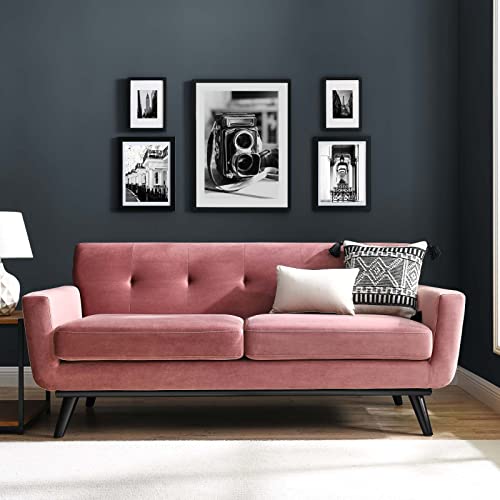


The label causes the most confusion. A loveseat, apartment sofa, and compact sofa can overlap in width, depth, and seating comfort, so dimensions matter more than the category name. A loveseat usually seats two people, while a sofa usually seats three people.
| Type | Width | Depth | Typical seat use | Fit signal |
|---|---|---|---|---|
| Compact loveseat | 50 to 60 inches | 32 to 40 inches | Two people, tighter perch | Best when wall space is limited |
| Standard loveseat | 60 to 72 inches | 32 to 40 inches | Two people, more usable width | Best when you want room for two adults |
| Apartment sofa | 68 to 80 inches | 34 to 42 inches | Two to three people depending on layout | Can fit where a loveseat label is expected |
| Compact sofa | 72 to 96 inches | 34 to 42 inches | Three people in typical use | Better when seating takes priority over footprint |
How width, depth, height, and seating capacity compare
Loveseats commonly measure 52 to 72 inches wide, and sofas commonly measure 72 to 96 inches wide. Typical loveseat depth ranges from 32 to 40 inches, while typical sofa depth ranges from 34 to 42 inches. Depth can be similar for both, so a shorter width does not guarantee an easier room fit.
Height affects sightlines, but width and depth usually decide whether the piece works in the room. Delivery also depends on the largest dimension, which can be width, depth, or height depending on the model and packaging. That is why a loveseat can still be hard to move even when it looks compact on paper. Many product measurement guides treat the full outer footprint as the first check before comfort details.
What size is a loveseat in inches?
A loveseat is usually 52 to 72 inches wide, with compact loveseats at 50 to 60 inches wide and standard loveseats at 60 to 72 inches wide. That range overlaps with smaller sofas, especially apartment sofas, so check the exact width, depth, and arm size rather than rely on the category name alone.
Where compact and standard ranges start to matter
Compact loveseats work best when wall space is tight and the seat is meant for occasional or close two-person use. Standard loveseats give you more total width, which can mean a better chance of fitting two adults without crowding. The overlap is real, though, and some standard loveseats are no smaller than a narrow apartment sofa.
How loveseat depth can match a sofa
A loveseat can be as deep as a sofa, and sometimes it feels even larger in a room because the frame and arms take up more visual and physical space. Typical loveseat depth ranges from 32 to 40 inches, while typical sofa depth ranges from 34 to 42 inches. If your room is shallow, depth can be the limiting number even when width looks safe.
Suppose you have a 68-inch wall and a loveseat with a 38-inch depth. The piece may fit along the wall, but it can still narrow the room if a coffee table and walkway need space in front of it. Width and depth need to work together, and room layout guides usually treat circulation space as part of the footprint, not an afterthought.
Why inside seat width matters more than overall width
Overall width can hide poor seating space. Arms take up part of the footprint, so the better comfort number is inside seat width, measured between the armrests. A loveseat with wide arms may look generous from the outside and still give each person less usable room than expected.
How arm width changes usable seating
Arm width varies by model and changes both the total width and the seat space you can actually use. A 66-inch loveseat with six-inch arms provides about 54 inches of inside seat width. A 70-inch loveseat with ten-inch arms provides only about 50 inches inside. The larger outside number does not always mean better seating.
An 80-inch sofa with five-inch arms provides roughly 70 inches inside. That is why a wider piece can sometimes seat people more comfortably than a smaller label suggests. The arm design matters as much as the category, and product measurement guides often separate total width from inside width for that reason.
How much seat width two adults usually need
A practical target is about 22 to 24 inches of usable seat width per person. That means two adults usually need about 44 to 48 inches of inside seat width for a comfortable sit, and a bit more if less shoulder contact is preferred. If the inside width falls below that range, the loveseat may still work, but it becomes a tighter fit.
For shoppers comparing a loveseat, apartment sofa, and compact sofa, this is the number that breaks the tie. If the inside seat width is too small, the wider label will not fix the seating problem.
Can a loveseat fit in a small living room?
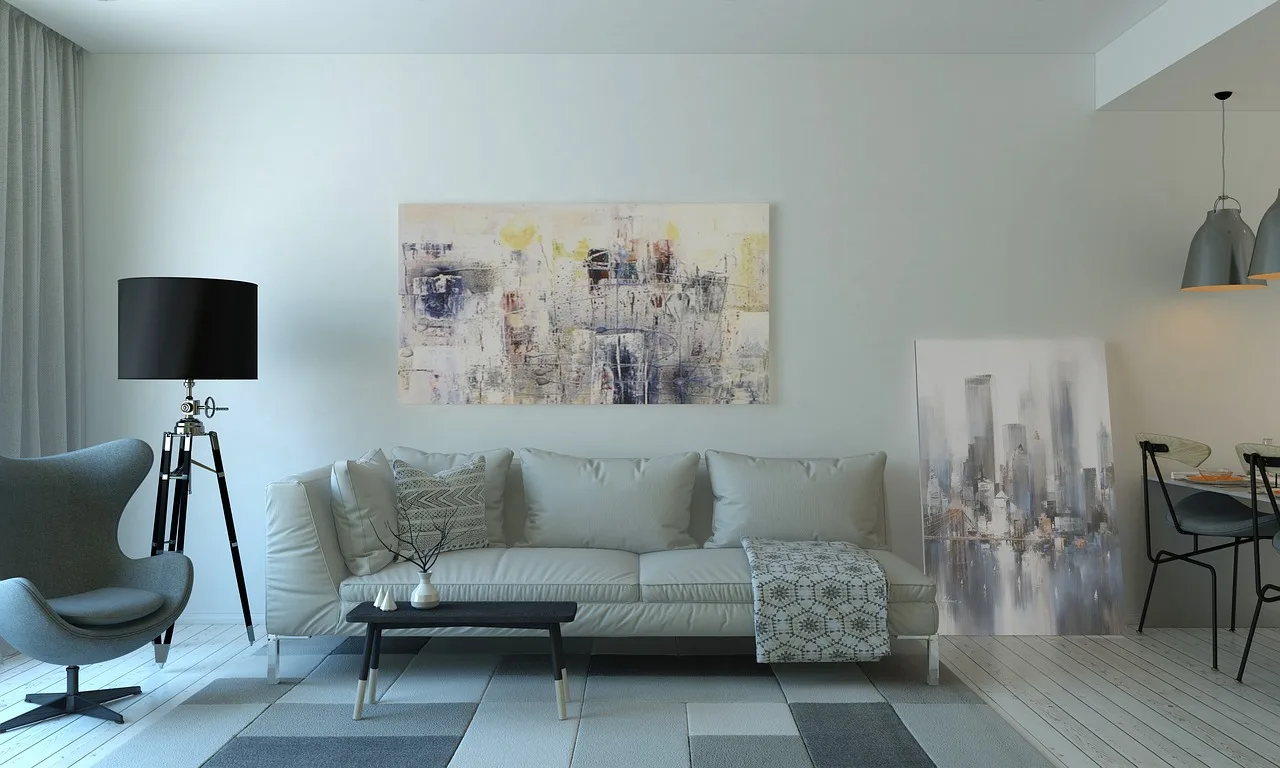
Yes, but only if you measure the room and the path through it before you buy. A loveseat can fit in a small living room when the wall, side clearances, and walkway clearance all work together. A deep loveseat or one with oversized arms can still overwhelm a room that looks large enough on paper.
How side clearance and walkway clearance work
Side clearance is the space beside the loveseat so it does not press directly into walls, doors, or other furniture. Walkway clearance is the open space people need to pass in front of it. If either number is too tight, the room will feel cramped even if the loveseat technically fits.
A common first-timer mistake is measuring only the room length and forgetting to leave space for side tables and opening the loveseat’s recline or chaise if needed. A 72-inch loveseat can fit on a 78-inch wall, but if a path must pass in front of it, the room may still fail because the usable floor area disappears. Interior layout standards typically treat the walking path as a separate clearance from the furniture footprint.
How wall width differs from usable wall width
Wall width is the full span from end to end. Usable wall width is what remains after trim, vents, radiators, window casing, corner clearance, and nearby doors are accounted for. Those details can turn an apparently usable wall into a poor fit for a loveseat with broad arms or a deep frame.
-
Measure the wall first.
Record the full wall width, then subtract anything that blocks the sofa base or arm. This gives you the usable wall width, which is the number that matters when the piece has thick arms or needs a little air on both sides. -
Check the depth path.
Measure from the wall to the nearest obstacle in front of the loveseat location. Compare that space to the loveseat depth, then leave room for legs, a coffee table, and walking room if the space is shared. -
Confirm the doorway and turn.
Measure the narrowest door, hall, or stair turn on the delivery path. Use the largest furniture dimension, including height if the piece has to tip or rotate, so you do not discover a miss at the front door.
Say your living room wall is 84 inches long, but a floor vent uses 6 inches and a door trim takes another 3 inches. Your usable wall width is closer to 75 inches, which changes whether a 72-inch standard loveseat is realistic once side clearance is added.
When a deep loveseat becomes a space problem
A deep loveseat can fit in width and still fail the room because it cuts into the usable floor area. If the depth is near 40 inches and the room also needs a coffee table or open passage, the space can feel blocked fast. That is why depth should be checked with the rest of the furniture plan, not alone.
Loveseat fit worksheet
Use this worksheet to compare the numbers before you order. The pass/fail verdict is based on whether the overall size leaves enough room for two-person use, basic side clearance, and a usable walking path in common room sizes. As a rule of thumb, inside seat width should meet the two-adult target, and the walkway should remain open after the furniture is placed.
| Room size | Overall width | Overall depth | Arm width | Inside seat width | Inches per person for two adults | Side clearance needed | Walkway clearance needed | Room-fit verdict |
|---|---|---|---|---|---|---|---|---|
| 8 ft x 10 ft | 60 to 66 in | 32 to 36 in | 4 to 6 in | 48 to 54 in | 24 to 27 in | 2 to 4 in | 30 in minimum | Pass for compact loveseat |
| 10 ft x 12 ft | 66 to 72 in | 34 to 38 in | 5 to 8 in | 50 to 58 in | 25 to 29 in | 3 to 6 in | 30 to 36 in | Pass for standard loveseat |
| 12 ft x 14 ft | 72 to 80 in | 36 to 40 in | 6 to 10 in | 54 to 64 in | 27 to 32 in | 4 to 6 in | 36 in preferred | Pass for large loveseat or apartment sofa |
| Narrow hall or landing | Any width over 32 in door clearance can fail | Any depth over turn space can fail | n/a | n/a | n/a | n/a | 32 in doorway clearance needed | Fail if the path cannot turn |
Should you choose a loveseat or a sofa?
The decision is less about the label and more about fit, seating width, and delivery path. A loveseat is the better call when the room is tight, the walkway must stay open, and the inside seat width still meets your comfort target. A sofa makes more sense when the room can absorb extra width and depth without crowding.
Choose a loveseat if…
- You need two-person seating and the room is short on wall width.
- The inside seat width still gives each person about 22 to 24 inches or more.
- Your hallway, door, or stair turn is tight and a smaller frame improves delivery odds.
- You want a compact footprint for a den, apartment, or secondary sitting area.
Choose a sofa if…
- You want three-person seating or more relaxed two-person spacing.
- The room can handle a width in the 72 to 96 inches range.
- You are choosing between a large loveseat and an apartment sofa, and the wider seat space wins.
- The delivery path allows for a larger piece and the room still keeps clear walkways.
Picture a 70-inch loveseat with 10-inch arms in a room that only needs seating for two. It may fit the wall, but the 50 inches inside can feel tight. In the same room, an apartment sofa with slimmer arms might give more usable space even if the outside width is similar.
Frequently asked questions
How wide is a standard loveseat?
A standard loveseat can be 60 to 72 inches wide. That range gives you more seating potential than a compact loveseat, but arm width still affects usable space. A wide frame with thick arms may leave less inside room than a narrower model with slim arms.
What is the difference between a loveseat and a sofa size?
A loveseat usually seats two people, while a sofa usually seats three people. Loveseats commonly measure 52 to 72 inches wide, and sofas commonly measure 72 to 96 inches wide. Because width ranges overlap, inside seat width and overall depth are better checks than the category name alone.
Will a loveseat fit in a small living room?
Yes, if the room has enough usable wall width, side clearance, and walkway clearance. A loveseat can still fail in a small living room if it is deep, has oversized arms, or blocks a needed path. Measure the wall, the depth space, and the delivery route before you buy.
How much seat width does a loveseat have inside?
Inside seat width depends on arm width, which reduces usable space. A 66-inch loveseat with six-inch arms provides about 54 inches inside, while a 70-inch loveseat with ten-inch arms provides only about 50 inches inside. For two adults, about 22 to 24 inches per person is a practical target.
Can a loveseat be deeper than a sofa?
Yes. Typical loveseat depth ranges from 32 to 40 inches, and typical sofa depth ranges from 34 to 42 inches, so the numbers overlap. A deep loveseat can take more floor space than expected, especially if the room needs a coffee table or a clear walkway in front of it.
Products related to this article
Sponsored / affiliate links. As an Amazon Associate I earn from qualifying purchases. I may earn additional commission from eligible campaigns.