Sofa Sagging Problems: Troubleshooting the Real Cause
For sofa sagging problems, start by checking whether the dip comes from the cushion, the webbing or springs, or the frame before you buy a sofa sagging repair insert. This foam support insert can help a cushion that has lost loft, but it will not fix a broken frame, loose fasteners, stretched webbing, or failed springs.
Verdict


Start by finding the failure point, then buy the part that matches it. If the cushion has lost loft but the seat base still supports weight evenly, a foam support pad can be a practical DIY answer. If the sag stays after you remove the cushion, stop there and inspect the support system below.
Who this repair insert is for / not
For: sofas, couches, loveseats, and chair cushions with a zippered cover, where the cushion foam has compressed but the frame still feels sound.
Not for: cracked frames, warped rails, loose or broken spring decks, recliners with coil springs, or any seat that still dips when the cushion is removed. In those cases, the right fix is in the structure below the cushion, not in the cushion fill.
Purchase-decision criteria
Buy this type of insert only when the cushion cover opens with a zipper, the weak area is limited to foam loss, and the cushion footprint matches the support coverage closely enough to matter. The sofa kit is a 2-piece kit, each foam piece is 1.5 inches thick, and together they cover 26 by 17 inches. For the recliner version, the spring type is part of the decision: it is made for attached seats with zig zag springs and is not for coil springs.
Pros and cons
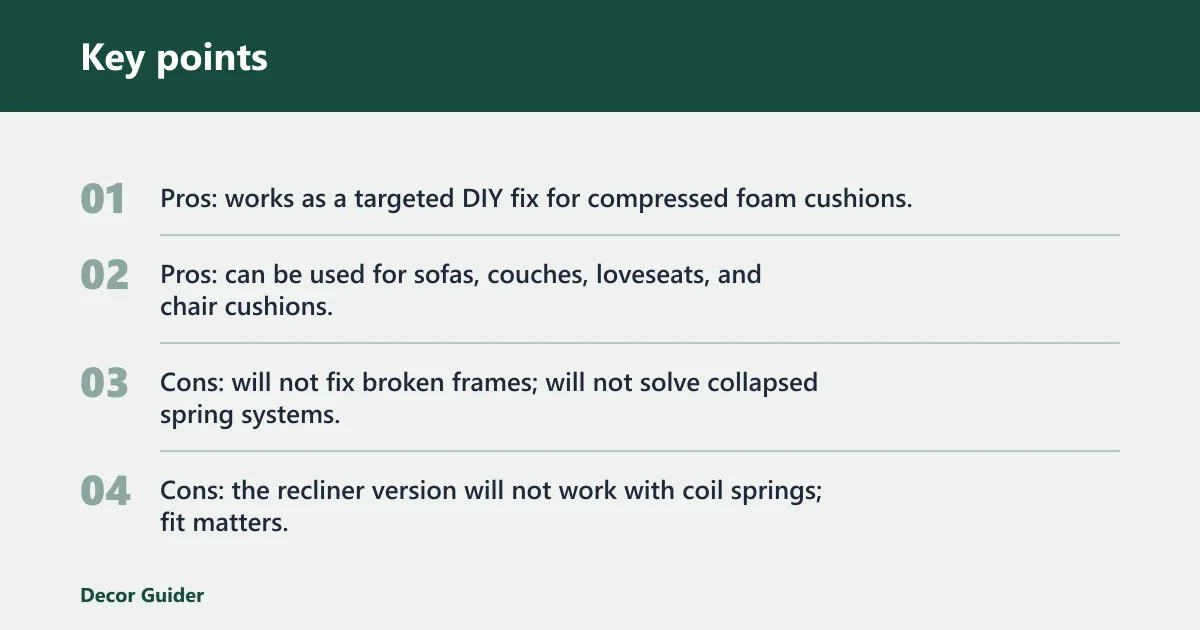
- Pros: works as a targeted DIY fix for compressed foam cushions; goes inside a zippered cover; the sofa kit includes two pieces.
- Pros: can be used for sofas, couches, loveseats, and chair cushions.
- Cons: will not fix broken frames; will not solve collapsed spring systems; the recliner version is only for attached seats with zig zag springs.
- Cons: the recliner version will not work with coil springs; fit matters, so a pad that is too small leaves the edges unsupported.
Check the cushion cover for a zipper, confirm whether the sag is in the cushion or the structure below it, and measure the cushion footprint before ordering. For recliners, confirm a zig zag spring layout before buying. If any of those checks fail, the insert is likely the wrong fix.
This suits homeowners and renters dealing with a cushion that feels flat, soft, or lopsided, but whose sofa frame still feels sound. It is also a fit for people comparing a cushion repair insert against re-foaming or replacement furniture. It is not the right answer for a cracked frame, a sunk spring deck, or a recliner with coil springs.
For example, a three-seat sofa may sag only where one cushion sits while the frame beneath still feels solid. That points toward foam loss or cushion support, not a structural failure. By contrast, if the seat dips in the center even with the cushion removed, the problem is likely in the springs, webbing, or frame.
Sofa sag troubleshooting matrix
Use this matrix before buying anything. It ties the visible symptom to the likely cause, the best DIY fix, the tools needed, and the point where a furniture repair pro is the better call.
| Visible symptom | Likely cause | Best DIY fix | Tools needed | When to call a pro | Severity | Confidence level | Estimated DIY difficulty | Expected lifespan of fix | Wrong fix risk |
|---|---|---|---|---|---|---|---|---|---|
| Cushion looks sunken but seat base feels firm | Compressed foam in the cushion insert | Use a sagging sofa cushion repair insert inside the zippered cover | Zip access, measuring tape | If the cushion cover is damaged or the cushion no longer holds shape | Moderate | High | Easy | According to the manufacturer, depends on use and foam loss | Low if the frame is sound; high if the sag is structural |
| Sag stays when the cushion is removed | Weak springs, loose webbing, or frame damage | Repair or replace the support system below the cushion | Flashlight, screwdriver, staple remover | If the frame is cracked, warped, or broken | High | High | Moderate to hard | According to the manufacturer, not applicable to an insert-only fix | Very high if you buy a cushion insert instead of fixing the support deck |
| Middle of the seat drops the most | Center support failure or worn suspension | Inspect the seat deck, springs, and frame rails | Flashlight, tape measure | If the seat deck has separated from the frame | High | High | Moderate | According to the manufacturer, not applicable unless the cushion is also compressed | Very high if the true problem is below the cushion |
| One edge feels lower than the rest | Local foam collapse or edge support loss | Use a foam support pad if the cushion cover allows the needed coverage | Measuring tape | If the edge sag is caused by broken structure below | Moderate | Medium | Easy | According to the manufacturer, depends on coverage and use | Moderate if the pad does not reach the weak area |
| Recliner seat sags when extended | Incorrect spring type or worn attached-seat support | Use the recliner version only on attached seats with zig zag springs | No tools needed for installation, but muscle is required | If the recliner has coil springs or a damaged mechanism | High | High | Easy | According to the manufacturer, depends on spring condition and fit | Very high if used on coil springs |
| Mattress dips in the middle, edge, or another spot | Localized mattress sag | Place the mattress support directly under the sag, between the mattress and box spring | None beyond lifting the mattress | If the bed frame or box spring is broken | Moderate | Medium | Easy | According to the manufacturer, depends on mattress wear and placement | Moderate if the problem is actually the box spring or frame |
Why is my sofa sagging in the middle?

Middle sag usually means the support system under the cushions is losing strength, not just the foam on top. If the cushion also feels flat, the foam may be worn out too. If the sag remains after you remove the cushion, the frame, springs, webbing, or fasteners need attention before any insert can help.
How to tell foam loss from seat support failure
Lift the cushion and press on the seat base. If the base feels even and firm, the cushion fill is the main issue. If the center still drops or rebounds poorly, look below the cushion. That difference tells you whether to buy a cushion support pad or repair the seat structure.
A common first-timer mistake is buying foam before checking the seat deck. That can leave you with a pad that sits on top of a damaged support system and changes almost nothing.
What middle sag usually means in an older sofa
Older sofas often lose support in more than one place. The foam compresses, the webbing stretches, and the springs loosen over time. If all three are worn, a single insert may improve comfort but will not restore the seat to full support.
Clues that point to frame or suspension damage
Listen and feel for squeaks, rocking, or uneven bounce. Look for a seat that tilts forward, dips more on one side, or bottoms out when you sit down. Those signs point away from foam and toward the structure below the cushion.
How do you fix a sagging couch cushion?
For a cushion-only problem, the practical fix is a foam support pad or similar insert placed inside the zippered cushion cover. The sofa kit is a 2-piece kit, and each foam piece is 1.5 inches thick. Together, the two pieces cover 26 by 17 inches, so the cushion size and loft loss need to match that coverage.
How a foam support pad works inside a zippered cover
The insert goes inside the zippered cushion cover, not under the cushion. That placement matters because the pad supports the foam from within the cushion assembly.
Fit checks for cushion depth and coverage
Measure the cushion length, width, and how much loft it has lost. If the pad coverage is smaller than the weak area, the edges may still sink. For sectional sofas, measure each seat separately. For apartment-sized sofas and loveseats, check the cushion footprint carefully before buying.
Picture a loveseat cushion that measures close to the pad coverage but has worn edges and a flat center. In that case, the insert may help the center most, but it cannot repair torn seams or a collapsed support deck under the cushion.
What the 2-piece foam kit covers
The sofa kit includes two pieces, which makes it easier to build support inside a cushion cover without a bulky single block. That two-piece design is useful when a cushion needs a more balanced fill across the seat area. It still depends on the cover size and the amount of foam loss.
Will it work on recliners and springs?
The recliner version is for attached seats with zig zag springs only. It should be installed with the recliner fully extended, and the support piece is positioned by hand during installation. It will not work with coil springs, so spring type is a required purchase check.
Zig zag springs: the compatible recliner setup
Zig zag springs flex in a way that suits the recliner application described for this product. If your recliner has attached seating with that spring style, the insert may help restore support under the seated area. Keep the recliner fully extended before installation so you can reach the support area properly.
Why coil springs are not the same case
Coil springs change the fit and support profile. The recliner product is explicitly not for coil springs, so buying it for that setup is a mismatch. If you can see or confirm coil springs, choose another repair path.
How do I know what kind of spring system my sofa has?
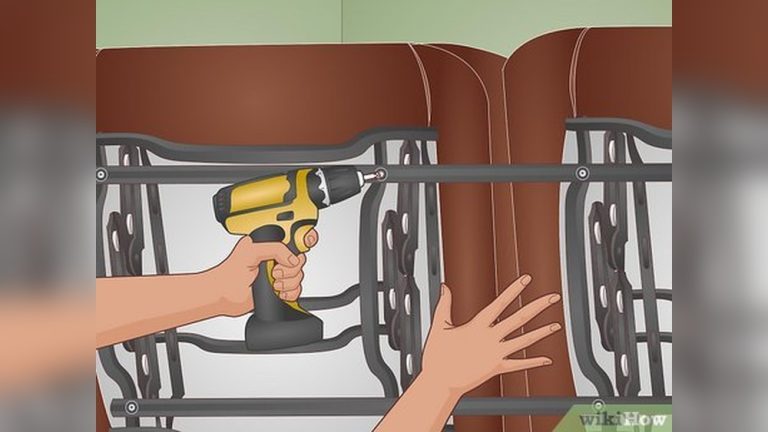
Check under the seat with a flashlight. Zig zag springs usually look like long, wave-shaped metal strips running across the seat. Coil springs look more like individual spring units. If you cannot tell from the underside, remove a cushion and inspect the support layout before ordering any repair insert. Also look for loose fasteners, stretched webbing, and cracked frame joints while you are there, since those problems can cause a sag even when the cushion itself is fine.
Sagging couch repair guide
Use the repair insert only after you confirm that the cushion cover has a zipper and the problem is in the cushion, not the structure below. For sofas and couches, the insert belongs inside the cover.
Install inside the zippered cushion cover
- Unzip the cushion cover.
- Place the insert inside the cover.
- Position it under the cushion fill so the foam sits where the support is needed.
- Close the zipper and sit on the cushion to check the feel.
Cost check: insert vs re-foaming vs replacement
A support insert is usually the least disruptive option because it avoids full cushion rebuilding. Re-foaming costs more because the cushion core is replaced. Spring repair or frame work can cost even more, especially if parts and labor are needed. Replacing the whole sofa is the highest-cost path, but it may make sense when the frame is damaged.
Alternatives: re-foaming, spring repair, or replacement
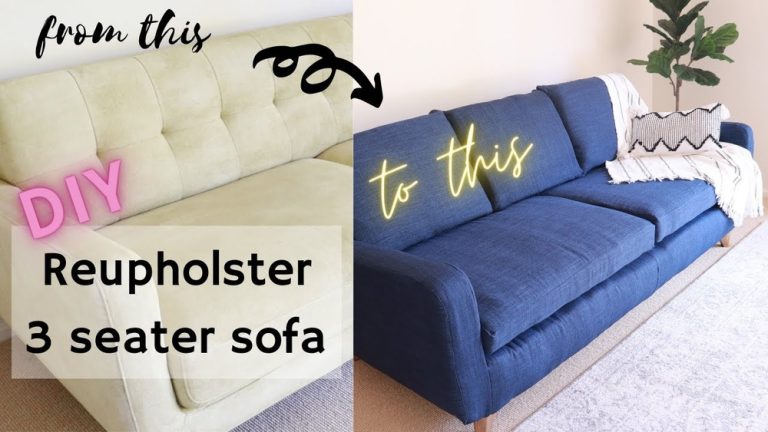
If the cushion cover is intact but the fill is exhausted, re-foaming can restore shape more fully than a support insert. If the seat still sags with the cushion removed, spring repair is the more appropriate fix. If the frame is cracked, warped, or failing in multiple areas, replacement can be the most practical option.
Prevention tips to slow future sagging
Rotate cushions if the design allows it. Avoid sitting in the same spot every day. Keep the sofa on a level floor so weight does not shift to one side. For recliners, check that the spring system stays aligned and that the seat fully extends as intended. Small habits help the repair last longer.
Suppose a renter in a small apartment has a loveseat with one flat cushion and a sound frame. In that case, a cushion insert can be a smart low-cost fix. If the same loveseat creaks, dips in the center with the cushion removed, and rocks on one side, the support system below needs repair first.
Frequently asked questions
Will a sofa sagging repair kit work for my couch?
It can, if the issue is limited to cushion compression and the sofa has a zippered cushion cover. It is less useful when the sag comes from broken springs, loose webbing, or frame damage. Check the support system first so you do not buy the wrong fix.
Can I put foam under a sagging cushion?
For this product, no. The sofa insert is meant to go inside a zippered cushion cover, and the insert should not be placed under the cushion. Check the cushion itself first, then choose the fix that matches the failure point.
Do sagging repair inserts work on recliners?
They can, but only on the recliner setup described for this product: attached seats with zig zag springs. The recliner should be fully extended during installation. If the recliner has coil springs, this product will not work.
Will this fix work if my sofa has coil springs?
Not for the recliner version, and that is a key failure-case check before you buy. Coil springs are explicitly not compatible with the recliner use case. If your seat uses coil springs and the support structure is failing, look at spring repair or professional repair instead.
Products related to this article
Sponsored / affiliate links. As an Amazon Associate I earn from qualifying purchases. I may earn additional commission from eligible campaigns.