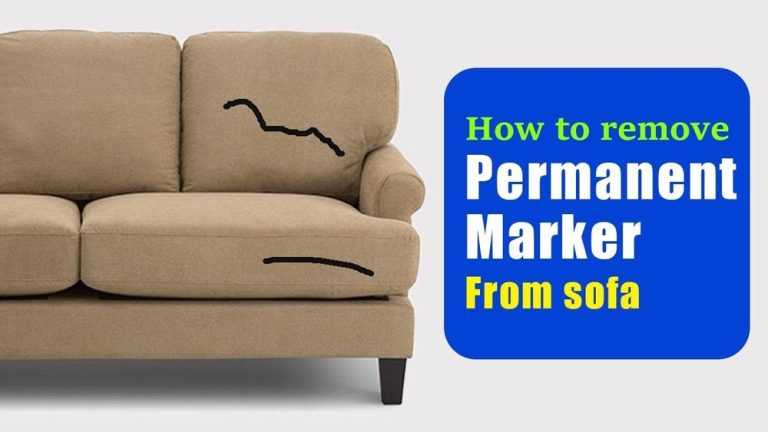
Best Sofa Repair Kits for Small Tears: based on specs and reviews
For small sofa tears, choose the kit by tear location and upholstery type: use adhesive patch kits for hidden or flat spots, and color-matched filler or liquid repair for visible leather or vinyl, while torn seams usually need stitching kits. A bad match can peel, discolor, or let the tear grow. This guide shows which repair method fits each upholstery type and tear location.
This guide is part of our Sofa cleaning and stain removal series.
Quick comparison
| Product | Badge | Best for | Price | ||
|---|---|---|---|---|---|
 |
ATG Upholstery Repair Kit – Car Seat Repair Kit Fabric –ATG | Our pick | 56 color options fabric fiber kit | $18.90
Price as of 1 Oct 2026
|
View |
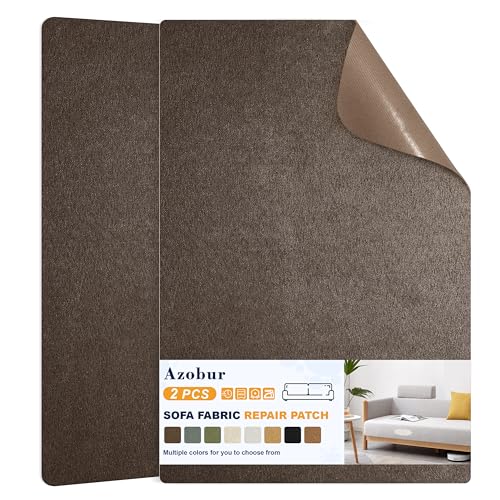 |
Azobur Couch Patch Repair Fabric,Microfiber Fabric,Azobur | Budget pick | Self-adhesive velvet patch, 2 pieces | $8.99
Price as of 1 Oct 2026
|
View |
 |
Leather & Vinyl Repair Kit for Furniture, Sofa, Jacket, CarHHGFCLTRS | Also great | 5-piece leather and vinyl repair kit | $16.99
Price as of 1 Oct 2026
|
View |
 |
COCONIX Carpet & Fabric Repair Kit for Upholstery, CarCOCONIX | Also great | All-in-one carpet and fabric repair | $19.95
Price as of 1 Oct 2026
|
View |
 |
Tarpware RV Awning Repair Tape: 3" x 30FT Black FabricTarpware | Upgrade pick | Heavy-duty black waterproof awning tape | $4.99
Price as of 1 Oct 2026
|
View |
The comparison below puts material fit first. I have seen good-looking kits fail because they were made for bonded leather, a woven fabric, or a seam split in a high-flex spot.
For small tears, the best choice is the one that can hold under daily sitting, cleaning, and pet friction without looking louder after cure than the original damage.
How we chose
The comparison below uses material compatibility first, because that decides whether the repair can bond at all. A leather filler on uncoated fabric is the wrong tool. So is a patch on a loose seam that needs stitches.
We also weighed visibility after cure, including color match, sheen match, and texture mismatch. That matters more than box claims for a sofa in a bright family room.
Durability in living-room use was the third filter. A repair that holds in a spare room can fail quickly on a seat cushion, armrest, or pet target zone.
Ease of use matters too, but only after fit. A first-time DIY repair should be simple enough to finish cleanly, not simply quick to apply.
Coconix Carpet & Fabric Repair Kit for Upholstery, Car Seats, Burns & Holes: best for visible fabric tears
This is the safer pick when the sofa is woven fabric, the tear is small, and the repair will be seen often. Based on the spec sheet and owner feedback, its broad color range makes it the most practical choice when matching a patterned or solid fabric is the main problem.
It fits small holes, frayed spots, and burn marks better than a leather-only filler. The useful part is the flexible repair approach, which matters on upholstery that moves every time someone sits down.
The drawback is that fabric matching is still a craft, not a guarantee. If the tear sits on a cushion edge, near piping, or in a high-sheen microfiber, the repair can still read as a patch even when the color is close.
ATG Upholstery Repair Kit – Car Seat Repair Kit Fabric – Fabric Repair Kit – Carpet Repair Kit – CarSeat Patch – Burn Hole Repair Kit – Sofa Repair Kit – Car Seat Leather Repair: best for color-matched fabric fixes
This kit is aimed at people who care most about matching color across fabric repairs, especially on small tears where the surrounding upholstery is still intact. The 56 color options make it one of the stronger choices when a close visual match matters more than a one-step convenience box.
It is a reasonable option for minor fabric damage on flat areas, and it can be useful when the tear is small enough that the repair area stays low-profile. The honest limitation is that more color choices do not solve the wrong repair method; if the fabric has split at a seam, stitching is still the better move.
Compared with a patch-only approach, this kind of fiber repair can leave a less obvious finish on some woven surfaces. But it also asks for more care during blending, and a poor color blend will stand out in daylight.
Azobur Couch Patch Repair Fabric,Microfiber Fabric, Self-Adhesive, for Sofa Repair and Upholstery, 2 Pieces, 9.5 x 11 inches (Dark Brown): best for quick patching
This is the right kind of kit for a small, flat fabric tear where speed and simplicity matter. The self-adhesive format avoids sewing, which is useful on rental furniture or a sofa that needs a low-risk fix rather than a restoration.
It works best on microfiber and similar fabric surfaces where a patch can sit flat without fighting the weave. The drawback is obvious: a patch is still a patch, and the 9.5 x 11 inch size may be more material than a tiny tear needs, especially if the patch edge lands in a visible zone.
Because it is self-adhesive, prep matters a lot. Dust, body oils, and old cleaner residue can weaken the bond faster than the patch itself.
HHGFCLTRS Leather & Vinyl Repair Kit for Furniture, Sofa, Jacket, Car Seats, Brown: best for coated surfaces
This is the better fit for leather and vinyl sofa damage where the surface is coated, the tear is shallow to moderate, and the repair needs a colored finish rather than a sewn patch. It is especially relevant for scratches, scuffs, and small tears that sit on non-porous upholstery.
The appeal is that a filler-and-color approach can blend better on coated surfaces than fabric glue can. The drawback is just as important: it should not be used as a universal fix on uncoated leather or on fabric, because the texture and absorption behavior are different enough to make the repair obvious.
For homes with kids or pets, the claim of waterproof and stain-resistant performance is useful only after full cure. Before that, the repaired zone is still vulnerable.
Tarpware RV Awning Repair Tape: 3" x 30FT Black Fabric Heavy Duty Waterproof Patch Kit for Sail Tent Boat Cover Outdoor Repair: best for dark utility fabric
This tape is the practical choice for black or very dark utility-style fabric where the priority is stopping the tear quickly, not perfect upholstery mimicry. It makes the most sense on low-visibility, non-decorative surfaces where a heavy-duty fabric bond matters more than elegance.
It is not the first pick for a living-room sofa unless the upholstery is dark, flat, and not especially visible. The drawback is that it is clearly a tape solution; on a couch arm, cushion face, or decorative seating area, the repair can look industrial.
For small tears in a rental or garage-style seating area, though, the instant bond and waterproof behavior can be enough to buy time until proper upholstery work is possible.
Should you patch, stitch, or fill the tear?
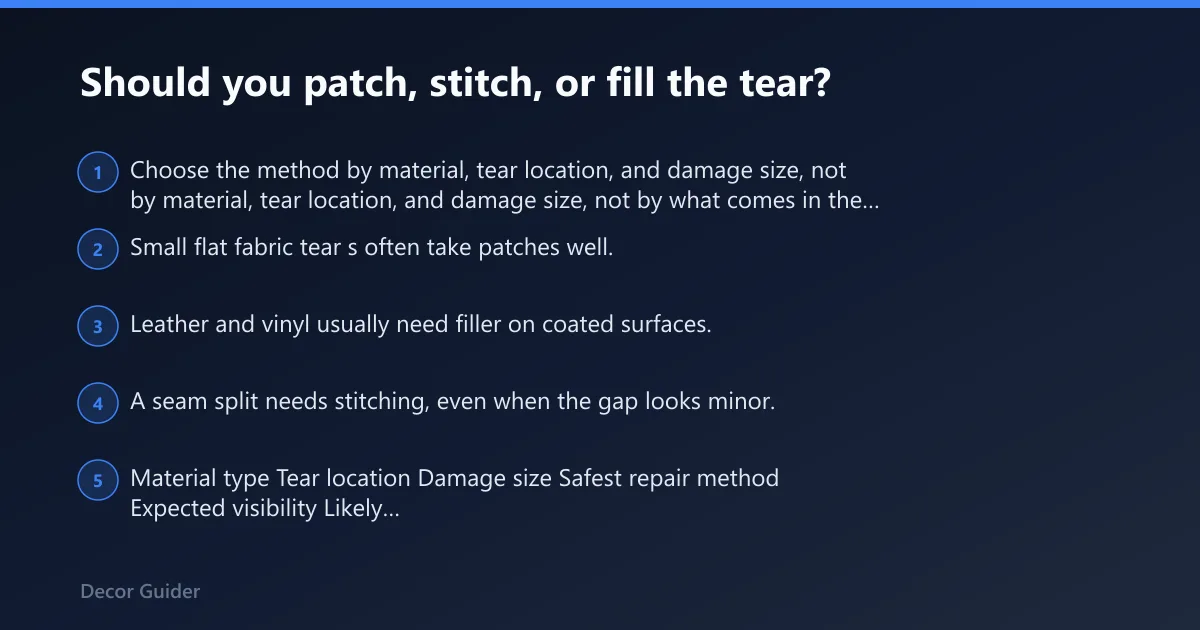
Choose the method by material, tear location, and damage size, not by what comes in the box. Small flat fabric tears often take patches well. Leather and vinyl usually need filler on coated surfaces. A seam split needs stitching, even when the gap looks minor.
| Material type | Tear location | Damage size | Safest repair method | Expected visibility | Likely durability outcome |
|---|---|---|---|---|---|
| Woven fabric | Flat seat panel, low-flex area | Small slit or hole under 1 inch | Patch with adhesive backer or fabric repair compound | Low to moderate if color matches | Good if cleaned well and left to cure fully |
| Woven fabric | Near seam, welt, or piping | Any tear that reaches stitching | Stitch or re-sew; patch only if hidden on the underside | Moderate to high | Better than adhesive alone |
| Leather | Flat panel, away from seams | Scratch to small tear | Leather filler plus tint on coated leather | Low if sheen matches; higher if gloss mismatches | Good on coated surfaces, fair on heavy-flex areas |
| Vinyl | Seat face or arm, away from folds | Small tear or crack | Vinyl filler or color repair kit | Low to moderate | Good if the vinyl is not brittle |
| Bonded leather | Any visible wear zone | Peeling, flaking, layered failure | Temporary filler only; replacement often safer | Moderate to high | Poor if the backing layer is failing |
| Any material | Within about 1/2 inch of a seam, cushion edge, or welt | Small tear | Stitching or professional upholstery repair | Moderate | Better than patching, because stress stays concentrated there |
When a repair is too close to the seam
If the tear reaches a seam, sits right beside piping, or is opening at a cushion edge, adhesive repair gets risky fast. Those spots flex constantly, so even a strong bond can peel. A patch there often looks neat for a week and then lifts at the edge.
That is also where upholstery repair adhesive matters in a specific way. Good formulas usually advertise strong bond strength, 10 to 30 minute working time, and a full cure that may take several hours or longer. Some are heat-activated, but heat should only be used when the instructions call for it and the fabric can tolerate it.
What different materials fail like
Fabric usually frays, opens, or pulls around the damaged weave. Leather tends to split at a crease or scratch through the finish layer. Vinyl cracks, then spreads from the crack line. Bonded leather peels and flakes because the top layer separates from the backing.
Those failure modes explain why one kit cannot solve everything. A patch can bridge fabric. A filler can restore a coated surface. A stitched seam can stop a split from lengthening. A loose peel on bonded leather often needs replacement instead of a cosmetic fix.
Which one should you buy?
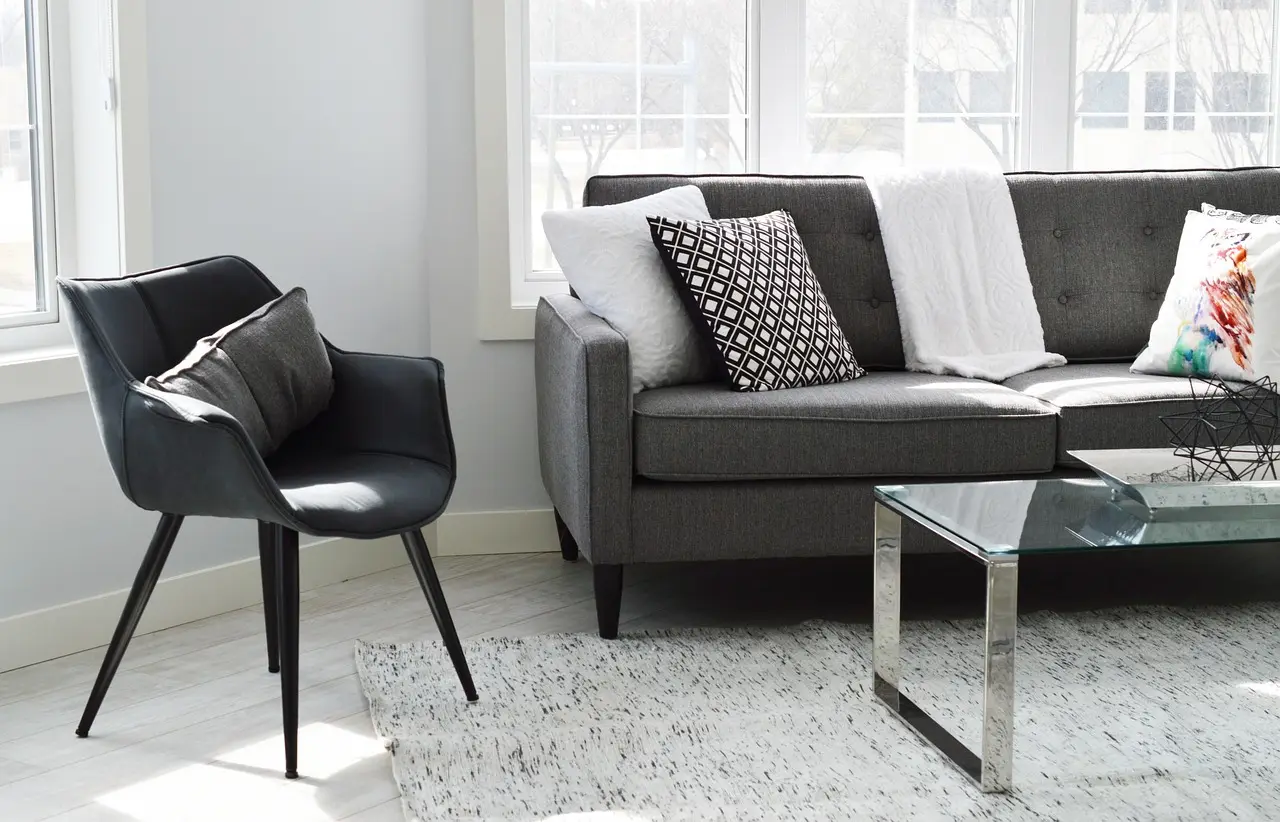
Buy the Coconix kit if you want the broadest fabric repair option for a small visible tear and color matching matters most. Buy ATG if you are matching fabric and want the widest color selection in a fiber-repair style kit. Buy Azobur if you want a fast, self-adhesive fabric patch for a simple tear. Buy HHGFCLTRS if your sofa is leather or vinyl and the damage is on a coated surface. Buy Tarpware only when the upholstery is dark, utility-like, and low visibility is not the main goal.
For pet scratches, the best choice depends on whether the scratch only scuffed the surface or opened a hole. Superficial marks on leather or vinyl usually suit filler and tint. Fabric snagging often needs trimming loose threads and patching before the damage spreads. For seam splits, buy a stitching approach or plan for upholstery repair, because adhesive alone rarely lasts there.
For a rental, the safer move is usually a reversible or low-commitment fix: self-adhesive patching on fabric, or a simple color repair on coated surfaces. For a family room, pick the method that resists repeated flex and cleaning, even if it takes more time. For a guest sofa, appearance may matter more than long-term wear, but the repair still needs to match the upholstery type.
If color match is the biggest concern, choose a kit with the most usable shades and the least sheen shift after cure. Matte repairs tend to disappear better on aged fabric and worn leather. Glossy finishes stand out quickly on vinyl and cleaner leather surfaces.
What is the best sofa repair kit for a small tear?
The best sofa repair kit for a small tear is the one that matches the upholstery and the tear’s position. For most fabric tears on flat areas, a fabric patch or fiber repair kit is the safer bet. For leather or vinyl, a color repair kit with filler is usually better than a patch.
Can a sofa tear be repaired without replacing the upholstery?
Yes, if the tear is small, stable, and not part of a larger failure. A clean hole, shallow scratch, or minor fabric split can often be repaired with patching, stitching, or filler. If the material is peeling, stretched thin, or splitting at multiple points, replacement becomes more practical.
How do you fix a small tear in a fabric sofa?
Clean the area first with a residue-free mild cleaner or alcohol-based prep wipe that is safe for the fiber. Let it dry fully. Then use a patch, backer mesh, or fabric repair compound that fits the weave. If the tear is on a seam or edge, stitching is usually safer than adhesive.
Are leather sofa repair kits better than patch kits?
For coated leather and vinyl, yes, repair kits with filler and tint are usually better than patch kits because they restore the surface instead of covering it. Patch kits can work on some fabric-backed materials, but on leather they often look obvious unless the damage is on an inconspicuous spot.
What tools do I need to repair a couch tear at home?
Most repairs call for a spatula or applicator, precision nozzle, cleaning wipes, gloves, and sometimes sandpaper or a prep pad. Seam splits may need a curved needle and strong thread with a color match. For leather or vinyl filler, a smooth applicator and careful cleanup matter most.
Will a sofa repair kit work on pet scratches and seam splits?
It can work on pet scratches if the damage is mostly cosmetic. Scratches on leather or vinyl often respond to filler and tint, while fabric snags may need trimming and patching. Seam splits are different; they usually need stitching or professional repair because the stress line keeps opening.
How long does a sofa tear repair last?
That depends on the material, tear location, and how well the surface was prepped. A repair on a flat, low-flex area can last a long time if it cures fully and is kept clean. Repairs near cushions, seams, or pet-targeted spots usually wear out sooner.
How do I match the color and texture of an upholstery repair?
Start with color, then check sheen, then texture. A close color match can still fail visually if the finish is too glossy or too matte. For fabric, a patch with the same weave direction helps. For leather or vinyl, test on a hidden spot if the kit allows it, and blend slowly.
What is in a sofa repair kit and which parts matter most?
Useful kits usually include repair adhesive, patch material or filler, applicators, and sometimes colorant. A backer mesh helps stabilize a larger small tear, especially in fabric. For seam work, a thread and needle set matters more than glue. The right part is the one that matches the failure mode.
How should you prep the surface before repair?
Remove dust, oils, and cleaner residue with a mild cleaner or alcohol-based prep wipe that is compatible with the upholstery. Let the area dry completely before applying anything. Skipping this step weakens bond strength, shortens repair life, and makes the final finish look uneven after cure.
Products related to this article
Sponsored / affiliate links. As an Amazon Associate I earn from qualifying purchases. I may earn additional commission from eligible campaigns.