3 Best Furniture Moving Straps for DIY Moves (2026): we compared
Choose adjustable lifting straps with shoulder pads for stairs, wide webbing for bulky pieces, and forearm straps for tight turns; for most DIY moves, one 2-person strap set plus one appliance strap is enough. The wrong strap can slip, crush fingers, tip a dresser on a landing, or leave you paying for damaged floors and a rescue crew. This guide breaks down furniture moving straps by scenario, with picks for stairs, turns, odd shapes, and solo or two-person lifting.
This guide is part of our Ratchet straps and tie downs guide series.
Quick comparison
| Product | Badge | Best for | Price | ||
|---|---|---|---|---|---|
 |
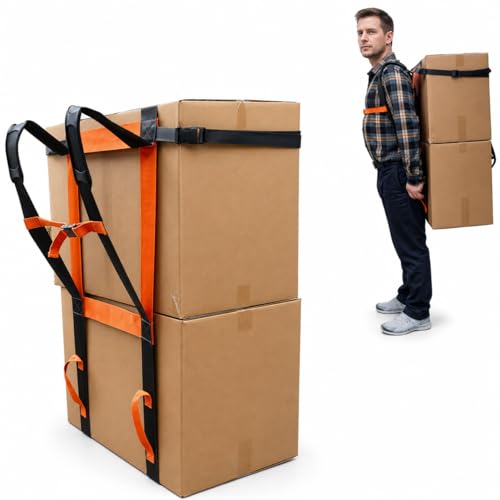
Moving Straps Lifting(Padded) one Person 2-Person LiftingEPXXUDD | Also great | One-person harness for awkward items | $29.99
Price as of 27 Sep 2026
|
View |
 |
Moving and Lifting Straps for Single Person Use, Heavy DutyStorbuffs | Budget pick | Single-person heavy-duty strap, 115 inches | $22.99
Price as of 27 Sep 2026
|
View |
 |
KEEPER Two Person Adjustable Lifting and Moving Straps withKEEPER | Our pick | Two-person system with 800 lb capacity | $19.99
Price as of 27 Sep 2026
|
View |
Start with the comparison table by move type, then check load rating and fit. That order matters more than brand names when the job includes stairs, narrow doors, or awkward furniture shape.
How we chose
The best strap for a DIY move has to match the route, not just the weight. I looked first at load rating and safety margin, padding and shoulder design, strap length and adjustability, and how well the system handles stairs, corners, and team lifting.
I also favor setups that go on cleanly without forcing a bad lift. A strap that looks strong on paper can still be the wrong call if it traps hands, crowds a landing, or leaves too little room to pivot through a doorway.
Moving straps lifting padded one person 2-person moving system: best for stairs and awkward furniture
This is the best general pick for DIY movers who expect a mixed route with stairs, landings, and bulky furniture. Based on the spec sheet and owner feedback, its two usage modes make it more adaptable than a plain carry strap when the item shape changes mid-move.
It suits sofas, mattresses, partitions, and other awkward loads where hands-free carry support matters. The drawback is the obvious one: a one-person setup can tempt someone to take on a job that really needs two people, and that is how corners get clipped and backs get twisted.
Keeper two person adjustable lifting and moving straps: best for budget two-person lifts
This looks like a strong value pick for two-person moves that need a straightforward shoulder setup. The listed capacity, multiple arm pockets, and several length options make it a practical choice for teams that want one strap set to cover furniture, boxes, and smaller appliances.
It works well when the route is simple and the crew wants a tidy fit. The drawback is that a basic two-person set does not solve every space problem; on very tight turns, long furniture can still feel unwieldy if the webbing is not adjusted before the lift starts.
Moving and lifting straps for single person use: best for solo boxes and short carries
This looks like a good match for a solo mover carrying boxes, compact furniture, or appliance parts over a short route. The listed length and the 2-inch PP strap with quick-release buckle suggest a setup built more for control and reduced back strain than for heavy lifting.
It is useful when one person needs help moving weight without a full team. The drawback is that a single-person strap is still limited by balance and line-of-sight, so it is a poor choice for tall, top-heavy furniture on stairs or anything that wants to tip.
Which one should you buy
Pick the two-person adjustable shoulder system if the move includes stairs, dressers, sofas, or a helper on each end. Choose the 800 lb two-person set if price matters and the route is mostly open, with a need for reliable padding and fit options. Choose the single-person strap only for smaller loads, short distances, or solo jobs where control matters more than speed.
If the move is mostly straight across a flat floor, a dolly or hand truck may be the better tool. If the item is fragile, top-heavy, or slippery, straps are the wrong answer even when the weight seems manageable.
What are the best furniture moving straps for DIY moves?
The best furniture moving straps for DIY moves are adjustable shoulder systems that match the route and the furniture shape. For stairs and landings, choose padded two-person straps. For narrow hallways or solo box moves, a shorter single-person system can work, but only when the load is stable and the path is clear.
Start with the item, then the path, then the team size. That order avoids buying a strap that looks strong but is hard to position on a landing or impossible to keep level around a tight corner.
Quick picks by move type
- Best for stairs: EPXXUDD moving straps lifting padded one person 2-person moving system
- Best for tight doorways and corners: KEEPER two person adjustable lifting and moving straps
- Best for heavy appliances: EPXXUDD or KEEPER, depending on team size and route length
- Best for small apartments: Storbuffs moving and lifting straps for single person use
How we chose
The useful spec is not the marketing claim. It is whether the strap has enough length to wrap the item cleanly, enough padding to keep shoulders from folding under load, and enough adjustment to keep the lift controlled in a doorway or on a stair turn.
We also weighed setup speed and mistake tolerance. Systems that are easy to center, quick to tighten, and forgiving when the route changes are safer than straps that demand perfect positioning before the first lift.
Weight capacity and safety margin
Weight capacity matters in two ways: the maximum load per set and the individual product rating. The safe choice is the one that leaves a margin below the stated limit, because uneven packing, stairs, and a bad grip all add stress that the number on the box does not show.
Padding and shoulder design
Shoulder padding should spread the load instead of cutting into the neck. A well-shaped shoulder system reduces slip, helps with comfort on long carries, and keeps the strap from wandering when the team stops to pivot or step down a landing.
Strap length and adjustability
Longer, adjustable webbing helps around bulky furniture and across awkward widths. Shorter or rigid setups can feel fine on a sofa in a hallway, then become awkward the moment a handrail, post, or tight corner gets in the way.
Move conditions and item shape
Stairs, doorways, tight corners, uneven surfaces, and team lifting all change the safe strap choice. A strap that works on flat ground may be a poor fit on a staircase if it leaves no room to re-grip or correct the angle.
Ease of setup
Good straps should be intuitive to center, tighten, and release. In practice, a simple design is better than a clever one when the team is standing in a cramped hallway with a heavy load already off the floor.
What strap works for your move?
The right strap depends on whether the load needs to travel up stairs, pivot through a narrow opening, or stay level under a bulky shape. Choose the system that reduces awkward lifting first. Capacity matters, but fit and route control matter more when the furniture is large or unstable.
Stairs and landings
For stairs, use a two-person shoulder system with padding and enough adjustment to keep the load close to the body. The key is to avoid a bent-back lift at the edge of a step, where the item can shift backward and force a sudden correction.
Tight turns and narrow hallways
Tight corners need strap length that allows the furniture to turn without dragging one end or pinning a hand against the wall. Forearm-style or adjustable webbing setups help when the team needs finer control than a basic shoulder carry can give.
Bulky sofas and dressers
Bulky sofas and dressers usually call for two-person straps with broad contact points. These pieces are hard to rotate once they start moving, so the strap should support a stable, level carry rather than a fast lift.
Appliances and heavy boxes
For appliances like washers and refrigerators, or for heavy boxes that are stacked evenly, a two-person strap can reduce strain and improve line-of-sight. The item still needs to be closed, strapped, and balanced before the carry begins, because one loose edge can shift the whole load.
Decision table: strap type by scenario
This table is the fastest way to avoid the wrong purchase. Match the route, the object shape, and the team size first, then verify the load range and the failure cases before buying.
| Scenario | Safest strap type | Required strap length | Recommended load range | Red-flag failure cases |
|---|---|---|---|---|
| Stair-only move with one landing | Two-person padded shoulder setup | Long enough to keep the load close while stepping | Below the stated maximum load per set, with margin | Top-heavy dresser, loose drawers, slippery finish |
| Tight apartment hallway | Adjustable webbing strap with forearm control | Long enough for a pivot without pinching hands | Light to moderate furniture weight | Oversized sofa, wall-hugging corners, sharp turns |
| Small-space apartment with narrow doors | Compact two-person system with padded shoulder sections | Enough adjustment for short carries and quick resets | Moderate loads only | Items wider than the doorway, fragile finishes, glass fronts |
| Heavy appliance move | Two-person adjustable lifting straps | Long enough to keep the appliance upright and balanced | Well below the product rating | Leaking appliance, unstable base, missing feet or panels |
| Solo move of heavy boxes | Single-person carrying strap | Enough to center the load on the shoulders | Light to moderate boxes only | Overpacked box, shifting contents, awkward grip points |
| Bookshelf with fixed shelves | Two-person shoulder system with good padding | Long enough to keep the shelf level through the door | Moderate load with strong frame | Back panel coming loose, glass inserts, tall narrow frame |
Do moving straps beat a dolly?
Moving straps beat a dolly when the route has stairs, tight turns, or a doorway that will not take a wheeled tool. A dolly beats straps on flat ground, especially for stacked boxes, appliances with a firm base, and moves where the item can roll without needing to stay shoulder-high.
That said, straps are not a replacement for a moving dolly. They solve a different problem. The best choice is the one that keeps the item stable while reducing awkward body positions.
When straps are the better pick
Straps are the better pick on stair runs, in narrow halls, and when the item has to be lifted around railings or corner posts. They also help when hands need to stay free for balance and the team needs better line-of-sight through the route.
When a dolly or hand truck is safer
A dolly or hand truck is safer for flat-floor moves, repetitive box hauling, and objects that can stand securely on a base. It is also the better tool when the load can be wheeled without tipping, because rolling usually beats carrying for distance.
When to call professional movers
Call professional movers when the item is fragile, unusually heavy, top-heavy, or too wide for the route. If the move needs multiple landings, awkward disassembly, or a rescue plan for damaged floors and tight interior corners, the time saved often outweighs the cost.
How to use furniture straps safely
Safe use starts before the lift. Set the straps to the right height, center them under the load, and make sure both people know the path, the stopping points, and who will call the next move. Keep a straight back and straight arms, and lift with the legs rather than the back.
The goal is controlled movement, not speed. If the item starts to twist, lower it and reset. A bad first lift is where most mistakes begin.
Set the strap height and spacing
Place the strap so the weight sits close to the body without forcing the shoulders upward. The spacing should keep the furniture level. If one person feels much more of the load, stop and rebalance before moving another step.
Lift and walk without twisting
Stand square to the load, brace the core, and rise together. Walk with small steps and turn the feet instead of twisting the torso. Twisting under load is a common cause of slips on landings and strained lower backs.
Common setup mistakes
- Starting the carry before both people agree on the path.
- Using straps on loose, top-heavy, or slippery furniture.
- Letting the load hang too low and catch on stairs or trim.
- Pulling with the arms instead of driving through the legs.
- Trying to force a turn that the doorway will not support.
Frequently asked questions
Are moving straps better than a dolly for furniture?
Moving straps are better than a dolly when the route has stairs, tight corners, or a doorway that makes rolling impossible. A dolly is better on flat ground and for items that can stay stable while wheeled. Many moves need both tools, not one tool for every task.
How do you use moving straps safely on stairs?
Use a two-person padded system, keep the item close, and move one step at a time with the load level. Keep a straight back and straight arms, lift with the legs, and stop before each landing turn. If the furniture shifts, lower it and reset the strap placement.
What weight can furniture moving straps handle?
Furniture moving straps can handle different weights depending on the product rating and the way the load is carried. The safe rule is to stay below the stated maximum load per set and leave a safety margin. Stairs, uneven floors, and poor balance reduce what should be attempted.
Can one person use moving straps to move furniture?
One person can use some moving straps for smaller furniture, heavy boxes, or short carries, but not for every item. Solo use works best when the load is stable, compact, and easy to center. Large sofas, dressers, and appliances usually need two people.
What furniture should you not move with straps?
Do not move fragile, top-heavy, slippery, or unstable furniture with straps if the load can shift or tip. Glass pieces, loose shelving, wobbly cabinets, and items with broken feet are poor candidates. If the furniture cannot stay balanced without constant correction, a dolly or professional help is safer.
Products related to this article
Sponsored / affiliate links. As an Amazon Associate I earn from qualifying purchases. I may earn additional commission from eligible campaigns.
 Furniture Sliders 4 Pack, 3.5 Inch Heavy Duty Reusable Furniture Moving Sliders for Hardwood Floors and Carpet, Beige Floor Protection Pads for Chairs, Sofas, Tables and Home Moving
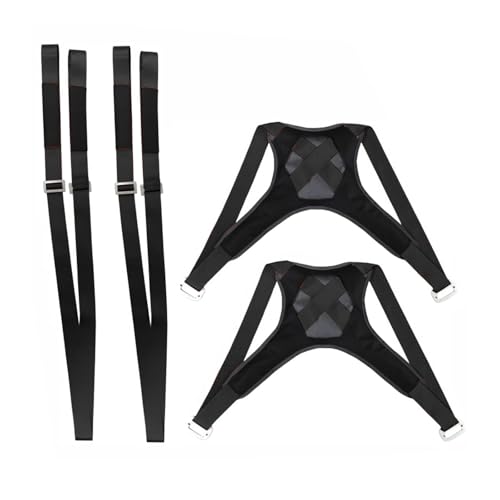 SENRISE 2-Person Moving Straps, Ergonomic Lifting System to Move Furniture Safely, 400kg/882lb Capacity Reinforced Mover Straps for Mattress Sofa Washer, Black